FREE: Frindle Novel Study Guide – Chapter 1
- Grades
- Grades 3–5, Elementary
- Pages
- 4
- File type
- Answer key
- Included


- Subject
- ELA, Reading, Reading Comprehension, Literature, Language Development, Vocabulary
- Topic
- Frindle, Novel Study
- Resource types
- Worksheets & Printables, Novel Studies
- Answer key
- Included
- Standards
- RL.4.1
Product description
From the author
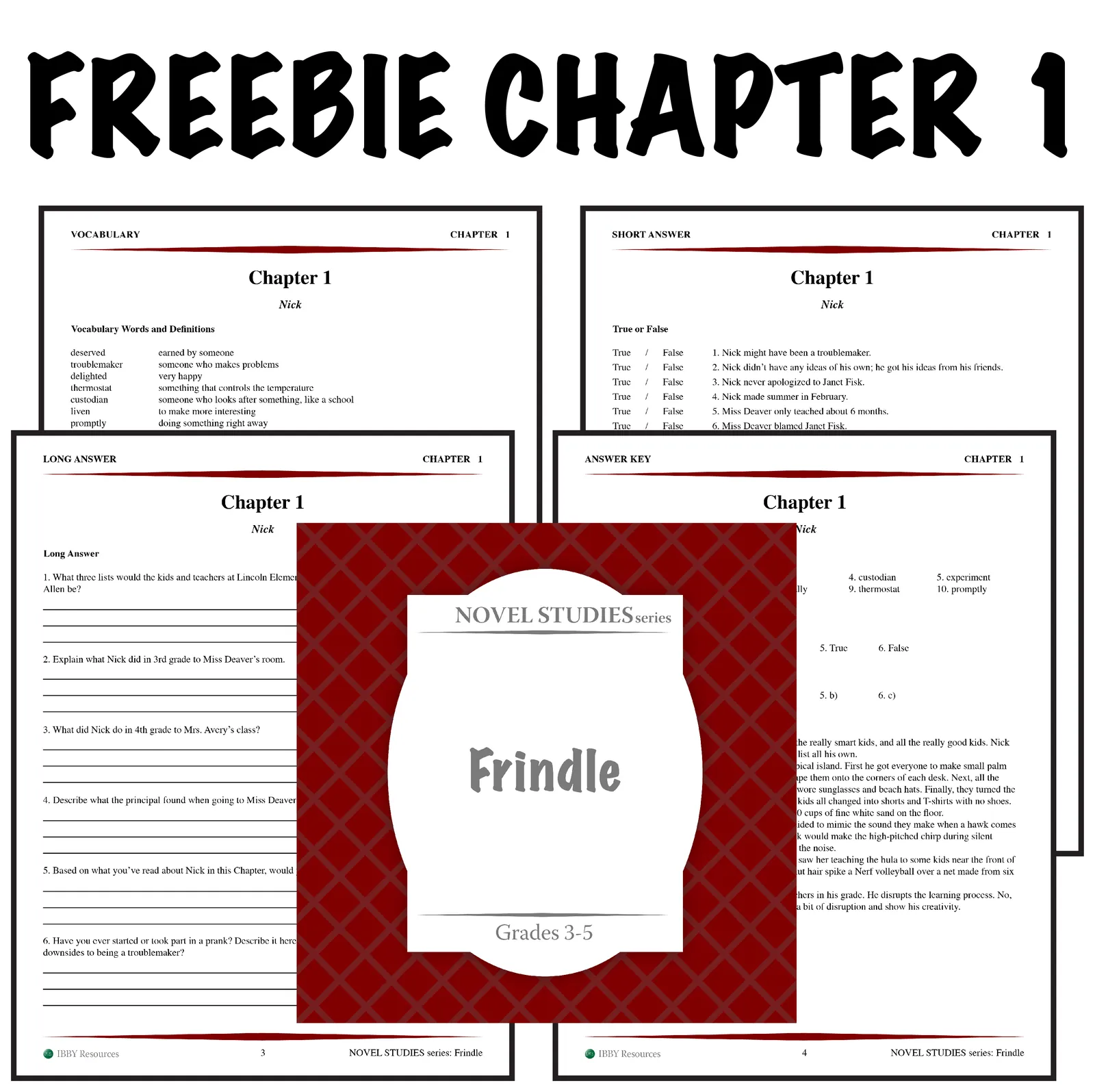
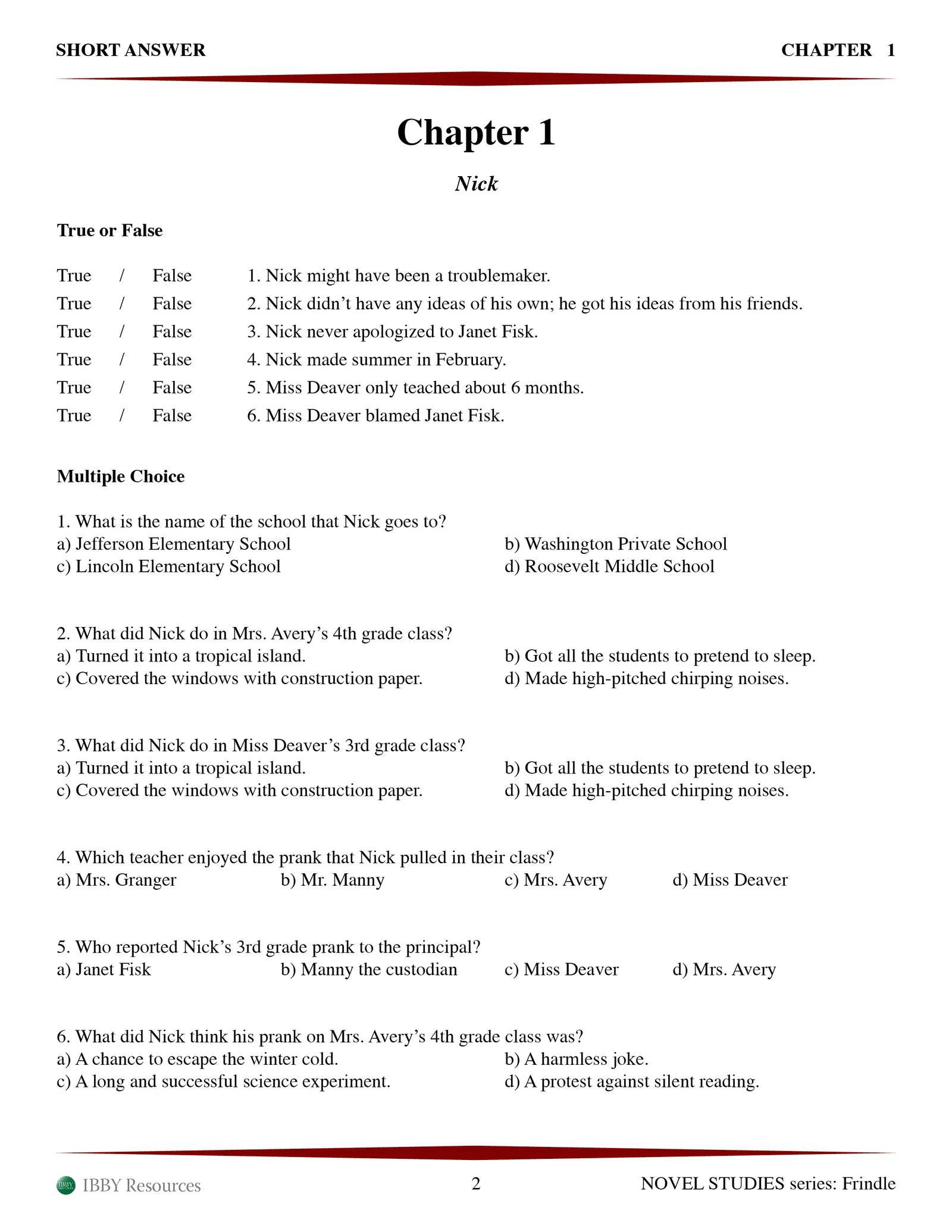
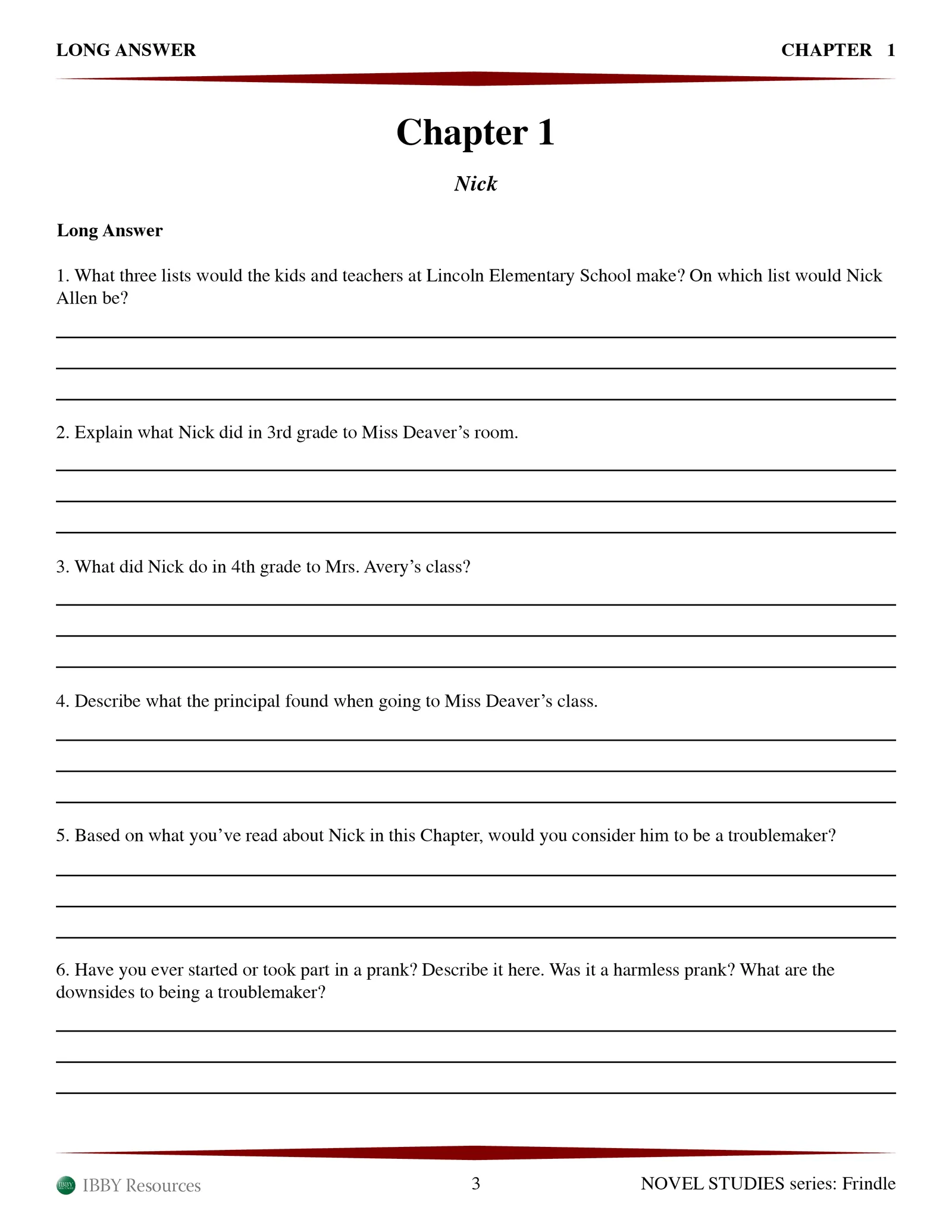
This is a FREE sample of our Frindle Novel Study Guide. In this sample, you can enjoy the entire first chapter of comprehension content, including vocabulary words with definitions, fill-in-the-blank questions, true or false, multiple choice, short answer questions, and answer key.
The full resource includes additional chapter comprehension questions following the same format as chapter 1, as well as word puzzles, such as word decoder, word search, word scramble, crossword, and hangman. Also included are bonus major projects.
The following description is for the full resource
About this Resource:
This resource is a study of the novel Frindle, written by Andrew Clements. The Novel Study Guide includes vocabulary and comprehension questions for each chapter of the novel. Students are meant to read the chapter, then answer the matching questions for that chapter. Teachers can choose to hand the questions out one chapter at a time, or group them into sections. A natural section break is provided in this guide with assessment-style puzzles. Teachers can hand out the chapter sections, followed by the assessment puzzle.
About the Chapter Worksheets:
Each chapter includes 4 pages: a Vocabulary page, Short Answer page, Long Answer page, and Answer Key.
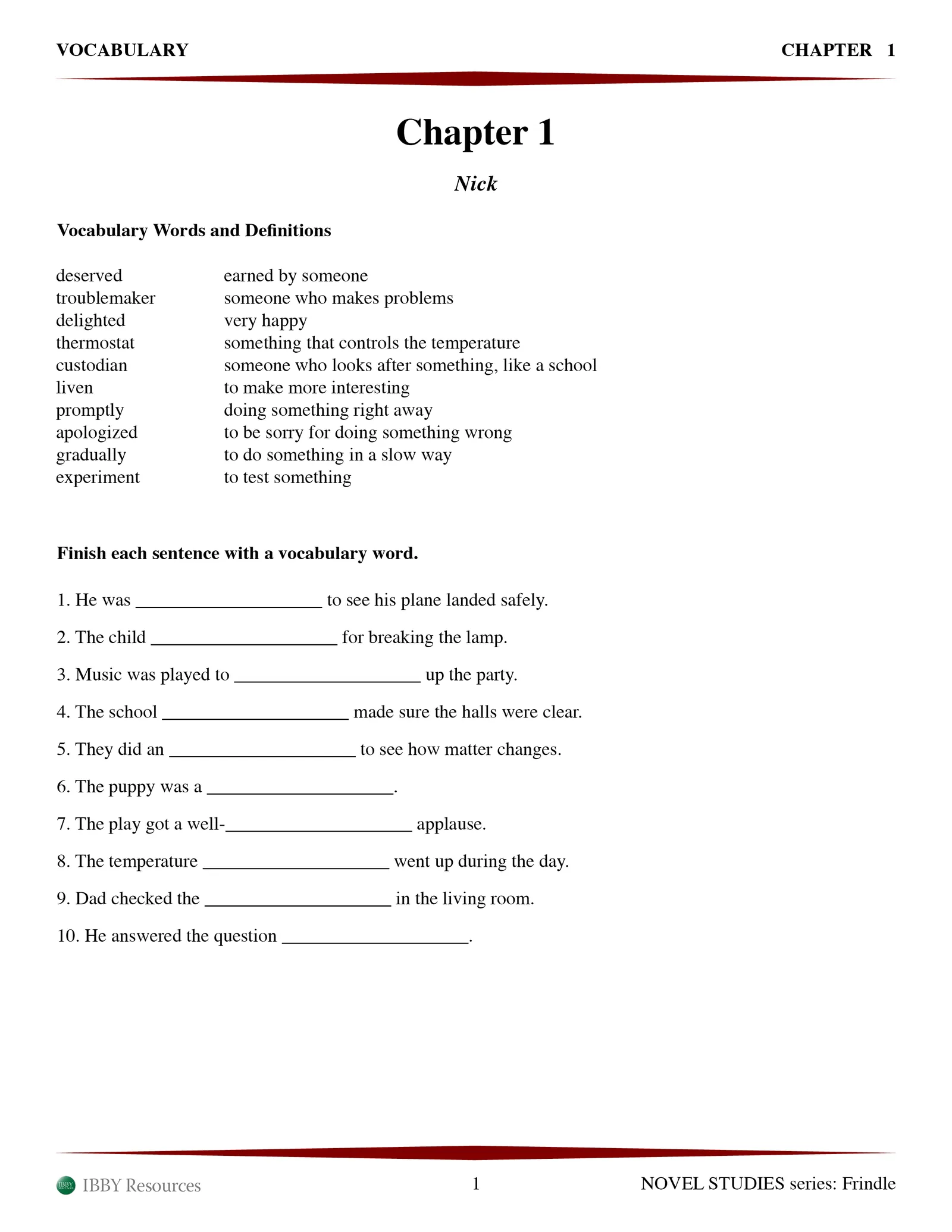
Vocabulary: 10 words taken from the chapter are listed with their meanings. 10 fill-in-the-blank questions are given. Students must finish each sentence using a vocabulary word.
Short Answer: 6 True or False questions are provided. Students must answer each statement as True or False. 6 multiple choice questions are provided. Students must answer each question with the best answer option.
Long Answer: 6 comprehension and critical thinking questions are provided. Students answer each question with complete sentences on the lines provided.
About the Section Puzzles:
5 assessment-style puzzles are provided in this resource. They appear at the end of chapter sections.
Word Decoder: Several word puzzles are provided. Each puzzle is written using numbers. Use the provided legend to decode the word puzzle.
Word Search: A word search puzzle and selection of vocabulary words are provided. Find the vocabulary words hidden in the puzzle.
Word Scramble: Several word puzzles are provided. Unscramble the words to make the vocabulary words.
Crossword: A crossword puzzle, selection of vocabulary words and clues are provided. Solve each clue with the vocabulary word that matches. Write the vocabulary word in the matching spot in the crossword puzzle.
Hangman: Guess letters to fill in the hidden vocabulary words. Guess a wrong letter and fill in the hangman. Finish the word before the hangman is done.
About the Major Projects:
4 end-of-unit major projects are provided at the end of the resource. Complete these at the end of the unit.
Related resources
More resources teachers may find useful
24 related resources were found using this product's title, contributor, categories and tags.


In the classroom
Teaching tips & learning objectives

Learning objectives
Students use Chapter 1 vocabulary words correctly in context (e.g., deserved, gradually, promptly).
Students demonstrate comprehension of Chapter 1 plot events, including Nick's pranks in Miss Deaver's and Mrs. Avery's classrooms.
Students form and support an opinion about a character's behavior, connecting Nick's actions to their own experience with pranks or mischief.

Teaching tips
Assign the vocabulary section before the comprehension checks, since several true/false and multiple-choice items depend on understanding words like 'troublemaker' and 'promptly' in context.
Use the long-answer question asking students to judge whether Nick is a troublemaker as a discussion starter, since the answer key itself models both a yes and a no response as equally valid.
Have students complete the personal-connection long-answer question (question 6) privately or share voluntarily, since it asks them to describe a real prank they witnessed or took part in.

Skills covered
Vocabulary in context — students complete fill-in-the-blank sentences using Chapter 1 words like custodian, liven, and thermostat.
Plot comprehension — students answer true/false and multiple-choice questions about specific Chapter 1 events, such as which teacher discovered Nick's prank.
Character analysis and personal connection — students evaluate whether Nick's actions make him a 'troublemaker' and relate the chapter to a personal experience.
Good to know
Questions teachers ask about this resource
How does the model response treat the question of whether Nick counts as a 'troublemaker'?
It offers a response that argues both sides are defensible — noting he causes disruption for teachers, but also that his pranks don't hurt anyone and show creativity — rather than settling on one fixed correct answer.

No reviews yet
Downloaded this resource? Tell other teachers how it went.
Curriculum
Standards, concepts & topics
Standards
 Standards
- RL.4.1
Core concepts
 Core concepts
Vocabulary in context
Plot comprehension
Character analysis
Topics
 Topics
Explore more
Categories this resource belongs to
Explore related searches
More to explore
You may also like