FREE Pre-Primer Heart Words - Compile Your Own Digital Flash Card Set
- Grades
- Preschool–3, Elementary
- File type
- Multiple File Types
- Editable
- Yes


- Subject
- ELA, Language Development, ESL, Phonics, Vocabulary, Spelling, Common Core
- Topic
- digital flash cards, sight words
- Resource types
- Teacher Tools, Presentations, Worksheets & Printables, Flashcards, Activities
- Editable
- Yes
About this resource
What's inside this resource
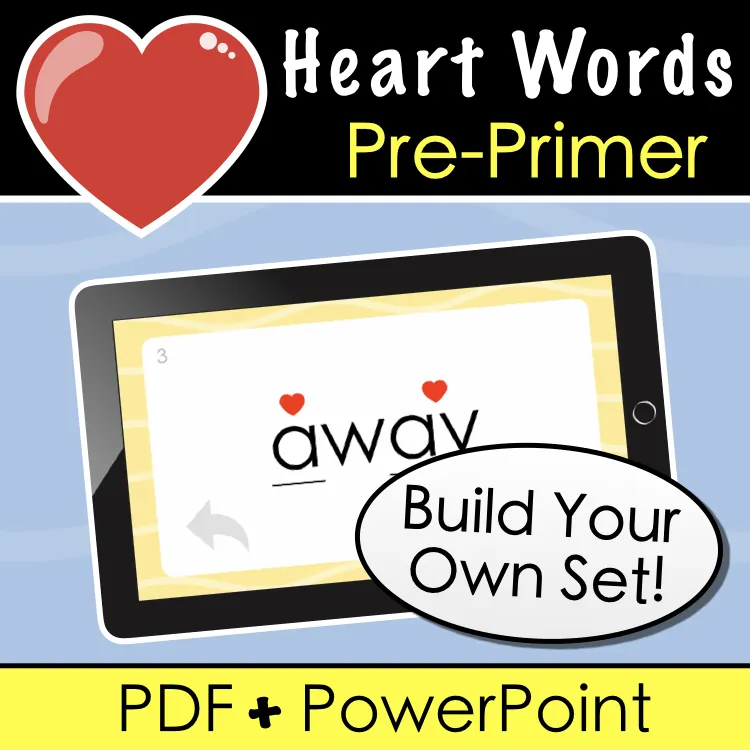
FREE Pre-Primer Heart Words - Create Your Own Digital Flash Card Set
The FREE Pre-Primer Heart Words tool is a comprehensive educational resource designed specifically for educators aiming to enhance early language and literacy skills. The set centers on using Heart Words, which are high-frequency words featuring irregular spelling patterns.
- Digital flash card format: Teachers can expertly arrange sets of these heart words to foster literacy abilities.
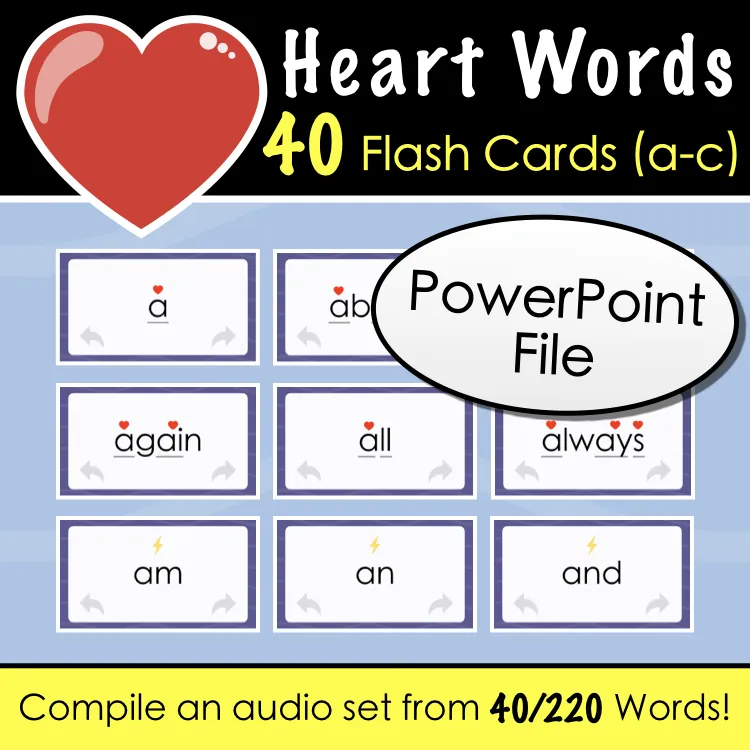
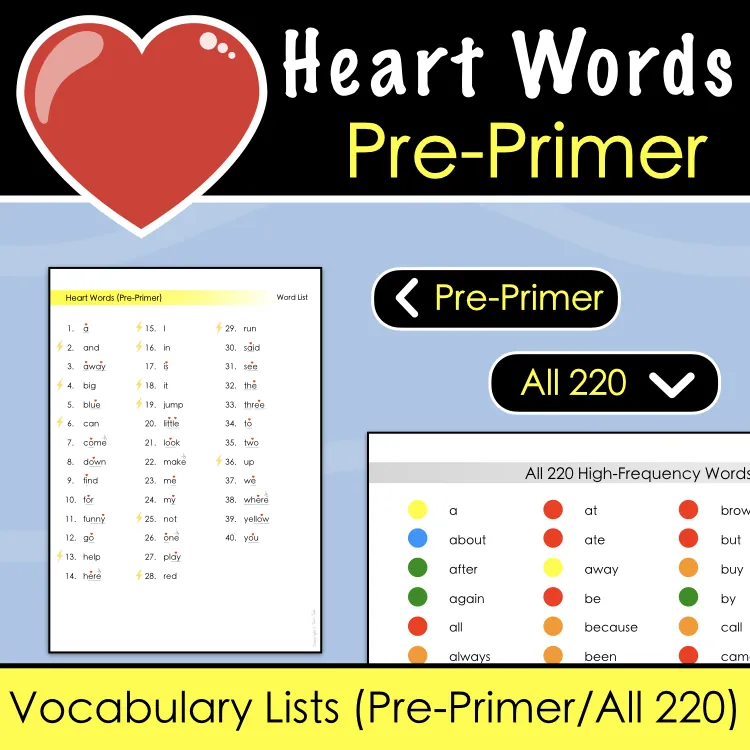
- Variety of Sight Words: The tool contains 40 sight words that you could gather into a digital flashcard deck.
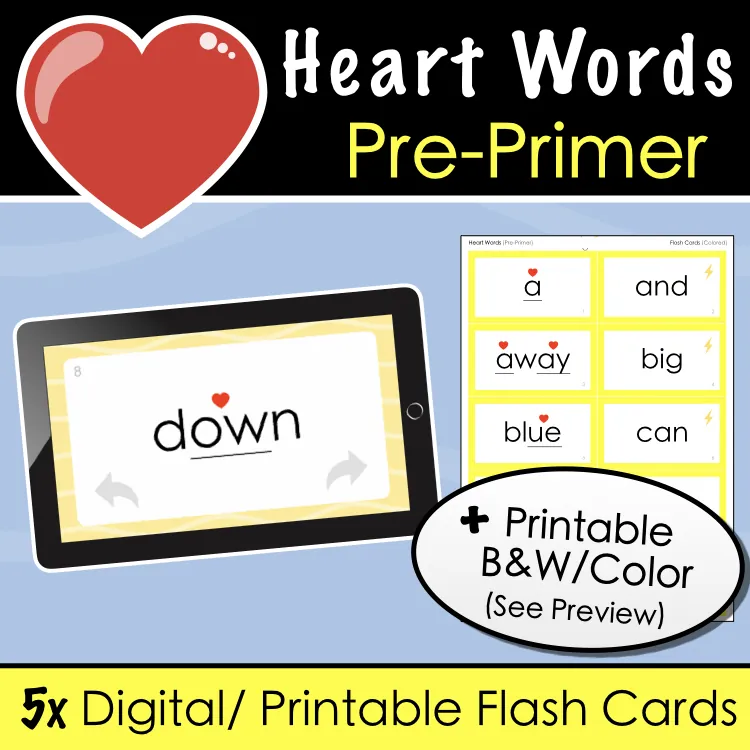
- Color variants: The set includes both color and black & white printables, offering diverse presentation styles according to your unique teaching approach.
- Inclusion of Temporary and Permanent Heart Words: You have the flexibility in guiding students through common sight word difficulties at an advanced level as well.
- Common Core Standards (CCSS) Compliance:
This easy-to-use digital format nurtures independent learning while reinforcing proficiency in areas such as ESL, Phonics, Vocabulary, and Spelling.
Ideal Setting for Usage
Suitable for classroom or homeschool settings; these flashcards provide educational benefits whether used individually or in larger group interactions. You can even use them as fun homework tasks!
Final Remark:
Nurturing crucial reading skills at the base level is made easier thanks to the adaptability this product offers in shaping your unique teaching approach, making it an invaluable addition to any teacher's toolkit.
Related resources
More resources teachers may find useful
24 related resources were found using this product's title, contributor, categories and tags.


In the classroom
Teaching tips & learning objectives

Learning objectives
Read the forty Pre-Primer high-frequency words — a, and, away, big, blue, can, come, down through to yellow and you — automatically on sight
Identify the irregular "heart part" of a word from the icon printed on its card and memorise that portion rather than sounding it out
Distinguish a flash word that basic phonics can decode from a permanent heart word that follows no regular pattern

Teaching tips
Work from the "Printable Flash Card Instructions" page before the first session; the icons for silent letters, the heart part and flash words are the whole reading system for the cards and are explained nowhere else in the download
The black-and-white set prints the level in the top left-hand corner of each card, which keeps Pre-Primer cards sortable if the set is later merged with cards from other levels
Cards are laid out ten to a page in the same numbered order in both versions, so a coloured card and its black-and-white twin can be printed back to back

Skills covered
Sight-word reading — students read forty Pre-Primer high-frequency words including said, come, funny, where and yellow straight from the card, without decoding.
Heart-part identification — the icon printed over the irregular portion of a word tells students which letters to memorise, so they learn to separate the decodable part from the part that must be known by heart.
Silent-letter recognition — a dedicated icon on the cards points out silent letters, giving students a visual cue for why a spelling and a pronunciation disagree.
Good to know
Questions teachers ask about this resource
What do the icons printed on each flash card mean?
The instructions page defines four marks: one icon points out silent letters, a second sits over the "heart part" of the word that students need to memorise by heart, a third indicates a flash word that can be decoded with basic phonics, and a line underneath a set of letters shows that those letters represent a single sound.
What is the difference between a temporary and a permanent heart word?
A temporary heart word contains a regular phonics pattern the student has not been taught yet, so it is memorised only until that pattern is covered. A permanent heart word is spelled irregularly, follows no specific phonics pattern, and has to stay memorised because it cannot be decoded or spelled by regular rules.
Which words does the Pre-Primer level cover, and where do the other 220 words appear?
The cards cover forty words, numbered 1 to 40 alphabetically from a, and, away and big through we, where, yellow and you. A separate four-page list prints all 220 high-frequency words in alphabetical order with a colour key marking each as Pre-Primer, Primer, 1st Grade, 2nd Grade or 3rd Grade, so the forty cards can be placed against the wider sequence.

No reviews yet
Downloaded this resource? Tell other teachers how it went.
Resource details
Concepts & topics
Core concepts
 Core concepts
Heart words
High-frequency words
Sight words
Phonics
Silent letters
 Topics
Explore more
Categories this resource belongs to
Explore related searches
More to explore
You may also like