Great Depression & Dust Bowl: A Document-Based Activity


About This Product
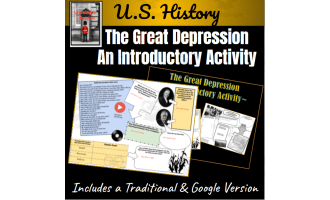
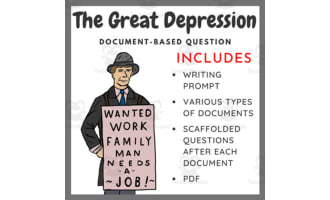
In this Document-Based Study of the Great Depression: Dust Bowl, your students will delve into answering these key questions: How did the Dust Bowl impact the lives of American farmers during the 1930s? How did it influence migration patterns? What was the government's reaction? You will receive a PPT, PDF, and Google-compatible version for your convenience!
Your students will engage in the following activities:
Warm-up: Analyze a Dust Bowl area map and undertake a related map activity.
Compile summary notes about the Dust Bowl (who, what, when, etc.) on a visual organizer by scanning a QR Code that directs them to an online article or using their classroom textbook.
Work in small groups (or individually), studying 16 artifacts (which include primary & secondary sources like photographs, documents, letters, etc.), and jotting down their observations on the given chart. (Understanding questions provided)
All necessary student worksheets, primary source materials, map activities, and a detailed teacher's guide are included!
**Includes a GOOGLE and Traditional version for your use!
About: Learning is a Passion Store - I have taught 6th-12th grade during my 20 year teaching career. I prefer to use lessons in my teaching practice that allow my students to become facilitators and active participants in their own learning rather than merely an audience of "my show". I love to create hands- on, interactive activities that really engage my students in the learning process.
Resource Tags
0 Reviews
Check out these other great products