Helpful vs Hurtful Problem Solving Worksheet

- Grades
- Grades 1–2
- Pages
- 2
- File type
- Answer key
- Included


- Subject
- Special Resources
- Topic
- Helpful words, Hurtful words
- Resource types
- Worksheets
- Answer key
- Included
Product description
From the author
This helpful vs. hurtful problem solving worksheet is a great way for students to learn how to best solve social problems. By deciding which statements are hurtful and helpful, students will be better equipped to handle future conflicts. This worksheet is a valuable tool for any teacher looking to promote social skills in their classroom.
If you want to give students extra practice with how they communicate to solve problems, I have just the resource for you.
This activity is perfect for students who are struggling with using the right language when faced with conflict. This will help them practice and improve their skills. This is a Helpful vs. Hurtful Problem Solving Words Printable.
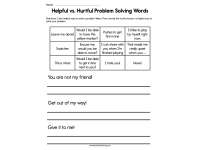
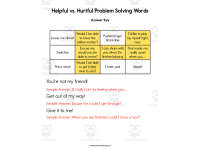
On the first page, there is a chart with 12 boxes. The boxes contain words and actions. Students will read each entry and decide whether each word or action would be helpful or hurtful. If the words are helpful, they can color the box yellow. Below the chart, three separate statements provide space to write more helpful alternatives. An answer key is included on the next page.
You may choose to have students complete this independently. It also works great as a small group activity. This is a great activity for a teacher or guidance counselor to implement after a lesson.
Take A Look at My Best Sellers:
Related resources
More resources teachers may find useful
24 related resources were found using this product's title, contributor, categories and tags.

In the classroom
Teaching tips & learning objectives

Learning objectives
Students distinguish helpful from hurtful language when responding to common classroom conflicts.
Students rewrite hurtful statements into more respectful, helpful alternatives.
Students practice specific scripted phrases, such as 'Excuse me, would you be able to move?', for resolving everyday classroom disputes.

Teaching tips
Discuss the situation and tone before judging a statement.
Distinguish a clear personal boundary from insulting or physically hurting someone.
Use the sample rewrites as examples and accept other respectful wording.

Skills covered
Conflict-resolution language — students identify and generate helpful phrasing for common classroom disputes.
Perspective-taking — students consider how a hurtful phrase might make a classmate feel and reframe it more kindly.
Reading comprehension — students read and interpret short dialogue-style phrases to judge their tone.
Good to know
Questions teachers ask about this resource
What kind of classroom situations do the phrases cover?
Everyday peer conflicts such as sharing markers, taking turns getting in line, and wanting personal space, phrased as things one student might say to another.

No reviews yet
Downloaded this resource? Tell other teachers how it went.
Resource details
Concepts & topics
Core concepts
 Core concepts
Conflict resolution
Helpful vs hurtful language
Social-emotional learning
 Topics
Explore more
Categories this resource belongs to
Explore related searches
More to explore
You may also like