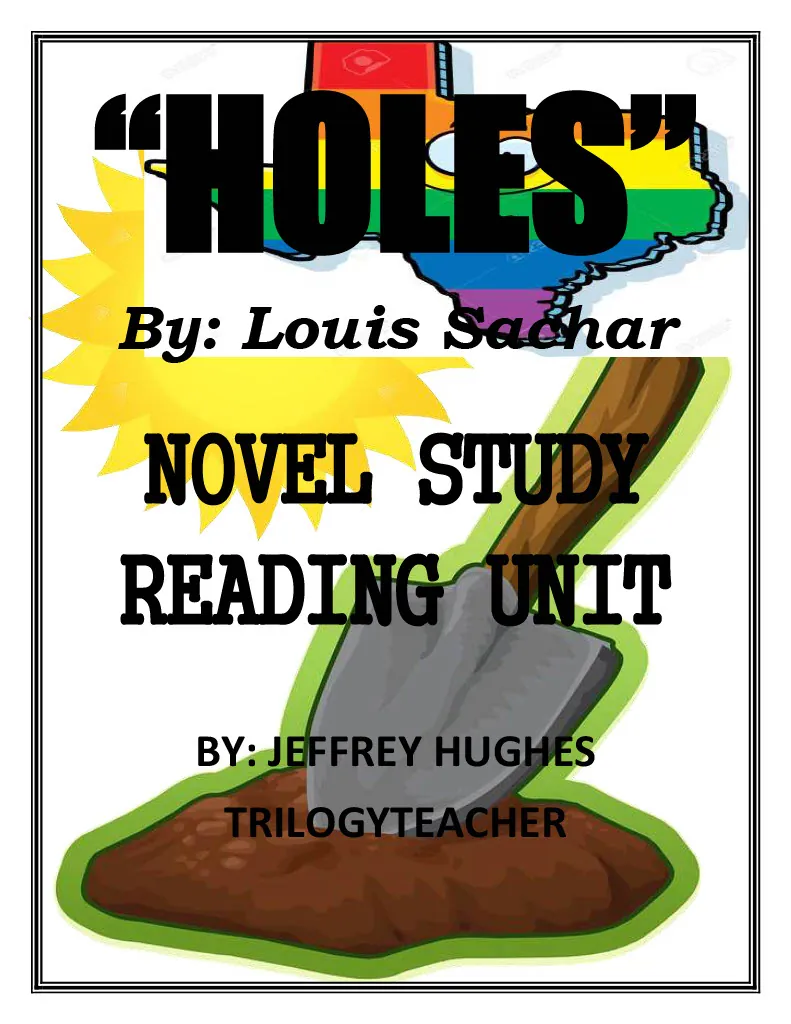
Holes Unit Plan - Novel Study for Louis Sachar
- Grades
- Grades 5–6, Elementary, Middle School
- File type
- Preparation
- Print ready


- Subject
- ELA, Literature, Vocabulary
- Topic
- Holes, novel study
- Resource types
- Novel Studies, Worksheets & Printables, Assessments, Quizzes and Tests, Writing Prompts
- Preparation
- Print ready
- Standards
- CCSS.W.5.9 CCSS.RL.5.6 +1
About this resource
What's inside this resource
Related resources
More resources teachers may find useful
24 related resources were found using this product's title, contributor, categories and tags.


In the classroom
Teaching tips & learning objectives

Learning objectives
Cite textual evidence to answer chapter comprehension questions
Use context clues to build vocabulary from the novel
Identify theme, main idea, and point of view across chapters

Teaching tips
Give each student a dedicated Holes folder at the start of the unit to collect all worksheets, quizzes, and reference pages
Use the "Souvenir Walking Tour" activity to review answers actively rather than only checking worksheets individually
Assign the historical reference pages before the chapters they relate to, so students have the background before reading

Skills covered
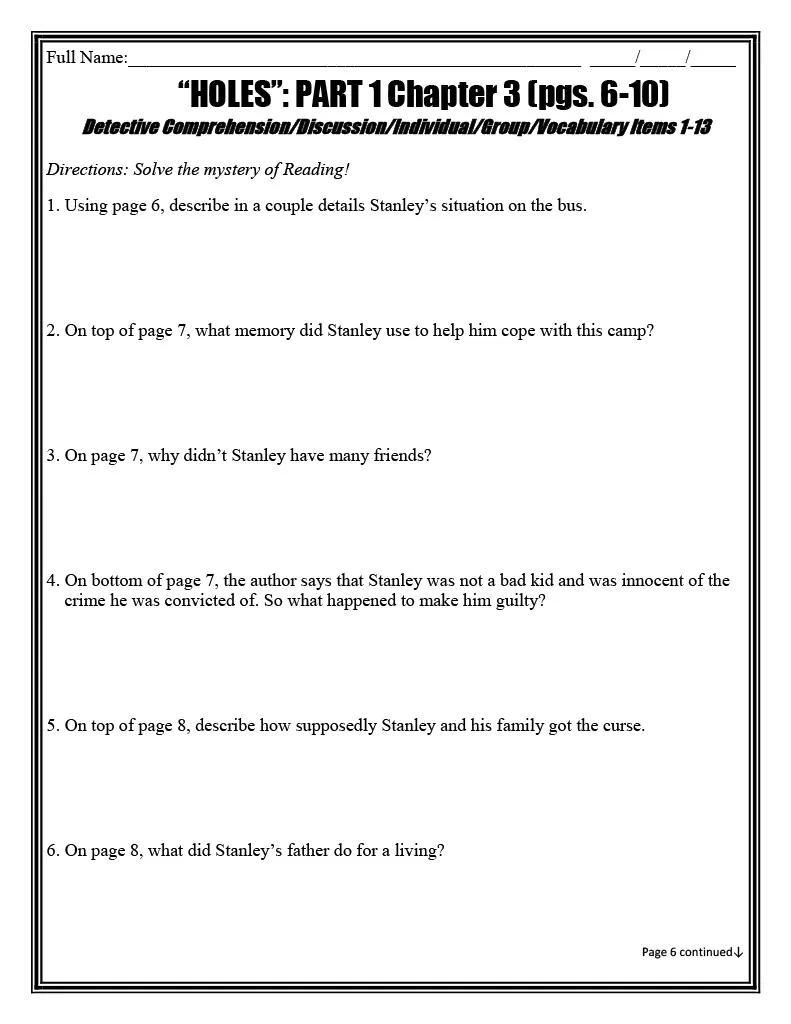
Reading comprehension — students answer chapter-specific evidence and plot questions for each of 49 chapters.
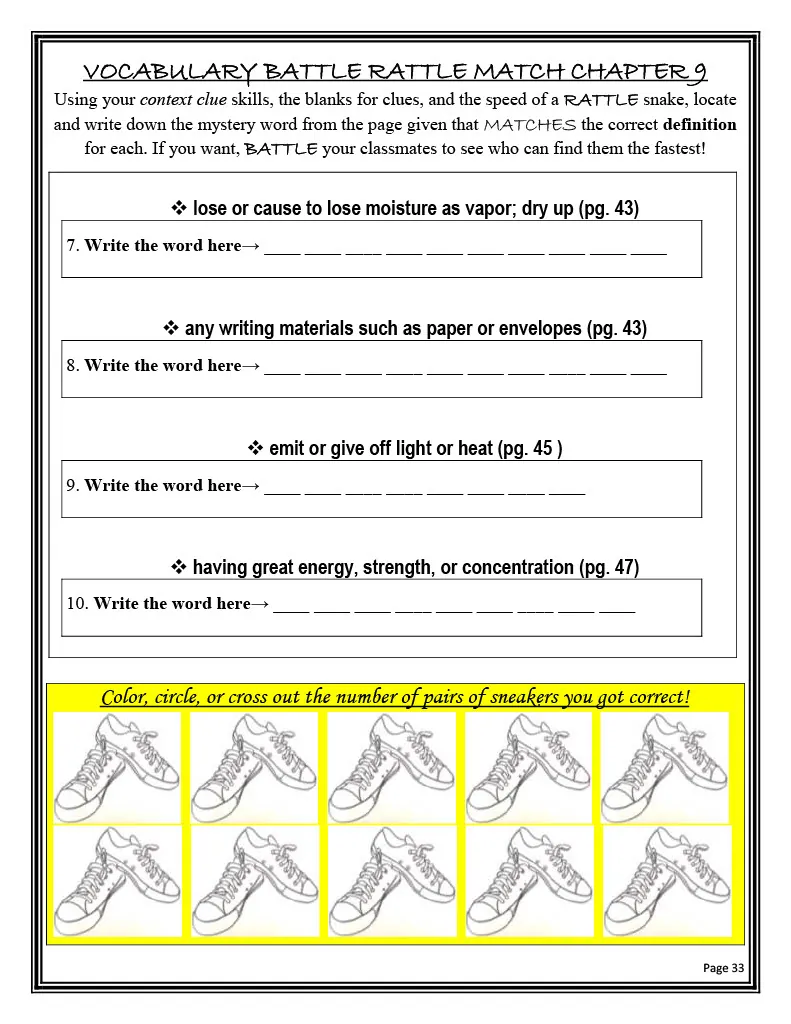
Context-clue vocabulary — students match 50 vocabulary words per set of ten chapters to their definitions using context clues.
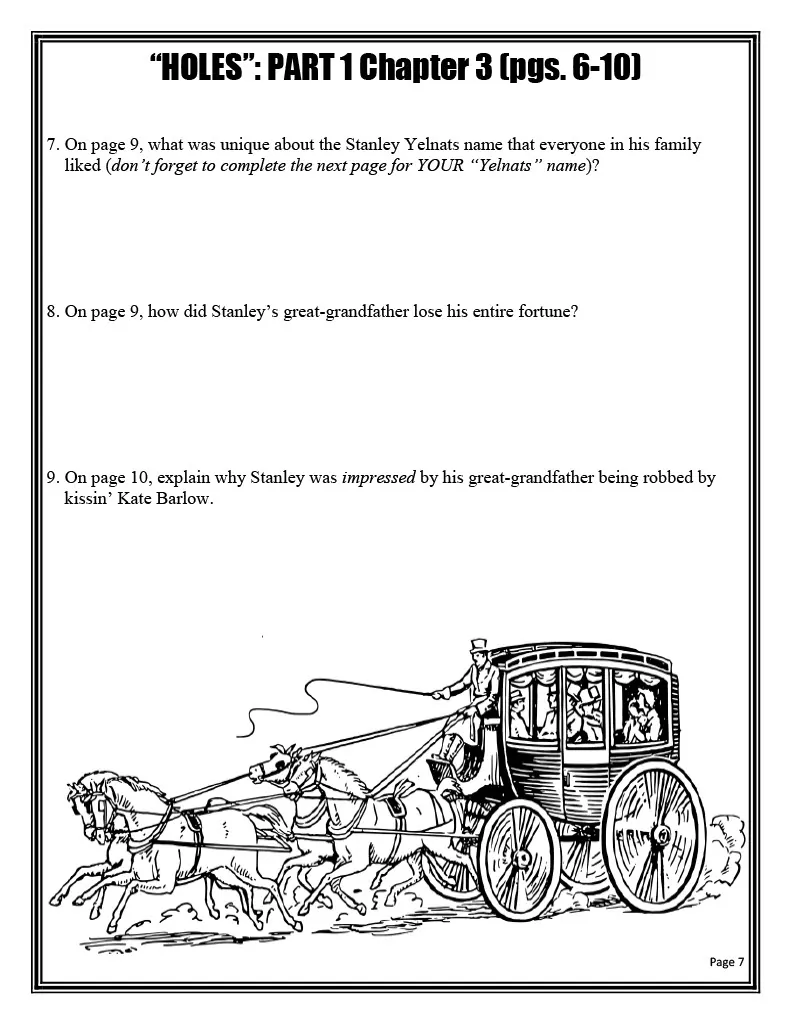
Historical and cross-curricular research — students use seven pages of background facts on topics like rattlesnakes and the FBI to answer quiz questions tied to specific chapters.
Good to know
Questions teachers ask about this resource
What is the "Souvenir Walking Tour" activity referenced throughout the teacher instructions?
Students circulate the room reading their answers to classmates, "collect" answers they like as a souvenir, and then the class reviews the correct answer together, an engagement activity suggested after worksheets or quizzes.
How do the Student Historical Reference Pages connect to the chapter quizzes?
They supply background facts, such as on rattlesnakes, stagecoaches, and the FBI, tied to specific chapters that the quizzes later draw on for textual evidence and cross-curricular questions.

No reviews yet
Downloaded this resource? Tell other teachers how it went.
Curriculum
Standards, concepts & topics
Standards
 Standards
- CCSS.W.5.9 — Draw evidence from literary or informational texts to support analysis, reflection, and research. a. Apply grade 5 Reading standards to literature (e.g., “Compare and contrast two or more characters, settings, or events in a story or a drama, drawing on specific details in the text [e.g., how characters interact]”). b. Apply grade 5 Reading standards to informational texts (e.g., “Explain how an author uses reasons and evidence to support particular points in a text, identifying which reasons and evidence support which point[s]”).
- CCSS.RL.5.6 — Describe how a narrator’s or speaker’s point of view influences how events are described
- CCSS.L.5.4 — Determine or clarify the meaning of unknown and multiple-meaning words and phrases based on grade 5 reading and content, choosing flexibly from a range of strategies. a. Use context (e.g., cause/effect relationships and comparisons in text) as a clue to the meaning of a word or phrase. b. Use common, grade-appropriate Greek and Latin affixes and roots as clues to the meaning of a word (e.g., photograph, photosynthesis). c. Consult reference materials (e.g., dictionaries, glossaries, thesauruses), both print and digital, to find the pronunciation and determine or clarify the precise meaning of key words and phrases.
Core concepts
 Core concepts
novel study
reading comprehension
vocabulary in context
theme
textual evidence
 Topics
Explore related searches
More to explore
You may also like