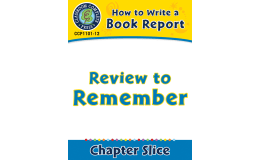
How to Write a Book Report: Oral Book Reports



- Grades
- Grades 5–8
- Pages
- 24
- File type
- Answer key
- Included


- Subject
- ELA, Reading
- Topic
- Listening skills, Speaking skills
- Resource types
- Presentations
- Answer key
- Included
- Standards
- CCSS.SL.5.4
Product description
From the author
This 24-page chapter slice helps students in Grades 5–8 plan and deliver an oral book report. It combines vocabulary work, a reading passage, report notes and an eight-item self-assessment checklist with six open-ended writing tasks.
The PDF also includes a crossword, word search, two-part comprehension quiz, answer guidance, an assessment rubric and six color organizer/research pages. Use the activities with a book students have read; the book itself is supplied separately.
Select the tasks that fit your lesson. The oral-report guidance supports organization, eye contact, pacing and use of visual aids.
Related resources
More resources teachers may find useful
24 related resources were found using this product's title, contributor, categories and tags.


In the classroom
Teaching tips & learning objectives

Learning objectives
Define key book-report and oral-presentation vocabulary (introduction, body, conclusion, theme, audience profile, transitions, visual aids, pacing).
Structure and deliver an oral book report in three parts -- introduction, body, and conclusion -- using the resource's step-by-step process.
Demonstrate comprehension of book-report concepts through a two-part quiz covering short-answer, true/false, and multiple-choice questions.

Teaching tips
Use the Assessment Rubric (page 4) alongside any of the writing tasks or graphic organizers -- it scores introduction, main characters, setting, problem/conflict, final outcome, and grammar/mechanics across four levels.
The Oral Book Report Checklist (printed page 8; PDF page 9) works well as a self-assessment students complete right after rehearsing, before presenting to the class.
Since the resource is built around Bloom's Taxonomy (page 3 maps every chapter's questions to one of six thinking levels), use that page to select or supplement questions matched to the level you want to target.

Skills covered
Oral presentation structuring — students learn to organize a report into introduction, body, and conclusion using a dedicated graphic organizer.
Vocabulary application — matching, crossword, and word-search activities reinforce book-report and oral-presentation terms.
Extended writing — six open-ended writing tasks apply book-report concepts to varied creative formats (author letter, diary entry, autobiography, ad script, review critique, quote collection).
Good to know
Questions teachers ask about this resource
Does this focus only on oral presentations, or does it also cover writing a book report?
The reading passage and checklist center on delivering an oral book report, but the resource also includes five additional graphic organizers (a five-paragraph outline, a fiction characterization organizer, a display template, and more) for planning and writing a traditional book report.

No reviews yet
Downloaded this resource? Tell other teachers how it went.
Curriculum
Standards, concepts & topics
Standards
 Standards
- CCSS.SL.5.4 — Report on a topic or text or present an opinion, sequencing ideas logically and using appropriate facts and relevant, descriptive details to support main ideas or themes; speak clearly at an understandable pace.
Core concepts
 Core concepts
Oral book reports
Presentation skills
Book report structure
Vocabulary
Bloom's Taxonomy
 Topics
Explore more
Categories this resource belongs to
Explore related searches
More to explore
You may also like