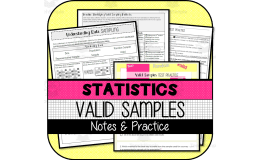
Inferences from Random Samples NOTES & PRACTICE


- Grades
- Grade 7, Middle School
- File type
- Preparation
- Print ready


- Subject
- Math, Statistics
- Topic
- inferences, notes
- Resource types
- Activities
- Preparation
- Print ready
About this resource
What's inside this resource
This resource was developed to meet the requirements of the 7th Grade Statistics & Probability Standard below:
CCSS.MATH.CONTENT.7.SP.A.2
Use data from a random sample to draw inferences about a population with an unknown characteristic of interest. Generate multiple samples (or simulated samples) of the same size to gauge the variation in estimates or predictions. For example, estimate the mean word length in a book by randomly sampling words from the book; predict the winner of a school election based on randomly sampled survey data. Gauge how far off the estimate or prediction might be.
Related resources
More resources teachers may find useful
24 related resources were found using this product's title, contributor, categories and tags.
In the classroom
Teaching tips & learning objectives

Learning objectives
- Use data from a random sample to estimate a population value
- Calculate percentages from sample survey results
- Explain whether a sample is valid for making an inference

Teaching tips
- The Google Forms test practice is linked, so students need internet access to use it.

Skills covered
- Proportional reasoning — scaling sample survey results up to a population
- Evaluating samples — answering a discussion question about sample validity

No reviews yet
Downloaded this resource? Tell other teachers how it went.
Resource details
Concepts & topics
Core concepts
 Core concepts
- Random sample
- Population
- Inference
- Proportional reasoning
Topics
 Topics
Explore more
Categories this resource belongs to
Explore related searches
More to explore
You may also like