Labeling Parts of a Flower
- Grades
- Grades 5–7, Middle School, Elementary
- File type
- Preparation
- Print ready


- Subject
- Science, Life Sciences, Nature & Plants, Basic Science
- Topic
- parts of a flower, labeling a flower
- Resource types
- Parts of and Anatomy of, Worksheets & Printables
- Preparation
- Print ready
About this resource
What's inside this resource
This beautiful Labeling Parts of a Flower resource is a set of worksheets will help your students identify and understand the function of each part of a flower.
Perfect for students to remember the location of each part and for vocabulary retention.
Included in this Labeling Parts of a Flower are:
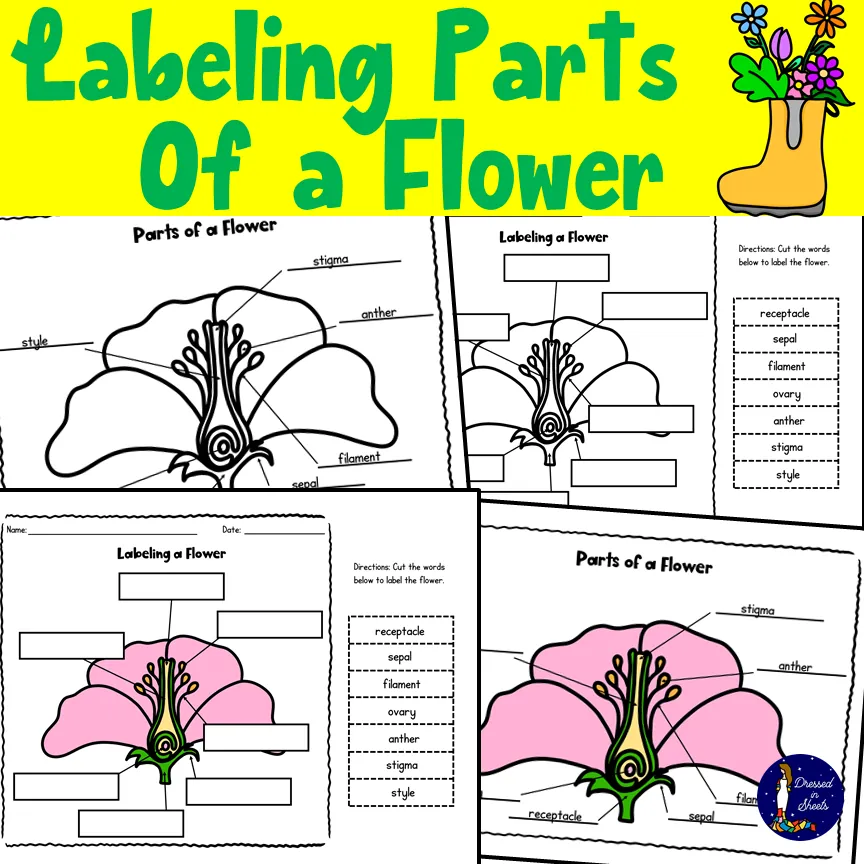
- Parts of a Flower Poster in B&W
- Parts of a Flower Poster in color
- Labeling parts of a flower cut and glue activity
- Labeling parts of a flower cut and glue activity in color
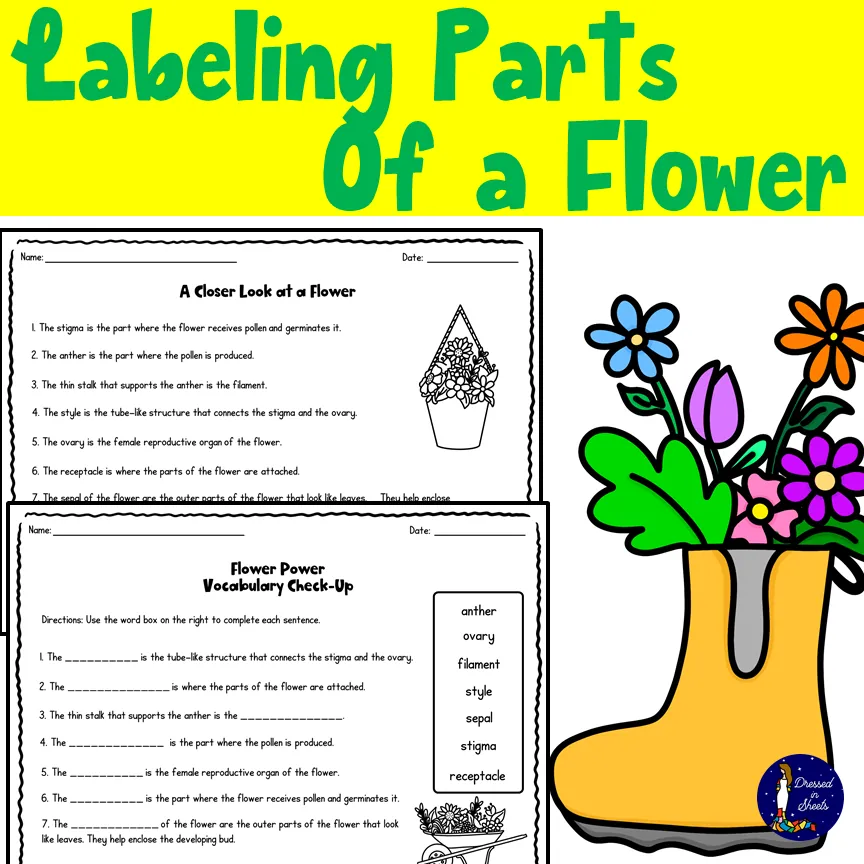
- A reading handout for students to read about what each part does and be able to locate it in the diagram as they read.
- Flower power vocabulary check-up
- answer key
In this Labeling Parts of a Flower resource, the flower power vocabulary check-up activity includes the following vocabulary terms:
- anther
- ovary
- filament
- style
- sepal
- stigma
- receptacle.
This resource was designed for students in middle schools or higher elementary school grades. Check the thumbnails to see how your students can benefit from this Labeling Parts of a Flower resource.
Thank you!
Related resources
More resources teachers may find useful
24 related resources were found using this product's title, contributor, categories and tags.


In the classroom
Teaching tips & learning objectives

Learning objectives
Label the seven main parts of a flower (stigma, style, anther, filament, ovary, sepal, receptacle) on a diagram.
Define the function of each flower part, including the composite structures stamen and pistil.
Complete fill-in-the-blank definition sentences using correct flower-part vocabulary, then self-check against the included answer key.

Teaching tips
Use the two identical cut-and-label activity copies as a first attempt and a corrected retry, since the diagram and word bank are identical on both pages.
Introduce stamen and pistil only after students have mastered the seven individually labeled parts, since both terms combine parts already covered (stamen = anther + filament; pistil = stigma + style + ovary).
Have students self-check their completed vocabulary check-up against the included answer key before submitting it for a grade. Extend the labeling with discussion prompts in this flower parts worksheet.

Skills covered
Flower-part identification — students label a diagram with the seven parts (stigma, style, anther, filament, ovary, sepal, receptacle).
Reproductive-structure vocabulary — students learn that stamen and pistil are composite terms combining several individually labeled parts.
Definition-based vocabulary recall — students complete fill-in-the-blank sentences naming each flower part from its function, then verify answers against the included key.
Good to know
Questions teachers ask about this resource
How do the terms "stamen" and "pistil" relate to the seven parts labeled on the diagram?
Stamen and pistil are composite terms introduced on the "Closer Look" page rather than individually labeled on the diagram: the stamen is the anther together with its supporting filament, and the pistil is the ovary, stigma, and style together.

No reviews yet
Downloaded this resource? Tell other teachers how it went.
Resource details
Concepts & topics
Core concepts
 Core concepts
Flower anatomy
Plant reproduction
Vocabulary
 Topics
Explore related searches
More to explore
You may also like