Letter K Do A Dot


- Grades
- Preschool–K
- Pages
- 8
- File type
- Preparation
- Print ready


- Subject
- ELA, Vocabulary, Language Development
- Topic
- Letter K, Alphabet Theme
- Resource types
- Activities
- Preparation
- Print ready
- Standards
- RF.K.3.a
Product description
From the author
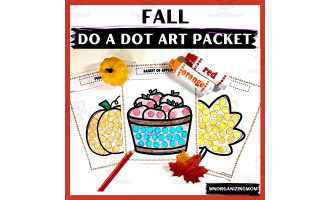
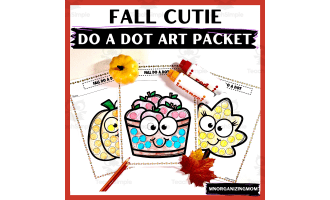
Letter K Do A Dot Art Packet is an engaging teaching resource for early childhood educators working with pre-k, kindergarten, or special needs students. This interactive packet features 7 black-and-white dot-art worksheets centered around the letter K. Students practise fine motor skills and hand-eye coordination as they use do-a-dot markers to fill in spaces on worksheets showing images of objects that start with the K sound, like kangaroos, kings, and keys. Educators can incorporate these activities into small groups, whole class instruction, morning work, or indoor recess. The versatility of this packet allows it to be used creatively across classroom settings to help young learners build foundational literacy skills. As students exert pressure to open markers and fill in dots, they will gain practice with bilateral coordination to prepare them for future handwriting tasks. This simple, straightforward tool shows learning can be interactive and fun.
Related resources
More resources teachers may find useful
24 related resources were found using this product's title, contributor, categories and tags.


In the classroom
Teaching tips & learning objectives

Learning objectives
Recognise the capital letter K in a large bubble-letter form
Connect the letter K to six words that begin with it - kangaroo, key, koala, king, kite and kiwi
Place a mark accurately inside a small printed circle using a dot marker, a sticker or a crayon

Teaching tips
Three-quarter-inch Avery circle stickers are named on the cover as an alternative to markers, which suits a child still building the grip strength a dot marker needs
Writing a target letter, number or shape into some circles and leaving others blank converts a finished-looking page into a discrimination task, so one print can serve twice
The bubble-letter page makes a natural first sheet and the six picture pages follow in any order, so a single page can fill a short morning slot without committing to the whole packet

Skills covered
Letter recognition - a full-page bubble-letter K and six K-initial pictures hold the target letter in view across every page of the packet.
Initial-sound vocabulary - each page is labelled kangaroo, key, koala, king, kite or kiwi, giving the adult six words to name as the child dots.
Fine-motor control - filling a printed circle with a dot marker, a crayon or a three-quarter-inch sticker asks the child to place a mark inside a small bounded shape.
Good to know
Questions teachers ask about this resource
What can be used to fill the circles besides dot markers?
The cover names three-quarter-inch Avery circle stickers as a direct substitute, crayons used alongside the markers, and mixing more than one medium on the same page.

No reviews yet
Downloaded this resource? Tell other teachers how it went.
Curriculum
Standards, concepts & topics
Standards
 Standards
- RF.K.3.a
Core concepts
 Core concepts
Letter recognition
Alphabet
Fine motor skills
 Topics
Explore more
Categories this resource belongs to
Explore related searches
More to explore
You may also like