


Male & Female Reproductive Systems – Health Unit



- Grades
- Grades 8–10, Middle School, High School
- Pages
- 9
- File type
- Answer key
- Included


- Subject
- P.E. & Health, Health
- Topic
- Female reproductive system, Male reproductive system
- Resource types
- Lesson Plans, Teacher Tools
- Answer key
- Included
About this resource
What's inside this resource
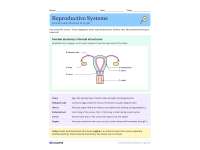
Students in grades 8–10 connect each structure of the male and female reproductive systems to its job, then use those connections to explain how gametes, fluids and key events fit together. Two fact sheets open the unit: a simplified front cutaway of the female internal anatomy and a side cutaway of the male anatomy, each with a labeled diagram and a table of functions. Notes on both pages point out that the diagrams are not to scale, that bodies vary and that no personal sharing is required.
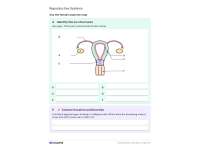
A short reading then covers sperm and eggs, semen, ovulation, fertilization, implantation and menstruation, followed by three guided questions. Students label lettered versions of both diagrams (six female and eight male structures), trace the sperm pathway in order, correct two common misconceptions, and finish with written explanations, such as why the urethra belongs to two body systems and why fertilization and implantation are separate events.
- Grades 8–10: health or biology, clinical and scientific in tone
- Nine pages: two fact sheets, five student pages with 14 tasks, a two-lesson teacher guide and a one-page answer key
- Print options: a full-color PDF and a print-friendly black and white PDF
Related resources
More resources teachers may find useful
24 related resources were found using this product's title, contributor, categories and tags.



In the classroom
Teaching tips & learning objectives

Learning objectives
Identify the main internal structures of the female reproductive system and describe the function of each.
Identify the main structures of the male reproductive system and describe the function of each.
Trace the path sperm take from the testis to the urethra.

Teaching tips
Read pages 1 and 2 together first and follow each leader line to its dot before students try the lettered diagrams on pages 4 and 5.
Let students use the fact sheets for tasks 4–9, then ask them to try tasks 10–14 without the references and check afterward.
Set out anonymous question slips, as the teacher guide suggests, and route personal health questions privately to a school health professional.

Skills covered
Anatomy identification: students label six female and eight male structures on lettered diagrams that match the fact sheets.
Structure and function: students connect each organ or gland to its job, such as the epididymis storing maturing sperm.
Sequencing: students order ovulation, fertilization and implantation, and trace the sperm pathway from testis to urethra.
Good to know
Questions teachers ask about this resource
What grade level is this unit for?
It is written for grades 8–10 health or biology. The language is clinical and scientific, and no task asks students to share personal information.
Which structures are labeled on the diagrams?
The female diagram shows the ovary, fallopian tube, uterus, endometrium, cervix and vagina. The male diagram shows the testis, epididymis, vas deferens, seminal vesicle, prostate, urethra, penis and scrotum.
Is there an answer key?
Yes. Page 9 gives the expected answer for all 14 tasks, including both sets of diagram letters.
Does it include lesson plans?
Page 8 is a teacher guide for two lessons: one on mapping structures and functions, and one on pathways and processes, with notes on assessment and support.

No reviews yet
Downloaded this resource? Tell other teachers how it went.
Resource details
Concepts & topics
Core concepts
 Core concepts
reproductive system
human anatomy
gametes
fertilization
implantation
menstrual cycle
structure and function
Topics
 Topics
Explore more
Categories this resource belongs to
Explore related searches
More to explore
You may also like


