Piranhas Don't Eat Bananas: Language-Literacy Book Companion Packet



- Grades
- K–2
- Pages
- 21
- File type
- Preparation
- Print ready


- Subject
- ELA, Literature
- Topic
- Piranhas Don't Eat Bananas, Food vocabulary
- Resource types
- Activities
- Preparation
- Print ready
- Standards
- RL.1.1
Product description
From the author
Related resources
More resources teachers may find useful
24 related resources were found using this product's title, contributor, categories and tags.


In the classroom
Teaching tips & learning objectives

Learning objectives
Answer who, where and what questions about the story by choosing from three pictured options
Use the core words we, eat and don't to comment, request and protest during a shared reading
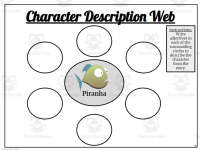
Describe the piranha, the banana and the human by writing adjectives into a description web

Teaching tips
Run the picture walk before any reading — the guidance page directs you to name what is on the front cover, discuss title, author, illustrator, front cover, back and spine, and to make predictions without reading the text at all
Cut the CROWD cards out and paperclip them to the book pages they name, or cut them into a bookmark, as the card page itself suggests
Print the fringe vocabulary page once per small group: the same ten words repeat in five identical strips, so each student can have a set

Skills covered
Rhyme recognition — students draw lines between the book's own rhyming pairs, joining peas to knees, plum to bum and silverbeet to feet.
Core-word practice — the packet isolates we, eat and don't and lists AAC targets grouped as requests, directing actions, commenting, protesting and questions.
Descriptive vocabulary — students write adjectives into the circles surrounding the Piranha, Banana and Human webs to describe a character or story element.
Good to know
Questions teachers ask about this resource
How do the CROWD cards connect to the book itself?
Each CROWD card identifies its matching book page. Cut out the cards to paperclip beside those pages, or arrange them as a bookmark.
How are the core words and the fringe strips meant to be used together?
The core page isolates three words the book repeats — we, eat and don't — for modelling on a device or board, while the fringe page carries the book-specific nouns and describing words. Those ten fringe words are printed as five identical strips down the page, so a strip can be cut for each student in a group.
Does the vocabulary follow the book's original wording?
Yes — the words are taken from the story rather than swapped for North American equivalents. Silverbeet appears both on the fringe strips and in the rhyming worksheet, where it pairs with feet, and bum is one of the rhyme partners for plum.

No reviews yet
Downloaded this resource? Tell other teachers how it went.
Curriculum
Standards, concepts & topics
Standards
 Standards
- RL.1.1
Core concepts
 Core concepts
Shared reading
Core vocabulary (AAC)
Rhyming
Story retell
WH questions
 Topics
Explore more
Categories this resource belongs to
Explore related searches
More to explore
You may also like