Posters: Making Inferences
- Grades
- Grades 3–6, Middle School, Elementary
- File type
- Preparation
- Print ready


- Subject
- ELA, Reading, Writing
- Topic
- Inferences, Character interpretation
- Resource types
- Posters, Classroom Decor
- Preparation
- Print ready
Product description
From the author
Posters: Making Inferences, is a comprehensive teaching resource designed to enrich Language Arts classes for grades 3 through 6.. This resource has been tailored specifically for educators such as public school teachers and homeschooling parents, helping them enhance their students' reading comprehension, writing skills, and critical analysis abilities.
About this educational material:
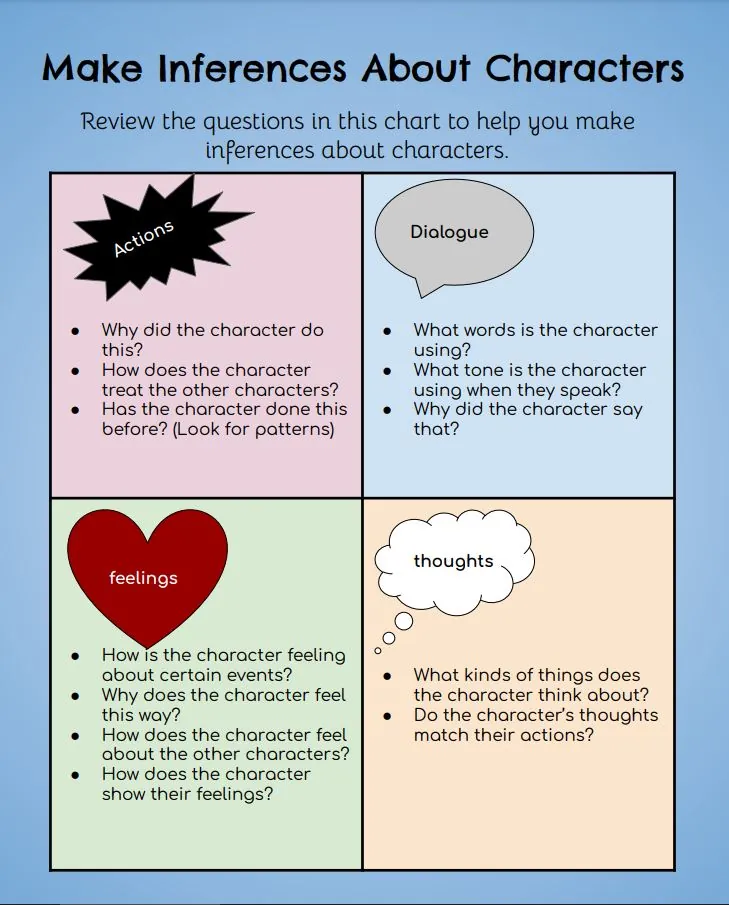
This unique tool promotes thoughtful engagement with text. It pushes students to extract character-related details from various cues including actions, feelings, thoughts and both direct or indirect statements about them.
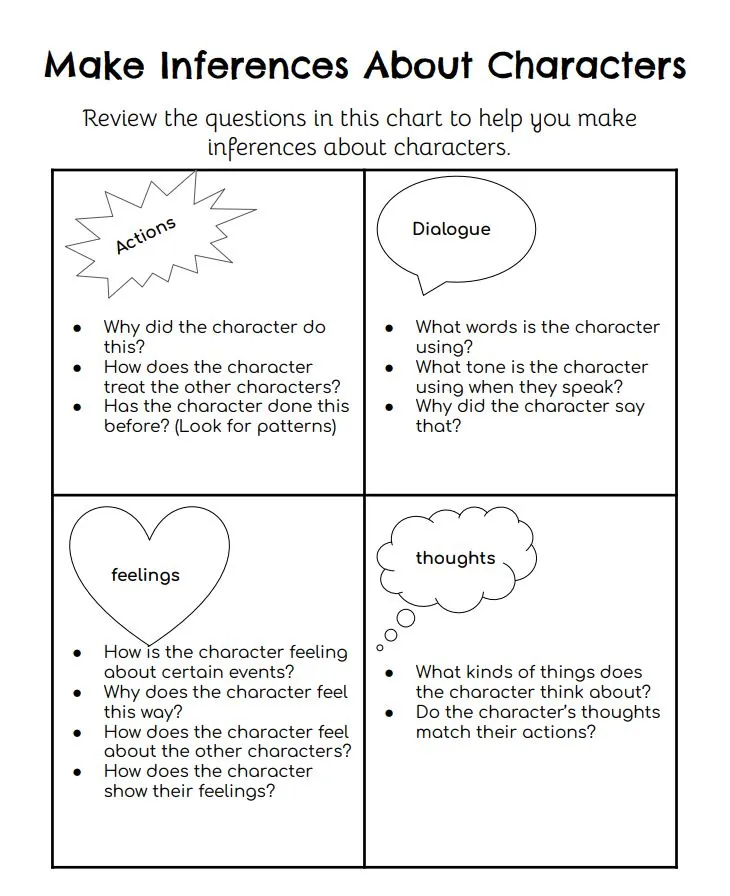
The package includes guiding questions that promote a deeper understanding of characters while fostering active participation during class discussions or study sessions.
Inclusions:
A vibrantly colored page which stimulates visual interest in group discussions
A monochromatic version that encourages focus during homework assignments or independent studies.
Format:
The resource package is available in PDF format ensuring it's compatible across devices and suitable for easy printing.
Versatility:
The materials are versatile enough to be used in whole class interactions where students collaboratively analyze characters; small scale tutoring sessions with individualized attention; or as regular homework assignments enabling abstract thinking application outside classroom setup.
In Summary, like adding depth to your Language Art lessons? 'Making Inferences' proves essential- Teachers develop knowledge transfer methods fitting the pacing of each child individually within the guides provided by our worksheets thus reinventing ways we educate making it an invaluable tool.
Related resources
More resources teachers may find useful
24 related resources were found using this product's title, contributor, categories and tags.



In the classroom
Teaching tips & learning objectives

Learning objectives
Students generate inference questions about a character's actions, dialogue, feelings, and thoughts.
Students distinguish between types of textual evidence (what a character does, says, feels, and thinks) when analyzing a character.

Teaching tips
Post the chart during a read-aloud or independent reading unit so students can reference specific quadrant questions while discussing a character.
Use the four quadrants as sentence starters for a written character analysis rather than requiring students to answer every listed question.

Skills covered
Character inference — students use guiding questions across four categories to draw conclusions about a character not stated directly in a text.
Textual evidence categorization — students sort observations about a character by evidence type (actions, dialogue, feelings, or thoughts).
Good to know
Questions teachers ask about this resource
How are the four question categories meant to work together?
Rather than answering every question, a student can select one or two per quadrant — actions, dialogue, feelings, and thoughts — to build a rounded picture of a character from multiple types of evidence.

No reviews yet
Downloaded this resource? Tell other teachers how it went.
Resource details
Concepts & topics
Core concepts
 Core concepts
character inference
textual evidence categories
 Topics
Explore more
Categories this resource belongs to
Explore related searches
More to explore
You may also like