24 related resources

"Progressive Era No. 2", Regents US History Short Essays

Regents-style document-based short essay tasks pair Progressive Era primary sources with a six-band scoring rubric, asking students to analyze historical relationships or source reliability.
Grades
Grades 10–12
File type
PDF
Preparation
Print ready

Updated Feb 21, 2024

Subject
Social Studies, ELA, History, History: USA, Writing, Formal Writing
Topic
new york state, dbq
Resource types
Assessments, DBQ's, Rubrics
Preparation
Print ready

About this resource

What's inside this resource

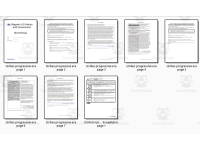
A Regents-style short-essay assessment presents two sets of primary-source documents on labor and immigration during the Progressive Era -- an excerpt from Jacob Riis's 'How the Other Half Lives,' an 1902 newspaper bulletin, an 1886 newspaper article, and a Pullman Strikers' statement -- and asks students to write a two-to-three-paragraph essay analyzing the historical context and the cause-and-effect, similarity/difference, or turning-point relationship between the documents. A second version of the task asks students instead to analyze one document's reliability by considering its audience, purpose, or bias. A six-band scoring rubric (from a 55-point response through a 100-point response) defines what separates a primarily descriptive essay from one that is 'richly' analytical and well-supported by the documents. The resource includes the task prompts, source citations, and rubric, but no student model essay or answer key, since short-essay responses are open-ended by design. Teachers assembling a full year of Regents-style document analysis can pair this with the Alien and Sedition Acts primary source analysis, which applies the same close-reading and reliability-evaluation skills to Federalist-era documents from 1798.

In the classroom

Teaching tips & learning objectives

Learning objectives

  • Describe the historical context surrounding a pair of primary source documents from the Progressive Era.

  • Explain a cause-and-effect, similarity/difference, or turning-point relationship between two historical documents.

  • Evaluate a document's reliability by considering its audience, purpose, or point of view.

  • Write a two-to-three-paragraph short essay well-supported by specific evidence from the source documents, per the included scoring rubric.

Teaching tips

  • Share the six-band scoring rubric with students before they write, since it specifies exactly what separates a descriptive response from an analytical one.

  • Use Set 1 (Riis excerpt + 1902 bulletin) for the cause-and-effect/relationship task and Set 2 (1886 article + Pullman Strikers statement) for the source-reliability task, since the two document sets are paired with different tasks in the file.

  • Review the cited primary-source URLs (Library of Congress, Hanover College) with students so they understand these are authentic historical documents rather than textbook summaries.

Skills covered

  • Primary source analysis -- students read excerpts from Jacob Riis's writing and period newspaper articles to identify historical context around Progressive Era labor conditions.

  • Document-based essay writing -- students write a two-to-three-paragraph essay establishing a cause-and-effect, similarity/difference, or turning-point relationship between two historical documents.

  • Source reliability evaluation -- in the second task variant, students analyze how a document's audience, purpose, or point of view affects its reliability as historical evidence.

Good to know

Questions teachers ask about this resource

The file includes two versions of the short-essay task using different document sets -- what's the difference between them?

The first version asks students to describe historical context and explain a relationship (cause/effect, similarity/difference, or turning point) between Set 1's documents; the second, using Set 2, instead asks students to analyze how audience, purpose, or bias affects one document's reliability as a source.

What license governs reuse of this resource?

The file states it is 'licensed under a Creative Commons Attribution-NonCommercial-ShareAlike 4.0 International License' by author David Jones, 2023 -- a different licensing model than a standard single-classroom-use copyright notice.

No reviews yet

Downloaded this resource? Tell other teachers how it went.

Curriculum

Standards, concepts & topics

Standards

  • CCSS.W.10.9 — Draw evidence from literary or informational texts to support analysis, reflection, and research. a. Apply grades 9–10 Reading standards to literature (e.g., “Analyze how an author draws on and transforms source material in a specific work [e.g., how Shakespeare treats a theme or topic from Ovid or the Bible or how a later author draws on a play by Shakespeare]”). b. Apply grades 9–10 Reading standards to literary nonfiction (e.g., “Delineate and evaluate the argument and specific claims in a text, assessing whether the reasoning is valid and the evidence is relevant and sufficient; identify false statements and fallacious reasoning”).
  • CCSS.RI.10.6 — Determine an author’s point of view or purpose in a text and analyze how an author uses rhetoric to advance that point of view or purpose.
  • CCSS.W.10.4 — Produce clear and coherent writing in which the development, organization, and style are appropriate to task, purpose, and audience. (Grade-specific expectations for writing types are defined in standards 1–3 above.)

Core concepts

  • Progressive Era

  • primary source analysis

  • document-based essay

  • historical reliability

More to explore

You may also like