Solfege Street Spring Interactive Music Game




- Grades
- Grades 1–5
- Pages
- 10
- File type
- Microsoft PowerPoint
- Editable
- Yes


- Subject
- Music
- Topic
- Solfege, Music game
- Resource types
- Activities, Presentations
- Editable
- Yes
Product description
From the author
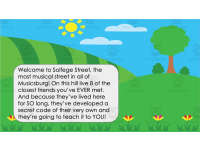
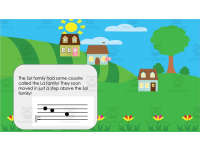
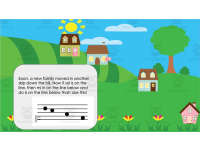
Solfege Street introduces sol, mi, la, do, re, fa and ti through a ten-slide written story about neighbors on a musical street. Their relative line-and-space positions build toward a closing do-to-do scale.
Read the story aloud, demonstrate the hand signs at the supplied teacher cue and add singing or further demonstrations to suit the class. The native PowerPoint can be adapted for teacher-led music instruction.
Related resources
More resources teachers may find useful
24 related resources were found using this product's title, contributor, categories and tags.



In the classroom
Teaching tips & learning objectives

Learning objectives
Recognize and name the solfege syllables do, re, mi, fa, sol, la, and ti in sequence
Relate each solfege syllable's staff position (line or space) to its neighbors

Teaching tips
Pause on slide 3 for the explicit teacher hand-sign demonstration. You can add further demonstrations as you introduce later syllables.
Revisit the line-and-space relationships before singing the closing do-to-do scale.

Skills covered
Solfege syllable recognition — students meet each syllable (sol, mi, la, do, re, fa, ti) introduced one at a time through the street narrative.
Staff-position reasoning — students learn each syllable's line-or-space position relative to the syllables introduced before it.
Hand-sign association — students associate the teacher-modeled signs with syllables; extend the slide 3 cue as needed.

No reviews yet
Downloaded this resource? Tell other teachers how it went.
Resource details
Concepts & topics
Core concepts
 Core concepts
Solfege syllables
Staff line and space position
Curwen-style hand signs
Topics
 Topics
Explore more
Categories this resource belongs to
Explore related searches
More to explore
You may also like