Tangram Tile Activity



- Grades
- Preschool–1, Elementary
- Pages
- 26
- File type
- Preparation
- Print ready


- Subject
- Math, Numbers, Early Math, Counting
- Topic
- Tangram puzzles, Spatial reasoning
- Resource types
- Activities
- Preparation
- Print ready
- Standards
- K.CC.B.5
Product description
From the author
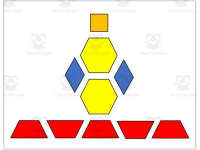
The Tangram Tile Activity is an early-learner pack for counting and copying designs with pattern-block tiles. It uses yellow hexagons, blue rhombuses, orange squares, red trapezoids, green triangles and white diamonds; it is not a traditional seven-piece tangram set.
Five counting pages show groups for 1–10, two per page. Nineteen design pages range from simple arrangements to larger patterns and pictures. The 26-page PDF also includes a cover and a blank final page. Supply matching physical tiles separately.
Use the counting cards with preschool, kindergarten or early grade 1 learners, then select designs to suit their experience with matching and arranging shapes. Introduce shape names through the pictured groups and model placing tiles to match a design.
For another activity, see the linked tangram puzzle resource.
Related resources
More resources teachers may find useful
24 related resources were found using this product's title, contributor, categories and tags.


In the classroom
Teaching tips & learning objectives

Learning objectives
Count out a set of one to ten identical blocks to match a printed numeral
Identify the pictured tile types by shape and colour, including the two differently shaped rhombus/diamond tiles
Recognise the digits 1 through 10 in order, meeting each digit next to the quantity it stands for

Teaching tips
Each card names the exact block wanted, so check the set on hand before the lesson: it needs up to five yellow hexagons plus blue rhombuses, orange squares, red trapezoids, green triangles and white diamonds
The shape stays constant for the first five numbers and only changes from six onward, which gives a settled start before colour and shape both begin to vary
The cards picture and label each group. Pair them with matching tiles so children can compare a concrete set with the picture and numeral

Skills covered
Counting to ten with objects - each card gives a numeral from 1 to 10 and names the block to count out, so a child builds the set rather than reading about it.
Naming tile shapes - the cards use hexagon, rhombus, square, trapezoid, triangle and diamond as shape words, one per number from six onward.
Attending to two attributes at once - every block is named by colour and shape together (yellow hexagon, blue rhombuses, orange square's, red trapezoid's), so choosing the right tile means matching both.

No reviews yet
Downloaded this resource? Tell other teachers how it went.
Curriculum
Standards, concepts & topics
Standards
 Standards
- K.CC.B.5
Core concepts
 Core concepts
Counting to 10
Pattern blocks
2D shapes
 Topics
Explore more
Categories this resource belongs to
Explore related searches
More to explore
You may also like