The Einstein Code
- Grades
- Grades 5–6
- Pages
- 66
- File type
- Answer key
- Included


- Subject
- ELA, Reading Comprehension, Math
- Topic
- Einstein Code, Biographies
- Answer key
- Included
- Standards
- RI.5.1
Product description
From the author
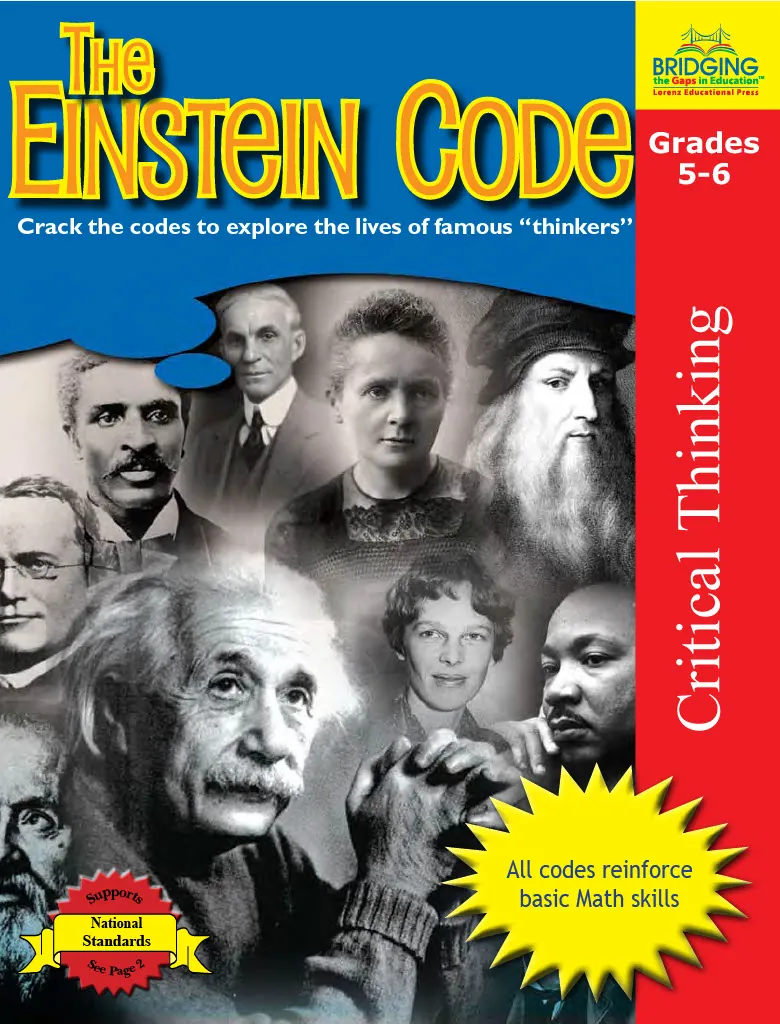
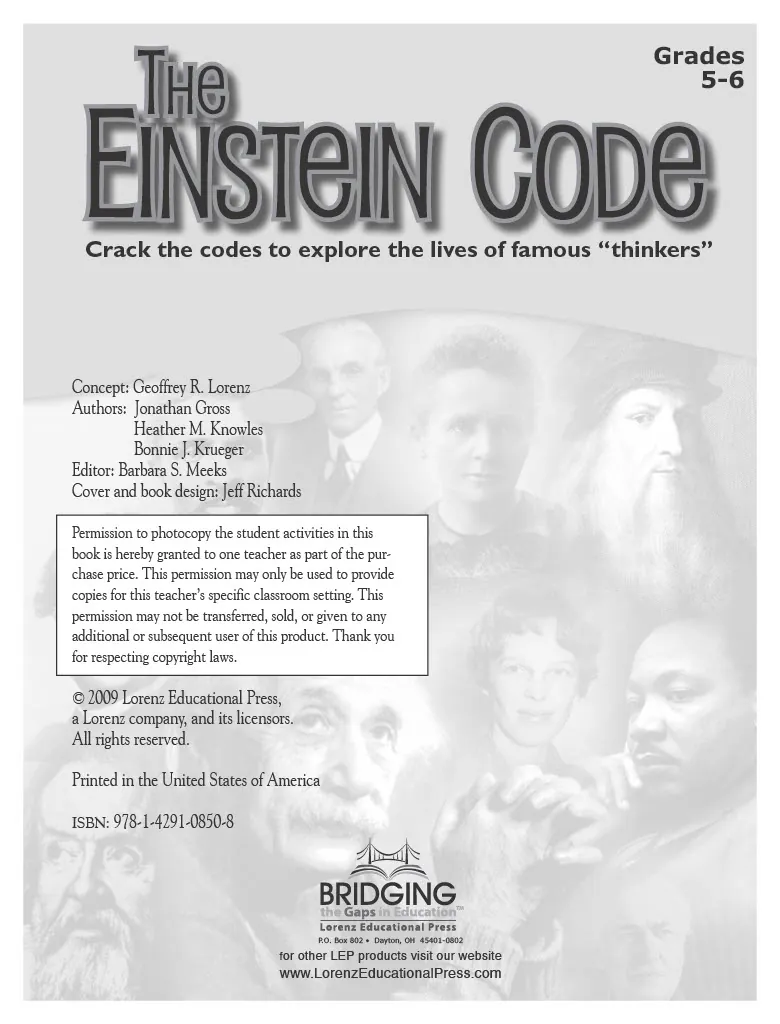
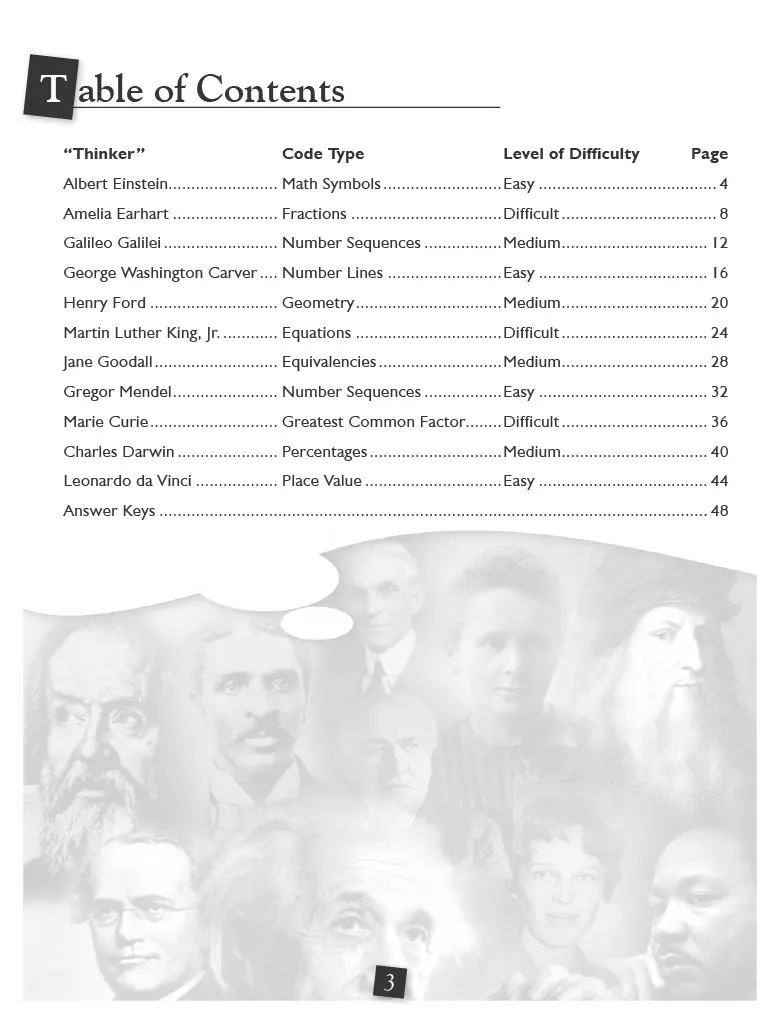
Read eleven biographies and use mathematical codes to uncover answers about notable thinkers, including Albert Einstein, Amelia Earhart, Jane Goodall and Marie Curie.
Each unit includes an illustrated biography, achievements and follow-up questions. Codes use skills such as fractions, number sequences, geometry, greatest common factor, percentages and place value; question counts vary. The directions explain how to use the first question as a clue to a code.
The PDF has 66 physical pages, including the front and back covers, with answer material at the back. Choose a unit to match the math your students are practising.
Related resources
More resources teachers may find useful
24 related resources were found using this product's title, contributor, categories and tags.

In the classroom
Teaching tips & learning objectives

Learning objectives
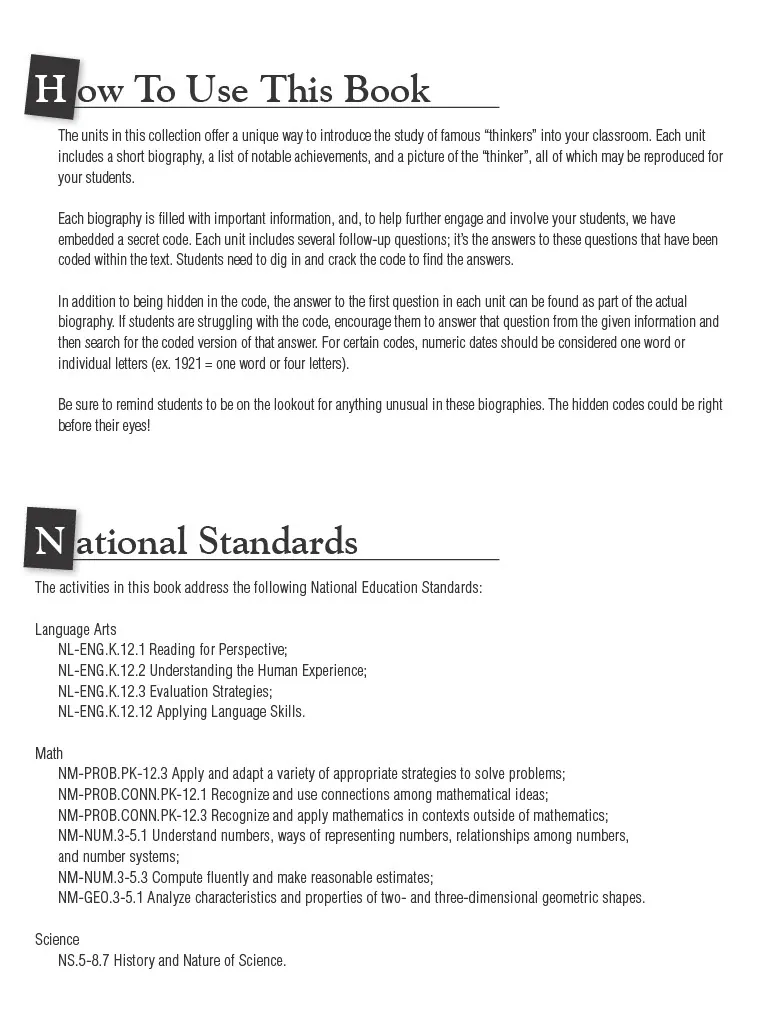
Decode a hidden message using the math operation specific to each unit (e.g., fractions, equations, place value, percentages).
Locate factual answers within a nonfiction biography through direct reading and through code-cracking.
Identify key achievements and life events of eleven historical figures across science, exploration, civil rights, and the arts.

Teaching tips
Assign a unit to match a current math topic — for example, the Charles Darwin unit uses percentages and the Marie Curie unit uses greatest common factor — so the code-cracking reinforces whatever operation students are already practicing.
The book's own directions note that the answer to each unit's first question can also be found directly in the biography text, so struggling students can use that question as an entry point before tackling the rest of the code.
Remind students the codes can appear anywhere in the biography, since the book specifically warns readers to watch for anything unusual because a hidden code 'could be right before their eyes.'

Skills covered
Biographical reading comprehension — students read an illustrated nonfiction biography and answer factual questions about each figure.
Applied math decoding — the units use varied math skills (fractions, equations, percentages, place value, greatest common factor, and more) to decrypt hidden answers.
Cross-checking strategy — students learn to verify a directly-stated answer against its coded counterpart in the text.
Good to know
Questions teachers ask about this resource
Which math skills do the codes use?
Each biography pairs with a math-based code; some code types recur — for example, the Einstein unit uses math symbols, the Amelia Earhart unit uses fractions, and the Charles Darwin unit uses percentages.
How can students get started if they're stuck on a code?
The book notes that the first question's answer can usually be found directly in the biography text, so students can answer it from the reading first and then search for its coded version to learn the pattern.

No reviews yet
Downloaded this resource? Tell other teachers how it went.
Curriculum
Standards, concepts & topics
Standards
 Standards
- RI.5.1
Core concepts
 Core concepts
Biography
Code-breaking
Applied math operations
Historical figures
 Topics
Explore more
Categories this resource belongs to
Explore related searches
More to explore
You may also like