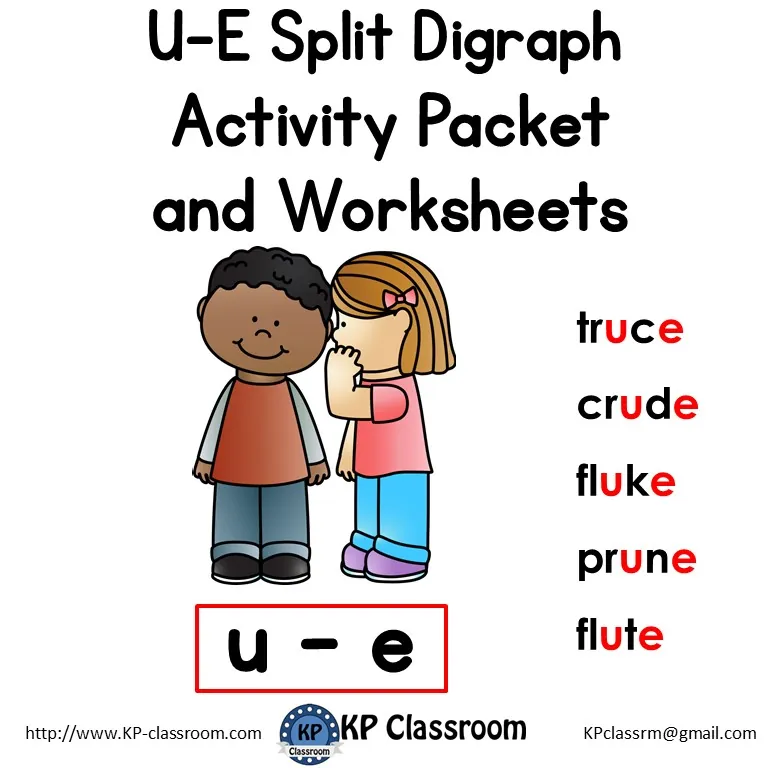
U-E Split Digraph Activity Packet and Worksheets
- Grades
- Grades 1–3, Elementary
- Pages
- 36
- File type
- Preparation
- Print ready


- Subject
- ELA, Reading, Phonics, Language Development, Spelling, Vocabulary
- Topic
- Digraph, Vowel
- Resource types
- Writing Prompts, Worksheets & Printables, Activities
- Preparation
- Print ready
- Standards
- RF.1.3.c
Product description
From the author
This phonics resource features a collection of engaging printable activities focused on developing split digraph skills using the letters u and e. Students will build foundational literacy abilities including spelling, reading comprehension, writing, and grammar through fun, no-prep games and worksheets. Educators can implement these materials in whole group, small group, or individual settings to reach learners at varying levels from kindergarten to 3rd grade. By practicing split digraphs in multiple ways, young students will gain confidence recognizing, decoding, and using these letter patterns to become stronger readers and writers. This teaching packet offers adaptable options to supplement explicit phonics instruction.
Related resources
More resources teachers may find useful
24 related resources were found using this product's title, contributor, categories and tags.


In the classroom
Teaching tips & learning objectives

Learning objectives
Explain the u-e split digraph rule: a final silent 'e' after a consonant makes the preceding 'u' say its long sound.
Read and write u-e split digraph words such as cube, flute, truce, and crude.
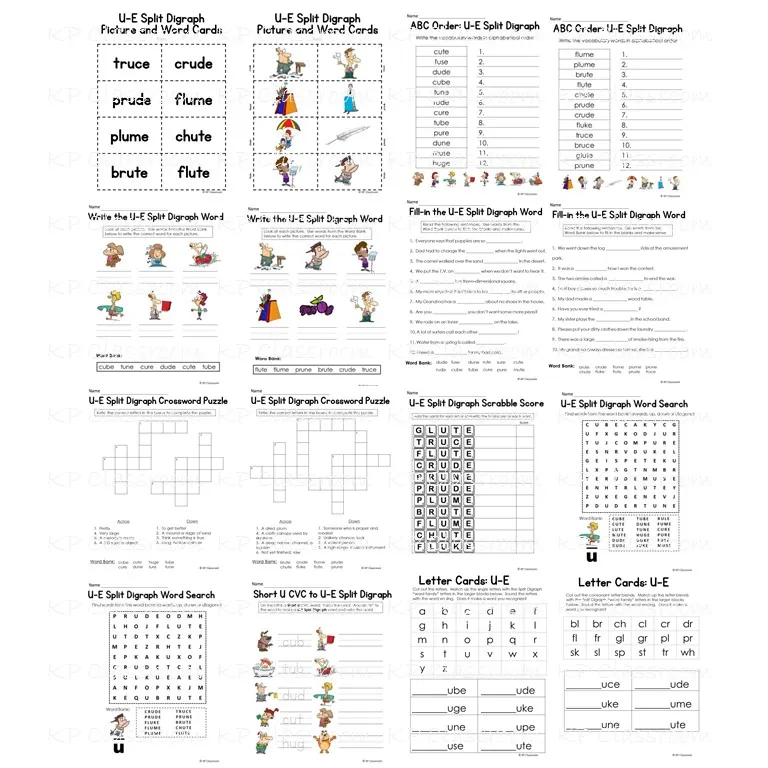
Change a short-u CVC word (e.g., cub, tub, cut) into a u-e split digraph word by adding a final 'e'.

Teaching tips
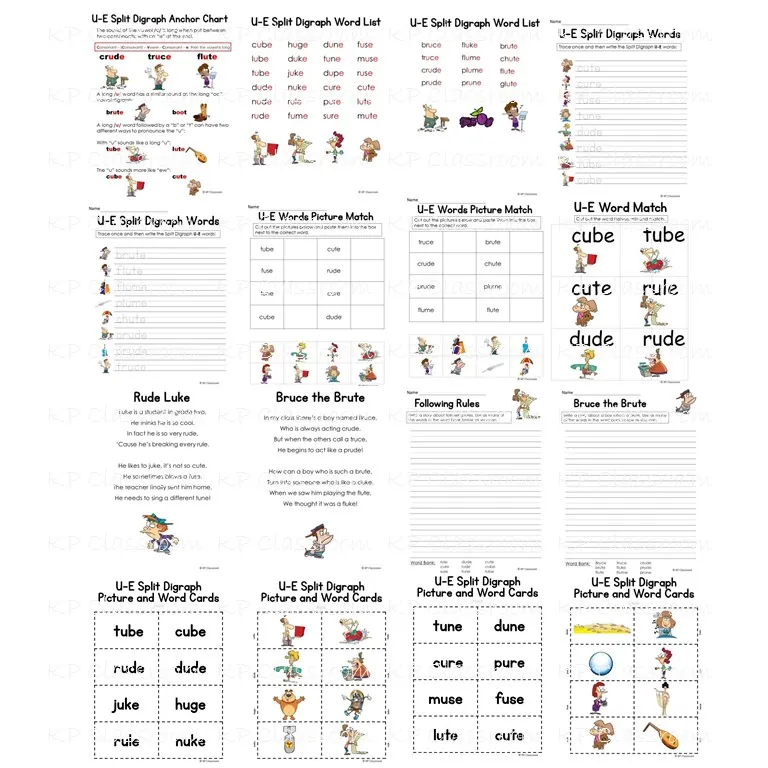
Introduce the anchor chart before any worksheet — it is the only page that explains the rule itself; every later page assumes students already know it.
Read the two poems, "Rude Luke" and "Bruce the Brute," aloud as a class before assigning the related word-bank story-writing pages, then introduce the word bank printed on each writing page.
Have scissors and glue ready before the picture-match, word-match, and letter-card pages — several activities are built as cut-and-paste tasks.

Skills covered
Split-digraph decoding — students apply the u-e rule (consonant-vowel-consonant-e = long u) to read words like crude, flute, and truce.
Phonics-to-spelling transfer — students change a short-u CVC word into its long-u split-digraph form by adding a final 'e'.
Target-word writing practice — students trace and independently write the target word list before using the words in sentences.
Good to know
Questions teachers ask about this resource
Are the two poems just for reading, or do they connect to a writing task?
The poems connect by theme to the Following Rules and Bruce the Brute writing pages. Read a poem together, then introduce the nine-word bank on its related writing page; the bank is not an exact repeat of the poem’s words.

No reviews yet
Downloaded this resource? Tell other teachers how it went.
Curriculum
Standards, concepts & topics
 Standards
 Core concepts
 Topics
Explore more
Categories this resource belongs to
Explore related searches
More to explore
You may also like