Reading Comprehension High School Lesson on UBI


Social Studies, Life Studies, ELA, Economics, Government, Finance, Reading, Reading Comprehension, Writing


About This Product
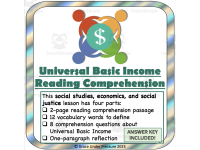
Are you trying to get your high school students interested in economics, social justice, and current events? Why not give them a crash course on the concept of Universal Basic Income. It's an idea that has been floated around for decades, and it is becoming more relevant as income inequality grows and grows in developed countries.
This comprehensive lesson includes:
Four parts in an easy to use 7 page PDF:
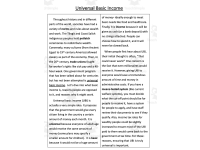
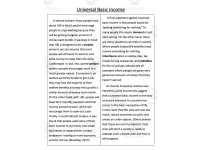
First, students will tackle a 2-page reading comprehension passage about Universal Basic Income. This passage teaches the basic history behind this economic idea and how it is supposed to work in theory. Related ideas such as means-tested systems, welfare, and corporate subsidies are included and explained. It is assumed that students have little to no experience with these topics.
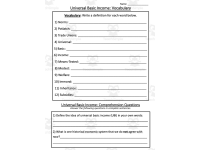
Next, students will learn new vocabulary by defining twelve important terms including potlatch, trade unions, and inheritance.
Then, students will answer eight comprehension questions about the reading passage. This section encourages critical thinking, close reading, and analysis.
Finally, students will write a one-paragraph reflection, where they can start to formulate their own personal opinions about the feasibility and fairness of Universal Basic Income.
A complete answer key is also included to eliminate any guesswork and make marking a snap.
Grades to Use With:
This lesson is designed for high school students in grades 8-12 in social studies, business, or economics classes. It could also be used in high school English classrooms as a non-fiction reading comprehension and vocabulary passage.
If you find this lesson useful, check out other integrated social justice activities in my store:
Income Inequality: Thinking Critically About the Distribution of Wealth
The Moral of the Story: Income Inequality in Popular Tales
Thinking Critically About Social Programs: Pension, Healthcare, UBI, Education
Human Rights: Access to Water: An Integrated Math and Social Studies Lesson
Resource Tags
0 Reviews
Check out these other great products