What is Electricity Presentation

- Grades
- Grades 4–11, Elementary, Middle School, High School
- File type
- Google Slide
- Subject
- Science, Technology, Engineering
- Topic
- Electricity dynamics, Circuit process
- Resource types
- Presentations, Teacher Tools
About this resource
What's inside this resource
What is Electricity Presentation: An Educational Resource
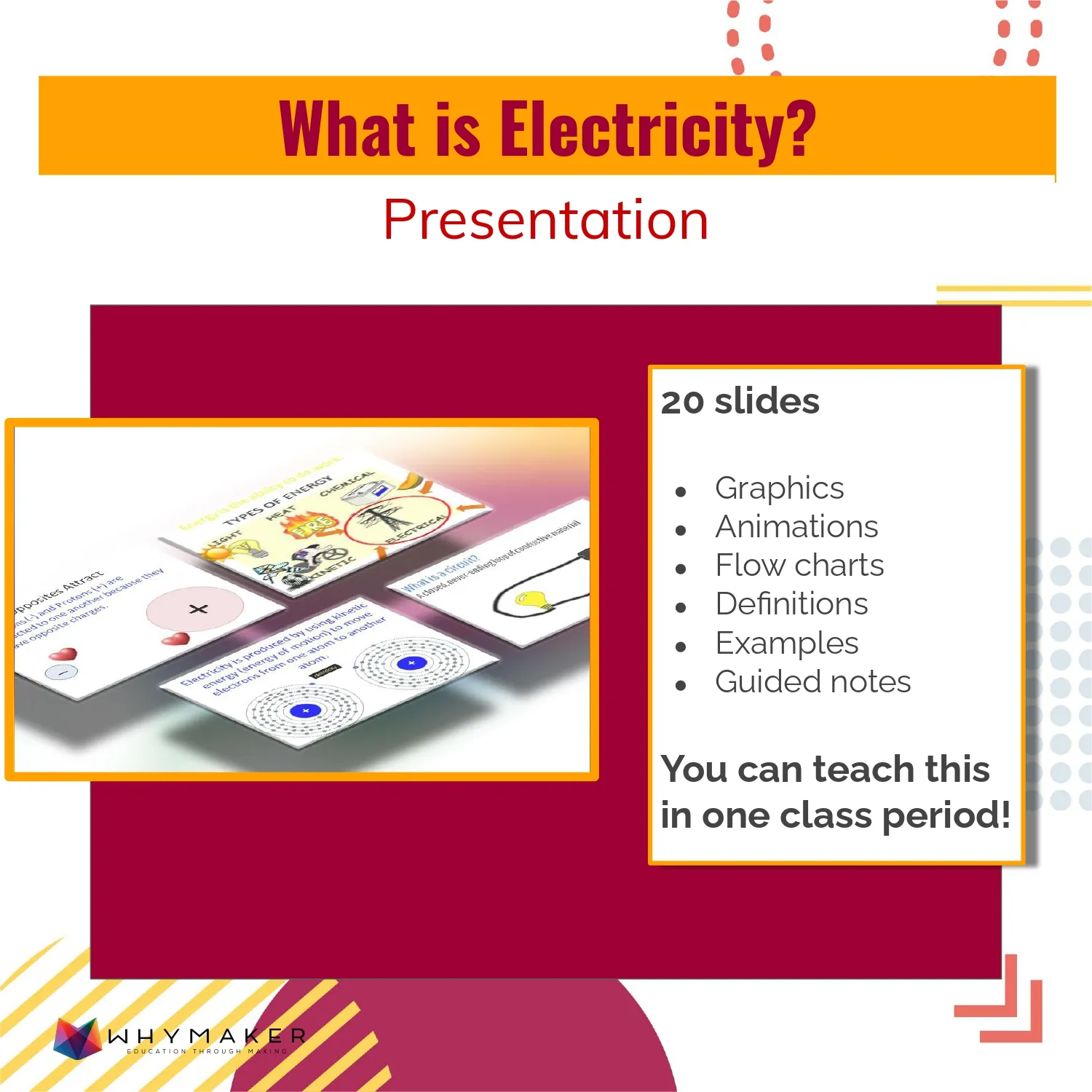
The What is Electricity Presentation is an all-encompassing teaching resource devised for educators at different stages of instruction, inclusive of public school teachers and home educators. The presentation offers a profound exploration of electricity dynamics, elucidating the complex mechanisms behind how electricity travels through a circuit.
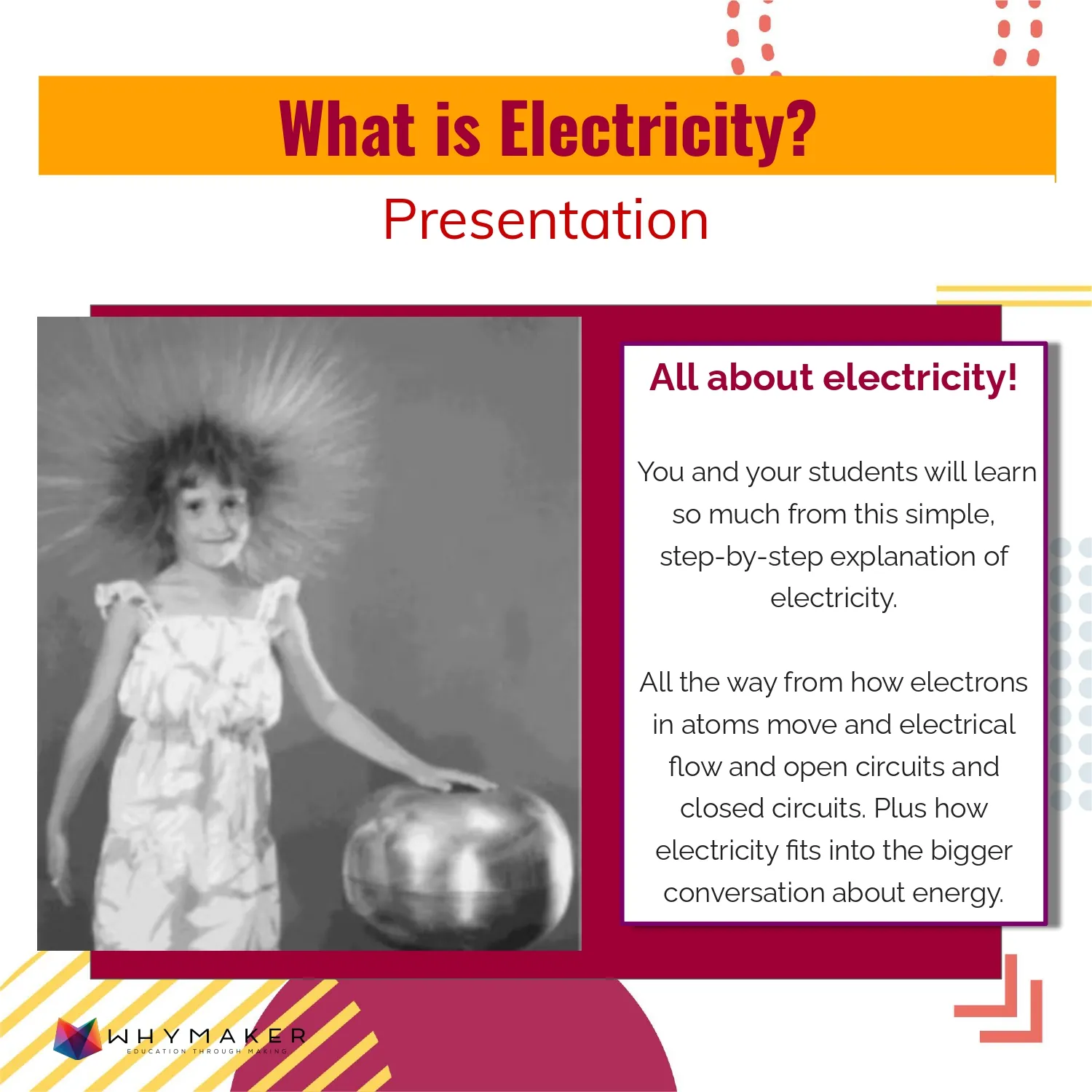
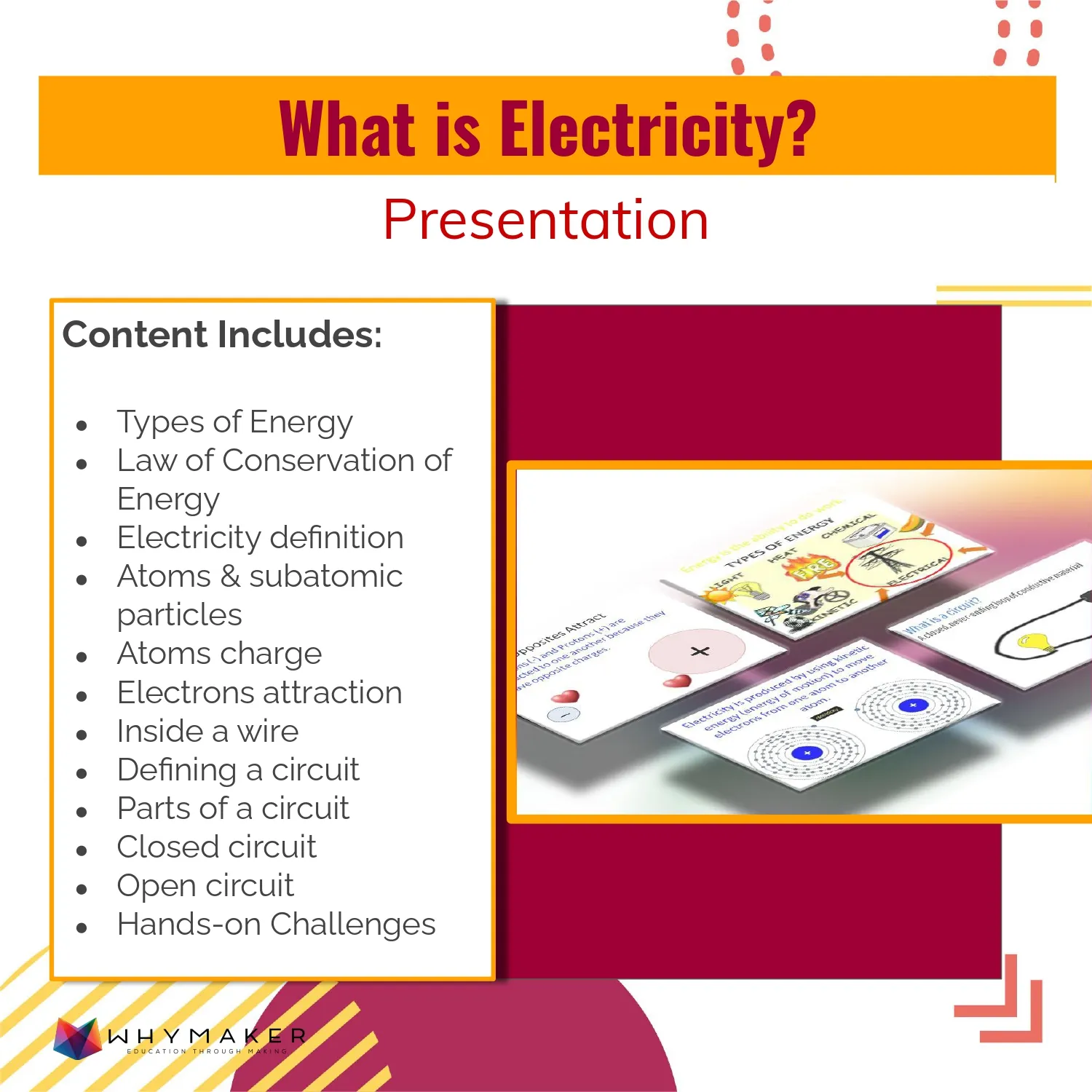
The presentation aims to demystify electrical concepts for students from upper-elementary up until high-school (Grade 4 - Grade 11), vividly depicting electron movement within circuits and the resultant generation of electricity. This extensive explanation goes beyond fundamental concepts by introducing subjects like Energy, Law of Conservation energy, Electrical Energy, as well parsing down atomic constituents into Electrons, Protons, and Neutrons.
Closed Circuits vs Open Circuits
The understanding of closed circuits compared to open circuits forms a crucial aspect woven into this comprehensive narrative presented in our 21-slide PowerPoint lesson resource. Crafted thoughtfully to simplify subjects like Science and Engineering into easily digestible chunks thereby significantly aiding student comprehension.
Presentation Advantages & Adaptability
- Versatile:This tool's design combined with Google Slide format's flexibility allows it to be adapted across various education applications in your classroom or homeschool setup.
- All-Inclusive: This versatile tool can also be effectively utilized for group instruction providing essential foundations on electricity principles.
- Dedicated Learning:This presentation can also be efficiently leveraged in smaller focus groups directed towards learners needing additional assistance understanding these unique electrical concepts.
- Educator Preparation: In allowing teachers to use this tool independently to prepare materials or simply assign the content directly to students for self-guided learning or homework requirements, our tool significantly amplifies educational productivity.
Inspiration via Information!
Our ultimate objective with the 'What is Electricity Presentation' is not only to inform students but spark their innate curiosity about the electrifying world they are part of!
In the classroom
Teaching tips & learning objectives
Learning objectives
State the Law of Conservation of Energy
Describe the structure of an atom and the charge of its protons, neutrons, and electrons
Explain how the movement of electrons between atoms produces electricity
Identify the four components required to build a circuit
Distinguish a closed circuit from an open circuit
Teaching tips
Use the two "Do Now" questions at the start as a bell-ringer discussion before introducing any electricity vocabulary
Gather light bulbs, batteries, wires, a switch, aluminum foil, and a small motor ahead of time so students can complete the closing hands-on challenge
Have groups discuss how a switch works while they swap in aluminum foil, per the challenge's own instruction, rather than jumping straight to the motor step
Skills covered
Atomic structure — students identify the nucleus, protons, neutrons, and electrons and their charges.
Electrical reasoning — students explain how electron movement between atoms produces an electric current.
Circuit construction — students build, open, and close a working circuit using a light bulb, switch, and aluminum foil.
Scientific vocabulary — students apply terms such as conductive material, load, and closed/open circuit to describe circuit behavior.
Good to know
Questions teachers ask about this resource
What happens to the switch during the final challenge?
Students remove the switch partway through the challenge and use aluminum foil in its place to manually open and close the circuit, then discuss how a switch works.
Does the challenge involve more than the light bulb circuit?
Yes — after working with the light bulb and switch, students are also asked to make a motor run using the same circuit-building skills.
No reviews yet
Downloaded this resource? Tell other teachers how it went.
Resource details
Concepts & topics
Core concepts
atomic structure
electric charge
circuits
conservation of energy
conductivity
Explore more