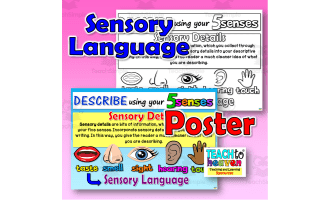
Sensory Language


About This Product
This teaching material aims to assist teachers in their efforts to teach students ways to use Sensory Language when describing. Particularly, it helps them teach the 5-senses descriptive strategy. This particular strategy transforms simplistic and dull descriptions into rich and impressive ones. Students, after constant repetition, eventually learn to incorporate this strategy into their written descriptive discourse.
What is Sensory Language? It is the use of sensory details in description.
What are Sensory Details? Sensory details are bits of information, which you collect through your five senses. Incorporate sensory details into your descriptive writing. In this way, you give the reader a much cleaner idea and a more specific picture of what you are describing. Moreover, Sensory language brings our writing to life, and it helps the reader to feel like they are a part of the experience. In other words, Sensory language are words and phrases that link readers to the five senses: touch, sight, sound or hearing, smell, and taste.
This certain product Includes three organizers and three writing templates for implementing the 5-senses strategy in descriptive writing:
-How to describe a flower, using the 5-senses technique (or strategy).
-How to describe a fruit, using the 5-senses technique (or strategy).
-How to describe a sweet, using the 5-senses technique (or strategy).
What's Included
This teaching material includes six A4-size printable worksheets for student to use.
Three of them can be used by students to prepare the description. And three of them can be used by the students to write the relevant text.
Resource Tags
0 Reviews
Check out these other great products