Acid and Base Nomenclature ESL: Korean version

- File type
- Microsoft Word

- Subject
- Chemistry, Science
- Topic
- Acid and Base, Nomenclature
- Resource types
- Activities
From the author
About this resource
Related resources
More resources teachers may find useful
More resources on the same subject and topic.


In the classroom
Teaching tips & learning objectives

Learning objectives
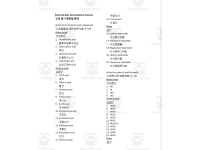
Write the correct chemical formula for 20 named binary acids, ternary acids and bases.
Name 20 acid and base formulas correctly, including the naming conventions for -ic/-ous and per-/hypo- prefixes.
Use Korean-language translations to confirm chemistry vocabulary while practising English nomenclature.

Teaching tips
Assign the formula-writing half and the name-writing half as separate sittings, since together they cover 40 items across the same 20 compounds.
Point Korean-speaking ESL students to the translation printed directly beneath each English term as a built-in vocabulary check rather than a separate glossary.
Edit the Word document to reorder or trim the compound list for a shorter quiz, since the file is a standard .docx rather than a locked worksheet.

Skills covered
Acid and base nomenclature — students write formulas for named compounds such as hydrofluoric acid (HF) and phosphoric acid (H3PO4), and name formulas such as HClO4 and Mg(OH)2 (pages 1-2).
Binary vs. ternary acid classification — students work through separate sets of binary acids (e.g., hydrochloric acid) and ternary acids (e.g., nitric acid, sulfuric acid), reinforcing the naming pattern differences between the two groups.
Bilingual vocabulary cross-checking — students use the Korean translation under each term to confirm chemistry vocabulary while completing English-language nomenclature problems.
Self-checking against a key — students verify all 40 formula/name answers against the included answer key (page 2).

No reviews yet
Downloaded this resource? Tell other teachers how it went.
Resource details
Concepts & topics
Core concepts
 Core concepts
Acid and base nomenclature
Chemical formulas
ESL science vocabulary
 Topics
Explore more
Categories this resource belongs to
Explore related searches




More to explore