Board Games Group

- Year groups
- Years 6–9 (Key Stages 2–3)
- File type
- Preparation
- Print ready


- Subject
- ESL, Language Development, English
- Topic
- Board Game, Speaking Games
- Resource types
- Games
- Preparation
- Print ready
From the author
About this resource
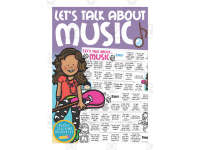
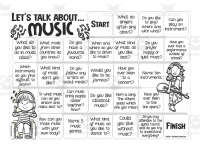
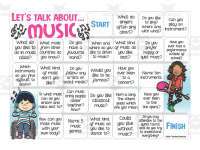
Let’s Talk About Music Board Game gives learners 26 music-themed conversation, vocabulary and action prompts. Students discuss preferences and experiences, name instruments or genres, and hum a tune for others to guess.
Choose the colour or black-and-white board and supply dice and tokens. Model a response before paired or small-group play, adapting response length and offering alternatives to performance prompts as needed.
Related resources
More resources teachers may find useful
More resources on the same subject and topic.


In the classroom
Teaching tips & learning objectives

Learning objectives
Answer personal-experience and opinion questions about music in spoken English.
Sustain turn-based conversation in pairs or small groups using varied question forms.
Produce topic vocabulary on demand through list challenges such as naming ten instruments or five genres.
Ask follow-up questions as classmates respond to open prompts like how music brings people closer together.

Teaching tips
Model one square first - answer 'What kind of music do you like best?' yourself - so students see the expected answer length before play begins.
Mix confident and quieter speakers in each group; performance squares like humming a song for others to guess give non-verbal students a low-pressure turn.
Set a minimum-sentence rule per square for stronger groups to stretch answers past yes/no on prompts like 'Do you like classical music?'
Keep the second copy of the board in reserve so two groups can play simultaneously from one printout.

Skills covered
ESL speaking fluency - every square is an open conversation prompt about music, from favourite bands to concerts.
Topic vocabulary retrieval - list squares demand ten instruments and five music genres on the spot.
Expressing opinions and preferences - prompts contrast happy versus quiet music, classical music, and life without music.
Interactive listening - the hum-a-song square has the group guess the tune, and open 'How?' prompts invite follow-ups.
Good to know
Questions teachers ask about this resource
What kinds of prompts fill the board's squares?
A deliberate mix: preference questions (favourite band, best music), experience questions (concerts, performing outside school), opinion prompts (could you live without music?), quick-fire lists (ten instruments, five genres), and action dares like humming a song for others to guess.
Which learners will get the most from the topic?
Students old enough to have music lives of their own - the squares ask about following artists on social media, attending concerts and opera, and music classes, so the game plays best from upper primary through teen and adult ESL groups.

No reviews yet
Downloaded this resource? Tell other teachers how it went.
Resource details
Concepts & topics
Core concepts
 Core concepts
ESL conversation
Speaking fluency
Music vocabulary
Board game
 Topics
Explore more
Categories this resource belongs to
Explore related searches


More to explore