Vocabulary Worksheets

- File type
- Preparation
- Print ready


- Subject
- Vocabulary, Language Development, English
- Topic
- Vocabulary, Vocab
- Resource types
- Worksheets
- Preparation
- Print ready
- England expectations
- Official curriculum expectation · Comprehension
From the author
About this resource
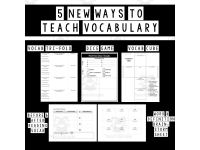
Here are 5 new activities you can use for teaching vocabulary in your class. I've used some of these for whole group activities and some of them I've had small groups work on. All of these can also be done by students individually.
*You will need dice for one of the activities but I've used electronic an electronic die when I couldn't find one.
Related resources
More resources teachers may find useful
More resources on the same subject and topic.


In the classroom
Teaching tips & learning objectives

Learning objectives
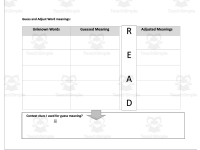
Use context clues to guess the meaning of an unfamiliar word and revise that guess after further reading
Practice a vocabulary word through multiple modalities: definition, synonym, antonym, sentence use, drawing, and acting it out
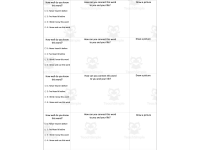
Self-assess personal familiarity with a vocabulary word on a defined rating scale
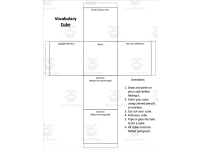
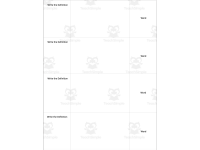
Construct a foldable study reference (cube) combining a definition, synonym, antonym, and illustration for one word

Teaching tips
Pair the Guess and Adjust sheet with a passage containing the target vocabulary in context, since the template itself provides no words or text
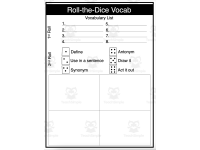
Use the Roll-the-Dice template in vocabulary centres so students get varied practice (define, sentence, drawing, acting) without the teacher assigning each activity manually
Assign the Vocabulary Cube as a take-home or end-of-unit study tool, since assembly (cutting, folding, gluing) takes more time than the flat templates
Use the FlapBook's four-point familiarity scale as a quick pre-assessment before teaching a new word list

Skills covered
Context-clue inference — students guess and then adjust a word's meaning based on surrounding text.
Multi-modal vocabulary practice — students define, find synonyms/antonyms, use in a sentence, draw, or act out an assigned word depending on a dice roll.
Self-assessment of word knowledge — students rate familiarity with a word on a four-point scale before connecting it to personal experience.
Reference-tool construction — students assemble a six-sided foldable cube summarising a word's definition, synonym, antonym, and illustration.
Good to know
Questions teachers ask about this resource
How is the Roll-the-Dice template meant to be used with a class word list?
Students roll a die once to select which numbered vocabulary word (1-8) they will work with, then roll again to determine which of six activities — define, synonym, antonym, sentence, draw, or act it out — they complete for that word.

No reviews yet
Downloaded this resource? Tell other teachers how it went.
National Curriculum in England
National Curriculum in England expectations
England expectations
 England expectations
- Official curriculum expectation · Comprehension — England Years 3–4 English reading comprehension: checking that the text makes sense to them, discussing their understanding, and explaining the meaning of words in context.
Core concepts
 Core concepts
Vocabulary
Context clues
Word study
 Topics
Explore more
Categories this resource belongs to
Explore related searches


More to explore