



Search results for Reading Groups
Results use exact search terms from the released United Kingdom inventory.


Action in Pictures Learning Chart 2
, Not Grade Specific,
Two chart pages hold 16 numbered boxes, each with a small picture and a sentence like 'The girl is bathing the puppy', for reading and talking about actions.
Author KD's Kids School Shop
Rating
Tags Action In Pictures, Learning Chart, Complete Sentences, Grammar Review, Visual Discrimation, Literacy Center, Small Groups, Assessing Mastery
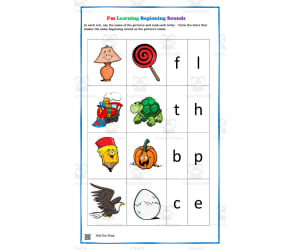
Beginning Sounds Printable
, Not Grade Specific,
Beginning sounds charts with two pictures and two letter choices in every row; students say the picture names and circle the letter for the beginning sound.
Author KD's Kids School Shop
Rating
Tags Beginning Sounds, Letter Sounds, Phonics Activity, Preschool, Literacy Centers, Background Knowledge, Reading Centers, Small Groups, Alphabet

Homophones Worksheet Set
, Not Grade Specific,
Homophone pairs such as witch/which, bear/bare, and flour/flower are practised by choosing the correct word from a word bank to complete sentences, then writing original sentences with a chosen pair.
Author Elementary Resources 4 U
Rating
Tags Homophones, Homonyms, Grammar, Language Arts, Reading Skills, Homework, Literacy Groups, Morning Work, Vocabulary, Homophones For 3rd Grade, Worksheet

Jigsaw Reading Method – Teacher Planning Guide
, Not Grade Specific,
A four-page template packet organises the Jigsaw reading strategy, where small groups of students each research a different expert focus on a text and report back.
Author Hey Teacher Shoppe
Rating
Tags Graphic Organizer, Reading Groups, Jigsaw, Jig Saw, Reading Comprehension, Nonfiction Text Structure , Elements Of Fiction, Jigsaw Activity Graphic Organizer, Jigsaw Graphic Organizer, Reading, Book, Read

Sorting Animals into Groups Worksheet
, Not Grade Specific,
Sorting Animals into Groups develops biological classification through a broad animal-name bank. Students read each name, recall its defining traits, and place it under one of six class headings. The collection includes familiar and less common examples, so they must use features such as body covering, breathing, development, and anatomy rather than habitat alone. A completed companion page supplies the intended groups for review and can support discussion of animals that are often misclassified.
Author Have Fun Teaching
Rating
Tags Statistics