Concrete or Abstract Nouns: Sentence Worksheet
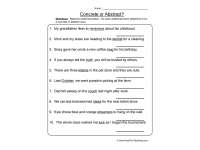
Read ten sentences and decide whether each underlined noun is concrete or abstract. Use the sentence meaning to guide your choice.

- Grades
- Grades 2–4
- Pages
- 1
- File type


- Subject
- Grammar, Vocabulary, Language Development, ELA
- Resource types
- Worksheets
- Ontario expectations
- B3.2 — demonstrate an understanding of the functions of parts of…
From the author
About this resource
This Common or Abstract Nouns Worksheet is a great way for students to determine the type of noun in a sentence. This worksheet will help students better understand common and abstract nouns, and how to use them correctly.
Related resources
More resources teachers may find useful
More resources on the same subject and topic.


In the classroom
Teaching tips & learning objectives

Learning objectives
- Distinguish tangible nouns from ideas and qualities
- Use sentence context to classify a noun semantically

Teaching tips
- Ask whether each target can be perceived through the senses; if not, discuss the idea or quality it represents.

Skills covered
- Noun semantics — Separate concrete from abstract referents
- Context analysis — Interpret underlined words within sentences

No reviews yet
Downloaded this resource? Tell other teachers how it went.
Ontario curriculum
Ontario curriculum expectations
Ontario expectations
 Ontario expectations
- B3.2 — demonstrate an understanding of the functions of parts of speech in sentences, including abstract and collective nouns, personal pronouns, forms of the verb “to be”, comparative and superlative adjectives, conjunctions, and recognition of the words that adverbs modify, and use this knowledge to support comprehension and communicate meaning clearly
Core concepts
 Core concepts
- Concrete nouns
- Abstract nouns
- Semantic classification
Explore more
Categories this resource belongs to
Explore related searches


More to explore