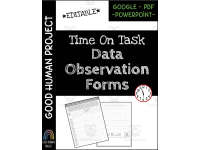
Time on Task Data Sheets - Two Observation Forms


- File type
- Multiple File Types

- Subject
- Classroom Management, Special Education Needs (SEN)
- Topic
- Data Tracking, Data Collection
- Resource types
- Teacher Tools
From the author
About this resource
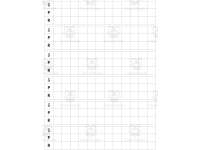
This resource is a Time On Task Data Observation Forms.
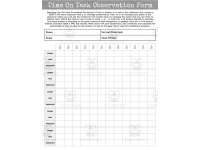
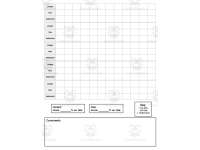
This is a set of 2 data tracking forms to determine students time on task.
Related resources
More resources teachers may find useful
More resources on the same subject and topic.




In the classroom
Teaching tips & learning objectives

Learning objectives
Record on-task behaviour at ten-second intervals and calculate the observed percentage.

Teaching tips
Choose a peer of average classroom performance as the comparison point, as the directions specify, so the target student's percentage is meaningful relative to typical behaviour.
Sit inconspicuously so the student being observed does not change behaviour from awareness of being watched.
Use the compact S/P/R version for repeated short observations and the fuller labelled version when documentation needs to be self-explanatory for other readers, such as at an IEP meeting.
Collect data across multiple sessions over time to show a trend in attentional skills rather than relying on a single observation.

No reviews yet
Downloaded this resource? Tell other teachers how it went.
Resource details
Concepts & topics
Core concepts
 Core concepts
Time-on-task observation
Behaviour data collection
IEP progress monitoring
 Topics
Explore more
Categories this resource belongs to
Explore related searches


More to explore