



2,224 products added recently
Page 120 - 5th Grade Lesson Plans
Prepare your fifth graders for future challenges with lesson plans that promote higher-order thinking and mastery of key concepts. These resources encourage collaboration and in-depth exploration across subjects. Use them to guide your students toward readiness for middle school.

 Show filters

I WONDER - How Has The Earth Changed | Animated Video Lesson
Earth Sciences, Earth and Environmental Sciences, Science, Geography, Social Studies, Grade 3, 4, 5, 6, 7, 8, 9, Lesson Plans, Teacher Tools
Video Introduction An amazing video designed for the students to learn more about famous places in different countries. I WONDER - How Has The Earth Changed | Animated Video Lesson What do you know about this place? Do you know in which part of the world it is? Have you ever visited this place? If yes, can you tell us more about your adventure, and what do you like the most about this place? Do you like reading about Geography? What is your favorite country in the whole world? If you are going on a trip where it will be? Which country? What you are going to see there? Does this country has a famous place to visit? I WONDER - How Has The Earth Changed | Animated Video Lesson The activity is perfect for encouraging the researching skills for the students, while learning more about this fantastic place. I WONDER - How Has The Earth Changed | Animated Video Lesson This friendly designed video is suitable for students at school, homeschooling, and as a group activity. Format Available in MP4 format.
Author Educational Voice
Tags How Has The Earth Changed, How Has The Earth Changed Video, The Earth, The Earth Facts, The Earth Video, The Earth Facts For Kids, The Earth Video For Kids, Earth, Earth Facts, Earth Video

I WONDER - What Type Of Water Are Polar Ice Caps Made From
Geography, Social Studies, Grade 4, 5, 6, 7, 8, 9, 10, Lesson Plans, Teacher Tools
Video Introduction An amazing video designed for the students to learn more about famous places in different countries. I WONDER - What Type Of Water Are Polar Ice Caps Made From | Animated Video Lesson What do you know about this place? Do you know in which part of the world it is? Have you ever visited this place? If yes, can you tell us more about your adventure, and what do you like the most about this place? Do you like reading about Geography? What is your favorite country in the whole world? If you are going on a trip where it will be? Which country? What you are going to see there? Does this country has a famous place to visit? I WONDER - What Type Of Water Are Polar Ice Caps Made From | Animated Video Lesson The activity is perfect for encouraging the researching skills for the students, while learning more about this fantastic place. I WONDER - What Type Of Water Are Polar Ice Caps Made From | Animated Video Lesson This friendly designed video is suitable for students at school, homeschooling, and as a group activity. Format Available in MP4 format.
Author Educational Voice
Tags What Type Of Water Are Polar Ice Caps Made From, What Type Of Water Are Polar Ice Caps Made From Video, Polar Ice Caps, Polar Ice Caps Video, Polar Ice Caps Facts, Polar Ice Caps Video For Kids, Polar Ice Caps Facts For Kids

Montana: A Micro-Learning Deck | Digital Geography Lesson
Social Studies, Geography, Grade 4, 5, 6, 7, Teacher Tools, Lesson Plans
The Montana: A Micro-Learning Deck resource presents a 14-slide digital lesson that engages students with the geography and culture of Montana. Students will watch engaging videos, read informational texts, complete graphic organizers, interact with digital components, and summarize their learnings. Educators can implement this versatile resource in various ways - as a whole class activity projected on the screen, a small group lesson at a center, or even an independent homework assignment. This interactive PowerPoint slide deck makes learning about Montana's landforms, history, economy, and state facts fun through differentiated activities suitable for grades 4-7.
Author Teach Me This
Tags Digital Geography Lesson, Montana Learning Deck, Social Studies, Interactive Slides, Interactive Geography
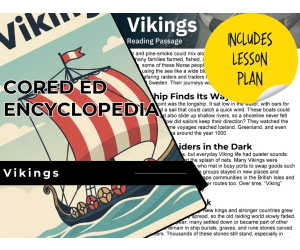
Vikings Reading Comprehension Passage - Cored Ed Encyclopedia
ELA, Language Development, Reading Comprehension, Reading, Pre-Reading, History, Social Studies, History: Europe, History: British, Vocabulary, Grade 2, 3, 4, 5, Worksheets & Printables, Worksheets, Teacher Tools, Centers, Activities, Writing Prompts, Assessments, Quizzes and Tests, Quizzes, Lesson Plans
This Vikings reading comprehension with lesson plan includes: Visualization (on the front cover) Start your lesson by taking a minute to think and share something about the topic. Read the script aloud (slowly), perhaps prepare some music or sound effects. Student close their eyes and let their imaginations wander. Students open their eyes, read the question aloud and give them a few minutes to complete. Ask a few students to share or keep answers until the end to compare with what they learn in the passage. Quick pause—thousands of Cored Education products are included with your TeachSimple membership. Download links and encyclopedia index available here. Pre-Reading Trivia Students will write down one thing they already know about the subject and then read five more facts and discuss. These facts are fun, and the students will enjoy learning about the subject before reading more. Give 1 minute for students to write what they already know (no pressure—best guess is fine). Read the five facts together. After each fact, do ask a student for their opinion, was it surprising? Set a purpose by asking students to highlight/underline one fact they want to learn more about during the reading. Reading Passage The text is a high-interest reading passage with set paragraphs, roughly three to four paragraphs long. It contains a variety of themes about the topic, anywhere from history to technology. The passage is between 250 and 350 words in length. First, ask students to look at the headings and see what they’ll learn about today. What do they know about the topic/heading? First read options: Teacher read-aloud (best for support). Partner reading (paragraph by paragraph). While reading, students underline important details, and vocabulary words they think may come up in the questions section. Mixed Questions The first question page contains four multiple-choice questions, each with a choice of four answers, and three written response questions that require a sentence or two from the student. Students complete the mcqs first independently, then review quickly as a class. For the 3 written responses, try to get students giving the answer with some form of evidence: “I think ___ because the text says ___.” If students get stuck, send them back to check the passage. Vocabulary Questions Practice seven key words from the text in this section across two activities. First section is scrambled words where students will unscramble three words given a clue for each. The second section is a word to meaning matching activity. Before starting, have some students read out words they underlined in the passage. Ask students to say the word and read aloud the sentence(s) around each word. Ask students to do scrambled words and the matching exercise in pairs then go through answers as a class. For the scrambled spelling task, get four pairs to come up to the board and write the words for extra practice with the other student reading out the clue. For the matching task, prompt students to give full sentences: “I matched ___ with ___ because ___.” Creative Writing In this question, the student will be required to write a five to eight sentence paragraph on a question related to the topic. Before starting, ask students write down 3 key ideas they are going to include in their piece. Ask students for ideas to share around the class to help those struggling. Pro writing expectations: 5–8 sentences At least 2 facts or details from the passage At least 2 vocabulary words from the previous page Students read their paragraphs while classmates listen for facts and vocabulary words. Extension Activities This page is optional for fast finishers or to take home. There are several activities, each one requiring a different skill. Do some, do none, do all, completely optional - but you will feel reassured knowing every possibility is planned for. Includes summary writting question. Answer Key There are answers for the multiple-choice questions, written response questions have sample answers, vocabulary answers and if there is a summary question then a sample summary will be provided as well. Lesson Plan Included Customized lesson plan for this lesson is included. Lesson Snapshot Title: Vikings Genre: Nonfiction (Informational text) Subject: Social Studies (History/Culture) Primary Topic: Viking travel, daily life, and lasting clues Estimated Guided Reading Level (A–Z): Q Support pages included: Visualization prompt, pre-reading trivia, mixed questions, vocabulary activities, creative writing, extension activities, and an answer key. QA check on support pages: The questions/vocabulary generally match the passage; the visualization prompt includes extra sensory details (e.g., “carved dragons,” a “small market”) that are not stated in the reading passage. What This Lesson Teaches Best Geography and origins of Viking-age people: Describes rocky coasts of Scandinavia and connects Vikings to places now Denmark, Norway, and Sweden. Why longships mattered for travel: Explains how longships used oars and a sail, crossed open seas, and moved up shallow rivers. Navigation using nature: States that sailors watched the Sun and stars to keep direction. A fuller view of Viking life: Notes that Vikings farmed, crafted, and traded goods (furs, metalwork, silver), and some blended with local people and helped shape communities. How history leaves evidence: Identifies lasting clues such as ship burials, graves, rune stones, and written sagas. Learning Goals Students will describe where Vikings lived and what the passage says the coasts were like. Students will explain how the longship’s design helped Vikings travel to many places. Students will identify how Viking sailors kept direction while traveling. Students will summarize everyday Viking jobs and trade goods named in the text. Students will list evidence the passage says still helps us learn about Vikings today. Key Vocabulary From the Text Scandinavia — a northern European region where many Vikings lived. Norse — people from Scandinavia in the passage. longship — a Viking boat with oars and a sail. Christianity — a religion that spread as times changed. sagas — stories written down from spoken memories. Discussion Prompts Pre-reading question: What details in the passage describe the coasts of Scandinavia? Comprehension questions: When did some Norse people begin traveling farther than neighbors expected? Comprehension questions: How did the longship help Vikings cross seas and travel up rivers? Comprehension questions: What clues does the passage say still remain today to help us learn about Vikings? FULL CATALOG OF DOWNLOAD LINKS AND ENCYCLOPEDIA INDEX HERE
Author Cored Education
Rating
Tags Vocabulary, Reading Comprehension, Reading Passages, Lesson Plans, Ela Lesson Plans, Reading Comprehension Lesson Plans, Pre-reading, History Lesson Plans, European History, British History

I WONDER - Why Do We Have Holes In Our Skulls | Animated Video Lesson
Human Body, Life Sciences, Science, Biology, STEM, Grade 3, 4, 5, 6, 7, 8, 9, Lesson Plans, Teacher Tools
Video Overview The human body is full of fascinating wonders to learn. This video is created to help the students recognize the anatomy and the job of the human body. I WONDER - Why Do We Have Holes In Our Skulls | Animated Video Lesson Every part and organ in our human body is vital so let's see how important they are. Have you ever imagined how we look like if we didn't have a skeleton? Did you know that because we have our amazing muscles we can stand! Do you know how many teeth do we have? Have you ever wondered about the food journey inside our body? Can you name all the glands in our body? Why do we have skin? Our nervous system is really good at sending signals. Can you tell us more about it? Are you really good at Mathematics, painting, or any other thing? You should really thank your brain about it! The famous five senses are really doing a great work? Can you explain how every sense works? I WONDER - Why Do We Have Holes In Our Skulls | Animated Video Lesson The video is perfect for encouraging the researching skills for the students, while learning more about our fantastic human body. I WONDER - Why Do We Have Holes In Our Skulls | Animated Video Lesson This friendly designed video is suitable for students at school, homeschooling, and as a group activity. Format Available in MP4 format.
Author Educational Voice
Tags Why Do We Have Holes In Our Skulls, Why Do We Have Holes In Our Skulls Video, Holes In Our Skulls, Holes In Our Skulls Facts, Holes In Our Skulls Facts For Kids, Holes In Our Skulls Video, Holes In Our Skulls Video For Kids

I WONDER - What Are Wetlands | Animated Video Lesson
Environmental Science, Earth and Environmental Sciences, Science, Earth Sciences, Grade 1, 2, 3, 4, 5, 6, 7, 8, Lesson Plans, Teacher Tools
Video Introduction An amazing video designed for the students to learn more about STEM. I WONDER - What Are Wetlands | Animated Video Lesson Do you like STEM subjects? what is your favorite one? Have you ever tried to plant a seed? If yes, tell us more about it. Or have you ever tried to invent something? If yes, tell us more about it. And how do you think it will help us? Have you ever seen a microorganism under a microscope? What was it? And how it looked like? Mathematics is a marvelous subject. Let' sharpen our brains and solve some equations. Do you like timetable tricks? What is your favorite one? Do you know how to code? Have you ever created an app or a game before? If yes, how was it like? I WONDER - What Are Wetlands | Animated Video Lesson The video is perfect for encouraging the researching skills for the students, while learning more about this fantastic topic. I WONDER - What Are Wetlands | Animated Video Lesson This friendly designed video is suitable for students at school, homeschooling, and as a group activity. Format Available in MP4 format.
Author Educational Voice
Tags What Are Wetlands, What Are Wetlands Video, Wetlands, Wetland, Wetlands Facts, Wetlands Facts For Kids, Wetlands Video, Wetlands Video For Kids, Wetland Facts For Kids

I WONDER - Did All Romans Wear Togas | Animated Video Lesson
History: Ancient, History, Social Studies, History: Europe, Grade 3, 4, 5, 6, 7, 8, 9, Lesson Plans, Teacher Tools
Video Introduction An amazing video designed for the students to learn more about history. I WONDER - Did All Romans Wear Togas | Animated Video Lesson Do you like history? Which topic do you really enjoy about history? Have you ever read an interesting fact about the Vikings? If yes, can you mention them? What do you like most about the Victorian era? Can you name all the Tudors? Have you ever wondered how people used to live in ancient Japan and ancient China? Do you know any interesting facts about ancient Egyptians and the Pharaohs? Have you ever visited South America? What do you know about Incas and Aztecs? Celtic culture was really one of a kind, can you name any of the places that Celts used to live in? Imagine yourself living during the ancient Roman empire, how your life will look like? Ancient Greece was an amazing place to live in. What do you know about ancient Greek life? I WONDER - Did All Romans Wear Togas | Animated Video Lesson The video is perfect for encouraging the researching skills for the students, while learning more about history. I WONDER - Did All Romans Wear Togas | Animated Video Lesson This friendly designed video is suitable for students at school, homeschooling, and as a group activity. Format Available in MP4 format.
Author Educational Voice
Tags Did All Romans Wear Togas, Did All Romans Wear Togas Video, Romans Togas, Romans Togas Facts, Romans Togas Facts For Kids, Romans Togas Video, Romans Togas Video For Kids, Ancient Romans Togas
I WONDER - What Is The Theory Of Relativity | Animated Video Lesson
Biographies, Social Studies, STEM, Inventors, Basic Science, Science, Theories, Grade 4, 5, 6, 7, 8, 9, 10, Lesson Plans, Teacher Tools
Video Introduction An amazing video designed for the students to learn more about famous people in different countries. I WONDER - What Is The Theory Of Relativity | Animated Video Lesson Do you know this person? How much do you know about him/her? Who is your idol? Why did you choose this person? Tell us more about him/her? Who is your favorite athlete? Or what is your favorite team? Have you recently heard a story about a famous person? Who was this person? Can you tell us more about him/her. Who is your favorite president, king, or queen? Why you chose that person? In your country, who are the most famous people? What did they do? Can you tell us more about them. What is your favorite invention? Who invented it? Who is your favorite artist? What is the most famous thing he/she have done? What is the most enjoyable you have read before? Who wrote it? I WONDER - What Is The Theory Of Relativity | Animated Video Lesson The video is perfect for encouraging the researching skills for the students, while learning more about this fantastic place. I WONDER - What Is The Theory Of Relativity | Animated Video Lesson This friendly designed video is suitable for students at school, homeschooling, and as a group activity. Format Available in MP4 format.
Author Educational Voice
Rating
Tags What Is The Theory Of Relativity, What Is The Theory Of Relativity Video, The Theory Of Relativity, The Theory Of Relativity Video, The Theory Of Relativity Facts, The Theory Of Relativity Facts For Kids, The Theory Of Relativity Video For Kids

New Hampshire: A Micro-Learning Deck | Digital Geography Lesson
Social Studies, Geography, Grade 4, 5, 6, 7, Teacher Tools, Lesson Plans
The New Hampshire: A Micro-Learning Deck resource is an informative 14-slide Microsoft PowerPoint presentation that teaches 4th-7th grade students about the state of New Hampshire. Students will engage with short videos, audio clips, texts, graphic organizers , digital activities, and summarizing questions as they explore details and concepts related to New Hampshire's geography. This concise lesson exposes learners to key ideas in a variety of modalities over the course of 14 slides that could be used in whole group instruction, independent work, or homework. The resource aims to build students' knowledge related to New Hampshire in a factual yet engaging manner without excessive adjectives or persuasive phrasing.
Author Teach Me This
Tags Digital Lesson Plan, Digital Geography, Interactive Slides, Learning Deck, New Hampshire

I WONDER - Did Girls Go To School In Ancient Rome | Animated Video
History: Ancient, History, Social Studies, History: Europe, Grade 2, 3, 4, 5, 6, 7, 8, Lesson Plans, Teacher Tools
Video Introduction An amazing video designed for the students to learn more about history. I WONDER - Did Girls Go To School In Ancient Rome | Animated Video Lesson Do you like history? Which topic do you really enjoy about history? Have you ever read an interesting fact about the Vikings? If yes, can you mention them? What do you like most about the Victorian era? Can you name all the Tudors? Have you ever wondered how people used to live in ancient Japan and ancient China? Do you know any interesting facts about ancient Egyptians and the Pharaohs? Have you ever visited South America? What do you know about Incas and Aztecs? Celtic culture was really one of a kind, can you name any of the places that Celts used to live in? Imagine yourself living during the ancient Roman empire, how your life will look like? Ancient Greece was an amazing place to live in. What do you know about ancient Greek life? I WONDER - Did Girls Go To School In Ancient Rome | Animated Video Lesson The video is perfect for encouraging the researching skills for the students, while learning more about history. I WONDER - Did Girls Go To School In Ancient Rome | Animated Video Lesson This friendly designed video is suitable for students at school, homeschooling, and as a group activity. Format Available in MP4 format.
Author Educational Voice
Tags Did Girls Go To School In Ancient Rome, Did Girls Go To School In Ancient Rome Video, School In Ancient Rome, Ancient Roman Schools, Ancient Roman Schools Video, Ancient Roman Schools Facts, Ancient Roman Schools Video For Kids

Energy: How Energy Moves and Changes Form
Science, Physics, Common Core, Grade 5, 6, 7, 8, Teacher Tools, Lesson Plans
Energy: How Energy Moves and Changes Form An outstanding teaching tool committed to demystifying the complex arena of energy for middle school pupils, spanning from grades 5 to 8. This lesson plan breaks down vital energy concepts making them easy and comprehendible. Chapter Scope This section concentrates on the movement and transformation of energy, equipping teachers with concrete methods to efficiently communicate this subject. It delves into various types of energy such as mechanical, thermal, sound waves, and light energy aiming at giving students a thorough understanding. The material does more than merely define what energy is; it also discusses potential forms. Educational Standards & Vocabulary Design Lined up with the Common Core State Standards with adherence to Blooms Taxonomy guidelines along with STEM approaches, these learning materials ensure learners attain crucial knowledge whilst fostering their analytical thinking skills. The language incorporated all through has been painstakingly picked in such a way that it's suitable for remedial pupils without undercutting the quality of information. Contents Overview The PDF file contains theory-rich reading sections that dive into varied aspects of this science subject. Theory comprehension is further encouraged by related student activities structured to enhance understanding while maintaining an enjoyable learning process. Included color mini posters can be practical visual aids during lessons or reassurances hung around the class for learner's reference points. Versatility & Use Applications: In group settings:Create vibrant discussions around readings during whole class instructions. In small clusters: Facilitate hands-on approach through problem-solving activities provided on worksheets in pdf format. As homework tasks: Extend learning continuity beyond the classroom with questions generated from these materials. This efficient teaching resource - irrespective if you're delivering Physics as part of a broader curriculum or aiming at an in-depth study of its varied areas such as Energy: How Energy Moves and Changes Form will definitely add significant value to your instructional setting or homeschool Curriculum design equally.
Author Classroom Complete Press
Tags PDF
Prevention, Recycling & Conservation: Fresh Water Resources Gr. 5-8
Science, Earth and Environmental Sciences, Environmental Science, Grade 5, 6, 7, 8, Teacher Tools, Lesson Plans
Prevention, Recycling & Conservation: Fresh Water Resources Gr. 5-8 Overview A comprehensive teaching resource specifically designed for Educators of Grades 5 through 8. Featuring detailed insights into Environmental Science, it simplifies and enriches information about Prevention, Recycling & Conservation initiatives. Coverage of Topics The notion of conservation and distinction between natural, renewable and non-renewable resources. Landfill waste reduction techniques and composting practices suitable for everyday life. Understanding how organic materials decompose over time. Educational material on preventing pollution of our critical fresh water resources. Sustainable land management practices to minimize environmental degradation from burning fossil fuels which leads to smog production, ozone layer depletion, and increased levels of greenhouse gases. Simplified Language Usage This specially designed resource breaks down complex topics into easily understandable terms for Grade 5-8 students irrespective of how technical they may initially sound. Educational Aid Features: Inbuilt Lesson Planning System: An ideal companion for teachers or homeschoolers that outlines effective lesson plans in Environmental Science education; this PDF type educational aid includes ready-to-use reading passages aligned meticulously with respective state standards plus a diverse selection of student activities—the perfect choice either as a whole group study aid or small group engagement tool or even for homework assignments. Bloom's Taxonomy Compliant: This resource governs its design based on the educational guidelines provided by Bloom's Taxonomy—it contains test prep materials ensuring effective revisions before examinations while aiding educators in tracking complete development outcomes regarding critical environmental subjects amongst students. Add-on Feature: Special attention is given for remedial learners as it includes color mini posters—catering to visually oriented learners with success in retaining complex concepts—an integrative approach indeed! Conclusion: To sum up: The novel educational instrument that is Prevention, Recycling & Conservation: Fresh Water Resources Gr. 5-8, serves as a reliable resource for educators enthusiastic about instilling necessary environmental knowledge in their students with efficiency.
Author Classroom Complete Press
Tags PDF

I WONDER - What Is An Omnivore | Animated Video Lesson
Animals, Life Sciences, Science, History, Social Studies, History: Ancient, History: World, Grade 2, 3, 4, 5, 6, 7, 8, Lesson Plans, Teacher Tools
Video Introduction An amazing video designed for the students to learn more about dinosaurs in different countries. I WONDER - What Is An Omnivore | Animated Video Lesson Do you like dinosaurs? what is your favorite one? Do you own a pet? If yes, tell us more about it, like what its name? And what do you like most about it? Do you think that your pet has been evolved from a dinosaur? Can you write down the characteristics of your favourite dinosaur like it's shape, their rivals, where did it use to live and what was their favourite food? What is the largest and the smallest dinosaur that ever found? Why is the T-rex is so famous? Have you ever read any interesting facts about it? Can you name any of the carnivores or herbivores dinosaurs? I WONDER - What Is An Omnivore | Animated Video Lesson The video is perfect for encouraging the researching skills for the students, while learning more about dinosaurs. I WONDER - What Is An Omnivore | Animated Video Lesson This friendly designed video is suitable for students at school, homeschooling, and as a group activity. Format Available in MP4 format.
Author Educational Voice
Rating
Tags What Is An Omnivore, What Is An Omnivore Video, Omnivore, Omnivores, Omnivore Facts, Omnivore Video, Omnivore Facts For Kids, Omnivore Video For Kids, Dinosaurs, Dinosaur
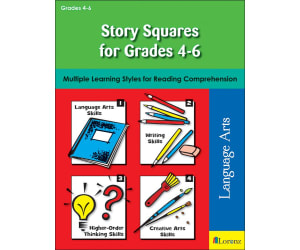
Story Squares for Grades 4-6: Multiple Learning Styles for Reading Comprehension
ELA, Reading, Reading Comprehension, Grade 4, 5, 6, Teacher Tools, Lesson Plans
Story Squares for Grades 4-6: Multiple Learning Styles for Reading Comprehension A sensational teaching resource that aims to grow passionate readers while simultaneously building an array of skills. This unique resource not only focuses on Language Arts and Writing, but also incorporates additional stimulus for Higher-Order Thinking and the Creative Arts. Key Features: Versatility: Designed aptly for whole group instruction, small group activities, paired tasks or individual assignments. Literary Focus: Covers three timeless children's classics viz., "Bud. Not Buddy," "The Borrowers," and "Esperanza Rising." Detailed story annotations alongside 20 diverse activities accompanied with each book ensure comprehensive coverage. Educator Support Tools Included: Educator hints providing valuable guidance through lessons. An easy-to-use grading rubric that facilitates fair evaluation/ assessment procedures along with a glossary outlining key terms used in the content. . The package is furnished as a simple to use, ready-to-print PFD format spanning 16 pages, . Aimed at enhancing comprehension levels amongst Grade 4 - Grade 6 students, this tool brings mundane lesson plans to life ensuring pedagogical objectives are effectively met. In essence,, Story Squares provides teachers with more than just a resource - it’s an innovative addition to their instructional arsenal, embracing various learning methodologies leading towards holistic educational growth across multiple domains within students.
Author Classroom Complete Press
Tags Comprehension, Language Arts, Story Summary, Character Traits, Paragraph Writing

I WONDER - What Is The Smallest Vertebrate In The World Video
STEM, Animals, Life Sciences, Science, Biology, Grade 1, 2, 3, 4, 5, 6, 7, 8, Lesson Plans, Teacher Tools
Video Introduction Animal kingdoms are full of fascinating wonders to learn. This video is designed for the students to learn more about animals in different countries. I WONDER - What Is The Smallest Vertebrate In The World | Animated Video Lesson Do you like animals? what is your favorite one? Do you own a pet? If yes, tell us more about it, like what its name? And what do you like most about it? What are the animal kingdoms? Can you write down the characteristics of each animal class like mammals, birds, reptiles, amphibian, fish and mollusks. Do you know that some animals can sing, can you name any of them? What is the largest and the smallest mammal in the world? What is the largest and the smallest bird in the world? What is the largest and the smallest fish in the world? I WONDER - What Is The Smallest Vertebrate In The World | Animated Video Lesson The video is perfect for encouraging the researching skills for the students, while learning more about these fantastic animals. I WONDER - What Is The Smallest Vertebrate In The World | Animated Video Lesson This friendly designed video is suitable for students at school, homeschooling, and as a group activity. Format Available in MP4 format.
Author Educational Voice
Tags What Is The Smallest Vertebrate In The World, What Is The Smallest Vertebrate In The World Video, Smallest Vertebrate In The World, Smallest Vertebrate In The World Video, Smallest Vertebrate In The World Facts
I WONDER - What Are The Stages In A Butterfly's Life Cycle
STEM, Insects, Life Sciences, Science, Animals, Biology, Grade 1, 2, 3, 4, 5, 6, 7, 8, Lesson Plans, Teacher Tools
Video Introduction Animal kingdoms are full of fascinating wonders to learn. This video is designed for the students to learn more about animals in different countries. I WONDER - What Are The Stages In A Butterfly's Life Cycle | Animated Video Lesson Do you like animals? what is your favorite one? Do you own a pet? If yes, tell us more about it, like what its name? And what do you like most about it? What are the animal kingdoms? Can you write down the characteristics of each animal class like mammals, birds, reptiles, amphibian, fish and mollusks. Do you know that some animals can sing, can you name any of them? What is the largest and the smallest mammal in the world? What is the largest and the smallest bird in the world? What is the largest and the smallest fish in the world? I WONDER - What Are The Stages In A Butterfly's Life Cycle | Animated Video Lesson The video is perfect for encouraging the researching skills for the students, while learning more about these fantastic animals. I WONDER - What Are The Stages In A Butterfly's Life Cycle | Animated Video Lesson This friendly designed video is suitable for students at school, homeschooling, and as a group activity. Format Available in MP4 format.
Author Educational Voice
Tags What Are The Stages In A Butterfly's Life Cycle, What Are The Stages In A Butterfly's Life Cycle Video, Butterfly's Life Cycle, Butterfly's Life Cycle Facts, Butterfly's Life Cycle Facts For Kids, Butterfly's Life Cycle Video
I WONDER - What Similarities Do Humans And Chicken Have
STEM, Biology, Life Sciences, Science, Animals, Grade 1, 2, 3, 4, 5, 6, 7, 8, Lesson Plans, Teacher Tools
Video Introduction Animal kingdoms are full of fascinating wonders to learn. This video is designed for the students to learn more about animals in different countries. I WONDER - What Similarities Do Humans And Chicken Have | Animated Video Lesson Do you like animals? what is your favorite one? Do you own a pet? If yes, tell us more about it, like what its name? And what do you like most about it? What are the animal kingdoms? Can you write down the characteristics of each animal class like mammals, birds, reptiles, amphibian, fish and mollusks. Do you know that some animals can sing, can you name any of them? What is the largest and the smallest mammal in the world? What is the largest and the smallest bird in the world? What is the largest and the smallest fish in the world? I WONDER - What Similarities Do Humans And Chicken Have | Animated Video Lesson The video is perfect for encouraging the researching skills for the students, while learning more about these fantastic animals. I WONDER - What Similarities Do Humans And Chicken Have | Animated Video Lesson This friendly designed video is suitable for students at school, homeschooling, and as a group activity. Format Available in MP4 format.
Author Educational Voice
Tags What Similarities Do Humans And Chicken Have, What Similarities Do Humans And Chicken Have Video, Chicken, Chicken Facts, Chicken Facts For Kids, Chicken Video, Chicken Video For Kids, Humans
I WONDER - Do All Hurricanes Spin In The Same Direction
Geography, Social Studies, Earth Sciences, Earth and Environmental Sciences, Science, Environmental Science, Grade 4, 5, 6, 7, 8, 9, 10, Teacher Tools, Lesson Plans
Video Introduction An amazing video designed for the students to learn more about natural disasters in different countries. I WONDER - Do All Hurricanes Spin In The Same Direction | Animated Video Lesson What do you know about this natural disaster? Do you know in which part of the world this could happen? Have you ever read about the safety misusers that we could have to protect ourselves from this natural disaster? If yes, can you tell us more about them? Can you name other natural disasters? If yes, tell us more about where they are likely to happen? And how frequently? Do you like reading about Geography? What is your favorite country in the whole world? If you are going on a trip where it will be? Which country? What you are going to see there? Does this country has a famous place to visit? Do you like reading about Geology? If yes, what is your favourite topic? I WONDER - Do All Hurricanes Spin In The Same Direction | Animated Video Lesson The video is perfect for encouraging the researching skills for the students, while learning more about this fantastic phenomenon. I WONDER - Do All Hurricanes Spin In The Same Direction | Animated Video Lesson This friendly designed video is suitable for students at school, homeschooling, and as a group activity. Format Available in MP4 format.
Author Educational Voice
Tags Do All Hurricanes Spin In The Same Direction, Do All Hurricanes Spin In The Same Direction Video, Hurricanes, Hurricane, Hurricanes Facts, Hurricanes Facts For Kids, Hurricanes Video, Hurricanes Video For Kids

I WONDER - When Was Chocolate Invented | Animated Video Lesson
History: Ancient, History, Social Studies, History: World, Grade 3, 4, 5, 6, 7, 8, 9, Lesson Plans, Teacher Tools
Video Introduction An amazing video designed for the students to learn more about history. I WONDER - When Was Chocolate Invented | Animated Video Lesson Do you like history? Which topic do you really enjoy about history? Have you ever read an interesting fact about the Vikings? If yes, can you mention them? What do you like most about the Victorian era? Can you name all the Tudors? Have you ever wondered how people used to live in ancient Japan and ancient China? Do you know any interesting facts about ancient Egyptians and the Pharaohs? Have you ever visited South America? What do you know about Incas and Aztecs? Celtic culture was really one of a kind, can you name any of the places that Celts used to live in? Imagine yourself living during the ancient Roman empire, how your life will look like? Ancient Greece was an amazing place to live in. What do you know about ancient Greek life? I WONDER - When Was Chocolate Invented | Animated Video Lesson The video is perfect for encouraging the researching skills for the students, while learning more about history. I WONDER - When Was Chocolate Invented | Animated Video Lesson This friendly designed video is suitable for students at school, homeschooling, and as a group activity. Format Available in MP4 format.
Author Educational Voice
Tags When Was Chocolate Invented, When Was Chocolate Invented Video, Chocolate Invention, Chocolate Invention Facts, Chocolate Invention Video, Chocolate, Chocolate History, Chocolate History Video

Hands-On - Physical Science: Simple Machines Gr. 1-5
Science, Physics, Grade 1, 2, 3, 4, 5, Teacher Tools, Lesson Plans
Hands-On - Physical Science: Simple Machines Gr. 1-5 An engaging teaching resource designed to make physical science more accessible and exciting for students from first to fifth grade. This product integrates different subjects, including science, technology, engineering, art, and math (STEAM) into a cohesive educational package. Aligned with STEAM Initiatives and Next Generation Science Standards This resource is consistent with STEAM initiatives and Next Generation Science Standards—preparing students adequately for their future academic pursuits through sound scientific learning experiences. "Simple Machines" Chapter Slice The chapter lets students explore energy-rich concepts while discovering the intricacies of simple mechanical devices like balanced and unbalanced forces. The students measure the impact of gravity on objects through hands-on drop tests—an activity that enhances learning real-world physics principles. Natural Environmental Phenomena Study A method using thunder's sight and sound cues introduces lightning distance measurement—an interactive approach amplifying observational skills of the students. The product also promotes an understanding of wave properties by modeling water, sound, and light waves—which also fosters team building among learners. Demo: Static Electricity Experiment Learners get to experience static electricity firsthand by making a balloon stick to a wall—a demo showcasing electric forces at work!. Matter Properties Classification A section helps describe solids, liquids,& gases found in everyday life—a valuable extension linking classroom knowledge to practical applications. Taking It Further: Complex Machinery Integration Kids can collaborate by integrating two or more simple machines to create complex machinery—a task encouraging cooperative effort and teaching about object functionality—it also shows how modern-day appliances are made from basic machinery combinations! Comprehensive Teaching Aid Features The resource includes reading passages plus graphic organizers designed for effectively consolidating conceptual knowledge. 'Before-you-read' sections prepare young minds by setting expectations, reinforcing lesson plans significantly. Evaluation activities included allow for self-assessment ensuring conceptual retention over time. The resource is available as a PDF file, making it suitable for diverse teaching settings such as whole group lectures, small student groups or independent homework assignments. Conclusion Hands-On - Physical Science: Simple Machines Gr. 1-5 serves as an effective tool in promoting both immersive and practical comprehension of fundamental physical science principles among young learners.
Author Classroom Complete Press
Tags PDF
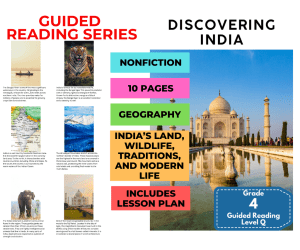
Discovering India: Guided Reading Level Q with Lesson Plan
ELA, Resources for Teachers, Reading Comprehension, Reading, Science, Geography, Social Studies, Technology, History, Life Sciences, Grade 3, 4, 5, Worksheets & Printables, Worksheets, Teacher Tools, Centers, Activities, Literacy Readers, Quizzes, Quizzes and Tests, Assessments, Lesson Plans
This Discovering India (level q) guided reading book with lesson plan includes: Guided Reading Color Label (front cover x1) This is a quick way to match the book’s demands to what students can generally handle.. The overall goal is to use the level/color to pick books for several smaller groups. To qualify for a certain level, a student is expected to read a book from that level with about 90–94% accuracy. If a student is consistently accurate and understands, move up a level. If the student is struggling at that level, drop down and add more support. Each student will improve at completely different rates, but it is generally one of the best ways to check progress across the class. DOWNLOAD THE CATALOG TO VIEW ALL GUIDED READING BOOKS AVAILABLE (SORTED LEVELS A-Z) Pre-Reading Question (x1) Teacher asks the prompt aloud, can be while showing the cover or first page. Students share what they already know, or make educated guesses from the cover. Prompt them to use the target vocabulary. Write some of their responses on the board to look back at during the reading. Vocabulary Words (x5) Introduce the five words, best doing it one at a time. Start by saying it, while students repeat and then see if anyone knows what it means before reading further. Read through the meaning and try to briefly connect each word to a picture or gesture so it’s meaningful. Ask students to flip through the book pages and point to where they see each of the vocabulary words. While reading the book pause upon coming across one of the vocab words or read the sentence twice to make sure students understand the word has appeared. Optional: Ask students to raise hands whenever they see/hear one of the new words. Guided Reading Pages (x10) Check the book snapshot (below) for: primary topic - do you need to prep extra reading or intro materials on this? what is taught best - decide on 1-2 bullets to focus on, use the prompt or words provided here for best results. learning goals - what you are checking for students to be able to do after the session, elicit answers using prompts or words provided. key vocabulary (see section above). questions overview - so you know what is coming up and if you need to prep extra materials to assist understanding. Run the lesson You may have already looked at a few of the pages together, but you can show them some of the pictures again first to set meaning. Depending on how much time you have and how familiar your students are with guided reading class, you may want to read the book aloud first with the group first. Students whisper or partner read, while you listen in. If time, do it as a group, one student reading a page each. Use the guided page’s prompts to coach: “Check the picture / does it make sense?” “Point under the words / try the first sound” “Reread the sentence smoothly”. Try to focus more on one student per session (rotating every time), so you can work out if they are ready to move up or need to move down a level. Comprehension Questions (back cover x3) This is your way to check that students didn’t just say the words, but actually understood the text. First, let students answer by pointing to the page/picture and saying a short sentence. After any answer, follow with: “Show me where you found that in the text.” In bigger groups, have partners answer first (10–20 seconds), then call on 2–3 students to share. Differentiation tips: Emerging speakers/struggling readers: oral + pointing On-level: oral in a full sentence Higher: one written sentence or draw + label Book Snapshot Title: Discovering India Genre: Nonfiction Subject: Social Studies (Geography/Culture) Primary Topic: India’s land, wildlife, traditions, and modern life Estimated Guided Reading Level (A–Z): Q What This Book Teaches Best Key geography facts about India’s location in Southern Asia, nearby borders, and surrounding waters. How landforms shape life in India, including the Himalayan Mountains and the Ganges River. Notable wildlife of India through examples like the Bengal tiger and the Indian elephant. Cultural traditions and everyday life, including spices used in meals and the celebration of Diwali. Modern India today, including transportation (auto-rickshaws) and major cities connected to technology and innovation. Learning Goals Students will describe where India is located and name details about its borders and southern waters. Students will explain how the Himalayan Mountains are described as protecting the inner plains. Students will explain why the Ganges River is important to people and farming in northern India. Students will describe key traits of the Bengal tiger and the Indian elephant using details from the text. Students will identify facts about the Taj Mahal, including where it is and features described in the book. Students will describe examples of Indian culture and modern life mentioned in the text (foods/spices, Diwali, transportation, cities). Key Vocabulary From the Text vast — very large in size. significant — very important. distinctive — easy to notice because it looks different. minarets — tall towers on a monument. diyas — small clay lamps used during Diwali. Discussion Prompts Pre-reading question: What are you hoping to learn about India as you read? Comprehension questions: What warm waters does the text say surround India to the south? Comprehension questions: According to the text, why is the Ganges River essential? Comprehension questions: What does the text say diyas symbolize during Diwali? Printing Tips 1. Best Printing Method (Recommended) “Booklet” Printing (Best if Available) If your printer or PDF viewer supports Booklet Printing , use this. Settings to use: Print mode: Booklet Paper size: Letter or A4 (either works) Orientation: Landscape Print on both sides: Yes Flip on: Short edge Scaling: Fit to printable area Booklet subset: First test: Front sides only Then: Back sides only This will automatically: Pair pages correctly Put the cover on the outside Align everything for folding After printing, fold in half and staple along the spine . 2. If “Booklet” Printing Is NOT Available You can still print this correctly with manual duplex printing . Step-by-step: Open the PDF. Choose Print . Set: Orientation: Landscape Pages per sheet: 1 Print on both sides: Yes Flip on: Short edge Print all pages . Because each PDF page already contains two facing book pages, the result will still fold cleanly into a book. Thousands of Cored Education products are included with your TeachSimple membership. Download links and encyclopedia index available here.
Author Cored Education
Rating
Tags Reading Comprehension, Reading Passages, Reading, Guided Reading, Guided Reading Lesson Plan, Guided Reading Activity, Pre-reading, Social Studies, Geography, History
I WONDER - What Is The Radius And Diameter | Animated Video Lesson
STEM, Geometry, Math, Grade 4, 5, 6, 7, 8, 9, 10, Lesson Plans, Teacher Tools
Video Introduction An amazing video designed for the students to learn more about STEM. I WONDER - What Is The Radius And Diameter | Animated Video Lesson Do you like STEM subjects? what is your favorite one? Have you ever tried to plant a seed? If yes, tell us more about it. Or have you ever tried to invent something? If yes, tell us more about it. And how do you think it will help us? Have you ever seen a microorganism under a microscope? What was it? And how it looked like? Mathematics is a marvelous subject. Let' sharpen our brains and solve some equations. Do you like timetable tricks? What is your favorite one? Do you know how to code? Have you ever created an app or a game before? If yes, how was it like? I WONDER - What Is The Radius And Diameter | Animated Video Lesson The video is perfect for encouraging the researching skills for the students, while learning more about this fantastic topic. I WONDER - What Is The Radius And Diameter | Animated Video Lesson This friendly designed video is suitable for students at school, homeschooling, and as a group activity. Format Available in MP4 format.
Author Educational Voice
Tags What Is The Radius And Diameter, What Is The Radius And Diameter Video, Radius, Radius Facts, Radius Video, Radius Video For Kids, Diameter, Diameter Facts, Diameter Video, Diameter Video For Kids

I WONDER - How Are Polygons Named | Animated Video Lesson
STEM, Geometry, Math, Grade 1, 2, 3, 4, 5, 6, 7, 8, Lesson Plans, Teacher Tools
Video Introduction An amazing video designed for the students to learn more about STEM. I WONDER - How Are Polygons Named | Animated Video Lesson Do you like STEM subjects? what is your favorite one? Have you ever tried to plant a seed? If yes, tell us more about it. Or have you ever tried to invent something? If yes, tell us more about it. And how do you think it will help us? Have you ever seen a microorganism under a microscope? What was it? And how it looked like? Mathematics is a marvelous subject. Let' sharpen our brains and solve some equations. Do you like timetable tricks? What is your favorite one? Do you know how to code? Have you ever created an app or a game before? If yes, how was it like? I WONDER - How Are Polygons Named | Animated Video Lesson The video is perfect for encouraging the researching skills for the students, while learning more about this fantastic topic. I WONDER - How Are Polygons Named | Animated Video Lesson This friendly designed video is suitable for students at school, homeschooling, and as a group activity. Format Available in MP4 format.
Author Educational Voice
Tags How Are Polygons Named, How Are Polygons Named Video, Polygons, Polygon, Polygons Facts, Polygons Facts For Kids, Polygons Video, Polygons Video For Kids, Polygon Facts, Polygon Video

Classification & Adaptation: A Case Study: The Koala and Its Adaptations Gr. 5-8
Science, Life Sciences, Biology, Grade 5, 6, 7, 8, Teacher Tools, Lesson Plans
Classification & Adaptation: A Case Study: The Koala and Its Adaptations Gr. 5-8 This engaging teaching resource is tailored for students in grades 5 to 8. It delves into the captivating world of biology, specifically focusing on the sphere of animal adaptation through an intimate exploration of the survival mechanisms adopted by the koala bear. This teaching aid encourages students to consider pressing questions such as: What distinguishes warm-blooded and cold-blooded animals? How are vertebrates different from invertebrates? BLOOM's Taxonomy Concepts In trying to answer these fundamental scientific inquiries, students will come face-to-face with concepts that make up BLOOM's taxonomy like comprehension, application, analysis and synthesis. The Core Subject – The Koala Bear The core of this resource a detailed case study about one of Australia's most iconic fauna – The Koala Bear. Students learn about this unique creature and its remarkable adaptations for survival in intricate environmental conditions. Educational Activities Included "How Important Are Thumbs?" "The Lake Habitat Thermometer" "A Day in the Life of a Paleontologist!" Apart from enlightening reading passages that simplify complex scientific concepts, this valuable resource also contains hands-on activities that facilitate practical understanding application. Educational Standards Alignment & Student Guide Additions This bundle conforms with your State’s educational standards ensuring relevance while aligning with STEM initiatives guarantees rigor in critical thinking and problem-solving skills development. Its simplified language makes learning enjoyable even to remedial students. Instruction Modes Educators can utilize this vital source material for various instruction modes including: Whole-class teaching Small group sessions Homework assignments fostering independent thought processes among learners. The addition of a student guide adds flexibility into usage possibilities. For educators keen on enhancing their grade 5-8 wards' scientific acumen, "Classification & Adaptation: A Case Study: The Koala and Its Adaptations Gr. 5-8" is an invaluable partner for the journey of comprehension, analysis, synthesis and evaluation of every learning endeavor.
Author Classroom Complete Press
Tags PDF