



2,375 products added recently
Page 44 - 5th Grade Lesson Plans
Prepare your fifth graders for future challenges with lesson plans that promote higher-order thinking and mastery of key concepts. These resources encourage collaboration and in-depth exploration across subjects. Use them to guide your students toward readiness for middle school.

 Show filters

I WONDER - Why Was The Titanic Called The Unsinkable Ship
History: British, History, Social Studies, History: Europe, History: USA, Grade 4, 5, 6, 7, 8, 9, 10, Lesson Plans, Teacher Tools
Video Introduction An amazing video designed for the students to learn more about history. I WONDER - Why Was The Titanic Called The Unsinkable Ship | Animated Video Lesson Do you like history? Which topic do you really enjoy about history? Have you ever read an interesting fact about the Vikings? If yes, can you mention them? What do you like most about the Victorian era? Can you name all the Tudors? Have you ever wondered how people used to live in ancient Japan and ancient China? Do you know any interesting facts about ancient Egyptians and the Pharaohs? Have you ever visited South America? What do you know about Incas and Aztecs? Celtic culture was really one of a kind, can you name any of the places that Celts used to live in? Imagine yourself living during the ancient Roman empire, how your life will look like? Ancient Greece was an amazing place to live in. What do you know about ancient Greek life? I WONDER - Why Was The Titanic Called The Unsinkable Ship | Animated Video Lesson The video is perfect for encouraging the researching skills for the students, while learning more about history. I WONDER - Why Was The Titanic Called The Unsinkable Ship | Animated Video Lesson This friendly designed video is suitable for students at school, homeschooling, and as a group activity. Format Available in MP4 format.
Author Educational Voice
Tags Why Was The Titanic Called The Unsinkable Ship, Why Was The Titanic Called The Unsinkable Ship Video, Titanic The Unsinkable Ship, Titanic The Unsinkable Ship Video, Titanic The Unsinkable Ship Facts, Titanic The Unsinkable Ship Video For Kids

Horses Reading Comprehension Passage - Cored Ed Encyclopedia
ELA, Reading Comprehension, Reading, Pre-Reading, Language Development, History, Social Studies, Geography, Life Sciences, Science, Grade 2, 3, 4, 5, Worksheets & Printables, Worksheets, Teacher Tools, Centers, Activities, Writing Prompts, Assessments, Quizzes and Tests, Quizzes, Lesson Plans
This horses reading comprehension with lesson plan includes: Visualization (on the front cover) Start your lesson by taking a minute to think and share something about the topic. Read the script aloud (slowly), perhaps prepare some music or sound effects. Student close their eyes and let their imaginations wander. Students open their eyes, read the question aloud and give them a few minutes to complete. Ask a few students to share or keep answers until the end to compare with what they learn in the passage. Quick pause—thousands of Cored Education products are included with your TeachSimple membership. Download links and encyclopedia index available here. Pre-Reading Trivia Students will write down one thing they already know about the subject and then read five more facts and discuss. These facts are fun, and the students will enjoy learning about the subject before reading more. Give 1 minute for students to write what they already know (no pressure—best guess is fine). Read the five facts together. After each fact, do ask a student for their opinion, was it surprising? Set a purpose by asking students to highlight/underline one fact they want to learn more about during the reading. Reading Passage The text is a high-interest reading passage with set paragraphs, roughly three to four paragraphs long. It contains a variety of themes about the topic, anywhere from history to technology. The passage is between 250 and 350 words in length. First, ask students to look at the headings and see what they’ll learn about today. What do they know about the topic/heading? First read options: Teacher read-aloud (best for support). Partner reading (paragraph by paragraph). While reading, students underline important details, and vocabulary words they think may come up in the questions section. Mixed Questions The first question page contains four multiple-choice questions, each with a choice of four answers, and three written response questions that require a sentence or two from the student. Students complete the mcqs first independently, then review quickly as a class. For the 3 written responses, try to get students giving the answer with some form of evidence: “I think ___ because the text says ___.” If students get stuck, send them back to check the passage. Vocabulary Questions Practice seven key words from the text in this section across two activities. First section is scrambled words where students will unscramble three words given a clue for each. The second section is a word to meaning matching activity. Before starting, have some students read out words they underlined in the passage. Ask students to say the word and read aloud the sentence(s) around each word. Ask students to do scrambled words and the matching exercise in pairs then go through answers as a class. For the scrambled spelling task, get four pairs to come up to the board and write the words for extra practice with the other student reading out the clue. For the matching task, prompt students to give full sentences: “I matched ___ with ___ because ___.” Creative Writing In this question, the student will be required to write a five to eight sentence paragraph on a question related to the topic. Before starting, ask students write down 3 key ideas they are going to include in their piece. Ask students for ideas to share around the class to help those struggling. Pro writing expectations: 5–8 sentences At least 2 facts or details from the passage At least 2 vocabulary words from the previous page Students read their paragraphs while classmates listen for facts and vocabulary words. Extension Activities This page is optional for fast finishers or to take home. There are several activities, each one requiring a different skill. Do some, do none, do all, completely optional - but you will feel reassured knowing every possibility is planned for. Includes summary writting question and additional facts. Answer Key There are answers for the multiple-choice questions, written response questions have sample answers, vocabulary answers and if there is a summary question then a sample summary will be provided as well. Lesson Plan Included Customized lesson plan for this lesson is included. Lesson Snapshot Title: Horses Genre: Nonfiction (informational text) Subject: Life Science / Social Studies (human–animal history) Primary Topic: Horse features, domestication, and partnership with people Estimated Guided Reading Level (A–Z): R What This Lesson Teaches Best Describes horses as domesticated equines (Equus ferus caballus) with single hard hooves. Explains how horse ancestors changed over millions of years from many-toed to one-toed runners. Uses archaeology clues (tooth wear from a bit; Botai culture evidence) to explain early domestication. Shows how trained horses affected human travel and power, including chariots and the development of different breeds. Highlights horse social behavior and communication (ear turns, tail swishes, shifts of weight) as part of partnership. Learning Goals Identify key physical features of horses described in the passage (hoof, muscle, equine). Describe how horse ancestors changed over time, using details from the text. Explain what clues archaeologists found that suggest humans guided horses with a bit. Describe how horses helped people with travel and power long ago (such as chariots). Explain how people created different breeds by choosing traits like strength, speed, or calm temperaments. Describe how horses communicate and stay watchful using body signals mentioned in the passage. Key Vocabulary From the Text domesticated — tamed to live and work with people. equine — related to horses. ancestors — family members from long ago. archaeologists — scientists who study the past using evidence. temperaments — typical behaviors, like calmness or energy. FULL CATALOG OF DOWNLOAD LINKS AND ENCYCLOPEDIA INDEX HERE
Author Cored Education
Rating
Tags Vocabulary, Reading Comprehension, Reading Passages, Lesson Plans, Ela Lesson Plans, Reading Comprehension Lesson Plans, Pre-reading, Social Studies Lesson Plans, Life Science, Science Lesson Plans

More Writing Workouts That Work: By the authors of Four Square Writing
ELA, Writing, Grade 2, 3, 4, 5, 6, Teacher Tools, Lesson Plans
More Writing Workouts That Work: By the authors of Four Square Writing This teaching resource, "More Writing Workouts That Work", offers a simple and practical guide for both public school teachers and homeschoolers to elevate their students' writing skills. The creators, who are also the authors of 'Four Square Writing', have devised this resource considering educators who wish to extend their resources beyond conventional solutions. Suitable For Grade 2 - 6 Students Perfectly suitable for grade 2 up to grade 6 students, this comprehensive guide is set out to introduce dynamic exercises designed to help learners improve in various aspects of writing. It includes stimulating material aimed at helping students: discover topics for written tasks more creatively, use language with precision, diversify sentence structures effectively understand the art of shaping voice in writings alongside mastering successful beginnings and endings. Beyond Just Writing This document encourages learners not just to write but also instills crucial skillsets such as using dialogue appropriately within narratives and revising written work more efficiently. The expertly-created content serves as an ideal tool that can be adapted into writer's workshop mini lessons or utilized as part of language arts instruction. User-friendly Convenience & Versatility The user-friendly nature of this product file comes with immense convenience - it's available as a single PDF file type boosting ease-of-access across digital platforms making it easy-to-use while enhancing its versatile applicability within varied classroom environments or homeschooling setups alike keeping adaptability at its core offering - truly answering modern-day learning challenges while catering authentically educational needs! "From mainstream classrooms through remote learning situations right down till homeschooling environments - wherever you are aiming targeted skill enhancement when it comes to writing; remember more workouts that work, indeed work!"
Author Classroom Complete Press
Tags PDF
Number & Operations: Decimals - Addition & Subtraction - Practice the Skill 2 - PC Software
Math, Decimals, Common Core, Grade 3, 4, 5, Teacher Tools, Lesson Plans
Number & Operations: Decimals - Addition & Subtraction – Practice the Skill 2 - PC Software For educators seeking an effective and accurate resource for reinforcing the Mathematical concept of addition and subtraction of decimals, this software emerges as a valuable teaching tool. As part of Number and Operations, educators introduce students to the world of decimal dynamics using this PC software. Interactive Teaching Resource with Timed Drill Activities: This teaching resource is designed with 'Practice the Skill' timed drill activities that encourage students to subtract provided decimals. This interactive method takes learning well beyond textbooks, thereby making mathematics enjoyable for learners at Grade 3, Grade 4, and Grade 5 levels. A Set of Included Math Tools: A set of included math tools amplifies user experience by delivering additional support during each lesson. This turns complex Math lessons into understandable concepts promoting active learner engagement. Versatile Usability: Taking into consideration various learning patterns among students, this product exhibits extensive usability points. It can be used in different setup options starting from whole group classes to smaller study groups or even as individual homework assignments. Bilingual Support: To cater to diverse classrooms filled with multi-lingual young minds or those looking forward to learning new languages at an early age; this software carries default English voice over and text but also incorporates a Spanish voice over plus text option enhancing its utility across bilingual settings. Educational Alignment Standards: This software adheres to The Common Core State Standards related specifically with Number & Operations in Mathematics, Satisfies STEM initiatives showcasing critical thinking skills along its pathway, and It conforms educational contents to NCTM (National Council Teachers Mathematics). The delivery design ensures easy download onto PCs via a single zip file minimizing technical obstacles for users across platforms. In conclusion, educators succeed in transforming theoretical mathematical concepts into tangible student experience rendering real life implications thereby ensuring thorough understanding which becomes evident through improved academic performance data.
Author Classroom Complete Press
Tags Adding Decimals, Subtracting Decimals, Operations, Digital Math, Decimals Printable

Motion: How to Graph Motion - FLASH-PC
Science, Physics, Common Core, Grade 5, 6, 7, 8, Teacher Tools, Lesson Plans
Motion: How to Graph Motion - FLASH-PC An innovative tool designed to simplify the teaching and understanding of the concepts involved in graphing motion. This resource has been thoughtfully crafted for educators aiming at grades 5 through 8, providing valuable content that aligns with Common Core State Standards. In The Realm Of Science And Physics Combining interactive elements and comprehensive theory in a user-friendly software format, this teaching aid navigates students through the intricate aspects of plotting motion on graphs. It presents engaging methods including reading passages with pre-reading questions (before you read) as well as assessment questions (after you read). A Multi-dimensional Learning Tool Lively audio for an auditory learning experience. Dynamic visual content and printable resources aiding in visual retention. Vocabulary flashcards add to its appeal making it an all-inclusive package suitable for teachers and homeschoolers alike. An Array of Possibilities... The hands-on activities that optimize student engagement while enhancing critical thinking skills according to Bloom's Taxonomy. The technology can be used for individual assignments or homework tasks thereby fostering independent learning, further more this immersive product can also serve as a platform for classroom experimentation or demonstrations. "Motion: How to Graph Motion - FLASH-PC" thus bridges gaps between textbook knowledge and real-world comprehension in an accessible way. Ideal For Varied Instructional Settings! Fostering group discussions during whole group instruction or center-focused small group activities. A useful addition to any science curriculum due to its abundant embedded tools offering numerous possibilities for lesson plans related to Physics concepts. Lastly, the added feature of video content aims at clarifying techniques needed when graphing motion — ensuring an all-around approach towards mastery of this subject matter. Overall, it serves as tool enhancing academic performance by strengthening student's understanding of complex scientific principles.
Author Classroom Complete Press
Tags Software (PC)
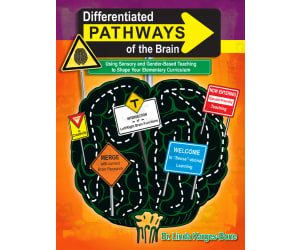
Differentiated Pathways of the Brain: Using Sensory and Gender-Based Teaching to Shape Your Elementary Curriculum
, Preschool, Grade 1, 2, 3, 4, 5, 6, Teacher Tools, Lesson Plans
The Differentiated Pathways of the Brain: Using Sensory and Gender-Based Teaching to Shape Your Elementary Curriculum This comprehensive 144 page PDF teaching resource is loaded with content suitable for Kindergarten to Grade 6, designed for both classroom educators and homeschoolers. Braided with Brain Research: The material is guided by recent brain research findings, providing educators with deep insights into sensory learning techniques and gender-based teaching methods aimed at boosting student engagement. Learn about optimal classroom groupings to facilitate learning while minimizing friction among students. Tactical teaching methods such as leveraging boys' inherent energy levels in language arts or utilizing girls' verbal skills effectively when facing math problems are explored in detail. The scope goes beyond traditional academic subjects, extending to different types of plans from overseeing single lesson objectives up to broader curriculum development projects. A Versatile Tool Designed with Today's Educational Landscape in Mind: An excellent tool amidst increasingly specialized teaching methodologies; this guide provides timely information rooted in thoughtful research. It paves the way for engaging students through differentiated instruction that caters uniquely to each child’s needs. Implementation applies across various scenarios like full class instruction, small-group activities or even homework planning. Sowing Seeds for a Cognitive Classroom: 'The Differentiated Pathways of the Brain' offers teachers strategic pedagogical approaches anchored on understanding cognitive processes. Rather than prescribing set lessons, it fosters an environment conducive to tailoring instructions based on individual learning requirements - ensuring optimal results overall.
Author Classroom Complete Press
Tags Teacher Lesson Plan, Poathways, Sensory Based Teaching, Gender Based Teaching, Curriculum
I WONDER - What Is Environmental Sustainability | Animated Video
Environmental Science, Earth and Environmental Sciences, Science, Grade 4, 5, 6, 7, 8, 9, 10, Teacher Tools, Lesson Plans
Video Introduction An amazing video designed for the students to learn more about STEM. I WONDER - What Is Environmental Sustainability | Animated Video Lesson Do you like STEM subjects? what is your favorite one? Have you ever tried to plant a seed? If yes, tell us more about it. Or have you ever tried to invent something? If yes, tell us more about it. And how do you think it will help us? Have you ever seen a microorganism under a microscope? What was it? And how it looked like? Mathematics is a marvelous subject. Let' sharpen our brains and solve some equations. Do you like timetable tricks? What is your favorite one? Do you know how to code? Have you ever created an app or a game before? If yes, how was it like? I WONDER - What Is Environmental Sustainability | Animated Video Lesson The video is perfect for encouraging the researching skills for the students, while learning more about this fantastic topic. I WONDER - What Is Environmental Sustainability | Animated Video Lesson This friendly designed video is suitable for students at school, homeschooling, and as a group activity. Format Available in MP4 format.
Author Educational Voice
Tags What Is Environmental Sustainability, What Is Environmental Sustainability Video, Environmental Sustainability, Environmental Sustainability Facts, Environmental Sustainability Facts For Kids, Environmental Sustainability Video
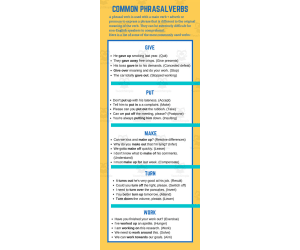
Phrasal Verbs | Intermediate Lesson Plan
ELA, Grammar, Grade 5, 6, 7, 8, 9, 10, 11, 12, Teacher Tools, Lesson Plans
Phrasal Verbs Intermediate Lesson Plan This intermediate-level lesson plan helps students in grades 5-7 learn about phrasal verbs, an important concept in language arts and grammar. Students will start by reading an informative overview of phrasal verbs, including definitions and examples. Next, they will apply what they learned by completing short practice exercises that assess their comprehension and help reinforce proper grammar usage. This versatile English language arts resource can be used by teachers in whole-class or small-group settings. It also works well for at-home practice or homework assignments. An answer key is provided to support student learning. Everything is formatted as editable PDF documents for convenience, including a version that is compatible with Google Apps for easy online assignment and grading. This ESL ELA TEFL lesson plan now includes new flash cards and exercises as well as a warmer, conversation questions, main use, construction, rules, examples, open questions, closed questions, activity, writing drill and extra study. The TEFL resource is available in PDF with 31 ready to print pages and one digital access file. A part of it is on Google Apps. The answer key is also included for reference.
Author TEAM TEFL
Tags Verbs Lesson, Matching Game, Direct Objects, Reports, ESL
I WONDER - What is The Smallest Vertebrate In The World
STEM, Animals, Life Sciences, Science, Biology, Grade 1, 2, 3, 4, 5, 6, 7, 8, Lesson Plans, Teacher Tools
Video Introduction Animal kingdoms are full of fascinating wonders to learn. This video is designed for the students to learn more about animals in different countries. I WONDER - What is The Smallest Vertebrate In The World | Animated Video Lesson Do you like animals? what is your favorite one? Do you own a pet? If yes, tell us more about it, like what its name? And what do you like most about it? What are the animal kingdoms? Can you write down the characteristics of each animal class like mammals, birds, reptiles, amphibian, fish and mollusks. Do you know that some animals can sing, can you name any of them? What is the largest and the smallest mammal in the world? What is the largest and the smallest bird in the world? What is the largest and the smallest fish in the world? I WONDER - What is The Smallest Vertebrate In The World | Animated Video Lesson The video is perfect for encouraging the researching skills for the students, while learning more about these fantastic animals. I WONDER - What is The Smallest Vertebrate In The World | Animated Video Lesson This friendly designed video is suitable for students at school, homeschooling, and as a group activity. Format Available in MP4 format.
Author Educational Voice
Tags What Is The Smallest Vertebrate In The World, What Is The Smallest Vertebrate In The World Video, Smallest Vertebrate In The World, Smallest Vertebrate In The World Facts, Smallest Vertebrate In The World Video

Number & Operations: Percentages with Fractions - Learn the Skill - MAC Software
Math, Percentages, Common Core, Grade 3, 4, 5, Teacher Tools, Lesson Plans
Number & Operations: Percentages with Fractions - Learn the Skill - MAC Software Overview: A comprehensive teaching resource designed for educators guiding students in grades 3 to 5. This software provides a hands-on experience in understanding calculations involving percentages and fractions, aligning perfectly with classroom lesson plans . Specially developed for math lessons focusing on percentages. Presents abstract mathematical ideas through real-world word problems. Fostering an engaging learning environment where students can connect their topics to everyday scenarios. Multilingual Support: In addition to English, our software also includes a Spanish text option and voice over accompaniment, catering to bilingual or Spanish-speaking classrooms. In-Classroom or Homeschool Application : Ideal for whole-group instruction or discussion sessions, this dynamic resource ensures an interactive learning experience. Can also be used effectively at home for homework assignments and reinforcement activities. Certifications : Closely Adheres: Common Core State Standards and STEM initiatives. Fully Compliant : NCTM standards. User-friendly Experience: The software is conveniently contained within one zip file specifically designed for MAC systems making it user-friendly. Post downloading onto your system it is instantly ready-to-use allowing immediate integration into your existing math lesson framework. To Sum Up :'Number & Operations: Percentages with Fractions'brings together best educational practices alongside technological convenience. Make mathematics more engaging than ever before! Consider integrating this tool today!
Author Classroom Complete Press
Tags Percentages, Fractions, Operations, Math Skills, Digital Math

Weather Unit
Science, Earth and Environmental Sciences, Earth Sciences, Research, Grade 3, 4, 5, 6, Lesson Plans, Teacher Tools
The Weather Unit An engaging and comprehensive resource package, the Weather Unit is designed to kindle curiosity and foster learning about weather in students. It's a versatile educational tool suitable for educators in public schools as well as homeschooling parents. CLOSE Reading Nonfiction Passages These passages illuminate various facets of weather- from the basic concept, elements like water cycle and clouds, different types of weather conditions, to meteorology and forecasting. Each passage comes with text-dependent questions that enhance comprehension skills. Vocabulary Cards i>Accompanying each CLOSE reading segment are vocabulary cards with definitions simplifying complex terminologies for students. Weather Research Report Included is a report that motivates students towards independent inquiry into the intricate world of weather. Educational Tools Included: A PowerPoint or handout that explicates the steps involved in CLOSE Reading along with anchor charts for student annotation. 'Text Dependent Questions', Common Core Essential questions ideal for assessments or performance tasks. RAFT ideas (Role-Audience-Format-Topic technique), Cognitive Content Dictionary improving vocabulary retention through visual association. Additional Materials: KWL Chart (Know-Want-Learned) Venn Diagrams promoting comparison analyses among learnt elements Tree Map Graphic Organizers to breakdown grammar components found in passages This bundle is an ideal choice for Grades 3 - 6 teachers teaching Science particularly Earth Sciences; bridging theoretical know-how with fun stimulating activities ensuring student motivation levels remain high throughout their learning journey of Weather. File formats available are Multiple File Types allowing easy access on various platforms to better suit your teaching needs.
Author The Teacher Team
Tags Weather, Close Reading, Nonfiction Passages, Vocabulary Cards, Research Report

Insect Breeding | Animated Insect Video Lesson
Science, Life Sciences, Insects, Grade 3, 4, 5, 6, Lesson Plans, Teacher Tools
This animated science video lesson is all about insect breeding. Students will love this engaging and interactive video as they learn more about insects. This video serves as a great introduction or review video for your learners. This is a 13-minute science video lesson.
Author Educational Voice
Tags Insect, Breeding, Science Lesson, Science Video, Insect Lesson, Animated Breeding, Insect Animation, Bug Breeding

Future Tense: Going To | Beginner Lesson Plan
ELA, Grammar, Grade 2, 3, 4, 5, 8, 9, 10, 11, 12, Teacher Tools, Lesson Plans
Going to ESL and EFL lesson plan for A1 beginner English students. This TEFL resource is ready to go and comprises a range of teaching materials, such as flashcards, activities, conversation topics, and writing drills. Created to raise language proficiency for early English students, the lesson teaches us about going to in a variety of situations when discussing the future. Describing plans for the future, it empowers ESL students with the knowledge and confidence to use the future form accurately in every day conversation and writing. With the inclusion of activities, exercises, and real-life examples, this lesson plan strengthens language concepts and establishes a solid foundation in the basics of English grammar. This lesson plan includes: Cover page Flash cards A warm-up activity Main use Construction details Rules, along with any exceptions Illustrative examples Two closed exercises One open exercise Revision exercise Writing exercises Chatterbox, a recurring feature in our course books encouraging conversation Activity , such as a game, quiz, puzzle, etc., to conclude the class The lesson plan is available in PDF with 29 ready to print pages and one digital access file. A part of it is on Google Apps. The answer key is also included for reference.
Author TEAM TEFL
Tags Verbs, Future Tense, Grammar Lesson, Language Arts, Verb Tenses

Discover! Plants
Science, Life Sciences, Nature & Plants, Grade 4, 5, 6, Teacher Tools, Lesson Plans
Discover! Plants: An Enlightening Educational Resource Your ideal guide for introducing or advancing the study of botany in Grade 4, 5, and 6 classrooms. This compilation of activities centers around many essential plant concepts. Key Concepts Include: The understanding of seeds Seedling germination and growth phases Intricate details about roots and stems Diverse features and functions of flowers Distinguishing characteristics between different trees species' The structure of leaves tied to the process of photosynthesis Seasonal Effects on Plant Life Cycle: This resource also includes sections highlighting how different weather patterns impact the natural development process in vegetation. A Hands-On Approach To Learning This teaching aid is more than a set of plain facts - it's an activity -driven approach to learning about plants. Tailored Activities Include: Sets of questions associated with each topic that encourages critical thinking A discussion forum among learners Answers provided within the materials for teachers to deliver accurate information Accessible Anytime, Anywhere One concrete PDF file accessible anywhere without any issues typical with traditional textbooks - merging traditional familiarity with digital education standards. A Versatile Teaching Resource! Use it during whole group class sessions or break it down into targeted instruction during extra classes or tutoring. Assign homework tasks from this resource to reinforce classroom learning - ensuring effective comprehension retention. In Summary, An all-in-one material offering detailed comprehensive assessment questions, fostering student interest & participation while instilling a profound appreciation for nature’s green kingdom. It's more than a textbook - it's an experiential gateway into botany under your guidance, and makes every science period an educational adventure.
Author Classroom Complete Press
Tags PDF
I WONDER - Who Invented The Yo-yo | Animated Video Lesson
History: Ancient, History, Social Studies, History: Europe, History: World, Grade 2, 3, 4, 5, 6, 7, 8, Lesson Plans, Teacher Tools
Video Introduction An amazing video designed for the students to learn more about history. I WONDER - Who Invented The Yo-yo | Animated Video Lesson Do you like history? Which topic do you really enjoy about history? Have you ever read an interesting fact about the Vikings? If yes, can you mention them? What do you like most about the Victorian era? Can you name all the Tudors? Have you ever wondered how people used to live in ancient Japan and ancient China? Do you know any interesting facts about ancient Egyptians and the Pharaohs? Have you ever visited South America? What do you know about Incas and Aztecs? Celtic culture was really one of a kind, can you name any of the places that Celts used to live in? Imagine yourself living during the ancient Roman empire, how your life will look like? Ancient Greece was an amazing place to live in. What do you know about ancient Greek life? I WONDER - Who Invented The Yo-yo | Animated Video Lesson The video is perfect for encouraging the researching skills for the students, while learning more about history. I WONDER - Who Invented The Yo-yo | Animated Video Lesson This friendly designed video is suitable for students at school, homeschooling, and as a group activity. Format Available in MP4 format.
Author Educational Voice
Tags Who Invented The Yo-yo, Who Invented The Yo-yo Video, Yo-yo, Yo-yo Facts, Yo-yo Facts For Kids, Yo-yo Video, Yo-yo Video For Kids, Yo-yo History, Yo-yo History Video, Yo-yo History Facts

Fiction Adventure Story Unit: Fort McHenry in Maryland
ELA, Reading, Grade 5, 6, 7, Lesson Plans, Teacher Tools
Fiction Adventure Story Unit: Fort McHenry in Maryland This fiction adventure story unit allows students to explore reading comprehension, vocabulary, social studies, and science through an engaging cross-curricular resource. Ideal for grades 5-7, the unit contains various worksheets and activities that could be implemented over 2-3 weeks. Teachers can utilize the fiction story and accompanying materials in whole group, small group, or individual settings through reading, writing, discussion, and project-based learning. Detailed teacher preparation guidelines and implementation directions facilitate seamless delivery of content. By interweaving multiple subjects in a creative format, this resource enables important real-world connections while building literacy skills. With bundles available for 50 unique adventure stories, the Mission X series offers dynamic learning across the curriculum .
Author TrilogyTeacher
Tags Fort McHenry, Cross-curricular, Fiction Adventure, Short Stories, Assessments

I WONDER - What Job Does Our Mouth Do | Animated Video Lesson
STEM, Biology, Life Sciences, Science, Human Body, Grade 1, 2, 3, 4, 5, 6, 7, 8, Lesson Plans, Teacher Tools
Video Overview The human body is full of fascinating wonders to learn. This video is created to help the students recognize the anatomy and the job of the human body. I WONDER - What Job Does Our Mouth Do | Animated Video Lesson Every part and organ in our human body is vital so let's see how important they are. Have you ever imagined how we look like if we didn't have a skeleton? Did you know that because we have our amazing muscles we can stand! Do you know how many teeth do we have? Have you ever wondered about the food journey inside our body? Can you name all the glands in our body? Why do we have skin? Our nervous system is really good at sending signals. Can you tell us more about it? Are you really good at Mathematics, painting, or any other thing? You should really thank your brain about it! The famous five senses are really doing a great work? Can you explain how every sense works? I WONDER - What Job Does Our Mouth Do | Animated Video Lesson The video is perfect for encouraging the researching skills for the students, while learning more about our fantastic human body. I WONDER - What Job Does Our Mouth Do | Animated Video Lesson This friendly designed video is suitable for students at school, homeschooling, and as a group activity. Format Available in MP4 format.
Author Educational Voice
Tags What Job Does Our Mouth Do, What Job Does Our Mouth Do Video, Mouth, Mouth Facts, Mouth Facts For Kids, Mouth Video, Mouth Video For Kids, Science, Science Facts, Science Facts For Kids
I WONDER - How Was The Amazon River Named | Animated Video Lesson
Geography, Social Studies, Grade 4, 5, 6, 7, 8, 9, 10, Lesson Plans, Teacher Tools
Video Introduction An amazing video designed for the students to learn more about famous places in different countries. I WONDER - How Was The Amazon River Named | Animated Video Lesson What do you know about this place? Do you know in which part of the world it is? Have you ever visited this place? If yes, can you tell us more about your adventure, and what do you like the most about this place? Do you like reading about Geography? What is your favorite country in the whole world? If you are going on a trip where it will be? Which country? What you are going to see there? Does this country has a famous place to visit? I WONDER - How Was The Amazon River Named | Animated Video Lesson The activity is perfect for encouraging the researching skills for the students, while learning more about this fantastic place. I WONDER - How Was The Amazon River Named | Animated Video Lesson This friendly designed video is suitable for students at school, homeschooling, and as a group activity. Format Available in MP4 format.
Author Educational Voice
Tags How Was The Amazon River Named, How Was The Amazon River Named Video, The Amazon River, Amazon River, Amazon River Facts, Amazon River Facts For Kids, Amazon River Video, Amazon River Video For Kids
I WONDER - How Many Eggs Do Crocodiles Lay | Animated Video Lesson
Life Sciences, Science, Biology, Animals, STEM, Grade 1, 2, 3, 4, 5, 6, 7, 8, Lesson Plans, Teacher Tools
Video Introduction Animal kingdoms are full of fascinating wonders to learn. This video is designed for the students to learn more about animals in different countries. I WONDER - How Many Eggs Do Crocodiles Lay | Animated Video Lesson Do you like animals? what is your favorite one? Do you own a pet? If yes, tell us more about it, like what its name? And what do you like most about it? What are the animal kingdoms? Can you write down the characteristics of each animal class like mammals, birds, reptiles, amphibian, fish and mollusks. Do you know that some animals can sing, can you name any of them? What is the largest and the smallest mammal in the world? What is the largest and the smallest bird in the world? What is the largest and the smallest fish in the world? I WONDER - How Many Eggs Do Crocodiles Lay | Animated Video Lesson The video is perfect for encouraging the researching skills for the students, while learning more about these fantastic animals. I WONDER - How Many Eggs Do Crocodiles Lay | Animated Video Lesson This friendly designed video is suitable for students at school, homeschooling, and as a group activity. Format Available in MP4 format.
Author Educational Voice
Tags How Many Eggs Do Crocodiles Lay, How Many Eggs Do Crocodiles Lay Video, Crocodiles, Crocodile, Crocodiles Facts, Crocodiles Facts For Kids, Crocodiles Video, Crocodiles Video For Kids, Crocodiles Eggs

I WONDER - What Happened On Christmas In 1914 | Animated Video Lesson
History: British, History, Social Studies, History: Europe, History: World, Grade 4, 5, 6, 7, 8, 9, 10, Lesson Plans, Teacher Tools
Video Introduction An amazing video designed for the students to learn more about history. I WONDER - What Happened On Christmas In 1914 | Animated Video Lesson Let's use our time machine and trave though time till we get to the ancient world where life began! Have you ever thought about how did ancient Greeks, Romans, Egyptians and even the Viking and Celts use to shower? And how did these amazing civilizations build iconic buildings and invented things that we still use till today like toothpaste? Do you know who was the first king and queen in the world? Which countries they ruled? Who is the most fascinating person lived on Earth? Tell us more about him/her. I WONDER - What Happened On Christmas In 1914 | Animated Video Lesson The video is perfect for encouraging the researching skills for the students, while learning more about history. I WONDER - What Happened On Christmas In 1914 | Animated Video Lesson This friendly designed video is suitable for students at school, homeschooling, and as a group activity. Format Available in MP4 format.
Author Educational Voice
Rating
Tags What Happened On Christmas In 1914, Christmas In 1914, Christmas In 1914 Facts, Christmas In 1914 Video, Christmas In 1914 Facts For Kids, Christmas In 1914 Video For Kids, World War 1, World War 1 Video
Reading Comprehension: Making Inferences
ELA, Reading, Reading Comprehension, Common Core, Grade 5, 6, 7, 8, Teacher Tools, Lesson Plans
Reading Comprehension: Making Inferences Teaching Resource For Grades 5-8 This invaluable teaching resource is designed for educators working with students in grades 5 through 8. Falling under the Language Arts discipline, and the subcategory of Comprehension,, it contains instructional material presented in an easy-to-follow Lesson Plan format. Aim: The principal aim is to bolster a student's ability to read fluently and comprehend intricate text across various subjects within and outside traditional classroom contexts. Proficiency in reading comprehension stands as a core life skill necessary for academic excellence. Skill Acquisition: Utilizing context clues. Determining the main idea from a text. Inferencing or understanding implicit meanings from given data. Each concept introduced lays solid foundational elements that enhances reading acquisition. These concepts are reinforced throughout for easier assimilation by pupils. Pedagogical standards: This product adheres to high pedagogical standards set by Bloom’s Taxonomy of Learning framework. It precisely aligns with Common Core State Standards, making it suitable both for public school teachers seeking consistency with established curriculum guidelines and homeschoolers seeking comprehensive scholastic resources. In Summary This single-file PDF tool is ready-for-use; whether you intend to use it during whole group instruction, small learning circles, or even as independently assigned student homework – its utility will shine through. Get your own copy now!
Author Classroom Complete Press
Tags PDF

I WONDER - How Did Stone Age People Get Their Food | Animated Video
History: Ancient, History, Social Studies, History: World, Grade 4, 5, 6, 7, 8, 9, 10, Lesson Plans, Teacher Tools
Video Introduction An amazing video designed for the students to learn more about history. I WONDER - How Did Stone Age People Get Their Food | Animated Video Lesson Do you like history? Which topic do you really enjoy about history? Have you ever read an interesting fact about the Vikings? If yes, can you mention them? What do you like most about the Victorian era? Can you name all the Tudors? Have you ever wondered how people used to live in ancient Japan and ancient China? Do you know any interesting facts about ancient Egyptians and the Pharaohs? Have you ever visited South America? What do you know about Incas and Aztecs? Celtic culture was really one of a kind, can you name any of the places that Celts used to live in? Imagine yourself living during the ancient Roman empire, how your life will look like? Ancient Greece was an amazing place to live in. What do you know about ancient Greek life? I WONDER - How Did Stone Age People Get Their Food | Animated Video Lesson The video is perfect for encouraging the researching skills for the students, while learning more about history. I WONDER - How Did Stone Age People Get Their Food | Animated Video Lesson This friendly designed video is suitable for students at school, homeschooling, and as a group activity. Format Available in MP4 format.
Author Educational Voice
Tags How Did Stone Age People Get Their Food, How Did Stone Age People Get Their Food Video, Stone Age People, Stone Age People Facts, Stone Age People Facts For Kids, Stone Age People Video, Stone Age People Video For Kids
Geometry: Triangles & Pyramids - Practice the Skill 1 - FLASH-MAC
Math, Geometry, Common Core, Grade 3, 4, 5, Teacher Tools, Lesson Plans
Geometry: Triangles & Pyramids - Practice the Skill 1 - FLASH-MAC This is an instrumental teaching resource specifically tailored for educators, allowing students to develop a deeper understanding of triangles and pyramids in geometry. The tool offers curriculum -based content with practical 'practice-the-skill' timed drills targeted for students in grades 3 to 5. Its immediate feedback and constant engagement enhance self-paced learning. Key Features: It can ask students to identify triangles via their sides, incorporating interactive elements into education. Seamlessly combines geometrical concepts with educational technology targeting enrichment of math lessons and improved comprehension levels. All content aligns with Common Core State Standards and integrates smoothly into STEM initiatives aiming at improving student interest and literacy levels within these crucial academia areas. The software meets criteria set by NCTM (National Council of Teachers of Mathematics), thus hitting key learning objectives. The Geometry: Triangles & Pyramids - Practice the Skill 1 - FLASH-MAC facilitates both English text and voice over as well as options in Spanish; breaking language barriers within education. This makes it a more inclusive tool for classrooms across varying linguistic backgrounds. The Utility of the Tool: This software wonderfully complements lesson plans integrating effortlessly into whole group instruction or small group activities. Additionally, given its intuitive nature can be assigned as engaging homework assignments ensuring continuity in learning without being too taxing on minds young or older alike! Note: Please remember that this software requires MAC system access given its design catering specifically towards such platform users.
Author Classroom Complete Press
Tags Software (Mac)
I WONDER - Where Do Selkies Live | Animated Video Lesson
History, Social Studies, Common Core, Grade 4, 5, 6, 7, 8, 9, 10, Lesson Plans, Teacher Tools
Video Introduction An amazing video designed for the students to learn more about mythological creatures in different cultures. I WONDER - Where Do Selkies Live | Animated Video Lesson Mythology is full of wonders and spectacular stories. Ancient civilizations were trying to explore every aspect of life, while they search for new technologies, they wanted to believe in something big and can change the world, so they created mythical creatures and mythical stories. Let's hear about them! What do you know about these creatures? Cyclops, Centaurs, Selkies, Phoenix, Gnomes, Dragons, Gorgons, Orcs, Cerberus, Trolls, Minotaur, Griffins, Mermaids, Elves, Polyphemus, Pegasus, and Ogres. I WONDER - Where Do Selkies Live | Animated Video Lesson The video is perfect for encouraging the creativity skills for the students, while learning more about this fantastic mythical creature. I WONDER - Where Do Selkies Live | Animated Video Lesson This friendly designed video is suitable for students at school, homeschooling, and as a group activity. Format Available in MP4 format.
Author Educational Voice
Rating
Tags Where Do Selkies Live, Where Do Selkies Live Video, Selkies, Selkies Video, Selkies Facts, Selkies Facts For Kids, Selkies Video For Kids, Mythology, Mythology Facts, Mythology Video