



2,285 products added recently
Page 80 - 5th Grade Lesson Plans
Prepare your fifth graders for future challenges with lesson plans that promote higher-order thinking and mastery of key concepts. These resources encourage collaboration and in-depth exploration across subjects. Use them to guide your students toward readiness for middle school.

 Show filters


Jugglers Reading Comprehension Passage - Cored Ed Encyclopedia
ELA, Reading Comprehension, Reading, Language Development, History, Social Studies, Geography, Pre-Reading, Vocabulary, Spelling, Grade 2, 3, 4, 5, Worksheets & Printables, Worksheets, Teacher Tools, Centers, Activities, Writing Prompts, Assessments, Quizzes and Tests, Quizzes, Lesson Plans
This Jugglers reading comprehension with lesson plan includes: Visualization (on the front cover) Start your lesson by taking a minute to think and share something about the topic. Read the script aloud (slowly), perhaps prepare some music or sound effects. Student close their eyes and let their imaginations wander. Students open their eyes, read the question aloud and give them a few minutes to complete. Ask a few students to share or keep answers until the end to compare with what they learn in the passage. Quick pause—thousands of Cored Education products are included with your TeachSimple membership. Download links and encyclopedia index available here. Pre-Reading Trivia Students will write down one thing they already know about the subject and then read five more facts and discuss. These facts are fun, and the students will enjoy learning about the subject before reading more. Give 1 minute for students to write what they already know (no pressure—best guess is fine). Read the five facts together. After each fact, do ask a student for their opinion, was it surprising? Set a purpose by asking students to highlight/underline one fact they want to learn more about during the reading. Reading Passage The text is a high-interest reading passage with set paragraphs, roughly three to four paragraphs long. It contains a variety of themes about the topic, anywhere from history to technology. The passage is between 250 and 350 words in length. First, ask students to look at the headings and see what they’ll learn about today. What do they know about the topic/heading? First read options: Teacher read-aloud (best for support). Partner reading (paragraph by paragraph). While reading, students underline important details, and vocabulary words they think may come up in the questions section. Mixed Questions The first question page contains four multiple-choice questions, each with a choice of four answers, and three written response questions that require a sentence or two from the student. Students complete the mcqs first independently, then review quickly as a class. For the 3 written responses, try to get students giving the answer with some form of evidence: “I think ___ because the text says ___.” If students get stuck, send them back to check the passage. Vocabulary Questions Practice seven key words from the text in this section across two activities. First section is scrambled words where students will unscramble three words given a clue for each. The second section is a word to meaning matching activity. Before starting, have some students read out words they underlined in the passage. Ask students to say the word and read aloud the sentence(s) around each word. Ask students to do scrambled words and the matching exercise in pairs then go through answers as a class. For the scrambled spelling task, get four pairs to come up to the board and write the words for extra practice with the other student reading out the clue. For the matching task, prompt students to give full sentences: “I matched ___ with ___ because ___.” Creative Writing In this question, the student will be required to write a five to eight sentence paragraph on a question related to the topic. Before starting, ask students write down 3 key ideas they are going to include in their piece. Ask students for ideas to share around the class to help those struggling. Pro writing expectations: 5–8 sentences At least 2 facts or details from the passage At least 2 vocabulary words from the previous page Students read their paragraphs while classmates listen for facts and vocabulary words. Extension Activities This page is optional for fast finishers or to take home. There are several activities, each one requiring a different skill. Do some, do none, do all, completely optional - but you will feel reassured knowing every possibility is planned for. Includes summary writting question and additional facts. Answer Key There are answers for the multiple-choice questions, written response questions have sample answers, vocabulary answers and if there is a summary question then a sample summary will be provided as well. Lesson Plan Included Customized lesson plan for this lesson is included. Lesson Snapshot Title: Jugglers Genre: Nonfiction (informational text) Subject: Reading (Informational Text) / Social Studies / Arts Primary Topic: Juggling across history and repeating patterns Estimated Guided Reading Level (A–Z): S What This Lesson Teaches Best Traces juggling through time and places (ancient Egypt, China, Greece/Rome, Europe, and today). Uses a historical example (an Egyptian tomb painting) to explain evidence of early juggling and what it suggests about audiences. Highlights performance skills jugglers show—control, timing, courage—and how crowds can understand the act “without any words.” Explains change over time: juggling’s reputation in Europe after the Roman Empire weakened, and how modern circuses brought it into the spotlight. Emphasizes the repeating pattern at the heart of juggling (throw, wait, catch, repeat) and connects it to learning rhythm with patience. Learning Goals Describe what the Egyptian tomb painting shows and why the passage calls it an early picture of toss juggling. Explain how juggling was used to impress or amaze people in different cultures mentioned in the text. Describe how some people in Europe viewed jugglers later and explain what the skill did instead of disappearing. Identify the basic juggling pattern named in the passage and explain why it matters. Compare where a juggler might perform today (stage, circus ring, sidewalk) and explain what stays the same. Key Vocabulary From the Text tomb — a place where someone is buried. audiences — groups of people watching a performance. festivals — celebrations with events and crowds. rhythm — a steady beat or timing pattern. wrongdoing — doing something people believe is wrong. FULL CATALOG OF DOWNLOAD LINKS AND ENCYCLOPEDIA INDEX HERE
Author Cored Education
Rating
Tags Vocabulary, Reading Comprehension, Reading Passages, Lesson Plans, Ela Lesson Plans, Reading Comprehension Lesson Plans, Pre-reading, Social Studies Lesson Plans, History, Geography

I WONDER - What Instruments Are In The Percussion Section
Music, Creative Arts, Grade 3, 4, 5, 6, 7, 8, 9, Lesson Plans, Teacher Tools
Video Introduction An amazing video designed for the students to learn more about music. I WONDER - What Instruments Are In The Percussion Section | Animated Video Lesson The percussion section is the most diverse and versatile group in the orchestra, with instruments of various shapes, sizes, and materials. Timpani, also known as kettle drums, are large, bowl-shaped drums that can be tuned to specific pitches, often used for dramatic moments or to add depth to the music. Xylophones have wooden bars that produce a bright, melodic sound when struck with mallets. Snare drums have a crisp, sharp sound, often used for rhythm and accenting. Cymbals, made of metal, can create a range of sounds from a soft shimmer to a loud crash, adding excitement and drama to the music. I WONDER - What Instruments Are In The Percussion Section | Animated Video Lesson The video is perfect for encouraging the artistic skills for the students, while learning more about this fantastic topic. I WONDER - What Instruments Are In The Percussion Section | Animated Video Lesson This friendly designed video is suitable for students at school, homeschooling, and as a group activity. Format Available in MP4 format.
Author Educational Voice
Rating
Tags What Instruments Are In The Percussion Section, What Instruments Are In The Percussion Section Video, Percussion Instruments, Percussion Instruments Facts, Percussion Instruments Video, Percussion Instruments Video For Kids
I WONDER - What Were Bronze Age Homes Like | Animated Video Lesson
History: Ancient, History, Social Studies, History: Europe, History: World, History: Asian, History: African, Grade 4, 5, 6, 7, 8, 9, 10, Lesson Plans, Teacher Tools
Video Introduction An amazing video designed for the students to learn more about history. I WONDER - What Were Bronze Age Homes Like | Animated Video Lesson Do you like history? Which topic do you really enjoy about history? Have you ever read an interesting fact about the Vikings? If yes, can you mention them? What do you like most about the Victorian era? Can you name all the Tudors? Have you ever wondered how people used to live in ancient Japan and ancient China? Do you know any interesting facts about ancient Egyptians and the Pharaohs? Have you ever visited South America? What do you know about Incas and Aztecs? Celtic culture was really one of a kind, can you name any of the places that Celts used to live in? Imagine yourself living during the ancient Roman empire, how your life will look like? Ancient Greece was an amazing place to live in. What do you know about ancient Greek life? I WONDER - What Were Bronze Age Homes Like | Animated Video Lesson The video is perfect for encouraging the researching skills for the students, while learning more about history. I WONDER - What Were Bronze Age Homes Like | Animated Video Lesson This friendly designed video is suitable for students at school, homeschooling, and as a group activity. Format Available in MP4 format.
Author Educational Voice
Tags What Were Bronze Age Homes Like, What Were Bronze Age Homes Like Video, Bronze Age Homes, Bronze Age Homes Facts, Bronze Age Homes Video, Bronze Age Homes Video For Kids, Bronze Age Homes Facts For Kids
I WONDER - How Fast Can Snakes Move | Animated Video Lesson
Biology, Life Sciences, Science, Animals, STEM, Grade 1, 2, 3, 4, 5, 6, 7, 8, Lesson Plans, Teacher Tools
Video Introduction Animal kingdoms are full of fascinating wonders to learn. This video is designed for the students to learn more about animals in different countries. I WONDER - How Fast Can Snakes Move | Animated Video Lesson Do you like animals? what is your favorite one? Do you own a pet? If yes, tell us more about it, like what its name? And what do you like most about it? What are the animal kingdoms? Can you write down the characteristics of each animal class like mammals, birds, reptiles, amphibian, fish and mollusks. Do you know that some animals can sing, can you name any of them? What is the largest and the smallest mammal in the world? What is the largest and the smallest bird in the world? What is the largest and the smallest fish in the world? I WONDER - How Fast Can Snakes Move | Animated Video Lesson The video is perfect for encouraging the researching skills for the students, while learning more about these fantastic animals. I WONDER - How Fast Can Snakes Move | Animated Video Lesson This friendly designed video is suitable for students at school, homeschooling, and as a group activity. Format Available in MP4 format.
Author Educational Voice
Tags How Fast Can Snakes Move, How Fast Can Snakes Move Video, Snakes, Snake, Snakes Facts, Snakes Facts For Kids, Snakes Video, Snakes Video For Kids, Snake Facts, Snake Facts For Kids
I WONDER - What Is The Future Of Pesticides | Animated Video Lesson
Animals, Life Sciences, Science, Insects, Nature & Plants, Grade 4, 5, 6, 7, 8, 9, 10, Lesson Plans, Teacher Tools
Video Introduction An amazing video designed for the students to learn more about STEM. I WONDER - What Is The Future Of Pesticides | Animated Video Lesson Plants world is really fascinating! Do you know that some flowers eat insects? Some other plants like to grow on walls can you mention any? Do you know what is the difference between fungicide and pesticide? If yes, Can you tell us more about it? What is nuclear energy? Is it safe to use it? Do you think it is a clean energy? Have you ever read about potential energy? If yes, tell us what it is? Do you think that potential energy can be converted into another form of energy? How it happens? I WONDER - What Is The Future Of Pesticides | Animated Video Lesson The video is perfect for encouraging the researching skills for the students, while learning more about this fantastic topic. I WONDER - What Is The Future Of Pesticides | Animated Video Lesson This friendly designed video is suitable for students at school, homeschooling, and as a group activity. Format Available in MP4 format.
Author Educational Voice
Rating
Tags What Is The Future Of Pesticides, The Future Of Pesticides, The Future Of Pesticides Facts, The Future Of Pesticides Video, The Future Of Pesticides Video For Kids, The Future Of Pesticides Facts For Kids, Pesticides
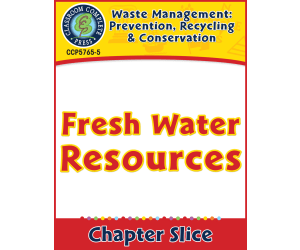
Prevention, Recycling & Conservation: Fresh Water Resources Gr. 5-8
Science, Earth and Environmental Sciences, Environmental Science, Grade 5, 6, 7, 8, Teacher Tools, Lesson Plans
Prevention, Recycling & Conservation: Fresh Water Resources Gr. 5-8 Overview A comprehensive teaching resource specifically designed for Educators of Grades 5 through 8. Featuring detailed insights into Environmental Science, it simplifies and enriches information about Prevention, Recycling & Conservation initiatives. Coverage of Topics The notion of conservation and distinction between natural, renewable and non-renewable resources. Landfill waste reduction techniques and composting practices suitable for everyday life. Understanding how organic materials decompose over time. Educational material on preventing pollution of our critical fresh water resources. Sustainable land management practices to minimize environmental degradation from burning fossil fuels which leads to smog production, ozone layer depletion, and increased levels of greenhouse gases. Simplified Language Usage This specially designed resource breaks down complex topics into easily understandable terms for Grade 5-8 students irrespective of how technical they may initially sound. Educational Aid Features: Inbuilt Lesson Planning System: An ideal companion for teachers or homeschoolers that outlines effective lesson plans in Environmental Science education; this PDF type educational aid includes ready-to-use reading passages aligned meticulously with respective state standards plus a diverse selection of student activities—the perfect choice either as a whole group study aid or small group engagement tool or even for homework assignments. Bloom's Taxonomy Compliant: This resource governs its design based on the educational guidelines provided by Bloom's Taxonomy—it contains test prep materials ensuring effective revisions before examinations while aiding educators in tracking complete development outcomes regarding critical environmental subjects amongst students. Add-on Feature: Special attention is given for remedial learners as it includes color mini posters—catering to visually oriented learners with success in retaining complex concepts—an integrative approach indeed! Conclusion: To sum up: The novel educational instrument that is Prevention, Recycling & Conservation: Fresh Water Resources Gr. 5-8, serves as a reliable resource for educators enthusiastic about instilling necessary environmental knowledge in their students with efficiency.
Author Classroom Complete Press
Tags PDF

Reducing Your Own Carbon Footprint: Your Slice Of The Shared Footprint Gr. 5-8
Science, Earth and Environmental Sciences, Environmental Science, Grade 5, 6, 7, 8, Teacher Tools, Lesson Plans
Reducing Your Own Carbon Footprint: Your Slice Of The Shared Footprint Gr. 5-8 This is a custom-designed teaching resource aimed at creating awareness among students about global climate change and its underlying causes. Targeted primarily towards Grade 5 to 8 educators specializing in Science, particularly Environmental Science, it provides versatile implementation options - usable for group lectures, small group discussions, and homework assignments. About the Material The teaching material comes as an exhaustive PDF file with 29 ready-to-print pages dissecting how individual actions contribute to the overall carbon footprint. It ranges from an intricate study of the greenhouse effect to understanding energy consumption in our kitchens. An intimate illustration of farm-to-table procedures helps identify carbon contributions at each stage. Engaging activities like travel footprint calculations guide students towards minimizing their personal impact on global climate change. A deep dive into post-consumption responsibility encourages thinking beyond mere waste disposal leading up to more responsible behaviors. Broader consideration on how individual carbon footprints contribute collectively within community settings is initiated too. Educational Value This valuable material promotes constructive brainstorming sessions for creating eco-friendly rules potentially assimilable into societal contracts. Bonus features include Bloom's Taxonomy and STEAM inputs which emphasizes academic rigor while ensuring retention among students. Additional Tools Data visualization via graphic organizers along with practical tools such as a carbon footprint calculator boost learning outcomes profoundly. To support evaluation, crossword puzzles combined with comprehension quizzes boasting word-search facilities are provided along with answer keys maximizing utility for instructors looking for contemporary ways of enlightening young brains about our environmental future." Bottom Line In conclusion, this fully loaded resource not only makes learning about the environment simple but converts it into an engaging trip where every student becomes part of the solution. It upholds its essence as an educational tool triggering behavioral change while making sure appropriate educational standards are met.
Author Classroom Complete Press
Tags Carbon Footprint, Environment, Science Workbook, Hands-on Activity

I WONDER - How Heavy Was The Diplodocus | Animated Video Lesson
History: Ancient, History, Social Studies, History: World, Animals, Life Sciences, Science, Grade 4, 5, 6, 7, 8, 9, 10, Lesson Plans, Teacher Tools
Video Introduction An amazing video designed for the students to learn more about dinosaurs in different countries. I WONDER - How Heavy Was The Diplodocus | Animated Video Lesson Do you like dinosaurs? what is your favorite one? Do you own a pet? If yes, tell us more about it, like what its name? And what do you like most about it? Do you think that your pet has been evolved from a dinosaur? Can you write down the characteristics of your favourite dinosaur like it's shape, their rivals, where did it use to live and what was their favourite food? What is the largest and the smallest dinosaur that ever found? Why is the T-rex is so famous? Have you ever read any interesting facts about it? Can you name any of the carnivores or herbivores dinosaurs? I WONDER - How Heavy Was The Diplodocus | Animated Video Lesson The video is perfect for encouraging the researching skills for the students, while learning more about dinosaurs. I WONDER - How Heavy Was The Diplodocus | Animated Video Lesson This friendly designed video is suitable for students at school, homeschooling, and as a group activity. Format Available in MP4 format.
Author Educational Voice
Rating
Tags How Heavy Was The Diplodocus, How Heavy Was The Diplodocus Video, Diplodocus, Diplodocus Facts, Diplodocus Video, Diplodocus Video For Kids, Diplodocus Facts For Kids, Dinosaurs, Dinosaurs Video

I WONDER - Where Did Cerberus Come From | Animated Video Lesson
History, Social Studies, Common Core, Grade 4, 5, 6, 7, 8, 9, 10, Lesson Plans, Teacher Tools
Video Introduction An amazing video designed for the students to learn more about mythological creatures in different cultures. I WONDER - Where Did Cerberus Come From | Animated Video Lesson Mythology is full of wonders and spectacular stories. Ancient civilizations were trying to explore every aspect of life, while they search for new technologies, they wanted to believe in something big and can change the world, so they created mythical creatures and mythical stories. Let's hear about them! What do you know about these creatures? Cyclops, Centaurs, Selkies, Phoenix, Gnomes, Dragons, Gorgons, Orcs, Cerberus, Trolls, Minotaur, Griffins, Mermaids, Elves, Polyphemus, Pegasus, and Ogres. I WONDER - Where Did Cerberus Come From | Animated Video Lesson The video is perfect for encouraging the creativity skills for the students, while learning more about this fantastic mythical creature. I WONDER - Where Did Cerberus Come From | Animated Video Lesson This friendly designed video is suitable for students at school, homeschooling, and as a group activity. Format Available in MP4 format.
Author Educational Voice
Rating
Tags Where Did Cerberus Come From, Where Did Cerberus Come From Video, Cerberus, Cerberus Facts, Cerberus Video, Cerberus Video For Kids, Cerberus Facts For Kids, Mythology, Mythology Video

Classification & Adaptation: Animal Adaptations Gr. 5-8
Science, Life Sciences, Biology, Grade 5, 6, 7, 8, Teacher Tools, Lesson Plans
Classification & Adaptation: Animal Adaptations Gr. 5-8 This resource forms an integral part of the interactive science curriculum for students studying in grades 5 to 8. It aims to provide a clear understanding of scientific concepts by displaying animal classifications and adaptations using common examples, such as discerning between warm-blooded and cold-blooded animals or comprehending vertebrates versus invertebrates. Highlight The prominent feature of this resource is a detailed case study on the adorable native Australian creature - the Koala. This case study equips students with a substantial understanding of how adaptation aids survival and furthers their comprehension of evolution. Hands-On Learning 'How Important Are Thumbs?' 'The Lake Habitat Thermometer' 'A Day in the Life of a Paleontologist!' Versatility & Ease-of-Use This learning material can be used for whole-group instruction, small group sessions, or independent studies. Furthermore, it serves as an excellent homework assignment due to its self-explanatory nature. Additional Features: Simplified language reading passages catering to diverse reading abilities Critical thinking stimulating student activities Test prep materials for comprehensive revision before assessments Vibrant mini posters that lend visual appeal to topics . Bonus Point: State Standards Alignment : The compatibility with state standards including Bloom's Taxonomy and STEM initiatives offers performance reliable guidance for both public schools teachers and homeschooling parents alike. The Classification & Adaptation: Animal Adaptations Gr. 5-8 package comes in an easy-to-use PDF format to ensure smooth integration into existing lesson plans for Science-Biology topics covering Grade 5 through 8.
Author Classroom Complete Press
Tags PDF, Lesson Plan Adaptations, Animal Adaptations Lesson Plans, Adaptations Lesson Plan, Lesson Plans Adaptations, Adaptation Lesson Plan
I WONDDR - How Is Silk Created | Animated Video Lesson
Animals, Life Sciences, Science, Biology, STEM, Grade 1, 2, 3, 4, 5, 6, 7, 8, Lesson Plans, Teacher Tools
Video Introduction Animal kingdoms are full of fascinating wonders to learn. This video is designed for the students to learn more about animals in different countries. I WONDER - How Is Silk Created | Animated Video Lesson Do you like animals? what is your favorite one? Do you own a pet? If yes, tell us more about it, like what its name? And what do you like most about it? What are the animal kingdoms? Can you write down the characteristics of each animal class like mammals, birds, reptiles, amphibian, fish and mollusks. Do you know that some animals can sing, can you name any of them? What is the largest and the smallest mammal in the world? What is the largest and the smallest bird in the world? What is the largest and the smallest fish in the world? I WONDER - How Is Silk Created | Animated Video Lesson The video is perfect for encouraging the researching skills for the students, while learning more about these fantastic animals. I WONDER - How Is Silk Created | Animated Video Lesson This friendly designed video is suitable for students at school, homeschooling, and as a group activity. Format Available in MP4 format.
Author Educational Voice
Tags How Is Silk Created, How Is Silk Created Video, Silk, Silk Facts, Silk Facts For Kids, Silk Video, Silk Video For Kids, Silk Worm, Silk Worms, Silk Worm Video

I WONDER - Where Did The Allosaurus Live | Animated Video Lesson
History: Ancient, History, Social Studies, History: World, Life Sciences, Science, Animals, Grade 4, 5, 6, 7, 8, 9, 10, Lesson Plans, Teacher Tools
Video Introduction An amazing video designed for the students to learn more about dinosaurs in different countries. I WONDER - Where Did The Allosaurus Live | Animated Video Lesson Do you like dinosaurs? what is your favorite one? Do you own a pet? If yes, tell us more about it, like what its name? And what do you like most about it? Do you think that your pet has been evolved from a dinosaur? Can you write down the characteristics of your favourite dinosaur like it's shape, their rivals, where did it use to live and what was their favourite food? What is the largest and the smallest dinosaur that ever found? Why is the T-rex is so famous? Have you ever read any interesting facts about it? Can you name any of the carnivores or herbivores dinosaurs? I WONDER - Where Did The Allosaurus Live | Animated Video Lesson The video is perfect for encouraging the researching skills for the students, while learning more about dinosaurs. I WONDER - Where Did The Allosaurus Live | Animated Video Lesson This friendly designed video is suitable for students at school, homeschooling, and as a group activity. Format Available in MP4 format.
Author Educational Voice
Rating
Tags Where Did The Allosaurus Live, Where Did The Allosaurus Live Video, Allosaurus, Allosaurus Facts, Allosaurus Video, Allosaurus Video For Kids, Allosaurus Facts For Kids, Dinosaur, Dinosaurs

Ancient Egypt Social Studies Notes (Aligned to 3rd Grade VA SOLs)
Social Studies, History, History: African, Grade 3, 4, 5, Teacher Tools, Lesson Plans
Go over the basic facts of Ancient Egypt using these notes. This product includes a printable and digital Google Slides version of the notes pages. it is geared toward the Virginia SOLs, but can be used as an introduction to Ancient Egyptian contributions, geography, and architecture. The printable version includes several variations: fully filled out, fill-in-the-blank, less information per page, and blank notes pages to fill out. The digital notes come in two sizes: portrait, so you can assign them as notes for your students in a paperless classroom or digital classroom, and landscape, which can be used as instructional materials projected on a interactive board or a projector. I usually print these two to a sheet and then the students merely have to cut them and glue them in their notebooks and they fit perfectly without using too much paper. These are not the kind of interactive notebooks with lots of pieces that flip up and down or require a great deal of cutting. I try to make simple, easy-to-use, printer friendly notes. Included in the notes pages: Important vocabulary Basic Facts Egypt Vocabulary Geography Government Mummies (this is a favorite of the students) Contributions Language Architecture Want some activities to go along with the lessons? Check out my Ancient Egypt Activity Pack Like what you see? Check out my other ancient civilization notebooks and activity packs: Ancient Egypt Notes Pages Ancient Egypt Activity Pack Ancient China Notes Pages Ancient China Activity Pack Ancient Greece Activity Pack Ancient Greece Notes Pages Ancient Rome Notes Pages Ancient Rome Activity Pack Ancient Mali Notes Pages Ancient Mali Activity Pack Ancient Civilization and Virginia Studies Timeline Bulletin Board Like what you see? Check out my other social studies interactive notebooks: Continents and Geographic Features interactive notebook Economics Interactive Notebook Civics Interactive Notebook
Author SchoolingSara
Tags Social Studies, Notes, Ancient, Egypt, VA SOL, Ancient Egypt, Virginia, 3rd Grade, Geography, History, 3rd Grade Va Sols

Landmarks and Landforms of Africa | Continent of Africa Unit Study | Geography Bundle
Social Studies, Geography, Grade 3, 4, 5, 6, 7, Lesson Plans, Teacher Tools
Enjoy 12 informative colorful postcards featuring famous landmarks and landforms found in Africa including Victoria Falls, The Great Pyramid, The Great Sphinx, Mount Kilimanjaro, Nile River, The Serengeti, Volcanoes National Park, Tabletop Mountain, Great Rift Valley, Namib Desert, Goree Island, and The Sahara Desert.. Each postcard is double sided with a beautiful photo on one side and a post-note on the other directed towards the students. Matching game with photos and clues to help students memorize and reinforce learning. Service opportunity included! How To Use This: Look through all the resources and decide which ones to use. Print the postcards double sided (or print and lightly glue). Laminate for re-use. Use these as resources to learn about countries, landmarks, or landforms. Use them to write reports, or give oral presentations . Color and cut out stamps to put in your "Passport" to show you've learned about that country! Play the "I have, Who has" game as review! What You Get: - 12 double-sided landmark and landform information cards using the metric system. - 12 double-sided landmark and landform information cards using the imperial system. - 24 memory game cards to play with your students, picture of each landmark on one card, clues about the landmark on the other. Want More Africa Study Resources?: - Countries of Africa: Brochures and Activities - Plants of Africa: Informational Cards - Animals of Africa: Informational Cards - Map work for Africa - Postcards for Africa: Landmarks and Landforms - Africa Unit Test *I have resources like this for every continent. So make sure to check them out if your'e trying to put together a comprehensive geography study! Check out other resources from my store: Simply Schoolgirl! I can be contacted for questions and concerns at simplyschoolgirl1@gmail.com
Author Simply Schoolgirl
Tags Postcards, Africa, Geography Lesson, Game Cards, Social Studies Activities, Pyramids, Victoria Falls, Serengeti, Sahara, Sphinx, Africa Landmarks, Landforms Of Africa, Landmarks Africa, Africa Land Marks

Number & Operations: Base-Ten & Place Value - Practice the Skill 1 - FLASH-MAC
Math, Place Value, Common Core, Grade 3, 4, 5, Teacher Tools, Lesson Plans
Number & Operations: Base-Ten & Place Value - Practice the Skill 1 This is a specialized teaching resource engineered for public school teachers and homeschoolers. It provides unique, curriculum-based content that boosts students' practice of Base-Ten and Place Value of Numbers and Operations. This software, compatible for Mac systems, offers timed drill activities that aid in strengthening the vital skill of correctly identifying place values. The child-friendly activity enables children to pinpoint the accurate place value by concentrating on underlined digits in the given numbers. A stand-out trait is its inclusive nature ensuring all students can take part by offering an English voiceover and text as well as a Spanish voiceover and text option in its integral tools. This feature promotes an equitable learning atmosphere ensuring diverse language preferences among students are catered to. The educational tool also comes with added math apparatus for use during instruction or practice times. These instruments enhance problem-solving abilities to dexterity, fostering experiential learning leading kids beyond mere memorizing into true understanding of math concepts like base-ten numbering system. Educational professionals striving for top-notch content will appreciate this material's alignment with educational standards set out in both Common Core State Standards (CCSS) and STEM directives while coordinating with rules prescribed by NCTM (National Council of Teachers Mathematics). This interactive resource spans across various academic levels, catering from grade three up until grade five instruction – slipping effortlessly into full group classes or guiding smaller focus groups. Additionally, it serves as practical homework projects reinforcing math concepts obtained during class sessions. In Conclusion, Number & Operations: Base-Ten & Place Value - Practice the Skill 1 stands not merely as another adjunct tool but a crucial supplement that gradually elevates students' skill levels while supporting teachers' continued endeavors.
Author Classroom Complete Press
Tags Software (Mac)

Geometry: 2-D & 3-D Shapes - Practice the Skill 1 - FLASH-MAC
Math, Geometry, Common Core, Grade 3, 4, 5, Teacher Tools, Lesson Plans
Geometry: 2-D & 3-D Shapes - Practice the Skill 1 - FLASH-MAC FLASH-MAC is designed to aid teachers in furthering their students' understanding of Geometry. The focus here is on sharpening the knowledge of trees to five graders on how to identify and distinguish between different shapes, mainly 2-D and 3-D. Teaching Approach: -FLASH-MAC employs rigorous drill activities aimed at reinforcing practical skills in learners. -It meticulously designs tasks that require learners to accurately identify specific shapes. -Its sole aim as a teaching resource is centered around stimulating interactive learning. Flexibility: Essential for diverse student populations and varying instructional needs. \ - English and Spanish voice-over options are prioritized - beneficial for English Language Learners or any other student who profits from bilingual teaching strategies. In order to support interactive learning experiences , this tool integrates valuable math tools into its digital curriculum provisions. This ensures educators have the necessary ammunition required in guiding their leaners towards understanding geometrical concepts adequately. Compliance becomes key when teachers are vetting such resources; hence, FLASH-MAC aligns perfectly with Common Core State Standards (CCSS). FLASH-MAC operates on Mac-compatible software and it has significant utility when aiding teachers realize STEM initiatives prescribed within schools' curriculum framework based on NCTM specifications. Possible Instructional Settings: Raising general ideas about geometry during whole group discussions. In targeted instructions or refinement of individual learner skills using small groups or one-on-one sessions. Futhermore, given its digital configuration as an interactive Mac software, assignments can be delegated for at-home practice thus extending learning beyond classrooms.
Author Classroom Complete Press
Tags Software (Mac)

I WONDER - Are There Countries That Don't Have Rivers | Animated Video
Geography, Social Studies, Grade 3, 4, 5, 6, 7, 8, 9, Lesson Plans, Teacher Tools
Video Introduction An amazing video designed for the students to learn more about famous places in different countries. I WONDER - Are There Countries That Don't Have Rivers | Animated Video Lesson What do you know about this place? Do you know in which part of the world it is? Have you ever visited this place? If yes, can you tell us more about your adventure, and what do you like the most about this place? Do you like reading about Geography? What is your favorite country in the whole world? If you are going on a trip where it will be? Which country? What you are going to see there? Does this country has a famous place to visit? I WONDER - Are There Countries That Don't Have Rivers | Animated Video Lesson The activity is perfect for encouraging the researching skills for the students, while learning more about this fantastic place. I WONDER - Are There Countries That Don't Have Rivers | Animated Video Lesson This friendly designed video is suitable for students at school, homeschooling, and as a group activity. Format Available in MP4 format.
Author Educational Voice
Tags Are There Countries That Don't Have Rivers, Are There Countries That Don't Have Rivers Video, Countries That Don't Have Rivers, Countries That Don't Have Rivers Facts, Countries That Don't Have Rivers Video, Countries That Don't Have Rivers Video For Kids

I WONDER - When Did People Learn To Read Hieroglyphs | Animated Video
History: African, History, Social Studies, History: Ancient, Grade 4, 5, 6, 7, 8, 9, 10, Lesson Plans, Teacher Tools
Video Introduction An amazing video designed for the students to learn more about history. I WONDER - When Did People Learn To Read Hieroglyphs | Animated Video Lesson Do you like history? Which topic do you really enjoy about history? Have you ever read an interesting fact about the Vikings? If yes, can you mention them? What do you like most about the Victorian era? Can you name all the Tudors? Have you ever wondered how people used to live in ancient Japan and ancient China? Do you know any interesting facts about ancient Egyptians and the Pharaohs? Have you ever visited South America? What do you know about Incas and Aztecs? Celtic culture was really one of a kind, can you name any of the places that Celts used to live in? Imagine yourself living during the ancient Roman empire, how your life will look like? Ancient Greece was an amazing place to live in. What do you know about ancient Greek life? I WONDER - When Did People Learn To Read Hieroglyphs | Animated Video Lesson The video is perfect for encouraging the researching skills for the students, while learning more about history. I WONDER - When Did People Learn To Read Hieroglyphs | Animated Video Lesson This friendly designed video is suitable for students at school, homeschooling, and as a group activity. Format Available in MP4 format.
Author Educational Voice
Tags When Did People Learn To Read Hieroglyphs, When Did People Learn To Read Hieroglyphs Video, Learn To Read Hieroglyphs, Learn To Read Hieroglyphs Facts, Learn To Read Hieroglyphs Video, Learn To Read Hieroglyphs Video For Kids

Properties of Matter: Physical Changes of Matter Gr. 5-8
Science, Physics, Grade 5, 6, 7, 8, Teacher Tools, Lesson Plans
Properties of Matter: Physical Changes of Matter Gr. 5-8 An instructional resource perfect for teachers and homeschoolers educating students from grades 5 to grade 8 about the complex concepts of matter in physical science. This comprehensive guide aids educators in teaching what matter is and what it's not, with activities focused on understanding the distinctions between a mixture and a solution. Includes an engaging array of hands-on activities designed to facilitate comprehension about various physical and chemical alterations of matter. Simplifies otherwise complex scientific concepts through accessible language usage. Provides meticulously curated information paired with easy-to-implement instruction, crafted specifically for learners requiring extra support or those who do well with step-by-step guidance due to its focus on foundational skills reinforcement. A notable feature: The array of experiments that keep learners engaged during instruction. Alongside these interactive elements are reading passages that help boost literary comprehension whilst highlighting applicable science principles simultaneously. An effective tool in preparing students for exams, thanks to its informative mini posters which serve as condensed revision materials and integrated answer key designed specifically for checking pupil’s mastery over topics discussed. How Can You Use It? You can use this resource: In whole group settings enhancing collaborative learning experiences In one-on-one class settings allowing each student self-paced study time based on their respective needs. We’ve made sure that our resources align perfectly with state standards, written considering Bloom's Taxonomy guidelines coupled with STEM initiatives provisions - rest assured that your learnings align strictly with educational strategies that underline successful teaching practice. You can download this indispensable guide as a PDF, making delivery of content handy and efficient for educators catering to youngsters eager to unravel the wonders of matter and its physical changes.
Author Classroom Complete Press
Tags PDF

Global Warming REDUCTION: Transportation - FLASH-PC
Science, Earth and Environmental Sciences, Environmental Science, Common Core, Grade 5, 6, 7, 8, Teacher Tools, Lesson Plans
Global Warming REDUCTION: Transportation - FLASH-PC This comprehensive teaching tool offers educators an in-depth exploration of the influence of transportation on global warming. Carefully developed for Grade 5 to Grade 8, this software fits perfectly within Science and especially Environmental Science programs. The resource focuses deeply on how changes in transportation can reduce global warming - a prime factor. It offers: Detailed reading passages to deepen students' understanding 'Before you read': questions designed to provoke thinking and set context. 'After you read': questions to enforce comprehension, knowledge retention, and critical thinking skills. A variety of printable materials perfect for hands-on practice outside computer interaction. Multimedia interactive activities like captivating videos and audio narratives that keeps the learners engaged throughout. The vocabulary flashcards are pivotal resources useful for getting familiarized with scientific terms related to reduction strategies centering around global warming via transportation modification. These can be utilized effectively both during classroom discussions as well as individual studies. The adherence to 'Common Core State Standards' guarantees a structured content flow while sticking onto 'Bloom's Taxonomy' accelerates cognitive domain development from remembering facts up to evaluation skills acquisition. This tool's versatile use potential makes it equally effective whether deployed in whole-group instruction or small-group work or even for self-paced study by individual learners. In summary, Global Warming REDUCTION: Transportation - FLASH-PC is not just another lesson plan tool! Instead, it is an immersive learning software providing diverse experiences that caters to varying capacities of learners. This makes complex concepts like environmental dynamics much more tangible than traditional teaching methods.
Author Classroom Complete Press
Tags Software (PC)
Korean War: Remembering the War Gr. 5-8
Social Studies, History, History: USA, Common Core, Grade 5, 6, 7, 8, Teacher Tools, Lesson Plans
The Korean War: Remembering the War Gr. 5-8 Serving as an engaging and accessible teaching resource for educators to introduce students in grades 5 through 8 to this pivotal era in modern history. 'Remembering the War', a chapter slice part of a broader lesson plan on the Korean War, unravels essential knowledge about one of the first significant conflicts during the Cold War period from 1950 to 1953. Putting emphasis on reasons beyond just dates and facts, it explains why it is crucially important for students to comprehend these historic events that have shaped modern international relations. Some highlights of this resource include: An examination of North and South Korea's geography allowing students where these pivotal events unfolded. A glimpse into life at war; portraying what it was like for U.S. troops stationed in South Korea during key battles against North Korea's offensive armies. . The role played by iconic figures such as President Harry S Truman, Joseph Stalin and Kim Il-Sung. To supplement learning consummately post-reading activities are included within: Crossword puzzle Word search exercise; Suited equally well for whole group instruction or small group discussions —it can even serve as an enriching homework assignment— this unit is provided conveniently in PDF format making it usable across digital platforms or traditional print-out modes if needed.{"The Korean War: Remembering the war Gr. 5-8", proves an invigorating teaching resource shaping student’s knowledge about this vital moment that has shaped our world today." Note: Aligned with state standards while incorporating Bloom’s Taxonomy facilitation strategies makes this unit resource an essential tool for teaching US History, balance between instruction rigurosity standard-wise and learner-friendly approach.
Author Classroom Complete Press
Tags PDF
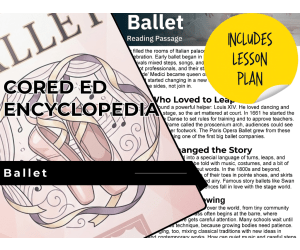
Ballet Reading Comprehension Passage - Cored Ed Encyclopedia
ELA, Language Development, Reading Comprehension, Reading, Social Studies, Writing, Vocabulary, History, Dance, Creative Arts, Grade 2, 3, 4, 5, Worksheets & Printables, Worksheets, Teacher Tools, Centers, Activities, Writing Prompts, Assessments, Quizzes and Tests, Quizzes, Lesson Plans
This ballet reading comprehension with lesson plan includes: Visualization (on the front cover) Start your lesson by taking a minute to think and share something about the topic. Read the script aloud (slowly), perhaps prepare some music or sound effects. Student close their eyes and let their imaginations wander. Students open their eyes, read the question aloud and give them a few minutes to complete. Ask a few students to share or keep answers until the end to compare with what they learn in the passage. COMPANION VIDEO NOW AVAILABLE (EMBEDDED AFTER PREVIEW PICTURES IN PRODUCT DESCRIPTION) Quick pause—thousands of Cored Education products are included with your TeachSimple membership. Download links and encyclopedia index available here. Pre-Reading Trivia Students will write down one thing they already know about the subject and then read five more facts and discuss. These facts are fun, and the students will enjoy learning about the subject before reading more. Give 1 minute for students to write what they already know (no pressure—best guess is fine). Read the five facts together. After each fact, do ask a student for their opinion, was it surprising? Set a purpose by asking students to highlight/underline one fact they want to learn more about during the reading. Reading Passage The text is a high-interest reading passage with set paragraphs, roughly three to four paragraphs long. It contains a variety of themes about the topic, anywhere from history to technology. The passage is between 250 and 350 words in length. First, ask students to look at the headings and see what they’ll learn about today. What do they know about the topic/heading? First read options: Teacher read-aloud (best for support). Partner reading (paragraph by paragraph). While reading, students underline important details, and vocabulary words they think may come up in the questions section. Mixed Questions The first question page contains four multiple-choice questions, each with a choice of four answers, and three written response questions that require a sentence or two from the student. Students complete the mcqs first independently, then review quickly as a class. For the 3 written responses, try to get students giving the answer with some form of evidence: “I think ___ because the text says ___.” If students get stuck, send them back to check the passage. Vocabulary Questions Practice seven key words from the text in this section across two activities. First section is scrambled words where students will unscramble three words given a clue for each. The second section is a word to meaning matching activity. Before starting, have some students read out words they underlined in the passage. Ask students to say the word and read aloud the sentence(s) around each word. Ask students to do scrambled words and the matching exercise in pairs then go through answers as a class. For the scrambled spelling task, get four pairs to come up to the board and write the words for extra practice with the other student reading out the clue. For the matching task, prompt students to give full sentences: “I matched ___ with ___ because ___.” Creative Writing In this question, the student will be required to write a five to eight sentence paragraph on a question related to the topic. Before starting, ask students write down 3 key ideas they are going to include in their piece. Ask students for ideas to share around the class to help those struggling. Pro writing expectations: 5–8 sentences At least 2 facts or details from the passage At least 2 vocabulary words from the previous page Students read their paragraphs while classmates listen for facts and vocabulary words. Extension Activities This page is optional for fast finishers or to take home. There are several activities, each one requiring a different skill. Do some, do none, do all, completely optional - but you will feel reassured knowing every possibility is planned for. Includes summary writting question and additional facts. Answer Key There are answers for the multiple-choice questions, written response questions have sample answers, vocabulary answers and if there is a summary question then a sample summary will be provided as well. Lesson Plan Included Customized lesson plan for this lesson is included. Lesson Snapshot Title: Ballet Genre: Nonfiction (informational passage) Subject: Arts (Dance) / Reading (Informational Text) Primary Topic: How ballet began, changed, and is practiced today Estimated Guided Reading Level (A–Z): S What This Lesson Teaches Best How ballet began in Renaissance palace courts, with dancing as part of celebrations. How ballet shifted from joining in to watching a performance “from the sides.” How ballet grew in France through royal support, including **Louis XIV starting a dance academy to set training rules and approve teachers. How stage design affected what audiences saw (the “proscenium arch” helped viewers see clearer lines and sharper footwork). How ballet tells stories without words using movement plus music, costumes, and a bit of mime, and how pointe shoes and lighter skirts changed the look. Learning Goals Describe where early ballet began and what events it was part of. Explain how ballet changed when people began watching instead of joining in. Identify what happened in 1661 and why it mattered for ballet training. Describe how the proscenium arch affected what audiences could see. Explain how ballet can show feelings and stories “without words,” using details from the text. Describe how ballet is practiced today (studios worldwide, barre work, and careful technique for growing bodies). Key Vocabulary From the Text Renaissance — a time in Europe with art, learning, and change. nobles — people from wealthy or high-ranking families. proscenium — a stage frame that shapes the audience’s view. pointe — dancing on the tips of the toes. barre — a rail dancers hold while practicing in class. FULL CATALOG OF DOWNLOAD LINKS AND ENCYCLOPEDIA INDEX HERE
Author Cored Education
Rating
Tags Vocabulary, Reading Comprehension, Reading Passages, Lesson Plans, Ela Lesson Plans, Reading Comprehension Lesson Plans, Pre-reading, History, Art, Dance Lesson Plans
I WONDER - Are There Any Advantages During Monsoon Season
Social Studies, Geography, Earth Sciences, Earth and Environmental Sciences, Science, Environmental Science, Grade 4, 5, 6, 7, 8, 9, 10, Lesson Plans, Teacher Tools
Video Introduction An amazing video designed for the students to learn more about natural disasters in different countries. I WONDER - Are There Any Advantages During Monsoon Season | Animated Video Lesson What do you know about this natural disaster? Do you know in which part of the world this could happen? Have you ever read about the safety misusers that we could have to protect ourselves from this natural disaster? If yes, can you tell us more about them? Can you name other natural disasters? If yes, tell us more about where they are likely to happen? And how frequently? Do you like reading about Geography? What is your favorite country in the whole world? If you are going on a trip where it will be? Which country? What you are going to see there? Does this country has a famous place to visit? Do you like reading about Geology? If yes, what is your favourite topic? I WONDER - Are There Any Advantages During Monsoon Season | Animated Video Lesson The video is perfect for encouraging the researching skills for the students, while learning more about this fantastic phenomenon. I WONDER - Are There Any Advantages During Monsoon Season | Animated Video Lesson This friendly designed video is suitable for students at school, homeschooling, and as a group activity. Format Available in MP4 format.
Author Educational Voice
Tags Are There Any Advantages During Monsoon Season, Are There Any Advantages During Monsoon Season Video, Monsoon Season, Monsoon Season Facts, Monsoon Season Facts For Kids, Monsoon Season Video

Flash Mob Choreography: "Waka Waka"
Creative Arts, Art, Dance, Grade 5, 6, 7, Teacher Tools, Lesson Plans
Flash Mob Choreography: Waka Waka Guide This extends the resource package of Flash Mob Dancing in Education. Turn up the excitement in your classroom by introducing your students to Flash Mob dancing, featuring Shakira’s popular hit “Waka Waka”. Subject Focus: Art & Music through Dance Promotes physical activity Cultural learning via music appreciation Ties Art & Music with motor skills and team-building teaching tools Versatile Educational Tool: Incorporate this guide into various educational settings such as whole group or small team scenarios, further encouraging student interaction and collaboration. Bonus Use: Transform this guide into an engaging homework assignment where learners partake in the practice moves at home. Format Accessibility: This PDF format is readily accessible from platforms like desktop computers or tablets - providing a preparation ease for educators without diminishing quality of resources. A final note, The Flash Mob Choreography: Waka Waka transcends being just another aid. It harnesses learners' self-esteem while fostering an academia environment that simultaneously promotes passion for art & music.
Author MUSICWORKS
Tags Flash Mob Dance, Choreography, Music Appreciation, Team-building, Art Integration