



3,922 products added recently
Page 10 - Physics Lesson Plans
Bring physics to life with lesson plans that simplify concepts such as motion, energy, and forces. These resources provide experiments and demonstrations that make learning interactive. Use them to help students grasp the laws governing the physical world and appreciate the relevance of physics in everyday life.

 Show filters


I WONDER - How Does A Compass Work | Animated Video Lesson
Physics, Science, Grade 4, 5, 6, 7, 8, 9, 10, Lesson Plans, Teacher Tools
Video Introduction An amazing activity designed for the students to learn more about STEM. I WONDER - How Does A Compass Work | Animated Video Lesson Do you like STEM subjects? what is your favorite one? Have you ever tried to plant a seed? If yes, tell us more about it. Or have you ever tried to invent something? If yes, tell us more about it. And how do you think it will help us? Have you ever seen a microorganism under a microscope? What was it? And how it looked like? Mathematics is a marvelous subject. Let' sharpen our brains and solve some equations. Do you like timetable tricks? What is your favorite one? Do you know how to code? Have you ever created an app or a game before? If yes, how was it like? I WONDER - How Does A Compass Work | Animated Video Lesson The video is perfect for encouraging the researching skills for the students, while learning more about this fantastic topic. I WONDER - How Does A Compass Work | Animated Video Lesson This friendly designed video is suitable for students at school, homeschooling, and as a group activity. Format Available in MP4 format.
Author Educational Voice
Tags How Does A Compass Work , How Does A Compass Work Video, Compass, Compass Facts, Compass Facts For Kids, Compass Facts Video, Compass Facts Video For Kids, Physics, Physics Facts
I WONDER - How Do Instruments Make Sounds | Animated Video Lesson
Physics, Science, Grade 4, 5, 6, 7, 8, 9, 10, Lesson Plans, Teacher Tools
Video Introduction An amazing activity designed for the students to learn more about STEM. I WONDER - How Do Instruments Make Sounds | Animated Video Lesson Do you like STEM subjects? what is your favorite one? Have you ever tried to plant a seed? If yes, tell us more about it. Or have you ever tried to invent something? If yes, tell us more about it. And how do you think it will help us? Have you ever seen a microorganism under a microscope? What was it? And how it looked like? Mathematics is a marvelous subject. Let' sharpen our brains and solve some equations. Do you like timetable tricks? What is your favorite one? Do you know how to code? Have you ever created an app or a game before? If yes, how was it like? I WONDER - How Do Instruments Make Sounds | Animated Video Lesson The video is perfect for encouraging the researching skills for the students, while learning more about this fantastic topic. I WONDER - How Do Instruments Make Sounds | Animated Video Lesson This friendly designed video is suitable for students at school, homeschooling, and as a group activity. Format Available in MP4 format.
Author Educational Voice
Tags Sound, Sound Facts, Sound Facts For Kids, Sound Facts Video, Video For Kids, Instruments, Music Instruments , Music Instruments Facts, Music Instruments Facts Video, Music Instruments Video

Sunglasses Reading Comprehension Passage - Cored Ed Encyclopedia
ELA, Language Development, Reading Comprehension, Reading, Pre-Reading, Writing, Science, Physics, History, Social Studies, Grade 2, 3, 4, 5, Worksheets & Printables, Worksheets, Teacher Tools, Centers, Activities, Writing Prompts, Assessments, Quizzes and Tests, Quizzes, Lesson Plans
This sunglasses reading comprehension includes: Visualization (on the front cover) Start your lesson by taking a minute to think and share something about the topic. Read the script aloud (slowly), perhaps prepare some music or sound effects. Student close their eyes and let their imaginations wander. Students open their eyes, read the question aloud and give them a few minutes to complete. Ask a few students to share or keep answers until the end to compare with what they learn in the passage. Quick pause—thousands of Cored Education products are included with your TeachSimple membership. Download links and encyclopedia index available here. Pre-Reading Trivia Students will write down one thing they already know about the subject and then read five more facts and discuss. These facts are fun, and the students will enjoy learning about the subject before reading more. Give 1 minute for students to write what they already know (no pressure—best guess is fine). Read the five facts together. After each fact, do ask a student for their opinion, was it surprising? Set a purpose by asking students to highlight/underline one fact they want to learn more about during the reading. Reading Passage The text is a high-interest reading passage with set paragraphs, roughly three to four paragraphs long. It contains a variety of themes about the topic, anywhere from history to technology. The passage is between 250 and 350 words in length. First, ask students to look at the headings and see what they’ll learn about today. What do they know about the topic/heading? First read options: Teacher read-aloud (best for support). Partner reading (paragraph by paragraph). While reading, students underline important details, and vocabulary words they think may come up in the questions section. Mixed Questions The first question page contains four multiple-choice questions, each with a choice of four answers, and three written response questions that require a sentence or two from the student. Students complete the mcqs first independently, then review quickly as a class. For the 3 written responses, try to get students giving the answer with some form of evidence: “I think ___ because the text says ___.” If students get stuck, send them back to check the passage. Vocabulary Questions Practice seven key words from the text in this section across two activities. First section is scrambled words where students will unscramble three words given a clue for each. The second section is a word to meaning matching activity. Before starting, have some students read out words they underlined in the passage. Ask students to say the word and read aloud the sentence(s) around each word. Ask students to do scrambled words and the matching exercise in pairs then go through answers as a class. For the scrambled spelling task, get four pairs to come up to the board and write the words for extra practice with the other student reading out the clue. For the matching task, prompt students to give full sentences: “I matched ___ with ___ because ___.” Creative Writing In this question, the student will be required to write a five to eight sentence paragraph on a question related to the topic. Before starting, ask students write down 3 key ideas they are going to include in their piece. Ask students for ideas to share around the class to help those struggling. Pro writing expectations: 5–8 sentences At least 2 facts or details from the passage At least 2 vocabulary words from the previous page Students read their paragraphs while classmates listen for facts and vocabulary words. Extension Activities This page is optional for fast finishers or to take home. There are several activities, each one requiring a different skill. Do some, do none, do all, completely optional - but you will feel reassured knowing every possibility is planned for. Includes summary writting question. Answer Key There are answers for the multiple-choice questions, written response questions have sample answers, vocabulary answers and if there is a summary question then a sample summary will be provided as well. Lesson Plan Included Customized lesson plan for this lesson is included. Lesson Snapshot Title: Sunglasses Genre: Nonfiction (informational text + support pages) Subject: Science (Light) / Health & Safety Primary Topic: Why sunglasses help and how they evolved Estimated Guided Reading Level (A–Z): Q What This Lesson Teaches Best What glare is and how tinted lenses can “calm down” sharp, shiny light bouncing off surfaces like water, sand, snow, or a car hood. A simple history of eye protection: smoky quartz lenses in 12th-century China and Inuit snow goggles with narrow slits to cut glare. How sunglasses became part of everyday life (experiments with tints; boardwalk sales in 1929; polarized lenses arriving in 1936). What UV light is (invisible but harmful over time) and what UV400 labeling means in the passage (filtering nearly all UVA/UVB up to 400 nanometers). How polarized lenses reduce reflected sparkle off flat surfaces like roads and water, making shapes easier to see. Learning Goals Define glare using details from the passage. Explain how tinted lenses help eyes feel more comfortable in bright sunlight. Describe two early ways people protected their eyes from harsh light. Explain how sunglasses became popular for everyday use using the dates and examples given. Describe what UV light is and what UV400 means in the passage. Explain how polarized lenses help with reflections off water and roads. Key Vocabulary From the Text glare — sharp, shiny light that bounces off surfaces. tinted — made darker, like a shaded window for eyes. quartz — a mineral used like simple dark lenses long ago. ultraviolet — invisible light that can harm eyes and skin over time. polarized — lens type that reduces reflections and sparkle. FULL CATALOG OF DOWNLOAD LINKS AND ENCYCLOPEDIA INDEX HERE
Author Cored Education
Rating
Tags Vocabulary, Reading Comprehension, Reading Passages, Lesson Plans, Ela Lesson Plans, Reading Comprehension Lesson Plans, Reading, Pre-reading, Physics, Sunglasses

Lesson 4.2 - Conservation of Energy
Science, Chemistry, Physics, Grade 6, 7, 8, 9, 10, 11, 12, Lesson Plans, Teacher Tools
Lesson 4.2 - Conservation of Energy Take your teaching experience to the next level with our expertly created resource, designed specifically for Integrated Chemistry & Physics education. This extensive digital package provides a multitude of materials that explain the concept of energy conservation and its real-world application. This comprehensive resource includes: Educational notes addressing energy conservation in systems, available in an interactive fill-in-the-blank version (A version) and completed version (B version). A captivating Energy Skate Park Simulation for displaying the transformative process encompassing various forms of energy. Intriguing activities to encourage students' creativity by finding tangible examples of energy conservation within their daily life, backed up by a lab activity focusing on kinetic and potential energies. A structured PowerPoint known as Objectives & Starter Questions to effectively spark class discussions or quizzes. Detailed PowerPoint Notes for presenting material to students smoothly. The aforementioned contents are designed in accordance with 2016 Indiana State Standards ICP.4.2 and ICP.4.3, suiting different learning environments including full-class instruction, small group work, or individual assignments. The files included come in .docx (editable), .pptx (editable PowerPoint), and .pdf (non-editable) formats, compatible with popular software like Microsoft Word & PowerPoint or Adobe Reader. Note: All editable materials can be adjusted to fit your teaching preferences with the right software. Non-editable .pdf files, however, require a PDF viewer like Adobe Reader. It's recommended to check software compatibility before purchase and download. Ideal for Grade 6 to 12 students, this one-stop solution in the realms of Chemistry and Physics education combines comprehensive theoretical input with practical activities. Introduce Lesson 4 - Conservation of Energy in your curriculum today! Reference: The pronouns 'you', 'your' are intended for educators or teachers.
Author Integrated Chemistry and Physics
Tags Energy Conservation, Systems, Interactive Simulation, Lab Activity, Classroom Discussion

I WONDER - What Is An Insulator | Animated Video Lesson
Chemistry, Science, Physics, Grade 4, 5, 6, 7, 8, 9, 10, Lesson Plans, Teacher Tools
Video Introduction An amazing activity designed for the students to learn more about STEM. I WONDER - What Is An Insulator | Animated Video Lesson Do you like STEM subjects? what is your favorite one? Have you ever tried to plant a seed? If yes, tell us more about it. Or have you ever tried to invent something? If yes, tell us more about it. And how do you think it will help us? Have you ever seen a microorganism under a microscope? What was it? And how it looked like? Mathematics is a marvelous subject. Let' sharpen our brains and solve some equations. Do you like timetable tricks? What is your favorite one? Do you know how to code? Have you ever created an app or a game before? If yes, how was it like? I WONDER - What Is An Insulator | Animated Video Lesson The video is perfect for encouraging the researching skills for the students, while learning more about this fantastic topic. I WONDER - What Is An Insulator | Animated Video Lesson This friendly designed video is suitable for students at school, homeschooling, and as a group activity. Format Available in MP4 format.
Author Educational Voice
Tags What Is An Insulator, What Is An Insulator Video, Insulator, Insulators, Insulator Facts, Insulator Facts For Kids, Insulators Video, Insulators Video For Kids, Stem, Stem Facts

Motion: Acceleration - FLASH-PC
Science, Physics, Common Core, Grade 5, 6, 7, 8, Teacher Tools, Lesson Plans
Motion: Acceleration - FLASH-PC Teaching Resource The Motion: Acceleration - FLASH-PC teaching resource is a comprehensive toolkit designed for educators to facilitate an engaging and thorough exploration of the principles of motion, with a focus on acceleration. This tool aligns with the curriculum content set out by Common Core State Standards and meets educational objectives as outlined in Bloom's Taxonomy. Reading Passages and Practice Questions This resource provides structured reading passages on the topic to deepen students' understanding of motion acceleration conceptually. These passages are paired with focused 'before you read' and 'after you read' question sections that encourage active engagement with the material while strengthening comprehension and retention skills. Inclusion of Easy-to-use Printables Educators will also find easy-to-use printables included in this product. These materials can be used effectively across varied teaching settings including whole group instruction or segmented into smaller learning units like: Pair Study sessions Individual Study sessions Digital Vocabulary Flashcards The product includes a set of vocabulary flashcards which serve to aid term memorization while enriching scientific vocabulary associated with physics education at grade levels 5 through 8. The digital format makes these flashcards useful during class time as well as take-home assignments. Multimedia Elements Included for Enhanced Engagement Besides traditional reading assignments, this tool brings multimedia elements into play such as video presentations and interactive activities involving audio tracks. These elements significantly enhance student engagement compared to text-only resources when dealing abstract concepts like Motion Acceleration. Note: The software-based file design means this teaching resource is easily shareable across different computer systems, making it a flexible choice for teachers operating from various technology platforms at schools or homes during remote-learning situations. Summary The Motion: Acceleration – FLASH-PC science lesson planning tool meticulously combines vital elements needed for effective pedagogical approaches. It aims at delivering complex physics topics like motion acceleration comprehensibly yet engagingly to students in mid-elementary to junior-high classrooms.
Author Classroom Complete Press
Tags Software (PC)

Properties of Matter: Physical Properties of Matter Gr. 5-8
Science, Physics, Grade 5, 6, 7, 8, Teacher Tools, Lesson Plans
Properties of Matter: Physical Properties of Matter Gr. 5-8 Properties of Matter: Physical Properties of Matter Gr. 5-8 is a comprehensive teaching resource that simplifies complex scientific concepts for middle school students (grades 5 to 8). This product is an important slice from the full lesson plan on "Properties of Matter", making it an ideal teaching tool. Fundamentally, this resource helps students understand what matter is and what it isn't. It explores the differences between a mixture and a solution through interactive learning experiences, with hands-on activities aiding in understanding physical and chemical transformations experienced by matter. The language and vocabulary used are simplified to make scientific ideas easier to grasp. The product does not merely tell but show how various properties interact. This enables grasp on otherwise abstract concepts. Included Materials and Activities: Apart from introspective reading passages, Intriguing experiments Purposeful activities-aligned with grades 5 through 8 learning capabilities This resource also includes colored mini posters that can be effectively used during test prep sessions, helping in uniting the class under shared objectives. An Ideal Teaching Aid: The elements within this set ensures that educators can offer optimal science experience through whole group instruction or small groups discussions or even while assigning homework. Further emphasizing its strategic design, it aligns well with state standards along with Bloom's Taxonomy and STEM initiatives. One advantage is its flexible format as a PDF file type which enhances accessibility across different digital platforms facilitating ease in dynamic classroom settings accommodating evolving teaching methods. In conclusion, Properties of Matter: Physical Properties of Matter Gr. 5-8 makes educating easier!
Author Classroom Complete Press
Tags PDF, Properties Of Matter Lesson Plan

I WONDER - What Is Potential Energy | Animated Video Lesson
Physics, Science, Grade 4, 5, 6, 7, 8, 9, 10, Lesson Plans, Teacher Tools
Video Introduction An amazing video designed for the students to learn more about STEM. I WONDER - What Is Potential Energy | Animated Video Lesson Plants world is really fascinating! Do you know that some flowers eat insects? Some other plants like to grow on walls can you mention any? Do you know what is the difference between fungicide and pesticide? If yes, Can you tell us more about it? What is nuclear energy? Is it safe to use it? Do you think it is a clean energy? Have you ever read about potential energy? If yes, tell us what it is? Do you think that potential energy can be converted into another form of energy? How it happens? I WONDER - What Is Potential Energy | Animated Video Lesson The video is perfect for encouraging the researching skills for the students, while learning more about this fantastic topic. I WONDER - What Is Potential Energy | Animated Video Lesson This friendly designed video is suitable for students at school, homeschooling, and as a group activity. Format Available in MP4 format.
Author Educational Voice
Rating
Tags What Is Potential Energy, Potential Energy, Potential Energy Facts, Potential Energy Video, Potential Energy Facts For Kids, Potential Energy Video For Kids, Energy, Energy For Kids, Types Of Energy

Simple Machines - Digital Lesson Plan Gr. 5-8 | MAC Software
Science, Physics, Grade 3, 4, 5, 6, 7, 8, Teacher Tools, Lesson Plans
Simple Machines - Digital Lesson Plan for Grades 5-8 An ideal resource for teaching science, particularly physics, to middle grade students. This MAC software package is streamlined for educators and simplifies the understanding and application of compound and simple machines. Fundamental Topics Covered Levers Inclined Planes Wedges Screws Pulleys Wheel & Axles The software provides comprehensive teaching material presented across a substantial number of interactive screens. A unique selling point of this resource is the high level of interaction it affords students. Interactive activities are provided before and after reading sessions—promoting comprehension skills while making learning enjoyable. Built-in Assessments Features: Test Prep Features: High-resolution memory match games designed to reinforce learned concepts. Crossword puzzles aimed at improving vocabulary. A word search feature for recognizing key terms pertinent to lessons on force and motion. This digital lesson plan encapsulates all these captivating methods within a single easy-to-manage zip file containing MAC software. All elements in this product are aligned with State Standards and rooted deeply in Bloom's Taxonomy principles—making learning simpler while maintaining academic rigor—a perfect blend regardless if the platform is catered for whole group discussions or small-group breakout activities; even as an enriching homework assignment .
Author Classroom Complete Press
Tags Digital Lesson Plan, Simple Machines, Machines Lesson Plan, Simple Machines Activity, Levers And Pulleys
Force: Other Forces That Act Without Touching - FLASH-PC
Science, Physics, Common Core, Grade 5, 6, 7, 8, Teacher Tools, Lesson Plans
The Force: Other Forces That Act Without Touching - FLASH-PC Teaching Resource This teaching resource is designed to help students gain a deeper understanding of the concept of Force, especially covering aspects that involve forces acting without any physical contact. It is most suitable for students within fifth through eighth grades, and aligns with the Common Core State Standards. Main Components: Reading Passages: These carry essential concepts on 'other forces that act without touching', providing educators with all necessary knowledge for robust class discussions or engaging individual study sessions. 'Before You Read' Questions: To assess students’ prior knowledge and support new learning. 'After You Read' Questions: For reflection on learnt material, enabling learners to express their understanding confidently, thereby reinforcing physics principles inherent in Force. Dynamically produced Printables: These can perfectly supplement group activities or independent study time. Vocabulary Flashcards : Significantly enhance vocabulary retention and subject comprehension by use of these tools. In addition, there are also video elements available in order to facilitate visual learning while auditory learners are catered via high-quality audio resources. The software can function across PC compatible platforms either as an independent tool or within classroom settings while ensuring instructions align with Bloom's Taxonomy methodology which guides cognitive skills development across various disciplines. Inspirational note: This resource serves as a potential stepping stone towards nurturing future physicists!
Author Classroom Complete Press
Tags Software (PC)
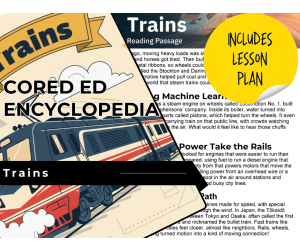
Trains Reading Comprehension Passage - Cored Ed Encyclopedia
ELA, Language Development, Reading Comprehension, Reading, Science, Technology, Engineering, History, Social Studies, Physics, Grade 2, 3, 4, 5, Worksheets & Printables, Worksheets, Teacher Tools, Centers, Activities, Writing Prompts, Assessments, Quizzes and Tests, Quizzes, Lesson Plans
This trains reading comprehension with lesson plan includes: Visualization (on the front cover) Start your lesson by taking a minute to think and share something about the topic. Read the script aloud (slowly), perhaps prepare some music or sound effects. Student close their eyes and let their imaginations wander. Students open their eyes, read the question aloud and give them a few minutes to complete. Ask a few students to share or keep answers until the end to compare with what they learn in the passage. Quick pause—thousands of Cored Education products are included with your TeachSimple membership. Download links and encyclopedia index available here. Pre-Reading Trivia Students will write down one thing they already know about the subject and then read five more facts and discuss. These facts are fun, and the students will enjoy learning about the subject before reading more. Give 1 minute for students to write what they already know (no pressure—best guess is fine). Read the five facts together. After each fact, do ask a student for their opinion, was it surprising? Set a purpose by asking students to highlight/underline one fact they want to learn more about during the reading. Reading Passage The text is a high-interest reading passage with set paragraphs, roughly three to four paragraphs long. It contains a variety of themes about the topic, anywhere from history to technology. The passage is between 250 and 350 words in length. First, ask students to look at the headings and see what they’ll learn about today. What do they know about the topic/heading? First read options: Teacher read-aloud (best for support). Partner reading (paragraph by paragraph). While reading, students underline important details, and vocabulary words they think may come up in the questions section. Mixed Questions The first question page contains four multiple-choice questions, each with a choice of four answers, and three written response questions that require a sentence or two from the student. Students complete the mcqs first independently, then review quickly as a class. For the 3 written responses, try to get students giving the answer with some form of evidence: “I think ___ because the text says ___.” If students get stuck, send them back to check the passage. Vocabulary Questions Practice seven key words from the text in this section across two activities. First section is scrambled words where students will unscramble three words given a clue for each. The second section is a word to meaning matching activity. Before starting, have some students read out words they underlined in the passage. Ask students to say the word and read aloud the sentence(s) around each word. Ask students to do scrambled words and the matching exercise in pairs then go through answers as a class. For the scrambled spelling task, get four pairs to come up to the board and write the words for extra practice with the other student reading out the clue. For the matching task, prompt students to give full sentences: “I matched ___ with ___ because ___.” Creative Writing In this question, the student will be required to write a five to eight sentence paragraph on a question related to the topic. Before starting, ask students write down 3 key ideas they are going to include in their piece. Ask students for ideas to share around the class to help those struggling. Pro writing expectations: 5–8 sentences At least 2 facts or details from the passage At least 2 vocabulary words from the previous page Students read their paragraphs while classmates listen for facts and vocabulary words. Extension Activities This page is optional for fast finishers or to take home. There are several activities, each one requiring a different skill. Do some, do none, do all, completely optional - but you will feel reassured knowing every possibility is planned for. Includes summary writting question. Answer Key There are answers for the multiple-choice questions, written response questions have sample answers, vocabulary answers and if there is a summary question then a sample summary will be provided as well. Lesson Plan Included Customized lesson plan for this lesson is included. Lesson Snapshot Title: Trains Genre: Nonfiction (informational text) Subject: Science (Technology & Engineering) Primary Topic: How rails and train power changed over time Estimated Guided Reading Level (A–Z): R What This Lesson Teaches Best Explains how smooth rails reduce “rubbing,” helping heavy loads move more easily than wagons on muddy roads. Uses a real historical example (the Stockton and Darlington Railway opening in 1825) to show steam trains carrying coal and people. Describes how a steam locomotive works (water becomes steam, steam pushes pistons, pistons help turn wheels). Compares train power types—steam, diesel (engine spins a generator), and electric (overhead wire or third rail). Shows how high-speed rail was designed for speed (special tracks, trains shaped to slice through wind), including Japan’s Tōkaidō Shinkansen (1964) “bullet train.” QA check (support pages vs. passage): The pre-reading trivia uses the word “friction,” but the main passage describes the idea as “rubbing.” Other questions and vocabulary (boiler, pistons, diesel, generator, third rail, high-speed rail) match the passage. Learning Goals Students will explain why smooth rails helped heavy loads move with less rubbing. Students will identify what happened in 1825 with the Stockton and Darlington Railway. Students will describe how steam in a boiler can help power wheel movement using pistons. Students will compare steam, diesel, and electric explanations of how trains get power in the text. Students will describe how train design and tracks can increase speed, using details about high-speed rail. Key Vocabulary From the Text locomotive — the front engine that pulls the train cars. boiler — the part where water is heated to make steam. pistons — parts steam pushes to help turn the wheels. generator — a machine that makes electricity for the train. soot — black dirty particles in the air from smoke. FULL CATALOG OF DOWNLOAD LINKS AND ENCYCLOPEDIA INDEX HERE
Author Cored Education
Rating
Tags Vocabulary, Reading Comprehension, Reading Passages, Lesson Plans, Ela Lesson Plans, Reading Comprehension Lesson Plans, Pre-reading, History, History Lesson Plans, Physics
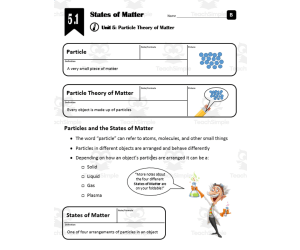
Lesson 5.1 - States of Matter
Science, Chemistry, Physics, Grade 6, 7, 8, 9, 10, 11, 12, Lesson Plans, Teacher Tools
Lesson 5.1 - States of Matter is an all-inclusive learning resource designed to simplify the complex concepts of chemistry and physics for students from grades six through twelve. This tool excellently illustrates the theory that everything is made up of particles, and introduces learners effortlessly into understanding the four different states of matter. The package incorporates a range of resources, including: Notes Foldables Simulations Whiteboard practices Powerpoint presentations. The materials provided are versatile in their application with opportunities to use them in several settings such as full classroom groups, more intimate teaching clusters or even for independent student studies like homework tasks. Note structure: Students will find comprehensive notes which cover the four states of matter in-depth with interactive blanks to practice their assimilation alongside theoretical instructions. A considerate feature includes completed versions for learners who may have been absent or those requiring certain accommodations. Foldables: Engagingly interactive foldables serve not only as note holders but also act as academic creativity stimuli. Leaves detailing each state's specific properties come both blank and prefilled similar to the note structure approach adopted previously ensuring regular revision aids are at hand irrespective of absence or special requirements. Innovative Features: An intriguing computer simulation provides students hands-on experience into exploring particle structures within each state fostered by user friendly URL embedded navigations leading them through modelled scientific data gathering whilst simultaneously answering corresponding queries growing their practical comprehension. Whiteboard practises move away from traditional methods engaging participants visually classifying matter types via pictures showcased on slides reinforcing identification skills real-time in a dynamic setting further enhancing memory retention strategies thereby improving exam performance rates overall. This tool adequately addresses multiple 2016 Indiana State Standards for Integrated Chemistry & Physics such as: Particle representation methods (ICP 5.1) Assumptions leading up to kinetic theory development (ICP 5.2) Explaining how forces change between particles (ICP 5.6) Density effects along with molecular structures contributing towards distinguishing gas properties versus liquid or solid(ICP 6.7) Thus this tool is an investment well worth considering. Your Download: The files come as editable docx or pptx formats in addition to non-editable PDFs, ensuring options to suit varying teaching styles based on preference and available software. In conclusion : Last but not the least, get charged up and ready with a lesson plan for academic success leveraging from Lesson 5.1 - States of Matter!
Author Integrated Chemistry and Physics
Tags States Of Matter, Particle Structures, Interactive Learning, Chemistry And Physics, Practical Comprehension

Lesson 3.3 - Newton's 1st Law of Motion (Inertia)
Science, Chemistry, Physics, Grade 6, 7, 8, 9, 10, 11, 12, Lesson Plans, Teacher Tools
Lesson 3.3 - Newton's 1st Law of Motion includes the following files: 3.3 1st Law of Motion Notes Covers the idea of inertia and gives examples of its presence in everyday life. This notes sheet comes with an (A) version that has blanks for students to fill out as well as a completed (B) version for students who are absent or may require accommodations. 3.3 Inertia Demo Stations Activity This activity is much like a lab , although I don't call it that because it does not follow the scientific process. It is more like a hands-on practice sheet. Students rotate to different stations and perform tasks while answering questions. The tasks are all designed to demonstrate inertia - an object staying at rest or staying in motion. 3.3 Objectives & Starter Questions PowerPoint Learning objectives and sample starter questions for the topic. 3.3 PowerPoint Notes Notes in PowerPoint format to make presentation to the class a breeze. The following 2016 Indiana State Standards for Integrated Chemistry & Physics are addressed in this resource: ICP.3.1 Develop pictorial and graphical representations which show that a single external applied force changes the velocity of an object, and that when no force acts, the velocity of an object remains constant.
Author Integrated Chemistry and Physics
Tags Integrated Chemistry & Physics, Newton's 1st Law, Inertia
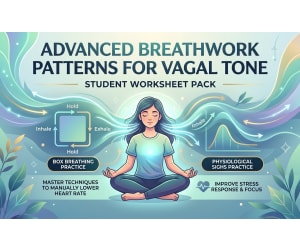
Advanced Breathwork Patterns for Vagal Tone
Science, Life Sciences, Biology, Human Body, Physics, STEM, Special Resources, Life Skills, Social Emotional Learning (SEL), Special Education Needs (SEN), Homeschool Curriculum, Homeschool Templates, Grade 8, 9, 10, 11, 12, Worksheets & Printables, Workbooks, Worksheets, Word Searches, Teacher Tools, Lesson Plans, Quizzes and Tests, Quizzes, Tests, Assessments
Transform Student Stress into Focused Success with Science-Backed Breathwork! Are your high school students struggling with test anxiety, overwhelming stress, and an inability to focus? It's not just in their heads—it's in their biology. The modern academic landscape puts the adolescent nervous system in a constant state of "fight or flight," hijacking their ability to learn and perform. Introducing the Advanced Breathwork Patterns for Vagal Tone Curriculum —a revolutionary, science-based toolkit designed to empower students to take conscious control of their own physiology. This isn't just another mindfulness exercise; it's an applied neurobiology lesson that provides tangible, immediate results. This comprehensive 44-page digital PDF package moves beyond simple "calm down" instructions. It introduces Haptic Respiratory Pacing , a powerful method combining specific breathing protocols (like Box Breathing and the Physiological Sigh) with the kinesthetic act of tracing. This dual-coding mechanism anchors a student's focus, interrupts anxiety loops, and directly stimulates the vagus nerve to manually lower heart rate and calm the nervous system. What's Inside This Complete, "Done-For-You" Curriculum? PHASE 1: Core Content & Theory (Educator/Student Guide): A deep dive into the "why" behind the techniques. This section explains the neurobiology of the stress response, the vagus nerve, and the mechanics of Box Breathing and the Physiological Sigh in clear, scientific terms. Perfect for engaging skeptical teens who want to know how it works. PHASE 2: Student Workbook (10 Rigorous Worksheets): A series of in-depth worksheets that blend academic learning with kinetic practice. Students will map neurobiological pathways, analyze data from their own heart rate, and apply these techniques to real-world scenarios like test-taking and athletic performance. PHASE 3: Visuals & Teacher Resources: High-Fidelity Tracing Diagrams: Clean, printable visual guides for Box Breathing and the Physiological Sigh that students can trace with a finger or pen. Comprehensive Answer Key: A full answer key for every question in the student workbook, including model answers for open-ended questions. Rigorous Teacher Implementation Guide: A step-by-step guide on how to frame the lesson ("Hacking the Nervous System"), run a baseline data protocol to get student buy-in, and integrate the curriculum into different subjects. Trauma-Informed Considerations: Expert guidance on how to apply these techniques safely and effectively for all students. Empower your students with a lifelong skill to manage stress, improve focus, and master their emotional state. Download this resource today and bring the power of applied neuroscience into your classroom! Keywords: Social Emotional Learning (SEL), Stress Management, Anxiety Reduction, Test Anxiety, High School, Biology, Health, PE, School Counselor, Mindfulness, Breathwork, Vagus Nerve, Box Breathing, Physiological Sigh, Self-Regulation, Coping Skills, Neurobiology, Focus, Student Workbook, Digital Download, Printable. Why Parents/Schools Love It: Empowers Students with a Real-World Skill: This isn't just theory. It gives teens a practical, discreet tool they can use anywhere—before an exam, during a stressful social situation, or on the athletic field—to manage their own anxiety and improve performance. Science-Backed & Data-Driven: The curriculum is grounded in real neurobiology, not abstract concepts. The included activities that have students measure their own heart rate provide concrete proof that the techniques work, ensuring high student engagement and buy-in. A Complete, Turnkey Solution: This 44-page PDF is a comprehensive, "plug-and-play" resource. It includes the theory, student worksheets, printable visuals, a full answer key, and a detailed implementation guide, saving teachers valuable prep time. Versatile and Easy to Integrate: The modules can be seamlessly integrated into various classes—Health, Biology, P.E., or even a 10-minute homeroom activity before a big school event. It directly supports school-wide Social-Emotional Learning (SEL) initiatives. Target Audience: Student Classes : Based on the sophisticated language, the scientific concepts, and the real-world examples (AP Calculus exams, athletic performance), target: Primary Target: Senior High School Students (Grades 10, 11, and 12). The content is perfectly matched for their cognitive level and the specific stressors they face. Secondary Target: Advanced 9th Graders in honors or gifted programs. Educators/Buyers: High School Health & P.E. Teachers High School Biology & Anatomy Teachers (excellent for a practical lab on the respiratory/nervous systems) School Counselors and Psychologists Test-Prep Coordinators and Tutors Homeroom/Advisory Teachers Copyright/Terms of Use: This Book was copyrighted by Syed Hammad Rizvi. This resource is for personal and single classroom use only. You may not alter, redistribute, or sell any part of this resource. In other words, you may not put it on the Internet where it could be publicly found and downloaded. If you want to share this resource with colleagues, please purchase additional licenses from Teachsimple. Thank you for respecting these terms of use. This product is happily brought to you by Syed Hammad Rizvi
Author Creative Book Store
Rating
Tags SEL, SocialEmotionalLearning, HighSchoolTeacher, StressManagement, AnxietyRelief, CopingSkills, VagusNerve, BoxBreathing, Neuroscience, ClassroomResources
I WONDER - Are X-Rays Safe | Animated Video Lesson
Physics, Science, Grade 6, 7, 8, 9, 10, 11, 12, Lesson Plans, Teacher Tools
Video Introduction An amazing activity designed for the students to learn more about STEM. I WONDER - Are X-Rays Safe | Animated Video Lesson Do you like STEM subjects? what is your favorite one? Have you ever tried to plant a seed? If yes, tell us more about it. Or have you ever tried to invent something? If yes, tell us more about it. And how do you think it will help us? Have you ever seen a microorganism under a microscope? What was it? And how it looked like? Mathematics is a marvelous subject. Let' sharpen our brains and solve some equations. Do you like timetable tricks? What is your favorite one? Do you know how to code? Have you ever created an app or a game before? If yes, how was it like? I WONDER - Are X-Rays Safe | Animated Video Lesson The video is perfect for encouraging the researching skills for the students, while learning more about this fantastic topic. I WONDER - Are X-Rays Safe | Animated Video Lesson This friendly designed video is suitable for students at school, homeschooling, and as a group activity. Format Available in MP4 format.
Author Educational Voice
Tags Are X-Rays Safe, Are X-Rays Safe Video, X-Rays, X-Ray, X-Rays Facts, X-Rays Facts For Kids, X-Rays Video, X-Rays Video For Kids, Science, Stem

I WONDER - What Are The Poles On A Magnet | Animated Video Lesson
Physics, Science, Grade 4, 5, 6, 7, 8, 9, 10, Lesson Plans, Teacher Tools
Video Introduction An amazing activity designed for the students to learn more about STEM. I WONDER - What Are The Poles On A Magnet | Animated Video Lesson Do you like STEM subjects? what is your favorite one? Have you ever tried to plant a seed? If yes, tell us more about it. Or have you ever tried to invent something? If yes, tell us more about it. And how do you think it will help us? Have you ever seen a microorganism under a microscope? What was it? And how it looked like? Mathematics is a marvelous subject. Let' sharpen our brains and solve some equations. Do you like timetable tricks? What is your favorite one? Do you know how to code? Have you ever created an app or a game before? If yes, how was it like? I WONDER - What Are The Poles On A Magnet | Animated Video Lesson The video is perfect for encouraging the researching skills for the students, while learning more about this fantastic topic. I WONDER - What Are The Poles On A Magnet | Animated Video Lesson This friendly designed video is suitable for students at school, homeschooling, and as a group activity. Format Available in MP4 format.
Author Educational Voice
Tags What Are The Poles On A Magnet, What Are The Poles On A Magnet Video, Magnet, Magnet Facts, Magnet Facts For Kids, Magnet Facts Video, Magnet Poles, Magnet Poles Facts, Magnet Poles Facts Video
I WONDER - What Is Nuclear Energy | Animated Video Lesson
Physics, Science, STEM, Grade 6, 7, 8, 9, 10, 11, 12, Lesson Plans, Teacher Tools
Video Introduction An amazing video designed for the students to learn more about STEM. I WONDER - What Is Nuclear Energy | Animated Video Lesson Do you like STEM subjects? what is your favorite one? Have you ever tried to plant a seed? If yes, tell us more about it. Or have you ever tried to invent something? If yes, tell us more about it. And how do you think it will help us? Have you ever seen a microorganism under a microscope? What was it? And how it looked like? Mathematics is a marvelous subject. Let' sharpen our brains and solve some equations. Do you like timetable tricks? What is your favorite one? Do you know how to code? Have you ever created an app or a game before? If yes, how was it like? I WONDER - What Is Nuclear Energy | Animated Video Lesson The video is perfect for encouraging the researching skills for the students, while learning more about this fantastic topic. I WONDER - What Is Nuclear Energy | Animated Video Lesson This friendly designed video is suitable for students at school, homeschooling, and as a group activity. Format Available in MP4 format.
Author Educational Voice
Tags What Is Nuclear Energy, What Is Nuclear Energy Video, Nuclear Energy, Nuclear Energy Facts, Nuclear Energy Facts For Kids, Nuclear Energy Video, Nuclear Energy Video For Kids, Energy, Energy Video
I WONDER - How Do We See Colours | Animated Video
Physics, Science, Biology, Life Sciences, Human Body, Grade 6, 7, 8, 9, 10, 11, 12, Lesson Plans, Teacher Tools
Video Introduction An amazing activity designed for the students to learn more about STEM. I WONDER - How Do We See Colours | Animated Video Lesson Do you like STEM subjects? what is your favorite one? Have you ever tried to plant a seed? If yes, tell us more about it. Or have you ever tried to invent something? If yes, tell us more about it. And how do you think it will help us? Have you ever seen a microorganism under a microscope? What was it? And how it looked like? Mathematics is a marvelous subject. Let' sharpen our brains and solve some equations. Do you like timetable tricks? What is your favorite one? Do you know how to code? Have you ever created an app or a game before? If yes, how was it like? I WONDER - How Do We See Colours | Animated Video Lesson The video is perfect for encouraging the researching skills for the students, while learning more about this fantastic topic. I WONDER - How Do We See Colours | Animated Video Lesson This friendly designed video is suitable for students at school, homeschooling, and as a group activity. Format Available in MP4 format.
Author Educational Voice
Tags How Do We See Colours, How Do We See Colours Video, Colours, Colors, How Do We See, Human Eyes, Human Eyes Facts, Human Eyes Facts For Kids, Colours Video For Kids, Colours Facts Video For Kids

Motion: Wave Motion Gr. 5-8
Science, Physics, Grade 5, 6, 7, 8, Teacher Tools, Lesson Plans
'Motion: Wave Motion Gr. 5-8' A comprehensive teaching resource designed for educators to simplify and effectively impart the principles of motion to students from grade 5 to grade 8. This magical material, derived from the full lesson plan on 'Motion', offers a profound understanding of wave motion. Understanding Different Types of Motion The packet helps unravel the complexities associated with different types of motion – linear, accelerating, rotating and oscillating – by presenting them in a clear and relatable manner. An Enriching Blend of Reading Passages Within this valuable teaching tool is an enriching blend of reading passages covering varied topics related to wave motion. To ensure that knowledge is rightly absorbed and analysed, there are comprehension questions following each passage that foster critical thinking. Moreover, color mini posters interspersed throughout significantly enhance visual learning. Hands-on Activities & Exercises Numerous hands-on activities have been curated by skilled educators aim at strengthening students' grasp on key concepts related to speed, velocity or acceleration through measurement and graphing exercises. The language has been meticulously simplified with struggling readers in mind ensuring accessibility for all learners without any hurdles. Aiming at Knowledge Retention & Recall To ensure knowledge retention and facilitate recall down-the-line there are engaging crosswords & word search games included besides rigorous comprehension quizzes & test prep providing wholesome reinforcement while making learning enjoyable! This PDF file aligns perfectly with your existing State Standards curriculum for Science under sub-section Physics at Grade 5-8 level witch greatly enhances their effectiveness! It adheres strictly to Bloom's Taxonomy guidelines and STEM initiatives making it modern & relevant in today's classrooms. Flexibility with Easy-to-adapt Structure From individual assignments within homeschooled environments to group lessons in a traditional classroom setup, this resource offers flexibility with its easy-to-adapt structure making it a versatile tool for every kind of educator.
Author Classroom Complete Press
Tags PDF

I WONDER - What Is Terminal Velocity | Animated Video Lesson
Physics, Science, Grade 4, 5, 6, 7, 8, 9, 10, Lesson Plans, Teacher Tools
Video Introduction An amazing activity designed for the students to learn more about STEM. I WONDER - What Is Terminal Velocity | Animated Video Lesson Do you like STEM subjects? what is your favorite one? Have you ever tried to plant a seed? If yes, tell us more about it. Or have you ever tried to invent something? If yes, tell us more about it. And how do you think it will help us? Have you ever seen a microorganism under a microscope? What was it? And how it looked like? Mathematics is a marvelous subject. Let' sharpen our brains and solve some equations. Do you like timetable tricks? What is your favorite one? Do you know how to code? Have you ever created an app or a game before? If yes, how was it like? I WONDER - What Is Terminal Velocity | Animated Video Lesson The video is perfect for encouraging the researching skills for the students, while learning more about this fantastic topic. I WONDER - What Is Terminal Velocity | Animated Video Lesson This friendly designed video is suitable for students at school, homeschooling, and as a group activity. Format Available in MP4 format.
Author Educational Voice
Tags What Is Terminal Velocity, What Is Terminal Velocity Video, Terminal Velocity, Terminal Velocity Facts, Terminal Velocity Facts For Kids, Terminal Velocity Facts Video, Stem, Stem Video, Stem Video For Kids

Walkie-Talkies Reading Comprehension Passage - Cored Ed Encyclopedia
ELA, Language Development, Reading Comprehension, Reading, Pre-Reading, Science, Social Studies, History, Technology, Physics, Grade 2, 3, 4, 5, Worksheets & Printables, Worksheets, Teacher Tools, Centers, Activities, Writing Prompts, Assessments, Quizzes and Tests, Quizzes, Lesson Plans
This walkie-talkies reading comprehension with lesson plan includes: Visualization (on the front cover) Start your lesson by taking a minute to think and share something about the topic. Read the script aloud (slowly), perhaps prepare some music or sound effects. Student close their eyes and let their imaginations wander. Students open their eyes, read the question aloud and give them a few minutes to complete. Ask a few students to share or keep answers until the end to compare with what they learn in the passage. Quick pause—thousands of Cored Education products are included with your TeachSimple membership. Download links and encyclopedia index available here. Pre-Reading Trivia Students will write down one thing they already know about the subject and then read five more facts and discuss. These facts are fun, and the students will enjoy learning about the subject before reading more. Give 1 minute for students to write what they already know (no pressure—best guess is fine). Read the five facts together. After each fact, do ask a student for their opinion, was it surprising? Set a purpose by asking students to highlight/underline one fact they want to learn more about during the reading. Reading Passage The text is a high-interest reading passage with set paragraphs, roughly three to four paragraphs long. It contains a variety of themes about the topic, anywhere from history to technology. The passage is between 250 and 350 words in length. First, ask students to look at the headings and see what they’ll learn about today. What do they know about the topic/heading? First read options: Teacher read-aloud (best for support). Partner reading (paragraph by paragraph). While reading, students underline important details, and vocabulary words they think may come up in the questions section. Mixed Questions The first question page contains four multiple-choice questions, each with a choice of four answers, and three written response questions that require a sentence or two from the student. Students complete the mcqs first independently, then review quickly as a class. For the 3 written responses, try to get students giving the answer with some form of evidence: “I think ___ because the text says ___.” If students get stuck, send them back to check the passage. Vocabulary Questions Practice seven key words from the text in this section across two activities. First section is scrambled words where students will unscramble three words given a clue for each. The second section is a word to meaning matching activity. Before starting, have some students read out words they underlined in the passage. Ask students to say the word and read aloud the sentence(s) around each word. Ask students to do scrambled words and the matching exercise in pairs then go through answers as a class. For the scrambled spelling task, get four pairs to come up to the board and write the words for extra practice with the other student reading out the clue. For the matching task, prompt students to give full sentences: “I matched ___ with ___ because ___.” Creative Writing In this question, the student will be required to write a five to eight sentence paragraph on a question related to the topic. Before starting, ask students write down 3 key ideas they are going to include in their piece. Ask students for ideas to share around the class to help those struggling. Pro writing expectations: 5–8 sentences At least 2 facts or details from the passage At least 2 vocabulary words from the previous page Students read their paragraphs while classmates listen for facts and vocabulary words. Extension Activities This page is optional for fast finishers or to take home. There are several activities, each one requiring a different skill. Do some, do none, do all, completely optional - but you will feel reassured knowing every possibility is planned for. Includes summary writting question. Answer Key There are answers for the multiple-choice questions, written response questions have sample answers, vocabulary answers and if there is a summary question then a sample summary will be provided as well. Lesson Plan Included Customized lesson plan for this lesson is included. Lesson Snapshot Title: Walkie-Talkies Genre: Nonfiction (informational text) Subject: Science & Technology (Informational Reading) Primary Topic: How walkie-talkies work, history, and clear communication Estimated Guided Reading Level (A–Z): P What This Lesson Teaches Best Explains how a walkie-talkie works as a handheld two-way radio that switches from listening to sending when the talk button is pressed. Builds understanding of shared communication rules , including that only one radio can transmit at a time and messages stay “short and clear.” Introduces a simple history of portable radios , from early military use (including a “packset” and the Motorola SCR-300) to later helpers on job sites. Highlights how word choice matters when people share the air, connecting clear/kind words to teamwork and getting things done. Uses comparisons and descriptive language (e.g., “scratchy,” “like a distant whisper,” “lighter than a deck of cards”) to help readers picture sound and size. Learning Goals Students will describe what a walkie-talkie is and what it can do (send and receive messages). Students will explain what happens when the talk button is pressed and why the radio listens most of the time. Students will identify at least two ways early walkie-talkies differed from many walkie-talkies today. Students will describe why teams keep messages short and clear when using walkie-talkies. Students will use evidence from the text to explain what “over” means in walkie-talkie talk. Key Vocabulary From the Text antenna — the part that sticks up to help signals travel. channel — a shared path where people hear the same messages. portable — easy to carry from place to place. transmit — send a message through the air. rugged — strong and built to last. FULL CATALOG OF DOWNLOAD LINKS AND ENCYCLOPEDIA INDEX HERE
Author Cored Education
Rating
Tags Vocabulary, Reading Comprehension, Reading Passages, Lesson Plans, Ela Lesson Plans, Reading Comprehension Lesson Plans, Pre-reading, Science Lesson Plans, History Lesson Plans, Technology
I WONDER - Where Are Lasers Used | Animated Video Lesson
Physics, Science, Grade 6, 7, 8, 9, 10, 11, 12, Lesson Plans, Teacher Tools
Video Introduction An amazing activity designed for the students to learn more about STEM. I WONDER - Where Are Lasers Used | Animated Video Lesson Do you like STEM subjects? what is your favorite one? Have you ever tried to plant a seed? If yes, tell us more about it. Or have you ever tried to invent something? If yes, tell us more about it. And how do you think it will help us? Have you ever seen a microorganism under a microscope? What was it? And how it looked like? Mathematics is a marvelous subject. Let' sharpen our brains and solve some equations. Do you like timetable tricks? What is your favorite one? Do you know how to code? Have you ever created an app or a game before? If yes, how was it like? I WONDER - Where Are Lasers Used | Animated Video Lesson The video is perfect for encouraging the researching skills for the students, while learning more about this fantastic topic. I WONDER - Where Are Lasers Used | Animated Video Lesson This friendly designed video is suitable for students at school, homeschooling, and as a group activity. Format Available in MP4 format.
Author Educational Voice
Tags Where Are Lasers Used, Where Are Lasers Used Video, Lasers, Lasers Facts, Lasers Facts For Kids, Lasers Video, Lasers Facts Video, Lasers Video For Kids, Science, Stem

Atoms, Molecules & Elements Gr. 5-8
Science, Physics, Grade 5, 6, 7, 8, Teacher Tools, Lesson Plans
Atoms, Molecules & Elements Gr. 5-8: A Comprehensive Learning Guide Atoms, Molecules & Elements Gr. 5-8 is an indispensable teaching resource aimed to elucidate the intriguing realm of atoms, molecules, and elements for young learners in grades 5 through 8. Leveraging this profound resource can enrich your instructional technique by deciphering the complex concepts ingrained within the periodic table. The dynamic tool ventures into answering foundational scientific inquiries such as what makes up atoms. It explains atomic models and their components – electrons, protons, and neutrons - illuminating students' grasp on these minuscule structures that form matter around us. Molecules vs Elements Beyond atom models, it carefully demystifies molecules and how they distinguish themselves from elements unequivocally. Firmly ingrained are also teachings about compounds and specific elemental combinations that constitute unique compounds known to science. The Periodic Table Unraveled The Atoms, Molecules & Elements Gr. 5-8 learning material provides excellent coaching with the periodic table while facilitating its users to recognize group-wise placement of each element effortlessly. Detailed understanding of patterns within the periodic table showcasing element interaction behavior Crisp segregation of metals, non-metals and inert gases based on unique properties. A compliance with Next Generation Science Standards norms combined with Bloom's Taxonomy methodologies providing superior educational framework! Inclusive STEAM activities recommendation promoting academic excellence in physical science tasks be it small groups or homework duties. Promoting Active Learning: Interactive Features Galore! Fostering proactive learning among disciples utilizing this document includes numerous engaging attributes such as crossword puzzles - adding a zest of pleasure in knowledge delivery processes apart from refining lexicon abilities related to chemistry terminology. Additionally, quizzes that help gauge comprehension levels post-learning episodes constituted within the myriad of lesson plans are integral here. The Complete Scientific Learning Package All in all, the imperative material is certainly catered to enhance curiosity and drive explorative journeys seamlessly through fifth-grade to eighth-grade levels of physical science lessons. Most critical is the presence of an inclusive answer key facilitating real-time revisions following every instructional session or homework assignment - making this document true comprehensive scientific learning package.
Author Classroom Complete Press
Tags Atoms, Molecules, Elements, EBook
Nuclear Energy
Fission and Fusion – Middle School Lesson
Science, Physics, Grade 5, 6, 7, Teacher Tools, Lesson Plans
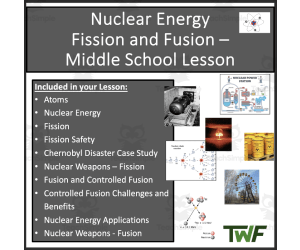
Nuclear Energy - Fission and Fusion - Middle School Physical Science Lesson Your lesson covers looks at the atom and how it can be split through fission or combined via fusion to release a great deal of energy and what that energy can be used for. In order, the lesson teaches about; Atoms, Nuclear Energy, Fission, Fission Safety, the Chernobyl Disaster Case Study, Nuclear Weapons – Fission, Fusion and Controlled Fusion, Controlled Fusion Challenges and Benefits, Nuclear Energy Applications, and Nuclear Weapons - Fusion. Your lesson includes the teacher and student version of the presentation, FOUR embedded videos, an auto-graded exit ticket, and a student lesson handout so the students can record the notes on a more condensed medium. This lesson is designed to be your go-to resource, whether you're in a traditional classroom or a virtual one. With both a teacher version and a student version, it seamlessly fits into your lesson plans, making learning engaging and adaptable. Assessment made easy We've included an auto-graded Exit Ticket and a quiz with an answer key because I know you don't have an excess of time. I know you don't, because I don't and I know I'll do whatever I can to reduce my grading time. Whether you use PowerPoint or Google Slides, prefer Word or Google Docs, this lesson has you covered. This lesson comes in both Office and Google formats for your convenience. The student version of the presentation has strategically placed blanks for them to fill in as you're teaching. It keeps them active and engaged, encourages discussion, and leaves more time for those "aha" moments.
Author Teach With Fergy
Tags Nuclear Energy, Energy, Fission, Fusion, Electricity, Science Lesson, Middle School Science Lesson, Middle School Energy