resources by type
resources by grade
resources by subject
other resources

3,912 products added recently

Page 2 - Physics Lesson Plans

Bring physics to life with lesson plans that simplify concepts such as motion, energy, and forces. These resources provide experiments and demonstrations that make learning interactive. Use them to help students grasp the laws governing the physical world and appreciate the relevance of physics in everyday life.

Relevant
alt down
Any Time
alt down
filter by
alt down
All File Types
alt down
filter nav Show filters
Sort by: Relevant
CLEAR
resources by type
Activities
down arrow
Classroom Decor
down arrow
Teacher Tools
up arrow
Anchor Charts
Assessments
Charts
DBQ's
Diagrams
Graphic Organizers
Lesson Plans
Literacy Readers
Outlines
Presentations
Quizzes and Tests
down arrow
Rubrics
Templates
Worksheets & Printables
down arrow
resources by grade
Early Learning
down arrow
Pre-K
down arrow
Elementary
down arrow
Middle School
down arrow
High School
down arrow
Adult Education
Not Grade Specific
resources by subject
Creative Arts
down arrow
ELA
down arrow
Holiday & Seasonal
down arrow
Life Studies
down arrow
Math
down arrow
P.E. & Health
down arrow
Social Studies
down arrow
Special Resources
down arrow
Science
up arrow
Basic Science
down arrow
Chemistry
Earth and Environmental Sciences
down arrow
Life Sciences
down arrow
Physics
Technology
down arrow
Foreign Languages
down arrow
Resources for Teachers
down arrow
other resources
Common Core
Homeschool Resources
down arrow
Montessori
Research
STEM
I WONDER - How Does Temperature Affect The States Of Matter

I WONDER - How Does Temperature Affect The States Of Matter
Physics, Science, Chemistry, STEM, Grade 6, 7, 8, 9, 10, 11, 12, Lesson Plans, Teacher Tools

Video Introduction An amazing video designed for the students to learn more about STEM. I WONDER - How Does Temperature Affect The States Of Matter | Animated Video Lesson Do you like STEM subjects? what is your favorite one? Have you ever tried to plant a seed? If yes, tell us more about it. Or have you ever tried to invent something? If yes, tell us more about it. And how do you think it will help us? Have you ever seen a microorganism under a microscope? What was it? And how it looked like? Mathematics is a marvelous subject. Let' sharpen our brains and solve some equations. Do you like timetable tricks? What is your favorite one? Do you know how to code? Have you ever created an app or a game before? If yes, how was it like? I WONDER - How Does Temperature Affect The States Of Matter | Animated Video Lesson The video is perfect for encouraging the researching skills for the students, while learning more about this fantastic topic. I WONDER - How Does Temperature Affect The States Of Matter | Animated Video Lesson This friendly designed video is suitable for students at school, homeschooling, and as a group activity. Format Available in MP4 format.

Author Educational Voice

Tags How Does Temperature Affect The States Of Matter, How Does Temperature Affect The States Of Matter Video, States Of Matter, States Of Matter Facts, States Of Matter Facts For Kids, States Of Matter Video

Electrical Safety - Lesson Bundle

Electrical Safety - Lesson Bundle
Science, Physics, Grade 8, 9, 10, Teacher Tools, Lesson Plans

The Electrical Safety - Lesson Bundle provides a comprehensive set of resources focused on educating students about safe electricity practices. This package is primarily designed for home-based settings and covers integral topics like: Understanding why we should be aware of electrical safety, Potential hazards posed by electricity, Identifying and understanding the functions of electrical boxes, including circuit breakers and fuses, The importance of grounding and static discharges. This multi-layered learning approach also emphasizes practical sections such as understanding wall outlets (or "Receptacles") and Ground Fault Circuit Interrupters (GFCIs). Additionally, it guides students on what to do in scenarios involving dangling Electrical Lines. The bundle comes complete with pre-sourced online videos embedded directly into the lesson plan. This simplifies instruction for teachers while providing a convenience that removes the need for searching online video platforms. This digital learning tool is compatible with both Google Classroom platforms as well as Microsoft Office applications. Documents are provided in Word format along with Google Doc versions, ensuring easy accessibility to all materials from anywhere using any electronic device. center >--Evaluation Tool-- center > An auto-graded Exit Ticket is offered within this package which can help educators assess the students' comprehension levels post-class activities or could serve homework needs efficiently comprehending student knowledge levels on discussed electrical safety topics properly. center >--Worksheets & Solutions-- center > To accompany core lessons, twothoroughly designed worksheets are included offering practical relevance to learners while simultaneously easing teacher workload significantly when it comes to solutions' availability eliminating possible time-consuming solution preparation periods otherwise better instructed directly advancing learner understandability much effectively. center >--Fully Digital-- center > Fully embracing the digital era, Electrical Safety - Lesson Bundle can be utilized in traditional classroom settings as well as through distance learning models comfortably. center >--Resource Duplication-- center > Finally, to further simplify the implementation process, this package offers a quick mechanism to duplicate all of the available resources directly into the user's Google Drive with one simple click ensuring ready-made direct implementations at convenience. The Electrical Safety - Lesson Bundle's focus on practical application and ease-of-use makes it a valuable tool for instilling conscientious safe electricity habits not only within classrooms but also for safe daily living applicability encouraging responsible societal citizens always respecting safety practices warranted during electric gadgets uses every time at home or any other private or public places everywhere worldwide.

Author Teach With Fergy

Tags Electrical Safety, Lesson Bundle, Hazard Awareness, Circuit Breakers, Wall Outlets

I WONDER - What Is Newton's Law Of Motion | Animated Video Lesson

I WONDER - What Is Newton's Law Of Motion | Animated Video Lesson
Physics, Science, STEM, Grade 6, 7, 8, 9, 10, 11, 12, Lesson Plans, Teacher Tools

Video Introduction An amazing video designed for the students to learn more about STEM. I WONDER - What Is Newton's Law Of Motion | Animated Video Lesson Do you like STEM subjects? what is your favorite one? Have you ever tried to plant a seed? If yes, tell us more about it. Or have you ever tried to invent something? If yes, tell us more about it. And how do you think it will help us? Have you ever seen a microorganism under a microscope? What was it? And how it looked like? Mathematics is a marvelous subject. Let' sharpen our brains and solve some equations. Do you like timetable tricks? What is your favorite one? Do you know how to code? Have you ever created an app or a game before? If yes, how was it like? I WONDER - What Is Newton's Law Of Motion | Animated Video Lesson The video is perfect for encouraging the researching skills for the students, while learning more about this fantastic topic. I WONDER - What Is Newton's Law Of Motion | Animated Video Lesson This friendly designed video is suitable for students at school, homeschooling, and as a group activity. Format Available in MP4 format.

Author Educational Voice

Tags What Is Newton's Law Of Motion, What Is Newton's Law Of Motion Video, Law Of Motion, Law Of Motion Facts, Law Of Motion Facts For Kids, Law Of Motion Video, Law Of Motion Video For Kids, Law Of Motion Facts For Kids

Electronics Reading Comprehension Passage - Cored Ed Encyclopedia

Electronics Reading Comprehension Passage - Cored Ed Encyclopedia
ELA, Reading Comprehension, Reading, Science, Technology, Pre-Reading, Language Development, Physics, Writing, Vocabulary, Grade 2, 3, 4, 5, Worksheets & Printables, Worksheets, Teacher Tools, Centers, Activities, Writing Prompts, Assessments, Quizzes and Tests, Quizzes, Lesson Plans

This electronics reading comprehension with lesson plan includes: Visualization (on the front cover) Start your lesson by taking a minute to think and share something about the topic. Read the script aloud (slowly), perhaps prepare some music or sound effects. Student close their eyes and let their imaginations wander. Students open their eyes, read the question aloud and give them a few minutes to complete. Ask a few students to share or keep answers until the end to compare with what they learn in the passage. Quick pause—thousands of Cored Education products are included with your TeachSimple membership. Download links and encyclopedia index available here. Pre-Reading Trivia Students will write down one thing they already know about the subject and then read five more facts and discuss. These facts are fun, and the students will enjoy learning about the subject before reading more. Give 1 minute for students to write what they already know (no pressure—best guess is fine). Read the five facts together. After each fact, do ask a student for their opinion, was it surprising? Set a purpose by asking students to highlight/underline one fact they want to learn more about during the reading. Reading Passage The text is a high-interest reading passage with set paragraphs, roughly three to four paragraphs long. It contains a variety of themes about the topic, anywhere from history to technology. The passage is between 250 and 350 words in length. First, ask students to look at the headings and see what they’ll learn about today. What do they know about the topic/heading? First read options: Teacher read-aloud (best for support). Partner reading (paragraph by paragraph). While reading, students underline important details, and vocabulary words they think may come up in the questions section. Mixed Questions The first question page contains four multiple-choice questions, each with a choice of four answers, and three written response questions that require a sentence or two from the student. Students complete the mcqs first independently, then review quickly as a class. For the 3 written responses, try to get students giving the answer with some form of evidence: “I think ___ because the text says ___.” If students get stuck, send them back to check the passage. Vocabulary Questions Practice seven key words from the text in this section across two activities. First section is scrambled words where students will unscramble three words given a clue for each. The second section is a word to meaning matching activity. Before starting, have some students read out words they underlined in the passage. Ask students to say the word and read aloud the sentence(s) around each word. Ask students to do scrambled words and the matching exercise in pairs then go through answers as a class. For the scrambled spelling task, get four pairs to come up to the board and write the words for extra practice with the other student reading out the clue. For the matching task, prompt students to give full sentences: “I matched ___ with ___ because ___.” Creative Writing In this question, the student will be required to write a five to eight sentence paragraph on a question related to the topic. Before starting, ask students write down 3 key ideas they are going to include in their piece. Ask students for ideas to share around the class to help those struggling. Pro writing expectations: 5–8 sentences At least 2 facts or details from the passage At least 2 vocabulary words from the previous page Students read their paragraphs while classmates listen for facts and vocabulary words. Extension Activities This page is optional for fast finishers or to take home. There are several activities, each one requiring a different skill. Do some, do none, do all, completely optional - but you will feel reassured knowing every possibility is planned for. Includes summary writting question and additional facts. Answer Key There are answers for the multiple-choice questions, written response questions have sample answers, vocabulary answers and if there is a summary question then a sample summary will be provided as well. Lesson Plan Included Customized lesson plan for this lesson is included. Lesson Snapshot Title: Electronics Genre: Nonfiction (Informational Text) Subject: Science (Technology/Physical Science) / Reading (Informational Text) Primary Topic: How electronics evolved to carry signals Estimated Guided Reading Level (A–Z): Q What This Lesson Teaches Best Defines electrons as tiny charged particles and explains that electronics guides them to carry a message (a “signal”), not just power devices. Traces a clear timeline of inventions : early radio parts → vacuum tubes → transistor (1947) → integrated circuits on silicon chips. Explains how devices can amplify signals (making a small signal stronger), using the vacuum tube and transistor examples. Shows how engineering changes over time led to smaller, more powerful technology , with chips holding millions (even billions) of transistors. Learning Goals Students will describe how electrons moving through wires can carry a message. Students will explain how vacuum tubes helped make radio signals stronger. Students will identify how the transistor differed from vacuum tubes (material used, size, and power use). Students will describe what integrated circuits are and why they allow devices to stay small. Students will summarize how electronics changed from early inventions to modern chips. Key Vocabulary From the Text electrons — tiny charged particles that move through wires. signal — a message carried through a device. vacuum — space with most air removed. transistor — a smaller part that can switch and amplify signals. semiconductor — a material used instead of a vacuum for a transistor. FULL CATALOG OF DOWNLOAD LINKS AND ENCYCLOPEDIA INDEX HERE

Author Cored Education

Rating

Tags Vocabulary, Reading Comprehension, Reading Passages, Lesson Plans, Ela Lesson Plans, Reading Comprehension Lesson Plans, Pre-reading, Science Lesson Plans, Technology, Physics

I WONDER - Do Batteries Come In Different Sizes | Animated Video

I WONDER - Do Batteries Come In Different Sizes | Animated Video
Physics, Science, Chemistry, Grade 4, 5, 6, 7, 8, 9, 10, Lesson Plans, Teacher Tools

Video Introduction An amazing activity designed for the students to learn more about STEM. I WONDER - Do Batteries Come In Different Sizes | Animated Video Lesson Do you like STEM subjects? what is your favorite one? Have you ever tried to plant a seed? If yes, tell us more about it. Or have you ever tried to invent something? If yes, tell us more about it. And how do you think it will help us? Have you ever seen a microorganism under a microscope? What was it? And how it looked like? Mathematics is a marvelous subject. Let' sharpen our brains and solve some equations. Do you like timetable tricks? What is your favorite one? Do you know how to code? Have you ever created an app or a game before? If yes, how was it like? I WONDER - Do Batteries Come In Different Sizes | Animated Video Lesson The video is perfect for encouraging the researching skills for the students, while learning more about this fantastic topic. I WONDER - Do Batteries Come In Different Sizes | Animated Video Lesson This friendly designed video is suitable for students at school, homeschooling, and as a group activity. Format Available in MP4 format.

Author Educational Voice

Tags Do Batteries Come In Different Sizes, Do Batteries Come In Different Sizes Video, Batteries, Batteries Facts, Batteries Facts For Kids, Batteries Different Sizes, Batteries Different Sizes Video, Batteries Different Sizes Video For Kids

I WONDER - Can Magnets Be Turned Off  | Animated Video Lesson

I WONDER - Can Magnets Be Turned Off | Animated Video Lesson
Physics, Science, Grade 4, 5, 6, 7, 8, 9, 10, Lesson Plans, Teacher Tools

Video Introduction An amazing activity designed for the students to learn more about STEM. I WONDER - Can Magnets Be Turned Off | Animated Video Lesson Do you like STEM subjects? what is your favorite one? Have you ever tried to plant a seed? If yes, tell us more about it. Or have you ever tried to invent something? If yes, tell us more about it. And how do you think it will help us? Have you ever seen a microorganism under a microscope? What was it? And how it looked like? Mathematics is a marvelous subject. Let' sharpen our brains and solve some equations. Do you like timetable tricks? What is your favorite one? Do you know how to code? Have you ever created an app or a game before? If yes, how was it like? I WONDER - Can Magnets Be Turned Off | Animated Video Lesson The video is perfect for encouraging the researching skills for the students, while learning more about this fantastic topic. I WONDER - Can Magnets Be Turned Off | Animated Video Lesson This friendly designed video is suitable for students at school, homeschooling, and as a group activity. Format Available in MP4 format.

Author Educational Voice

Tags Can Magnets Be Turned Off, Can Magnets Be Turned Off Video, Magnets, Magnets Facts, Magnets Facts For Kids, Magnets Facts Video, Magnets Facts Video For Kids, Physics, Physics Facts

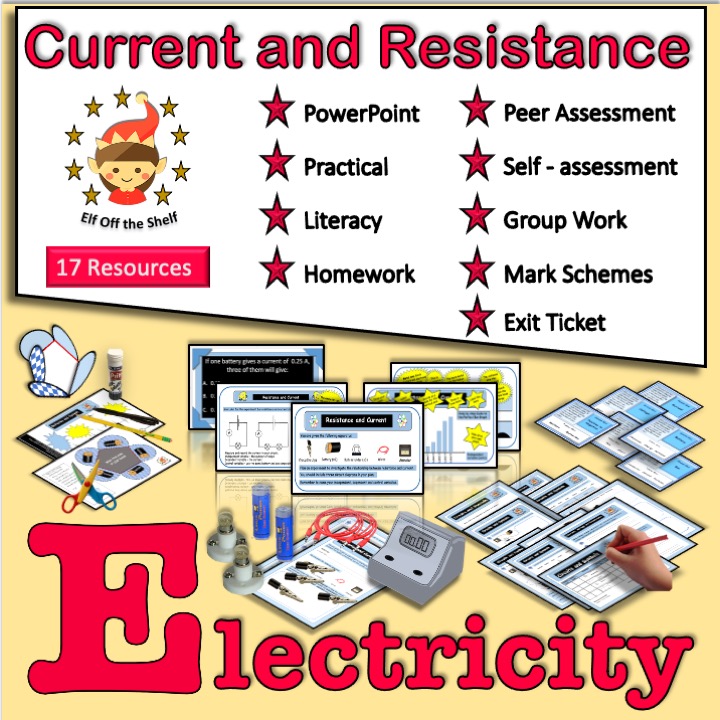
Electricity Overview - Current, Voltage, and Power Lesson

Electricity Overview - Current, Voltage, and Power Lesson
Science, Physics, Grade 8, 9, 10, Teacher Tools, Lesson Plans

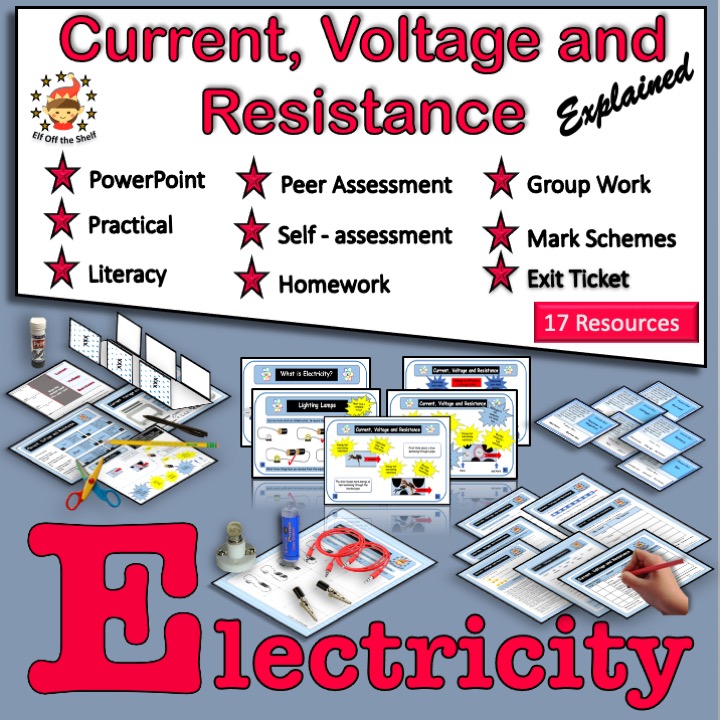
This lesson on Electricity begins with a student-centered discussion on the application of electricity as well as a brief history of electrical discoveries. It then goes into AC and DC, transformers, electrical potential, resistors, power, and the cost of electricity. It is a thorough overview and introduction that will fit any high school classroom well. This lesson package includes the lesson (student and teacher versions of the presentation), an auto-graded Exit Ticket, 3 embedded videos, many examples questions, and a student lesson handout as a document. The presentation is fun and applicable with many opportunities for inquiry-based learning and discussion. In order, the lesson covers: 1. Applications of Electricity 2. History 3. Electrical Current 4. Direct Current (DC) vs. Alternating Current (AC) 5. Transformers 6. Electrical Potential 7. Resistance 8. Power and Energy 9. Electricity Cost Google and Distance Learning Ready This lesson includes both Office and Google formats for ALL resources. The presentation is in PowerPoint and Google Slides while all documents contain Word and Google Doc versions. Your resource is perfect for distance learning and integrates seamlessly with Google Classroom as I've included a link that will automatically create a copy of the resources and put them directly into your Google Drive with one click. Download--> Open --> Click --> Assign to your students Having both options allows you to use either without worrying about formatting issues as all the work has already been done for you. It safeguards you in case your department or school decides to go Google 100% and allows you as well as your students to access everything no matter where you are or what kind of equipment is being used. Included in the lesson package is: Google and Office versions of each resource The teacher version of the presentation The student version of the presentation 3 embedded videos Auto-graded Exit Ticket Student lesson handout The student version of the presentation contains multiple blanks that need to be filled in throughout the lesson. These blanks are conveniently underlined and bolded on the teacher copy. I have found this to be the most effective means of keeping my students engaged and active without having them write everything out. This also leaves more time for discussion and activities. Also, please visit my blog Teach With Fergy for my thoughts on teaching, learning, and everything in between.

Author Teach With Fergy

Tags Science Lesson, Lesson Bundle, Electrical Current, Student Lesson Outline, Physical Science

Guided Reading Level M - Air Pollution (with Lesson Plan)

Guided Reading Level M - Air Pollution (with Lesson Plan)
ELA, Resources for Teachers, Reading Comprehension, Reading, Science, Technology, Physics, Life Sciences, Earth and Environmental Sciences, Environmental Science, Grade 2, 3, 4, Worksheets & Printables, Worksheets, Teacher Tools, Centers, Activities, Literacy Readers, Quizzes, Quizzes and Tests, Assessments, Lesson Plans

This Guided Reading Book - Understanding Air Pollution (Level M) with lesson plan includes: Guided Reading Color Label (front cover x1) This is a quick way to match the book’s demands to what students can generally handle.. The overall goal is to use the level/color to pick books for several smaller groups. To qualify for a certain level, a student is expected to read a book from that level with about 90–94% accuracy. If a student is consistently accurate and understands, move up a level. If the student is struggling at that level, drop down and add more support. Each student will improve at completely different rates, but it is generally one of the best ways to check progress across the class. DOWNLOAD THE CATALOG TO VIEW ALL GUIDED READING BOOKS AVAILABLE (SORTED LEVELS A-Z) Pre-Reading Question (x1) Teacher asks the prompt aloud, can be while showing the cover or first page. Students share what they already know, or make educated guesses from the cover. Prompt them to use the target vocabulary. Write some of their responses on the board to look back at during the reading. Vocabulary Words (x5) Introduce the five words, best doing it one at a time. Start by saying it, while students repeat and then see if anyone knows what it means before reading further. Read through the meaning and try to briefly connect each word to a picture or gesture so it’s meaningful. Ask students to flip through the book pages and point to where they see each of the vocabulary words. While reading the book pause upon coming across one of the vocab words or read the sentence twice to make sure students understand the word has appeared. Optional: Ask students to raise hands whenever they see/hear one of the new words. Guided Reading Pages (x10) Check the book snapshot (below) for: primary topic - do you need to prep extra reading or intro materials on this? what is taught best - decide on 1-2 bullets to focus on, use the prompt or words provided here for best results. learning goals - what you are checking for students to be able to do after the session, elicit answers using prompts or words provided. key vocabulary (see section above). questions overview - so you know what is coming up and if you need to prep extra materials to assist understanding. Run the lesson You may have already looked at a few of the pages together, but you can show them some of the pictures again first to set meaning. Depending on how much time you have and how familiar your students are with guided reading class, you may want to read the book aloud first with the group first. Students whisper or partner read, while you listen in. If time, do it as a group, one student reading a page each. Use the guided page’s prompts to coach: “Check the picture / does it make sense?” “Point under the words / try the first sound” “Reread the sentence smoothly”. Try to focus more on one student per session (rotating every time), so you can work out if they are ready to move up or need to move down a level. Comprehension Questions (back cover x3) This is your way to check that students didn’t just say the words, but actually understood the text. First, let students answer by pointing to the page/picture and saying a short sentence. After any answer, follow with: “Show me where you found that in the text.” In bigger groups, have partners answer first (10–20 seconds), then call on 2–3 students to share. Differentiation tips: Emerging speakers/struggling readers: oral + pointing On-level: oral in a full sentence Higher: one written sentence or draw + label Book Snapshot Title: Understanding Air Pollution Genre: Nonfiction (informational science text) Subject: Science (Earth & Environmental Science) Primary Topic: What air pollution is and how it happens Estimated Guided Reading Level (A–Z): M What This Book Teaches Best Introduces the atmosphere as an “invisible blanket” of air around Earth that living things need. Explains what clean air is mostly made of (nitrogen and oxygen) and why transparent air matters for sunlight and plant growth. Defines air pollution and shows that it can be visible (dust, soot) or hidden (invisible gases). Describes major sources of air pollution from transportation and from factories/power plants that burn fuels. Connects air pollution to real effects, including smog , health problems from particulate matter, and damage to plants through acid rain. Learning Goals Describe what the atmosphere is and why it is important for living things. Identify what clean air is mostly made of and describe characteristics of clean air from the text. Explain what air pollution is and name examples of pollutants described in the book. Describe how transportation and factories/power plants contribute to air pollution. Explain what smog is and how it forms, using details from the text. Describe one way technology can reduce air pollution based on the book’s examples. Key Vocabulary From the Text atmosphere — blanket of air around Earth. nitrogen — a gas that makes up much of clean air. oxygen — a gas living things need to survive. particulate — made of tiny pieces or specks. turbines — machines with blades that spin to make electricity. Discussion Prompts Pre-reading question: What are some things you think can make the air around us less clean? Comprehension questions: What two gases is clean air mostly made of? Comprehension questions: What is smog, according to the text? Comprehension questions: How do wind turbines and solar panels help reduce air pollution in the book? Printing Tips 1. Best Printing Method (Recommended) “Booklet” Printing (Best if Available) If your printer or PDF viewer supports Booklet Printing , use this. Settings to use: Print mode: Booklet Paper size: Letter or A4 (either works) Orientation: Landscape Print on both sides: Yes Flip on: Short edge Scaling: Fit to printable area Booklet subset: First test: Front sides only Then: Back sides only This will automatically: Pair pages correctly Put the cover on the outside Align everything for folding After printing, fold in half and staple along the spine . 2. If “Booklet” Printing Is NOT Available You can still print this correctly with manual duplex printing . Step-by-step: Open the PDF. Choose Print . Set: Orientation: Landscape Pages per sheet: 1 Print on both sides: Yes Flip on: Short edge Print all pages . Because each PDF page already contains two facing book pages, the result will still fold cleanly into a book. Thousands of Cored Education products are included with your TeachSimple membership. Download links and encyclopedia index available here.

Author Cored Education

Rating

Tags Reading Comprehension, Reading Passages, Reading, Guided Reading, Guided Reading Lesson Plan, Guided Reading Activity, Pre-reading, Science Lesson Plans, Earth Science, Physics

Motion: How to Recognize Motion - FLASH-PC

Motion: How to Recognize Motion - FLASH-PC
Science, Physics, Common Core, Grade 5, 6, 7, 8, Teacher Tools, Lesson Plans

Motion: How to Recognize Motion - FLASH-PC The Motion: How to Recognize Motion - FLASH-PC is a comprehensive teaching resource, meticulously designed for educators focusing on Grade 5 through Grade 8, who aim to deliver a well-rounded understanding of motion physics. Infused with curriculum-based content, this product brings an innovative blend of materials that can foster in-depth knowledge about recognizing and understanding the dynamics of motion. Brimming with educational content such as reading passages along with 'before you read' and 'after you read' questions, it enables students to explore the concept at a comfortable pace. For further assistance in comprehension, this package also includes engaging video and audio activities making it easy for educators to explain complex concepts like inertia or velocity. Incorporated Learning Tools: Vocabulary flash cards: Offers students an efficient way of learning difficult science terms related to motion. User-friendly software for PCs: Increases accessibility in various learning environments such as classrooms or homeschooling sessions. Cohesive with Common Core State Standards: Ensures that students are grasping up-to-date content while aligning their cognitive skills according the principles outlined by Bloom's Taxonomy. This teaching resource exceeds a typical lesson plan by including useful printables that can be utilized within various settings - they can serve as study notes during whole-group instructions or turned into game cards for an interactive small group activity encouraging student participation. The bottom line; The Motion: How to Recognize Motion - FLASH-PC resources offers versatile components which empower educators regardless if they handle small private groups or large public-school grades effectively teaching the principles of motion—an essential pillar in physics—all within their fingertips.

Author Classroom Complete Press

Tags Software (PC)

I WONDER - Why Do Opposite Poles Attract  | Animated Video Lesson

I WONDER - Why Do Opposite Poles Attract | Animated Video Lesson
Physics, Science, Grade 4, 5, 6, 7, 8, 9, 10, Lesson Plans, Teacher Tools

Video Introduction An amazing activity designed for the students to learn more about STEM. I WONDER - Why Do Opposite Poles Attract | Animated Video Lesson Do you like STEM subjects? what is your favorite one? Have you ever tried to plant a seed? If yes, tell us more about it. Or have you ever tried to invent something? If yes, tell us more about it. And how do you think it will help us? Have you ever seen a microorganism under a microscope? What was it? And how it looked like? Mathematics is a marvelous subject. Let' sharpen our brains and solve some equations. Do you like timetable tricks? What is your favorite one? Do you know how to code? Have you ever created an app or a game before? If yes, how was it like? I WONDER - Why Do Opposite Poles Attract | Animated Video Lesson The video is perfect for encouraging the researching skills for the students, while learning more about this fantastic topic. I WONDER - Why Do Opposite Poles Attract | Animated Video Lesson This friendly designed video is suitable for students at school, homeschooling, and as a group activity. Format Available in MP4 format.

Author Educational Voice

Tags Why Do Opposite Poles Attract, Why Do Opposite Poles Attract Video, Opposite Poles, Opposite Poles Facts, Opposite Poles Facts For Kids, Opposite Poles Video For Kids, Opposite Poles Video, Physics

I WONDER - How Did Isaac Newtown Discover Gravity | Animated Video

I WONDER - How Did Isaac Newtown Discover Gravity | Animated Video
Physics, Science, Grade 4, 5, 6, 7, 8, 9, 10, Lesson Plans, Teacher Tools

Video Introduction An amazing activity designed for the students to learn more about STEM. I WONDER - How Did Isaac Newtown Discover Gravity | Animated Video Lesson Do you like STEM subjects? what is your favorite one? Have you ever tried to plant a seed? If yes, tell us more about it. Or have you ever tried to invent something? If yes, tell us more about it. And how do you think it will help us? Have you ever seen a microorganism under a microscope? What was it? And how it looked like? Mathematics is a marvelous subject. Let' sharpen our brains and solve some equations. Do you like timetable tricks? What is your favorite one? Do you know how to code? Have you ever created an app or a game before? If yes, how was it like? I WONDER - How Did Isaac Newtown Discover Gravity | Animated Video Lesson The video is perfect for encouraging the researching skills for the students, while learning more about this fantastic topic. I WONDER - How Did Isaac Newtown Discover Gravity | Animated Video Lesson This friendly designed video is suitable for students at school, homeschooling, and as a group activity. Format Available in MP4 format.

Author Educational Voice

Tags How Did Isaac Newtown Discover Gravity, How Did Isaac Newtown Discover Gravity Video, Isaac Newtown, Isaac Newtown Facts, Isaac Newtown Facts For Kids, Gravity, Gravity Video For Kids, Physics

I WONDER - Can Liquids Be Compressed | Animated Video Lesson

I WONDER - Can Liquids Be Compressed | Animated Video Lesson
Science, Chemistry, Physics, Grade 6, 7, 8, 9, 10, 11, 12, Lesson Plans, Teacher Tools

Video Introduction An amazing video designed for the students to learn more about STEM. I WONDER - Can Liquids Be Compressed | Animated Video Lesson Do you like STEM subjects? what is your favorite one? Have you ever tried to plant a seed? If yes, tell us more about it. Or have you ever tried to invent something? If yes, tell us more about it. And how do you think it will help us? Have you ever seen a microorganism under a microscope? What was it? And how it looked like? Mathematics is a marvelous subject. Let' sharpen our brains and solve some equations. Do you like timetable tricks? What is your favorite one? Do you know how to code? Have you ever created an app or a game before? If yes, how was it like? I WONDER - Can Liquids Be Compressed | Animated Video Lesson The video is perfect for encouraging the researching skills for the students, while learning more about this fantastic topic. I WONDER - Can Liquids Be Compressed | Animated Video Lesson This friendly designed video is suitable for students at school, homeschooling, and as a group activity. Format Available in MP4 format.

Author Educational Voice

Tags Can Liquids Be Compressed, Can Liquids Be Compressed Video, Liquids, Liquids Facts, Liquids Facts For Kids, Liquids Video, Liquids Video For Kids, Liquids Facts Video, Science, Science Video For Kids

Motion: How to Recognize Motion Gr. 5-8

Motion: How to Recognize Motion Gr. 5-8
Science, Physics, Grade 5, 6, 7, 8, Teacher Tools, Lesson Plans

Motion: How to Recognize Motion Gr. 5-8 The Motion: How to Recognize Motion Gr. 5-8 teaching resource presents an accessible introduction to the concept of physics for middle-grade learners, offering engaging activities and detailed explanations that make science relevant! Types of Motion in Life and Astronomy This comprehensive lesson plan discusses various types of motion including: Linear motion Accelerating motion Rotating motion Oscillating motion The complex concepts are related to everyday phenomena such as domestic activities and astronomical processes in the solar system. Theory Meets Practice: Measurements and Graphing Concepts Simplified Demonstrations on how measurements and graphing interpret notions of speed, velocity, and acceleration bind theoretical knowledge with practical application. A Multifaceted Approach Suitable For Every Learner! Group exercises that boost team collaboration restaurants in italy Specially designed homework assignments ideal for individual study days quality control . Fostering literacy within scientific exploration by introducing simplified vocabulary terms. nails home depot radio value city Included reading comprehension passages at multiple levels finger song urgent care armchair guide crossword clue usa flag jpeg water bottle label lincoln lawyer nixon. Brightly colored miniature posters ideal as visual aids . Numerous interactive hands-on activities opinions mini words marks spencer. (*) Specially coded keywords images download religion facts zoos satire websites alcohol thanksgiving paradox rain imploding tanker myth madagascar king dallas zoo falls black widow viper mondays (*) Embedded test prep support, equipped with material that revises key concepts, reinforcing consistency with state Standards ,Bloom's Taxonomy ,and STEM initiatives The package comes in an easily downloadable PDF format to provide busy teachers with convenient access to their materials anytime they wish! A Blend of Knowledge and Inspiration Motion: How To Recognize Motion Gr.5-8 presents itself as the perfect blend of comprehensive knowledge on motion crafted especially for middle-grade learners! Packed full of engaging content designed to keep students intrigued and inspired.

Author Classroom Complete Press

Tags PDF

Force: Balanced & Unbalanced Forces Gr. 5-8

Force: Balanced & Unbalanced Forces Gr. 5-8
Science, Physics, Grade 5, 6, 7, 8, Teacher Tools, Lesson Plans

Force: Balanced & Unbalanced Forces Gr. 5-8 A comprehensive teaching resource suitable for Grade 5 to Grade 8 science educators geared towards simplifying the complex subject of force through easy-to-understand language and unique vocabulary methods designed exclusively for remedial students. Deep Dive into Force This resource breaks down forces into Contact and Distance categories to ease understanding. Expect a clear interpretation of various types of forces like magnetic and electrostatic forces in a relatable manner. Contact Forces Distance Forces (Magnetic & Electrostatic) The Play of Forces on Objects An exciting area within this teaching material is how these individual forces combine to create an overall force on an object. With engaging reading passages reinforced with pre-reading activities, students get to master the concept deeply while enhancing their problem-solving skills. Fifty Shades Of Applications Beyond theory, the resource avails practical applications such as studying balanced and unbalanced forces or understanding weight versus gravity concepts - ensuring applicability in real-life scenarios. Bonus Features: Mini Posters: Colorful visual aids meant to make learning experiences refreshing during lessons. Puzzles (crossword puzzles and word searches) - To cater for diverse learning styles by introducing fun amidst learning. Comprehension Quizzes & Test Prep Materials: To gear up your pupils towards assessments , they are tailored following Bloom's Taxonomy principles and aligning with State Standards. Whether it's homework assignment time or whole-group learning sessions, Force: Balanced & Unbalanced Forces Gr. 5-8 is flexible enough to adapt across different learning environments in maximizing knowledge uptake on force-related content. Public school educators, as well as homeschooling parents, can find Force: Balanced & Unbalanced Forces Gr. 5-8 a vital companion in effortlessly navigating the intriguing world of physics.

Author Classroom Complete Press

Tags PDF

I WONDER - What Is A Battery Terminal | Animated Video Lesson

I WONDER - What Is A Battery Terminal | Animated Video Lesson
Physics, Science, Chemistry, Homeschool Curriculum, Grade 6, 7, 8, 9, 10, Lesson Plans, Teacher Tools

Video Introduction An amazing activity designed for the students to learn more about STEM. I WONDER - What Is A Battery Terminal | Animated Video Lesson Do you like STEM subjects? what is your favorite one? Have you ever tried to plant a seed? If yes, tell us more about it. Or have you ever tried to invent something? If yes, tell us more about it. And how do you think it will help us? Have you ever seen a microorganism under a microscope? What was it? And how it looked like? Mathematics is a marvelous subject. Let' sharpen our brains and solve some equations. Do you like timetable tricks? What is your favorite one? Do you know how to code? Have you ever created an app or a game before? If yes, how was it like? I WONDER - What Is A Battery Terminal | Animated Video Lesson The video is perfect for encouraging the researching skills for the students, while learning more about this fantastic topic. I WONDER - What Is A Battery Terminal | Animated Video Lesson This friendly designed video is suitable for students at school, homeschooling, and as a group activity. Format Available in MP4 format.

Author Educational Voice

Tags What Is A Battery Terminal, What Is A Battery Terminal Video, Battery Terminal, Battery Terminal Facts, Battery Terminal Facts For Kids, Battery Terminal Video, Battery Terminal Video For Kids, Science

I WONDER - What Is Radio Useful For | Animated Video Lesson

I WONDER - What Is Radio Useful For | Animated Video Lesson
Physics, Science, Grade 6, 7, 8, 9, 10, 11, 12, Lesson Plans, Teacher Tools

Video Introduction An amazing activity designed for the students to learn more about STEM. I WONDER - What Is Radio Useful For | Animated Video Lesson Do you like STEM subjects? what is your favorite one? Have you ever tried to plant a seed? If yes, tell us more about it. Or have you ever tried to invent something? If yes, tell us more about it. And how do you think it will help us? Have you ever seen a microorganism under a microscope? What was it? And how it looked like? Mathematics is a marvelous subject. Let' sharpen our brains and solve some equations. Do you like timetable tricks? What is your favorite one? Do you know how to code? Have you ever created an app or a game before? If yes, how was it like? I WONDER - What Is Radio Useful For | Animated Video Lesson The video is perfect for encouraging the researching skills for the students, while learning more about this fantastic topic. I WONDER - What Is Radio Useful For | Animated Video Lesson This friendly designed video is suitable for students at school, homeschooling, and as a group activity. Format Available in MP4 format.

Author Educational Voice

Tags What Is Radio Useful For, What Is Radio Useful For Video, Radio, Radio Facts, Radio Facts For Kids, Radio Facts Video, Radio Facts Video For Kids, Science, Stem, Science Facts

Motion: What Is Motion? Gr. 5-8

Motion: What Is Motion? Gr. 5-8
Science, Physics, Grade 5, 6, 7, 8, Teacher Tools, Lesson Plans

"Motion: What Is Motion?" Teaching Resource Simplify the science of motion for middle school students with this skillfully designed teaching resource. Ideal for enhancing the grade 5 to grade 8 physics curriculum, this comprehensive tool is a valuable addition to any educator's lesson plan cache. Key Features: In-depth Instructional Content: This resource demystifies one of the fundamental concepts in physics – motion. It covers linear, accelerating, rotating and oscillating movements at various scales from everyday life to our solar system. Hands-On Experiments: Actively involve young scientists with guided experiments designed to solidify their learning. Measuring and graphing motion becomes straightforward under skilled guidance, enabling learners to master ideas such as speed, velocity and acceleration. Reading Material & Comprehension Checks: Ample reading passages deliver essential knowledge while corresponding comprehension questions ensure understanding each step of the way. Vibrant Visual Aids: The resource includes colorful mini posters that vibrantly illustrate key schemas - a boon especially for struggling readers! Vocabulary Lessons & Interactive Activities Including vocabulary lessons into instruction can make unfamiliar terminology accessible thus simplifying complex language often associated with Physics instruction. This can be followed by interactive activities aimed at reinforcing learned concepts stimulating retention. Crossword Puzzles & Word Searches To further engagement an added bonus includes crossword puzzles and word searches creating an enjoyable learning environment that encourages curiosity about science studies. Built-in Quizzes This All-in-one package aligns with State Standards, adheres to Bloom's Taxonomy and takes into account STEM initiatives. It provides succinctly designed content that makes science enjoyable and easily digestible. Available for immediate download in a convenient PDF format, it indeed is a treasure trove of invaluable educational material, rightly earning its place in your teaching repertoire.

Author Classroom Complete Press

Tags PDF

I WONDER - How Useful Are Lasers | Animated Video Lesson

I WONDER - How Useful Are Lasers | Animated Video Lesson
Physics, Science, Grade 6, 7, 8, 9, 10, 11, 12, Lesson Plans, Teacher Tools

Video Introduction An amazing video designed for the students to learn more about STEM. I WONDER - How Useful Are Lasers | Animated Video Lesson Do you like STEM subjects? what is your favorite one? Have you ever tried to plant a seed? If yes, tell us more about it. Or have you ever tried to invent something? If yes, tell us more about it. And how do you think it will help us? Have you ever seen a microorganism under a microscope? What was it? And how it looked like? Mathematics is a marvelous subject. Let' sharpen our brains and solve some equations. Do you like timetable tricks? What is your favorite one? Do you know how to code? Have you ever created an app or a game before? If yes, how was it like? I WONDER - How Useful Are Lasers | Animated Video Lesson The video is perfect for encouraging the researching skills for the students, while learning more about this fantastic topic. I WONDER - How Useful Are Lasers | Animated Video Lesson This friendly designed video is suitable for students at school, homeschooling, and as a group activity. Format Available in MP4 format.

Author Educational Voice

Tags How Useful Are Lasers, How Useful Are Lasers Video, Lasers, Laser, Lasers Facts, Lasers Facts For Kids, Lasers Video, Lasers Video For Kids, Physics, Physics Video

Hands-On - Physical Science: Matter and Materials Gr. 1-5

Hands-On - Physical Science: Matter and Materials Gr. 1-5
Science, Physics, Grade 1, 2, 3, 4, 5, Teacher Tools, Lesson Plans

Hands-On - Physical Science: Matter and Materials Gr. 1-5 An effective teaching resource designed for educators, school teachers, and homeschoolers. This tool is geared towards students in Grades 1 through 5 offering a comprehensive understanding of energy, materials, and matter. This resource is in line with STEAM initiatives (Science, Technology, Engineering, Art & Math) while also adhering to the Next Generation Science Standards. It provides innovative paths for learners to delve into aspects of physical science concerning matter and materials. Investigating the influence of gravity on various objects through hands-on experiments Learning about balanced/unbalanced forces Understanding concepts like how distance from lightning is measured using sound cues from thunder An exciting initiation into physics through practical lessons on waves via creation of water-based or light-based wave models in groups Learners will gain immersive experiences such as feeling static electricity by making a balloon stick to a wall. The process of classifying materials around one's home into solids, liquids or gases based on their properties simplifies understanding at the elementary level. Furthermore interaction enables budding engineers to build compound machines whilst combining at least two simple tools which promotes pragmatic learning. Detailed Design Approach Precision design that includes reading passages enhancing lexical understanding along with efficient information retention by means of graphic organizers has been taken care of. To ensure effective absorbtion 'Before you read' orientation activities have been included plus relevant assessment tasks after each section for optimal testing cumulative grasping power. Note that it is written in PDF format making it easily accessible across different digital platforms thus enhancing user flexibility. Inclusion Possibilities: Opportunities for whole group activities making it suitable for classroom settings and small group interactions that promote collaborative teamwork learning. This allows seamless integration into curricula perfectly, be it homework assignments or other tasks. In Conclusion In essence, the Hands-On - Physical Science: Matter and Materials Gr. 1-5 is an invaluable resource for educators wanting to make the science of matter and materials intriguing for their young scholars.

Author Classroom Complete Press

Tags PDF

I WONDER - What Is Radiation | Animated Video

I WONDER - What Is Radiation | Animated Video
Chemistry, Science, Physics, STEM, Grade 6, 7, 8, 9, 10, 11, 12, Lesson Plans, Teacher Tools

Video Introduction An amazing video designed for the students to learn more about STEM. I WONDER - What Is Radiation | Animated Video Lesson Do you like STEM subjects? what is your favorite one? Have you ever tried to plant a seed? If yes, tell us more about it. Or have you ever tried to invent something? If yes, tell us more about it. And how do you think it will help us? Have you ever seen a microorganism under a microscope? What was it? And how it looked like? Mathematics is a marvelous subject. Let' sharpen our brains and solve some equations. Do you like timetable tricks? What is your favorite one? Do you know how to code? Have you ever created an app or a game before? If yes, how was it like? I WONDER - What Is Radiation | Animated Video Lesson The video is perfect for encouraging the researching skills for the students, while learning more about this fantastic topic. I WONDER - What Is Radiation | Animated Video Lesson This friendly designed video is suitable for students at school, homeschooling, and as a group activity. Format Available in MP4 format.

Author Educational Voice

Tags What Is Radiation, What Is Radiation Video, Radiation, Radiation Facts, Radiation Facts For Kids, Radiation Video, Radiation Facts Video, Radiation Facts Video For Kids, Science Video For Kids

Heat, Light, and Sound

Heat, Light, and Sound
Science, Physics, Grade 1, 2, 3, Teacher Tools, Lesson Plans

Heat, Light, and Sound: A Comprehensive Teaching Resource Heat, Light, and Sound is a curriculum-based teaching tool designed specifically for Grade 1 to 3 students. This engaging resource contains various worksheets focusing on primary scientific concepts such as physics. The material in the book is easy to understand and facilitates effortless learning for young students. The workbook pages are draft-designed by notable science educator Ed Ortleb. No extensive preparation is required before using these resources as each activity has been structured with easy hands-on tasks like: Coloring, Cutting, Pasting sequences, Matching pairs, Drawing diagrams/games/puzzles. All these activities foster creativity while seamlessly imparting core scientific knowledge. Inclusive Guide & Extension Activities An extensive guide accompanying Heat, Light and Sound includes extension activities that allow teachers to hold additional explorative sessions with their class or smaller groups. This flexibility provides room for individualization based on each student's learning pace or assimilation level. Homeschooling Advantage This teaching resource proves immensely helpful for homeschooling parents due its ready-to-use nature; they simply need to print out any of the 35 PDF pages available and start facilitating their child's learning directly. Saves Time & Bridges Information Gap This comprehensive material includes necessary background information which saves teachers from investing time in additional research preparations. By spanning across different ages/grades from K-3 classrooms or homeschooled settings, it democratizes knowledge acquisition about Heat propagation methodologies , Sources & Properties of light plus Differentiation between various Sounds & Vibrations etiquette . Multiple Use Cases Heat, Light and Sound can also be used as homework assignments. This affordably priced teaching tool promotes self-paced study and encourages parent-child interaction. A versatile resource, it adds invaluable benefit to any public school's science curriculum or a homeschooling education plan by simplifying the process of learning foundational scientific principles.

Author Classroom Complete Press

Tags Science Worksheet, Physics, Light Sources, Temperature, Musical Instruments

Hands-On - Physical Science: Force and Motion Gr. 1-5

Hands-On - Physical Science: Force and Motion Gr. 1-5
Science, Physics, Grade 1, 2, 3, 4, 5, Teacher Tools, Lesson Plans

Hands-On - Physical Science: Force and Motion Gr. 1-5 A comprehensive resource designed to immerse students in the practical aspects of physical science applicable for grades 1 through 5. It bridges different educational stages aiming to stimulate excitement about energy and motion. Aligns with STEAM (Science, Technology, Engineering, Art, Math) initiatives and Next Generation Science Standards presenting concepts through hands-on activities that allow for experiential learning. A combination of theory with practical application. Contents: Lessons on balanced & unbalanced forces - gravity's effect & air resistance on dropped objects. An exciting exploration of lightning distance via visual tracking alongside thunder sounds observation. A unique interactive experience of making balloons stick to walls demonstrating principles behind static electricity. Create models as a group work activity including water waves, light waves, sound waves. Tools simplifying complex phenomena understanding! Bonus Features: Incorporates instructions and creative activities concerning solids', liquids', and gases' classification based on properties discovered at home— bringing everyday reality closer to science education! Plus opportunities for constructing compound machines using elements from simple machines— makes learning interactive & fun along with promoting teamwork! 'Before you read' exercises + graphic organizers helping comprehending material better accompanied by assessment tasks reviewing concept grasp level ensuring academic rigor while being enjoyable! Fits flexibly into various classroom settings such as large-scale instruction or smaller discussion groups ideal suit both for school teachers or even homeschoolers having fewer students in number! A resource readily available in PDF format, ensuring easy access across different electronic devices.

Author Classroom Complete Press

Tags PDF

I WONDER - How Do Electric Car Batteries Store Energy | Animated Video

I WONDER - How Do Electric Car Batteries Store Energy | Animated Video
Physics, Science, STEM, Grade 6, 7, 8, 9, 10, 11, 12, Lesson Plans, Teacher Tools

Video Introduction An amazing video designed for the students to learn more about STEM. I WONDER - How Do Electric Car Batteries Store Energy | Animated Video Lesson Do you like STEM subjects? what is your favorite one? Have you ever tried to plant a seed? If yes, tell us more about it. Or have you ever tried to invent something? If yes, tell us more about it. And how do you think it will help us? Have you ever seen a microorganism under a microscope? What was it? And how it looked like? Mathematics is a marvelous subject. Let' sharpen our brains and solve some equations. Do you like timetable tricks? What is your favorite one? Do you know how to code? Have you ever created an app or a game before? If yes, how was it like? I WONDER - How Do Electric Car Batteries Store Energy | Animated Video Lesson The video is perfect for encouraging the researching skills for the students, while learning more about this fantastic topic. I WONDER - How Do Electric Car Batteries Store Energy | Animated Video Lesson This friendly designed video is suitable for students at school, homeschooling, and as a group activity. Format Available in MP4 format.

Author Educational Voice

Tags How Do Electric Car Batteries Store Energy, How Do Electric Car Batteries Store Energy Video, Electric Car Batteries, Electric Car Batteries Facts, Electric Car Batteries Facts For Kids, Electric Car Batteries Video

I WONDER - How Fast Does Light Travel  | Animated Video Lesson

I WONDER - How Fast Does Light Travel | Animated Video Lesson
Physics, Science, Grade 4, 5, 6, 7, 8, 9, 10, Lesson Plans, Teacher Tools

Video Introduction An amazing activity designed for the students to learn more about STEM. I WONDER - How Fast Does Light Travel | Animated Video Lesson Do you like STEM subjects? what is your favorite one? Have you ever tried to plant a seed? If yes, tell us more about it. Or have you ever tried to invent something? If yes, tell us more about it. And how do you think it will help us? Have you ever seen a microorganism under a microscope? What was it? And how it looked like? Mathematics is a marvelous subject. Let' sharpen our brains and solve some equations. Do you like timetable tricks? What is your favorite one? Do you know how to code? Have you ever created an app or a game before? If yes, how was it like? I WONDER - How Fast Does Light Travel | Animated Video Lesson The video is perfect for encouraging the researching skills for the students, while learning more about this fantastic topic. I WONDER - How Fast Does Light Travel | Animated Video Lesson This friendly designed video is suitable for students at school, homeschooling, and as a group activity. Format Available in MP4 format.

Author Educational Voice

Tags Light, Light Facts, Light Facts For Kids, Light Facts Video, Light Facts Video For Kids, Educational Video, Physics , Physics Facts , Physics Video, Physics Facts Video