resources by type
resources by grade
resources by subject
other resources

3,912 products added recently

Page 4 - Physics Lesson Plans

Bring physics to life with lesson plans that simplify concepts such as motion, energy, and forces. These resources provide experiments and demonstrations that make learning interactive. Use them to help students grasp the laws governing the physical world and appreciate the relevance of physics in everyday life.

Relevant
alt down
Any Time
alt down
filter by
alt down
All File Types
alt down
filter nav Show filters
Sort by: Relevant
CLEAR
resources by type
Activities
down arrow
Classroom Decor
down arrow
Teacher Tools
up arrow
Anchor Charts
Assessments
Charts
DBQ's
Diagrams
Graphic Organizers
Lesson Plans
Literacy Readers
Outlines
Presentations
Quizzes and Tests
down arrow
Rubrics
Templates
Worksheets & Printables
down arrow
resources by grade
Early Learning
down arrow
Pre-K
down arrow
Elementary
down arrow
Middle School
down arrow
High School
down arrow
Adult Education
Not Grade Specific
resources by subject
Creative Arts
down arrow
ELA
down arrow
Holiday & Seasonal
down arrow
Life Studies
down arrow
Math
down arrow
P.E. & Health
down arrow
Social Studies
down arrow
Special Resources
down arrow
Science
up arrow
Basic Science
down arrow
Chemistry
Earth and Environmental Sciences
down arrow
Life Sciences
down arrow
Physics
Technology
down arrow
Foreign Languages
down arrow
Resources for Teachers
down arrow
other resources
Common Core
Homeschool Resources
down arrow
Montessori
Research
STEM
Lesson 7.2 - The Periodic Table

Lesson 7.2 - The Periodic Table
Science, Chemistry, Physics, Grade 6, 7, 8, 9, 10, 11, 12, Lesson Plans, Teacher Tools

Unit 7: The Atom & the Nucleus - Whole Unit Description This resource provides educators with comprehensive materials for teaching atomic and nuclear concepts. Ideal for middle and high school science teachers handling chemistry and physics topics, these resources encourage fun, student-oriented instruction. Subatomic Particles Lessons The unit begins with lessons on three subatomic particles: proton, neutron, and electron. Included are '7.1 Atomic Structure Notes' which contain details about their properties and location within the atom. A version complete with blanks for in-class participation A filled-out version for reference Interactive Practice Session '7.1 Subatomic Particle Matching Practice' features printable cards with facts about each subatomic particle that students can group accordingly—perfect for group or paired activities. Offline Learning Experience 'World's Smallest Movie Reading' assignment promotes independent exploration outside class hours through an IBM mini-movie created using stop-motion photography of individual atoms. Brief summary writing exercise to improve recall plan attached. PowerPoint Presentations: Filled with Starter Questions The Periodic Table notes touch briefly on history Data from including an exciting scavenger hunt activity Nuclear Energy Lessons & Computer Simulations Sensational computer simulations bring construction of atoms or nuclear fission principles to life while promoting classroom collaboration. Various exercises foster: Critical thinking skills via assorted readings on nuclear energy pros/cons Navigating the various debates surrounding its use Mastery Test The comprehensive test with differing question types ensures understanding of all concepts discussed in this unit: True/False and matching questions Short essay questions A recovery quiz helps boost any underwhelming scores whilst also acting as an additional review process. All materials meet essential Integrated Chemistry & Physics State Standards beyond Indiana’s curricular requirements and are editable in .docx or.pptx formats for easy customization. *You should have a word processor that supports .docx file type and similar presentation software to support the .pptx format for accessing these files.

Author Integrated Chemistry and Physics

Tags Subatomic Particles, Atomic Structure, Periodic Table, Nuclear Energy, Interactive Simulations

Simple Machines - Digital Lesson Plan Gr. 5-8 | PC Software

Simple Machines - Digital Lesson Plan Gr. 5-8 | PC Software
Science, Physics, Grade 3, 4, 5, 6, 7, 8, Teacher Tools, Lesson Plans

Simple Machines - Digital Lesson Plan Gr. 5-8 | PC Software This is an innovative teaching resource designed specifically for educators teaching complex Physics topics. Designed for students in grades 5 to 8, this tool can prove invaluable for both public school teachers and homeschoolers. The Focus of the Software The software simplifies the intricate world of simple machines, explaining fundamental scientific concepts applied daily. Covered topics include six elementary machines - Levers, Inclined Planes, Wedges, Screws, Pulleys, and Wheel & Axles. The content starts with basic principles such as force, work and motion before moving on to complex areas. Dedicated Interactive Learning Environment To foster active learning environments planetary system model consists of over 80 unique screen-pages where lessons are driven by reading passages coupled with pre-and-post comprehension checks. It also features: Test prep modules: A memory match game : Multimedia resources including audio aids and videos: An All-In-ONE Learning Tool For Diverse Scenarios! The inclusivity of multimedia resources supports various learning scenarios including individual study time; group-based projects or even flipped classrooms where students interact with material independently ahead of class discussion or activities. This comprehensive digital resource comes packed in a single zip file containing PC software ensuring a stress-free installation process by instructors. Educational Standards Adherence! All aspects of this product's design have been guided by vigorous State Standards as well as following Bloom's Taxonomy guidelines reinforcing a well-rounded academic approach compatible with curriculums nationwide. Experience the fun of bringing Science to life in your class today with Simple Machines - Digital Lesson Plan Gr. 5-8 | PC Software!

Author Classroom Complete Press

Tags Science Crossword Puzzle, Simple Machines Lesson, Digital Lesson Plan, Physics Lesson, Digital Science

Force: Force and Mass - FLASH-PC

Force: Force and Mass - FLASH-PC
Science, Physics, Common Core, Grade 5, 6, 7, 8, Teacher Tools, Lesson Plans

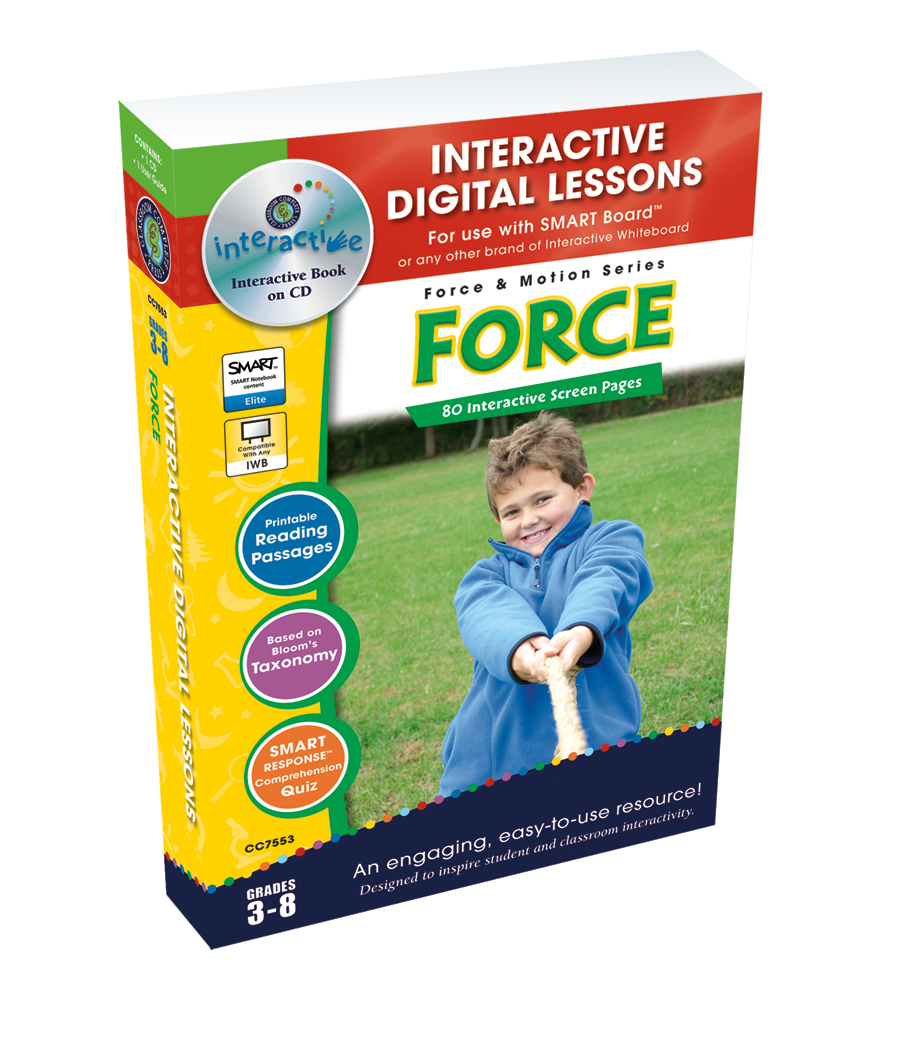
Force: Force and Mass - FLASH-PC An all-inclusive tool, specifically designed for teachers with the aim to facilitate teaching of physics concepts pertaining to force and mass. This software-oriented lesson plan is ideal for students in grades 5 through 8, offering a comprehensive insight into these crucial scientific principles. Leverages esteemed Curriculum Standards: Taking its basis from authoritative curriculum standards such as the Common Core State Standards, it provides educators with high-quality instructional techniques. Incorporates Bloom's Taxonomy: This product proves beneficial for teachers looking to incorporate Bloom's taxonomy administration strategies within their lessons. Reading Passages Included: Specially crafted reading passages that explain the principles of force and mass are presented. These come equipped with guided questions served both pre and post reading engagement that stimulate comprehension while concurrently fostering higher understanding levels. Reinforce concepts with printable materials: A portion of included resources comprises of printable materials; an excellent avenue to encourage tactile learner engagement – as part of classwork or extended homework tasks reaching beyond classroom environments. Vocabulary Flashcards: To boost student vocabulary related to mass and force, handy flashcards are incorporated into this resourceful software package serving tool during full-class instruction or smaller break-out sessions enabling individualized focused attention – effectively consolidating understandings one term at a time! Multimodal Instructional Methods Incorporated: This program includes video clips targeting relevant subject areas enhancing auditory learning experience. Furthermore, interactive activities solidify kinaesthetic experiences within physics education making the learning process fun-filled! Fits varied educational needs: Flexibility is a key feature with this uncomplicated program! It can be seamlessly integrated into standard public school teaching, small education circles, or homeschooled curricula – serving various differentiated needs effectively meeting all student’s academic requirements while sparking intrigue for complex subject matter.
Author Classroom Complete Press

Tags Software (PC)

Force: Other Forces That Act Without Touching Gr. 5-8

Force: Other Forces That Act Without Touching Gr. 5-8
Science, Physics, Grade 5, 6, 7, 8, Teacher Tools, Lesson Plans

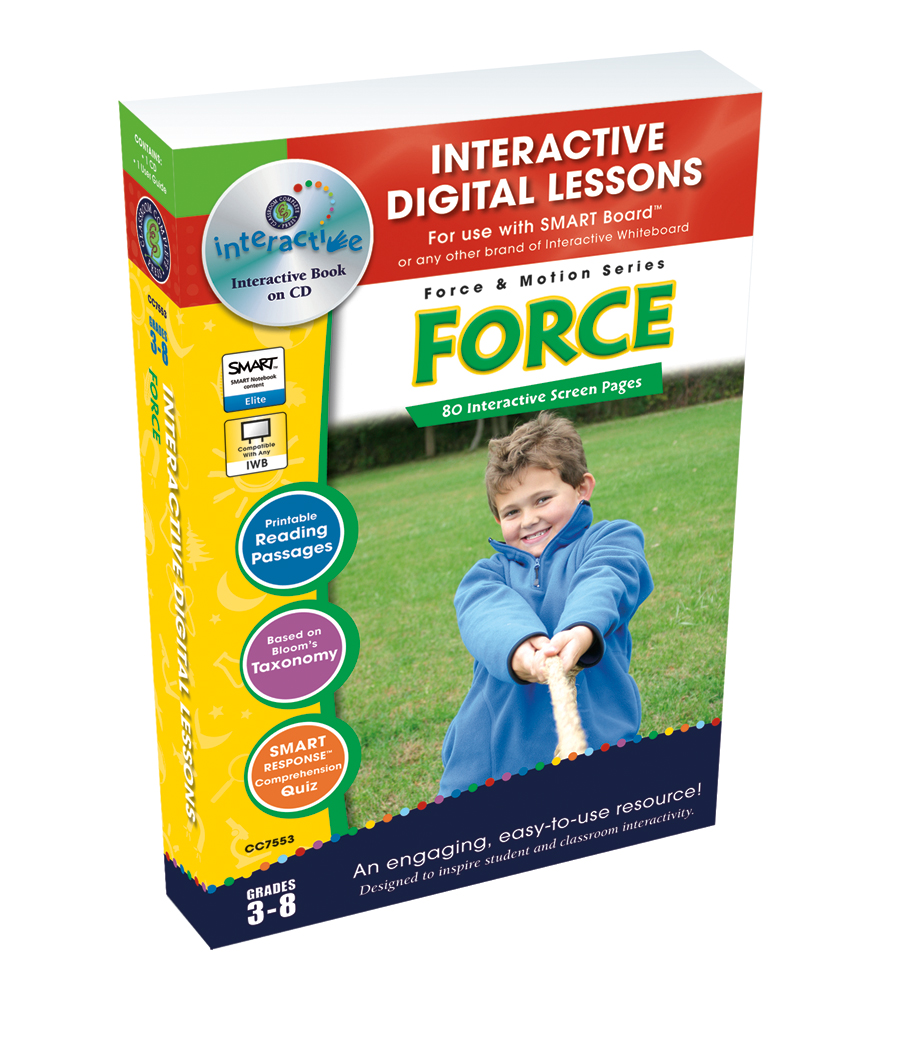
"Force: Other Forces That Act Without Touching Gr. 5-8" This teaching tool is designed specifically to enhance the understanding of the complex world of physical forces for students in grades 5 through 8, focusing on those forces that work without touching. Main Topics Covered: Balanced and unbalanced forces Weight, gravity, magnetic, and electrostatic forces This resource helps students visualize these usually invisible phenomena. By studying it, students will understand how various forces influence an object's total force. Complex scientific principles are simplified into easily digestible chunks for young learners. Pedagogical Approaches: The product can fit into different teaching scenarios: Whole Group Instruction: during class periods Small Group Studies : after school hours Homeschooling Efforts: serves as homework assignments! Also suitable for exam prep due to its quizzes feature. Note: The product comes with visually pleasing color 'mini posters' . This comprehensive kit aligns seamlessly with STEM initiatives within your State Standards making it highly beneficial educational tool whether you're instructing science lessons at public schooling institutions or spearheading homeschooling efforts! Intrinsically rewarding - there's nothing much quite like unraveling mysteries of the universe together with your pupils!

Author Classroom Complete Press

Tags PDF

Guided Reading Level N - The Power of the Wind (with Lesson Plan)

Guided Reading Level N - The Power of the Wind (with Lesson Plan)
ELA, Resources for Teachers, Reading Comprehension, Reading, Social Studies, Geography, Earth and Environmental Sciences, Science, Physics, Technology, Grade 2, 3, 4, Worksheets & Printables, Worksheets, Teacher Tools, Centers, Activities, Literacy Readers, Quizzes, Quizzes and Tests, Assessments, Lesson Plans

This Guided Reading Book - The Power of the Wind (Level N) with lesson plan includes: Guided Reading Color Label (front cover x1) This is a quick way to match the book’s demands to what students can generally handle.. The overall goal is to use the level/color to pick books for several smaller groups. To qualify for a certain level, a student is expected to read a book from that level with about 90–94% accuracy. If a student is consistently accurate and understands, move up a level. If the student is struggling at that level, drop down and add more support. Each student will improve at completely different rates, but it is generally one of the best ways to check progress across the class. DOWNLOAD THE CATALOG TO VIEW ALL GUIDED READING BOOKS AVAILABLE (SORTED LEVELS A-Z) Pre-Reading Question (x1) Teacher asks the prompt aloud, can be while showing the cover or first page. Students share what they already know, or make educated guesses from the cover. Prompt them to use the target vocabulary. Write some of their responses on the board to look back at during the reading. Vocabulary Words (x5) Introduce the five words, best doing it one at a time. Start by saying it, while students repeat and then see if anyone knows what it means before reading further. Read through the meaning and try to briefly connect each word to a picture or gesture so it’s meaningful. Ask students to flip through the book pages and point to where they see each of the vocabulary words. While reading the book pause upon coming across one of the vocab words or read the sentence twice to make sure students understand the word has appeared. Optional: Ask students to raise hands whenever they see/hear one of the new words. Guided Reading Pages (x10) Check the book snapshot (below) for: primary topic - do you need to prep extra reading or intro materials on this? what is taught best - decide on 1-2 bullets to focus on, use the prompt or words provided here for best results. learning goals - what you are checking for students to be able to do after the session, elicit answers using prompts or words provided. key vocabulary (see section above). questions overview - so you know what is coming up and if you need to prep extra materials to assist understanding. Run the lesson You may have already looked at a few of the pages together, but you can show them some of the pictures again first to set meaning. Depending on how much time you have and how familiar your students are with guided reading class, you may want to read the book aloud first with the group first. Students whisper or partner read, while you listen in. If time, do it as a group, one student reading a page each. Use the guided page’s prompts to coach: “Check the picture / does it make sense?” “Point under the words / try the first sound” “Reread the sentence smoothly”. Try to focus more on one student per session (rotating every time), so you can work out if they are ready to move up or need to move down a level. Comprehension Questions (back cover x3) This is your way to check that students didn’t just say the words, but actually understood the text. First, let students answer by pointing to the page/picture and saying a short sentence. After any answer, follow with: “Show me where you found that in the text.” In bigger groups, have partners answer first (10–20 seconds), then call on 2–3 students to share. Differentiation tips: Emerging speakers/struggling readers: oral + pointing On-level: oral in a full sentence Higher: one written sentence or draw + label Book Snapshot Title: The Power of the Wind Genre: Nonfiction (informational science text) Subject: Science (Energy/Earth Science) Primary Topic: How wind forms and how it makes electricity Estimated Guided Reading Level (A–Z): N What This Book Teaches Best Defines wind as the movement of air across Earth’s surface and describes wind as a breeze or a strong gust. Explains the cause of wind : the sun heats Earth unevenly, warm air rises, and cool air moves in to replace it. Shows how people have used wind over time, comparing traditional windmills (grinding grain, pumping water) to modern wind turbines. Describes how a wind turbine works, including blades spinning a shaft connected to a generator that makes electricity. Connects wind energy to sustainability by explaining wind farms , offshore wind farms , and wind energy as a clean, renewable resource. Learning Goals Students will explain what wind is using details from the text. Students will describe how the sun’s heating of Earth helps create wind. Students will describe how traditional windmills used wind to help people. Students will explain how wind turbines change wind’s motion into electricity. Students will describe what a wind farm is and why offshore wind farms can capture strong winds. Students will explain why wind energy is described as renewable and clean in the text. Key Vocabulary From the Text movement — going from one place to another. gust — a short, strong burst of wind. turbines — big machines with blades that spin in wind. generator — a machine that makes electricity. renewable — can be used again and won’t run out. Discussion Prompts Pre-reading question: Where have you seen wind do work, like moving something or making power? Comprehension questions: What does the text say creates wind? Comprehension questions: How did traditional windmills use wind to help people? Comprehension questions: How does a wind turbine turn wind into electricity, according to the text? Printing Tips 1. Best Printing Method (Recommended) “Booklet” Printing (Best if Available) If your printer or PDF viewer supports Booklet Printing , use this. Settings to use: Print mode: Booklet Paper size: Letter or A4 (either works) Orientation: Landscape Print on both sides: Yes Flip on: Short edge Scaling: Fit to printable area Booklet subset: First test: Front sides only Then: Back sides only This will automatically: Pair pages correctly Put the cover on the outside Align everything for folding After printing, fold in half and staple along the spine . 2. If “Booklet” Printing Is NOT Available You can still print this correctly with manual duplex printing . Step-by-step: Open the PDF. Choose Print . Set: Orientation: Landscape Pages per sheet: 1 Print on both sides: Yes Flip on: Short edge Print all pages . Because each PDF page already contains two facing book pages, the result will still fold cleanly into a book. Thousands of Cored Education products are included with your TeachSimple membership. Download links and encyclopedia index available here.

Author Cored Education

Rating

Tags Reading Comprehension, Reading Passages, Reading, Guided Reading, Guided Reading Lesson Plan, Guided Reading Activity, Pre-reading, Geography, Science Lesson Plans, Technology

I WONDER - How Does Gravity Work | Animated Video Lesson

I WONDER - How Does Gravity Work | Animated Video Lesson
Physics, Science, Grade 6, 7, 8, 9, 10, 11, 12, Lesson Plans, Teacher Tools

Video Introduction An amazing video designed for the students to learn more about STEM. I WONDER - How Does Gravity Work | Animated Video Lesson Do you like STEM subjects? what is your favorite one? Have you ever tried to plant a seed? If yes, tell us more about it. Or have you ever tried to invent something? If yes, tell us more about it. And how do you think it will help us? Have you ever seen a microorganism under a microscope? What was it? And how it looked like? Mathematics is a marvelous subject. Let' sharpen our brains and solve some equations. Do you like timetable tricks? What is your favorite one? Do you know how to code? Have you ever created an app or a game before? If yes, how was it like? I WONDER - How Does Gravity Work | Animated Video Lesson The video is perfect for encouraging the researching skills for the students, while learning more about this fantastic topic. I WONDER - How Does Gravity Work | Animated Video Lesson This friendly designed video is suitable for students at school, homeschooling, and as a group activity. Format Available in MP4 format.

Author Educational Voice

Tags How Does Gravity Work, How Does Gravity Work Video, Gravity, Gravity Facts, Gravity Facts For Kids, Gravity Video, Gravity Video For Kids, Science, Stem, Science Video

I WONDER - How Are Echoes Caused | Animated Video Lesson

I WONDER - How Are Echoes Caused | Animated Video Lesson
Physics, Science, Grade 4, 5, 6, 7, 8, 9, 10, Lesson Plans, Teacher Tools

Video Introduction An amazing activity designed for the students to learn more about STEM. I WONDER - How Are Echoes Caused | Animated Video Lesson Do you like STEM subjects? what is your favorite one? Have you ever tried to plant a seed? If yes, tell us more about it. Or have you ever tried to invent something? If yes, tell us more about it. And how do you think it will help us? Have you ever seen a microorganism under a microscope? What was it? And how it looked like? Mathematics is a marvelous subject. Let' sharpen our brains and solve some equations. Do you like timetable tricks? What is your favorite one? Do you know how to code? Have you ever created an app or a game before? If yes, how was it like? I WONDER - How Are Echoes Caused | Animated Video Lesson The video is perfect for encouraging the researching skills for the students, while learning more about this fantastic topic. I WONDER - How Are Echoes Caused | Animated Video Lesson This friendly designed video is suitable for students at school, homeschooling, and as a group activity. Format Available in MP4 format.

Author Educational Voice

Tags How Are Echoes Caused, How Are Echoes Caused Video, Echoes, Echo, Echoes Facts, Echoes Facts For Kids, Echoes Video, Echoes Video For Kids, Sound, Sound Facts

I WONDER - Is Light White | Animated Video Lesson

I WONDER - Is Light White | Animated Video Lesson
Physics, Science, Grade 6, 7, 8, 9, 10, 11, 12, Lesson Plans, Teacher Tools

Video Introduction An amazing activity designed for the students to learn more about STEM. I WONDER - Is Light White | Animated Video Lesson Do you like STEM subjects? what is your favorite one? Have you ever tried to plant a seed? If yes, tell us more about it. Or have you ever tried to invent something? If yes, tell us more about it. And how do you think it will help us? Have you ever seen a microorganism under a microscope? What was it? And how it looked like? Mathematics is a marvelous subject. Let' sharpen our brains and solve some equations. Do you like timetable tricks? What is your favorite one? Do you know how to code? Have you ever created an app or a game before? If yes, how was it like? I WONDER - Is Light White | Animated Video Lesson The video is perfect for encouraging the researching skills for the students, while learning more about this fantastic topic. I WONDER - Is Light White | Animated Video Lesson This friendly designed video is suitable for students at school, homeschooling, and as a group activity. Format Available in MP4 format.

Author Educational Voice

Tags Is Light White, Is Light White Video, Light, Light Facts, Light Facts For Kids, Light Video, Light Facts Video, Light Videos, Light Videos For Kids, Science

Acceleration in 1 and 2 Dimensions - Lesson Bundle

Acceleration in 1 and 2 Dimensions - Lesson Bundle
Science, Physics, Grade 7, 8, 9, Teacher Tools, Lesson Plans

Acceleration in One and Two Dimensions - SENIOR PHYSICS - This two-day physics lesson package discusses acceleration in both one and two dimensions. It also provides a detailed overview with example questions for position-time, velocity-time, and acceleration-time graphs. It is geared towards students who are in high school senior physics. This package includes the lesson (student and teacher versions of the presentation), an auto-graded Exit Ticket, and a student lesson handout as a document. The presentation is fun and applicable with many opportunities for inquiry-based learning and discussion. In order, the lesson covers: Acceleration in 1 dimension Units Examples Graphing Motion With Constant Acceleration Position-time, velocity-time and acceleration-time Constant Acceleration Equations Examples Acceleration in 2 dimensions Examples Included in the lesson package is: The teacher version of the presentation The student version of the presentation One embedded video An auto-graded Exit Ticket and a separate quiz with an answer key Student lesson handout ------------------------------------------------- Google and Distance Learning Ready This lesson includes both Office and Google formats for ALL resources. The presentation is in PowerPoint and Google Slides while all documents contain Word and Google Doc versions. Your resource is perfect for distance learning and integrates seamlessly with Google Classroom as I've included a link that will automatically create a copy of the resources and put them directly into your Google Drive with one click. Download--> Open --> Click --> Assign to your students Having both options allows you to use either without worrying about formatting issues as all the work has already been done for you. It safeguards you in case your department or school decides to go Google 100% and allows you as well as your students to access everything no matter where you are or what kind of equipment is being used. The student version of the presentation contains multiple blanks that need to be filled in throughout the lesson. These blanks are conveniently underlined and bolded on the teacher copy. I have found this to be the most effective means of keeping my students engaged and active without having them write everything out. This also leaves more time for discussion and activities Also, please visit my blog Teach With Fergy for my thoughts on teaching, learning, and everything in between.

Author Teach With Fergy

Tags Acceleration, Dimensions, Physical Science, Science Lesson, Student Worksheet Outline, Acceleration Activities For Middle School

Force: Gravity Gr. 5-8

Force: Gravity Gr. 5-8
Science, Physics, Grade 5, 6, 7, 8, Teacher Tools, Lesson Plans

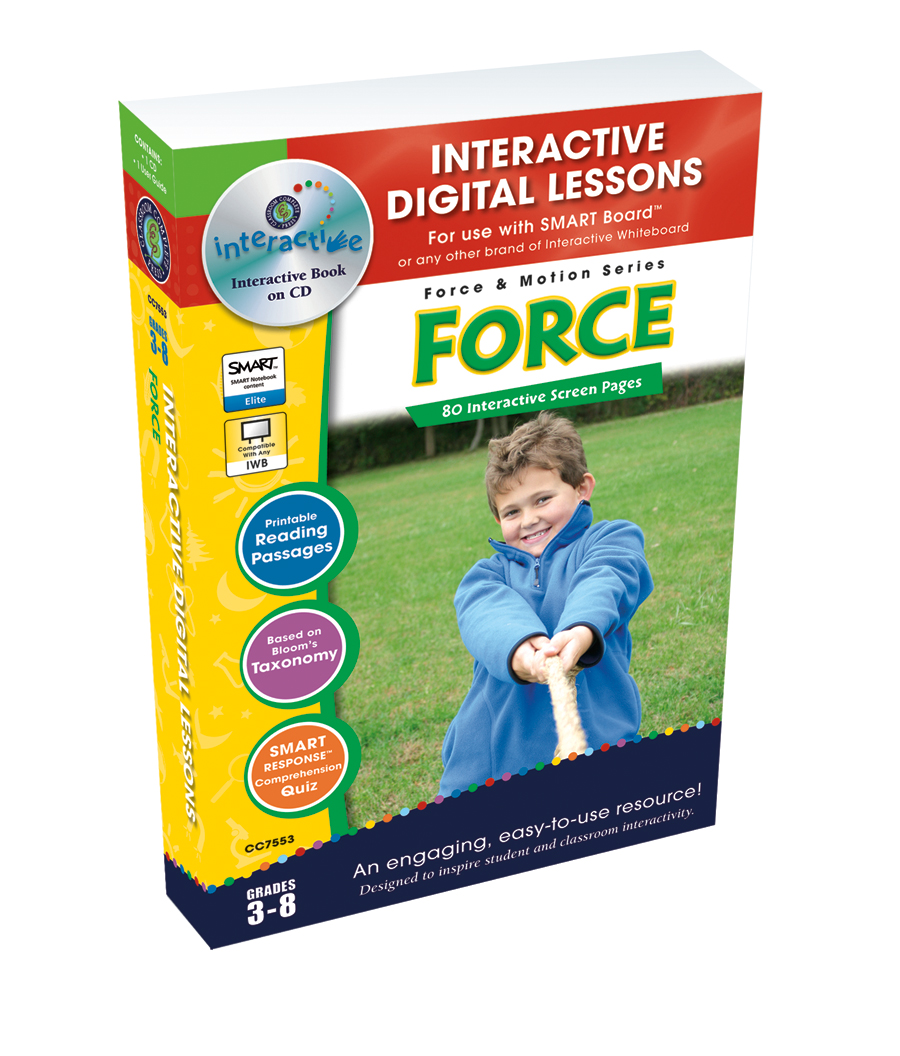
Force: Gravity Gr. 5-8 - Comprehensive Teaching Resource Force: Gravity Gr. 5-8 is a comprehensive teaching resource meticulously crafted to simplify complex physics concepts for grade 5 to grade 8 students. With simple language and relevant vocabulary, understanding these concepts becomes achievable. This resource narrows down the "Force" lesson plan, focusing predominantly on Gravity. It aims to elucidate how forces function around us in different situations, whether upon contact or from a distance. Learners will develop an understanding of balanced and unbalanced forces, A comprehension of weight and gravity, An insight into magnetic and electrostatic forces, among others. Pedagogically Impactful Resource Features: The integration reading passages championed by pre and post reading activities makes teaching effortless boosting effective learning among students. Creatively Designed Learning Tools: Color mini posters cater to visual learners’ needs while creating an engaging learning environment for all learners' types. Evaluative Measures & Fun Puzzles: The package includes: Crosswords, Word searches ideal for reinforcing knowledge through enjoyable interactive exercises that engage student creativity, A comprehension quiz along with test prep materials designed efficiently evaluate students understanding thereby enabling educators track progress over time accurately. Diligently Designed Following Educational Protocols: Faithfully created by education professionals the Force: Gravity Gr. 5-8 aligns itself with state standards authored explicitly following Bloom's Taxonomy protocol coupled with STEM initiatives. This ensures quality educational content deeply imbued into engaging activities throughout. Versatile Teaching Resource: Pedagogues can innovatively implement this valuable resource across various teaching settings; it works well for whole group lectures or small focus groups facilitating deeper concept understanding through dynamic group discussions. Educators could even assign parts as homework tasks for an individualized at-home learning experience. Delivering Remarkable Science Education: Embodying all things physics in interactive ways that resonate well with grade-level expectations, this versatile resource available in PDF format is ideal not just for public school teachers but also for homeschoolers committed to delivering efficient science education.

Author Classroom Complete Press

Tags PDF

Guided Reading Level N - Everest (with Lesson Plan)

Guided Reading Level N - Everest (with Lesson Plan)
ELA, Resources for Teachers, Reading Comprehension, Reading, Science, Earth and Environmental Sciences, Social Studies, Geography, Life Sciences, Physics, Grade 2, 3, 4, Worksheets & Printables, Worksheets, Teacher Tools, Centers, Activities, Literacy Readers, Quizzes, Quizzes and Tests, Assessments, Lesson Plans

This Guided Reading Book - Everest (Level N) with lesson plan includes: Guided Reading Color Label (front cover x1) This is a quick way to match the book’s demands to what students can generally handle.. The overall goal is to use the level/color to pick books for several smaller groups. To qualify for a certain level, a student is expected to read a book from that level with about 90–94% accuracy. If a student is consistently accurate and understands, move up a level. If the student is struggling at that level, drop down and add more support. Each student will improve at completely different rates, but it is generally one of the best ways to check progress across the class. DOWNLOAD THE CATALOG TO VIEW ALL GUIDED READING BOOKS AVAILABLE (SORTED LEVELS A-Z) Pre-Reading Question (x1) Teacher asks the prompt aloud, can be while showing the cover or first page. Students share what they already know, or make educated guesses from the cover. Prompt them to use the target vocabulary. Write some of their responses on the board to look back at during the reading. Vocabulary Words (x5) Introduce the five words, best doing it one at a time. Start by saying it, while students repeat and then see if anyone knows what it means before reading further. Read through the meaning and try to briefly connect each word to a picture or gesture so it’s meaningful. Ask students to flip through the book pages and point to where they see each of the vocabulary words. While reading the book pause upon coming across one of the vocab words or read the sentence twice to make sure students understand the word has appeared. Optional: Ask students to raise hands whenever they see/hear one of the new words. Guided Reading Pages (x10) Check the book snapshot (below) for: primary topic - do you need to prep extra reading or intro materials on this? what is taught best - decide on 1-2 bullets to focus on, use the prompt or words provided here for best results. learning goals - what you are checking for students to be able to do after the session, elicit answers using prompts or words provided. key vocabulary (see section above). questions overview - so you know what is coming up and if you need to prep extra materials to assist understanding. Run the lesson You may have already looked at a few of the pages together, but you can show them some of the pictures again first to set meaning. Depending on how much time you have and how familiar your students are with guided reading class, you may want to read the book aloud first with the group first. Students whisper or partner read, while you listen in. If time, do it as a group, one student reading a page each. Use the guided page’s prompts to coach: “Check the picture / does it make sense?” “Point under the words / try the first sound” “Reread the sentence smoothly”. Try to focus more on one student per session (rotating every time), so you can work out if they are ready to move up or need to move down a level. Comprehension Questions (back cover x3) This is your way to check that students didn’t just say the words, but actually understood the text. First, let students answer by pointing to the page/picture and saying a short sentence. After any answer, follow with: “Show me where you found that in the text.” In bigger groups, have partners answer first (10–20 seconds), then call on 2–3 students to share. Differentiation tips: Emerging speakers/struggling readers: oral + pointing On-level: oral in a full sentence Higher: one written sentence or draw + label Book Snapshot Title: Everest Genre: Nonfiction (informational text) Subject: Science (Earth Science/Geography) Primary Topic: Mount Everest’s location, formation, and extreme conditions Estimated Guided Reading Level (A–Z): N What This Book Teaches Best Key facts about Mount Everest’s height and setting in the Himalayas in Asia. How mountain ranges form over long periods of time, including tectonic plate movement. How borders and regions connect to physical geography (Nepal/China border across the summit). How extreme environments change with altitude, including the “Death Zone” and low oxygen. How glaciers, weather, earthquakes, and erosion shape Everest and keep it changing. Learning Goals Describe where Mount Everest is located and what mountain system it is part of. Identify what the text says about the border between Nepal and China on Everest. Explain how Everest was formed using the book’s description of tectonic plates. Describe what the “Death Zone” is and why most living things cannot survive there long. Describe how glaciers create features on the mountain, including crevasses. Explain one way Everest is still changing today, using details from the text. Key Vocabulary From the Text summit — the very top point of a mountain. glacier — a huge, slow-moving river of ice. tectonic — related to Earth’s moving crust plates. crevasses — deep cracks in ice. erosion — wind, water, or ice wearing rock away. Discussion Prompts Pre-reading question: Where does the book say Mount Everest stands? Comprehension questions: What does the text say about where the Nepal–China border is on Everest? Comprehension questions: How does the text explain that Everest was formed long ago? Comprehension questions: What is one way the text says Mount Everest is still changing today? Printing Tips 1. Best Printing Method (Recommended) “Booklet” Printing (Best if Available) If your printer or PDF viewer supports Booklet Printing , use this. Settings to use: Print mode: Booklet Paper size: Letter or A4 (either works) Orientation: Landscape Print on both sides: Yes Flip on: Short edge Scaling: Fit to printable area Booklet subset: First test: Front sides only Then: Back sides only This will automatically: Pair pages correctly Put the cover on the outside Align everything for folding After printing, fold in half and staple along the spine . 2. If “Booklet” Printing Is NOT Available You can still print this correctly with manual duplex printing . Step-by-step: Open the PDF. Choose Print . Set: Orientation: Landscape Pages per sheet: 1 Print on both sides: Yes Flip on: Short edge Print all pages . Because each PDF page already contains two facing book pages, the result will still fold cleanly into a book. Thousands of Cored Education products are included with your TeachSimple membership. Download links and encyclopedia index available here.

Author Cored Education

Rating

Tags Reading Comprehension, Reading Passages, Reading, Guided Reading, Guided Reading Lesson Plan, Guided Reading Activity, Pre-reading, Social Studies Lesson Plans, Science Lesson Plans, Geography

Motion - Digital Lesson Plan Gr. 5-8 | MAC Software

Motion - Digital Lesson Plan Gr. 5-8 | MAC Software
Science, Physics, Grade 3, 4, 5, 6, 7, 8, Teacher Tools, Lesson Plans

Motion - Digital Lesson Plan Gr. 5-8 | MAC Software Description This educational resource is designed specifically for grades 5 through 8 educators in the public school system and homeschool environment. It simplifies the complex science topic of motion for young learners. Interactive and Comprehensive The software spans across 80 screen-pages full of dynamic information, to enhance students' comprehension skills, making learning more interactive and immersive. Educational Features and Components Reading passages integrated with interactive activities. Examination-based preparation aids. Crossword puzzles for vocabulary enhancement. Mind drills via word search exercises. Audiological-Visual association via audio-video content enrichment. Including Students Participation in Learning Process The lesson plan includes measurement tools which allow students to graph motion themselves, enabling tangible association between theory and practice. In a downloadable zip file format, this software goes beyond teaching physics; it provides a profound, enriching learning experience. Conforms to state educational standards considering Bloom's Taxonomy- further emphasizing understanding over rote memorization. This software can be used in whole group discussions as well as individual homework tasks; it's flexible to adapt as per your unique teaching style! Want an exciting platform that makes the learning experience rich? Choose the Motion !

Author Classroom Complete Press

Tags Digital Lesson Plan, Science Lesson Plan, Physics Interactive Activity, Motion Lesson Plan, Science Passage

I WONDER - Are There Different Types Of Circuits | Animated Video

I WONDER - Are There Different Types Of Circuits | Animated Video
Physics, Science, Grade 6, 7, 8, 9, 10, 11, 12, Lesson Plans, Teacher Tools

Video Introduction An amazing activity designed for the students to learn more about STEM. I WONDER - Are There Different Types Of Circuits | Animated Video Lesson Do you like STEM subjects? what is your favorite one? Have you ever tried to plant a seed? If yes, tell us more about it. Or have you ever tried to invent something? If yes, tell us more about it. And how do you think it will help us? Have you ever seen a microorganism under a microscope? What was it? And how it looked like? Mathematics is a marvelous subject. Let' sharpen our brains and solve some equations. Do you like timetable tricks? What is your favorite one? Do you know how to code? Have you ever created an app or a game before? If yes, how was it like? I WONDER - Are There Different Types Of Circuits | Animated Video Lesson The video is perfect for encouraging the researching skills for the students, while learning more about this fantastic topic. I WONDER - Are There Different Types Of Circuits | Animated Video Lesson This friendly designed video is suitable for students at school, homeschooling, and as a group activity. Format Available in MP4 format.

Author Educational Voice

Tags Types Of Circuits, Are There Different Types Of Circuits, Are There Different Types Of Circuits Video, Types Of Circuits Facts, Types Of Circuits Facts For Kids, Types Of Circuits Video, Science, Science Facts

Speed Quizzing – Waves and Sound Unit

Speed Quizzing – Waves and Sound Unit
Science, Physics, Grade 8, 9, 10, Lesson Plans, Teacher Tools

This activity will get your students out of their seats, moving around, and discussing the material. It is fully editable and requires very little preparation. Simply print, cut out the flash cards, and pass them out to students. Note. This resource can also be used as an excellent question bank as it contains 32 high-quality questions that you can use in any way you see fit. This activity contains 32 questions designed to test your students’ knowledge of the unit they are studying. The questions come directly from the lessons and cover the following topics: • Waves – An Introduction • Waves – Transmission, Reflection, and Interference • Standing Waves • Sound, Sound Energy, and Speed • Hearing and the Human Ear • The Doppler Effect and Supersonic Travel Each of the Speed Quizzes listed below can be found in my Speed Quizzes Growing bundle at a discount of at least 65%. Here’s how you implement them: 1. Provide each student with a flash card 2. Pair up students using the stand up/hands up/pair up method 3. Partner A reads the question to Partner B, who answers. Partner A praises if correct or coaches if incorrect. 4. Partners switch roles 5. Students thank each other and switch cards 6. Partners raise their hands to find a new partner 7. Repeat for a specified amount of time Alternate way to ensure each student gets a new partner each time: Divide students into groups A and B. Have every student pair up with someone from the other group (if there is an odd number of students you participate too!) 1) Do Speed Quizzing 2) Then have group A move to the right and group B stay still. 3) Do Speed Quizzing 4) Then have group B move to the left and group A stay still. Every student in group A will meet every student in group B, but students will not meet students in their own group (a clever way to keep apart students who should not be partnered for whatever reason). This activity can be used to: • Prompt meaningful student conversation • Review prior knowledge • Review new terms/problems after a unit • Gather student ideas • Remediate weak skills • Practice new skills Thank you for your interest in my products. If you have any questions, please send me an email - devon@teachwithfergy.com

Author Teach With Fergy

Tags Waves Transmission, Speed Quizzing, Partner Work, Group Work, Physical Science

Simple Machines Gr. 5-8

Simple Machines Gr. 5-8
Science, Physics, Grade 5, 6, 7, 8, Teacher Tools, Lesson Plans

Simple Machines Gr. 5-8: An Efficient Teaching Guide Simple Machines Gr. 5-8 is a comprehensive resource designed for educators teaching principles of simple machines to students in Grades 5 to 8. This user-friendly guide helps teachers explain complex scientific concepts related to simple machines and turns them into tangible, interactive lessons. Interactive Learning Through Hands-On Experiments The guide encourages engaging learning by introducing hands-on experiments, such as tests with first-class levers to examine the relationships between force and distance. In-depth Understanding of a Variety of Mechanical Devices Analyzes how a wheel and axle act as a lever, Distinguishes different types of pulleys, Covers how climbing up an inclined plane increases resistance force, Demonstrates how a wedge directs effort into splitting objects. The book also dives into everyday aspects like demonstrating that screws are forms of inclined planes or tasks that involve identifying various simple and complex machines at hardware stores. Synchronized with Academic Standards & Bloom's Taxonomy Crafted thinking about Next Generation State Standards, Bloom's Taxonomy & STEAM initiatives, this guide ensures you are on top-notch academically while promoting analytical thinking amongst the students. Purchase Includes Rich Content Knowledge and Engaging Activities: Rick content knowledge:In PDF format for optimal flexibility useful in whole group instruction, small group activities, or homework assignments. , , Engaging Activities: Crosswords, word searches and comprehension quizzes for the reinforcement of knowledge and better teacher assessments . , Saving Valuable Time During Lesson Prep An added advantage of this interactive teaching guide is that it comes with answer keys for these activities, which provides a quick verification process saving valuable time during lesson preparations. In Conclusion In essence, Simple Machines Gr. 5-8 is an efficient teaching resource that transforms complicated o topics making lessons on Physical Science studies more straightforward and interactive for learners from Grades 5 through 8.

Author Classroom Complete Press

Tags PDF

Force: More Than One Force Gr. 5-8

Force: More Than One Force Gr. 5-8
Science, Physics, Grade 5, 6, 7, 8, Teacher Tools, Lesson Plans

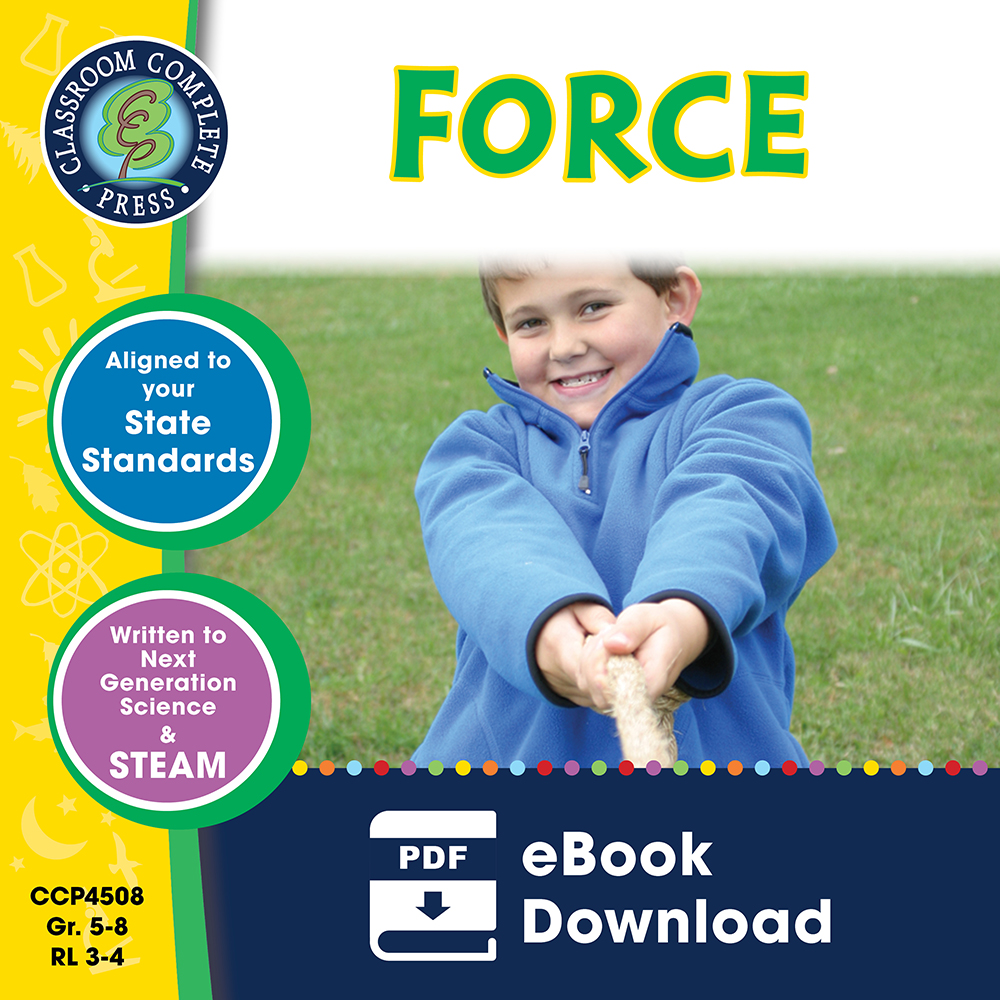
Force: More Than One Force Gr. 5-8 An interactive and exciting teaching supplement for students in grades five to eight. This tool simplifies the intricate concept of force making it understandable for young learners. It is a part of our extensive lesson plan titled "Force", primarily emphasizing on the coexistence and interaction of various forces we encounter daily. The use of clear language, precise vocabulary eliminates complexities around physics theories. The important themes presented are: Balanced and unbalanced forces Weight versus gravity Magnetic and electrostatic forces This resource is versatile making it suitable for large group instruction, smaller break-out groups or even as assigned homework to enforce previously learnt concepts. In addition to reading activities, before-and-after worksheets ensure better understanding especially in case extra practice or repetition is required. Color Mini Posters: To invigorate learning experience bold color mini posters are offered transforming perplexing physics principles into comprehensible ideas. Nurturing Exercises: Crosswords : Word search puzzles : Evaluation Measures: We have included quizzes as well as test preparation materials helping you feel confident that your students understand the material. This resource strictly adheres to State Standards following Bloom's Taxonomy and STEM initiatives ensuring best quality education standards are met uniformly. In conclusion Force: More Than One Force Gr. 5-8 includes everything required to make your curriculum satisfying by taking your physics class on an amazing ride into the mysteries of force!

Author Classroom Complete Press

Tags PDF

I WONDER - Why Is Friction Useful | Animated Video Lesson

I WONDER - Why Is Friction Useful | Animated Video Lesson
Physics, Science, Grade 4, 5, 6, 7, 8, 9, 10, Lesson Plans, Teacher Tools

Video Introduction An amazing activity designed for the students to learn more about STEM. I WONDER - Why Is Friction Useful | Animated Video Lesson Do you like STEM subjects? what is your favorite one? Have you ever tried to plant a seed? If yes, tell us more about it. Or have you ever tried to invent something? If yes, tell us more about it. And how do you think it will help us? Have you ever seen a microorganism under a microscope? What was it? And how it looked like? Mathematics is a marvelous subject. Let' sharpen our brains and solve some equations. Do you like timetable tricks? What is your favorite one? Do you know how to code? Have you ever created an app or a game before? If yes, how was it like? I WONDER - Why Is Friction Useful | Animated Video Lesson The video is perfect for encouraging the researching skills for the students, while learning more about this fantastic topic. I WONDER - Why Is Friction Useful | Animated Video Lesson This friendly designed video is suitable for students at school, homeschooling, and as a group activity. Format Available in MP4 format.

Author Educational Voice

Tags Why Is Friction Useful, Why Is Friction Useful Video, Friction, Friction Facts, Friction Facts For Kids, Friction Facts Video, Physics, Stem, Stem Video, Science Video

I WONDER - What Is A Lightbulb | Animated Video Lesson

I WONDER - What Is A Lightbulb | Animated Video Lesson
Physics, Science, Grade 5, 6, 7, 8, 9, 10, 11, Lesson Plans, Teacher Tools

Video Introduction An amazing activity designed for the students to learn more about STEM. I WONDER - What Is A Lightbulb | Animated Video Lesson Do you like STEM subjects? what is your favorite one? Have you ever tried to plant a seed? If yes, tell us more about it. Or have you ever tried to invent something? If yes, tell us more about it. And how do you think it will help us? Have you ever seen a microorganism under a microscope? What was it? And how it looked like? Mathematics is a marvelous subject. Let' sharpen our brains and solve some equations. Do you like timetable tricks? What is your favorite one? Do you know how to code? Have you ever created an app or a game before? If yes, how was it like? I WONDER - What Is A Lightbulb | Animated Video Lesson The video is perfect for encouraging the researching skills for the students, while learning more about this fantastic topic. I WONDER - What Is A Lightbulb | Animated Video Lesson This friendly designed video is suitable for students at school, homeschooling, and as a group activity. Format Available in MP4 format.

Author Educational Voice

Tags What Is A Lightbulb, What Is A Lightbulb Video, Lightbulb, Lightbulbs, Lightbulb Facts, Lightbulb Facts For Kids, Lightbulb Video, Lightbulb Facts Video, Lightbulb Facts Video For Kids

I WONDER - How Do Instruments Make Sounds  | Animated Video Lesson

I WONDER - How Do Instruments Make Sounds | Animated Video Lesson
Physics, Science, Grade 4, 5, 6, 7, 8, 9, 10, Lesson Plans, Teacher Tools

Video Introduction An amazing activity designed for the students to learn more about STEM. I WONDER - How Do Instruments Make Sounds | Animated Video Lesson Do you like STEM subjects? what is your favorite one? Have you ever tried to plant a seed? If yes, tell us more about it. Or have you ever tried to invent something? If yes, tell us more about it. And how do you think it will help us? Have you ever seen a microorganism under a microscope? What was it? And how it looked like? Mathematics is a marvelous subject. Let' sharpen our brains and solve some equations. Do you like timetable tricks? What is your favorite one? Do you know how to code? Have you ever created an app or a game before? If yes, how was it like? I WONDER - How Do Instruments Make Sounds | Animated Video Lesson The video is perfect for encouraging the researching skills for the students, while learning more about this fantastic topic. I WONDER - How Do Instruments Make Sounds | Animated Video Lesson This friendly designed video is suitable for students at school, homeschooling, and as a group activity. Format Available in MP4 format.

Author Educational Voice

Tags Sound, Sound Facts, Sound Facts For Kids, Sound Facts Video, Video For Kids, Instruments, Music Instruments , Music Instruments Facts, Music Instruments Facts Video, Music Instruments Video

I WONDER - What Is Potential Energy | Animated Video Lesson

I WONDER - What Is Potential Energy | Animated Video Lesson
Physics, Science, Grade 4, 5, 6, 7, 8, 9, 10, Lesson Plans, Teacher Tools

Video Introduction An amazing video designed for the students to learn more about STEM. I WONDER - What Is Potential Energy | Animated Video Lesson Plants world is really fascinating! Do you know that some flowers eat insects? Some other plants like to grow on walls can you mention any? Do you know what is the difference between fungicide and pesticide? If yes, Can you tell us more about it? What is nuclear energy? Is it safe to use it? Do you think it is a clean energy? Have you ever read about potential energy? If yes, tell us what it is? Do you think that potential energy can be converted into another form of energy? How it happens? I WONDER - What Is Potential Energy | Animated Video Lesson The video is perfect for encouraging the researching skills for the students, while learning more about this fantastic topic. I WONDER - What Is Potential Energy | Animated Video Lesson This friendly designed video is suitable for students at school, homeschooling, and as a group activity. Format Available in MP4 format.

Author Educational Voice

Rating

Tags What Is Potential Energy, Potential Energy, Potential Energy Facts, Potential Energy Video, Potential Energy Facts For Kids, Potential Energy Video For Kids, Energy, Energy For Kids, Types Of Energy

Dams Reading Comprehension Passage - Cored Ed Encyclopedia

Dams Reading Comprehension Passage - Cored Ed Encyclopedia
ELA, Language Development, Reading Comprehension, Reading, Pre-Reading, Science, Technology, Physics, Earth and Environmental Sciences, Life Sciences, Grade 2, 3, 4, 5, Worksheets & Printables, Worksheets, Teacher Tools, Centers, Activities, Writing Prompts, Assessments, Quizzes and Tests, Quizzes, Lesson Plans

This dams reading comprehension with lesson plan includes: Visualization (on the front cover) Start your lesson by taking a minute to think and share something about the topic. Read the script aloud (slowly), perhaps prepare some music or sound effects. Student close their eyes and let their imaginations wander. Students open their eyes, read the question aloud and give them a few minutes to complete. Ask a few students to share or keep answers until the end to compare with what they learn in the passage. Quick pause—thousands of Cored Education products are included with your TeachSimple membership. Download links and encyclopedia index available here. Pre-Reading Trivia Students will write down one thing they already know about the subject and then read five more facts and discuss. These facts are fun, and the students will enjoy learning about the subject before reading more. Give 1 minute for students to write what they already know (no pressure—best guess is fine). Read the five facts together. After each fact, do ask a student for their opinion, was it surprising? Set a purpose by asking students to highlight/underline one fact they want to learn more about during the reading. Reading Passage The text is a high-interest reading passage with set paragraphs, roughly three to four paragraphs long. It contains a variety of themes about the topic, anywhere from history to technology. The passage is between 250 and 350 words in length. First, ask students to look at the headings and see what they’ll learn about today. What do they know about the topic/heading? First read options: Teacher read-aloud (best for support). Partner reading (paragraph by paragraph). While reading, students underline important details, and vocabulary words they think may come up in the questions section. Mixed Questions The first question page contains four multiple-choice questions, each with a choice of four answers, and three written response questions that require a sentence or two from the student. Students complete the mcqs first independently, then review quickly as a class. For the 3 written responses, try to get students giving the answer with some form of evidence: “I think ___ because the text says ___.” If students get stuck, send them back to check the passage. Vocabulary Questions Practice seven key words from the text in this section across two activities. First section is scrambled words where students will unscramble three words given a clue for each. The second section is a word to meaning matching activity. Before starting, have some students read out words they underlined in the passage. Ask students to say the word and read aloud the sentence(s) around each word. Ask students to do scrambled words and the matching exercise in pairs then go through answers as a class. For the scrambled spelling task, get four pairs to come up to the board and write the words for extra practice with the other student reading out the clue. For the matching task, prompt students to give full sentences: “I matched ___ with ___ because ___.” Creative Writing In this question, the student will be required to write a five to eight sentence paragraph on a question related to the topic. Before starting, ask students write down 3 key ideas they are going to include in their piece. Ask students for ideas to share around the class to help those struggling. Pro writing expectations: 5–8 sentences At least 2 facts or details from the passage At least 2 vocabulary words from the previous page Students read their paragraphs while classmates listen for facts and vocabulary words. Extension Activities This page is optional for fast finishers or to take home. There are several activities, each one requiring a different skill. Do some, do none, do all, completely optional - but you will feel reassured knowing every possibility is planned for. Includes summary writting question and additional facts. Answer Key There are answers for the multiple-choice questions, written response questions have sample answers, vocabulary answers and if there is a summary question then a sample summary will be provided as well. Lesson Plan Included Customized lesson plan for this lesson is included. Lesson Snapshot Title: Dams Genre: Nonfiction (informational text with headings) Subject: Science (Engineering) / Reading (Informational Text) Primary Topic: How dams store water, make electricity, and release water safely Estimated Guided Reading Level (A–Z): P What This Lesson Teaches Best Explains what a dam does by describing how a wall can hold back river water into a deep reservoir. Teaches types of dams and how they stay strong (embankment dams packed tight; gravity dams using weight; layers and drains for stability). Shows how stored water can generate electricity using penstocks, turbines, and generators. Highlights safety and trade-offs, including controlled release through a spillway, the danger of failure, and impacts on fish paths and river mud. Uses headings to organize information into clear sections (building, electricity, and safe water release). Learning Goals Students will explain how a dam changes a river’s flow and creates a reservoir. Students will describe how embankment dams are built and why tight packing matters. Students will identify the role of penstocks, turbines, and generators in making electricity. Students will explain why spillways are needed and how they help release extra water safely. Students will describe at least one cost or concern the passage connects to dams. Key Vocabulary From the Text reservoir — deep stored water behind a dam. embankment — packed earth-and-rock mound used to build a dam. penstocks — big pipes that send water down from a reservoir. turbines — spinning machines turned by rushing water. spillway — safe path for extra water to leave a reservoir. FULL CATALOG OF DOWNLOAD LINKS AND ENCYCLOPEDIA INDEX HERE

Author Cored Education

Rating

Tags Vocabulary, Reading Comprehension, Reading Passages, Lesson Plans, Ela Lesson Plans, Reading Comprehension Lesson Plans, Pre-reading, Science Lesson Plans, Physics, Technology

I WONDER - What Is Conduction | Animated Video Lesson

I WONDER - What Is Conduction | Animated Video Lesson
Chemistry, Science, Physics, STEM, Grade 6, 7, 8, 9, 10, 11, 12, Lesson Plans, Teacher Tools

Video Introduction An amazing video designed for the students to learn more about STEM. I WONDER - What Is Conduction | Animated Video Lesson Do you like STEM subjects? what is your favorite one? Have you ever tried to plant a seed? If yes, tell us more about it. Or have you ever tried to invent something? If yes, tell us more about it. And how do you think it will help us? Have you ever seen a microorganism under a microscope? What was it? And how it looked like? Mathematics is a marvelous subject. Let' sharpen our brains and solve some equations. Do you like timetable tricks? What is your favorite one? Do you know how to code? Have you ever created an app or a game before? If yes, how was it like? I WONDER - What Is Conduction | Animated Video Lesson The video is perfect for encouraging the researching skills for the students, while learning more about this fantastic topic. I WONDER - What Is Conduction | Animated Video Lesson This friendly designed video is suitable for students at school, homeschooling, and as a group activity. Format Available in MP4 format.

Author Educational Voice

Tags What Is Conduction, What Is Conduction Video, Conduction, Conduction Facts, Conduction Facts For Kids, Conduction Facts Video , Conduction Facts Video For Kids, Conduction Video, Science

Motion: Velocity and Speed - FLASH-PC

Motion: Velocity and Speed - FLASH-PC
Science, Physics, Common Core, Grade 5, 6, 7, 8, Teacher Tools, Lesson Plans

Motion: Velocity and Speed - FLASH-PC A meticulously crafted teaching resource for students in grades 5 through 8, focusing on the fundamental principles of physics including velocity and speed. Primarily designed as a supplementary tool for science educators' lesson plan. Common Core State Standards Integration The resource plays a pivotal role in helping teachers firmly embed complex scientific concepts into comprehensible lessons, supporting the Common Core State Standards educational initiative. Informative Reading Passages: Well-curated content not only promotes knowledge recollection, but also deepens subject matter understanding. Targeted Questions: Skillfully positioned both pre and post-reading, these inquiries activate prior knowledge while sharpening comprehension skills. Versatility & Engagement This digital package shatters conventional worksheet boundaries to encourage diverse learning approaches by offering the following interactive multimedia aids: Educational Videos: Visually convey motion's core principles for visual learners. Audiobooks Adaptation: An inclusive measure accommodating auditory learners. Vocabulary Enhancement & Flexible Application A special focus is placed on fostering vocabulary retention through accessible digital flashcards featuring crucial scientific terms tied to each topic discussed, thus bolstering students' language acquisition regarding critical scientific terminology. Taking into account varying classroom environments, selective strategies are available including: Rousing whole-group discussions to uncover layers of speed, Distributing velocity-focused tasks among smaller clusters for greater engagement and nuanced understanding. With qualities allowing it to serve as additional homework material or even an independent study aid, Motion: Velocity and Speed - FLASH PC projects a sublime blend of comprehensive physics instruction with digital convenience. Every learner, regardless of their individual paths, can harness the power to grasp challenging concepts like velocity and speed with ease.

Author Classroom Complete Press

Tags Software (PC)

I WONDER - Are Black Holes Affected By Gravity | Animated Video Lesson

I WONDER - Are Black Holes Affected By Gravity | Animated Video Lesson
Physics, Science, Space, Earth and Environmental Sciences, Grade 4, 5, 6, 7, 8, 9, 10, Lesson Plans, Teacher Tools

Video Introduction An amazing activity designed for the students to learn more about STEM. I WONDER - Are Black Holes Affected By Gravity | Animated Video Lesson Do you like STEM subjects? what is your favorite one? Have you ever tried to plant a seed? If yes, tell us more about it. Or have you ever tried to invent something? If yes, tell us more about it. And how do you think it will help us? Have you ever seen a microorganism under a microscope? What was it? And how it looked like? Mathematics is a marvelous subject. Let' sharpen our brains and solve some equations. Do you like timetable tricks? What is your favorite one? Do you know how to code? Have you ever created an app or a game before? If yes, how was it like? I WONDER - Are Black Holes Affected By Gravity | Animated Video Lesson The video is perfect for encouraging the researching skills for the students, while learning more about this fantastic topic. I WONDER - Are Black Holes Affected By Gravity | Animated Video Lesson This friendly designed video is suitable for students at school, homeschooling, and as a group activity. Format Available in MP4 format.

Author Educational Voice

Tags Are Black Holes Affected By Gravity, Are Black Holes Affected By Gravity Video, Black Holes, Black Holes Video, Black Holes Video For Kids, Black Holes Facts, Gravity, Gravity Video, Gravity Video For Kids