
Reusable scoring guidesVoice & writing craft
6 Traits of Writing Sticky Note Rubrics
Assess ideas, organization, voice, word choice, sentence fluency, and conventions with teacher and student rubrics designed for printing on sticky notes.




Classroom resources
Find ready-to-use rubrics for assessing stories, narrative technique, and writing craft. Start with reusable scoring guides, or choose writing lessons that include a rubric and student assessment tools.
Browse by lesson focus
Choose the topic or kind of practice you need.
Showing 1–22 of 22 resources

 Show filters
 Assess ideas, organization, voice, word choice, sentence fluency, and conventions with teacher and student rubrics designed for printing on sticky notes.

Score narrative writing using four performance levels for sensory description, character thoughts, dialogue, and grammar and style.

Give a peer editor this rubric alongside a completed narrative. After reading twice, the editor highlights qualities in column A that the writer uses consistently, then circles criteria that need continued practice. The criteria focus attention on character development and narrative craft as well as grammar and style. A separate peer editing checklist can support another pass through writing mechanics.

Three writing rubric sets — narrative , informative, and opinion — each pair a student-facing checklist describing what an 'excellent' response looks like across four or five traits with a five-point teacher grading guideline spelling out the difference between an 'Excellent' and a 'Needs Improvement' response, trait by trait. Each set includes scorecards with rating and comment spaces in bordered and unbordered layouts. Check and adapt the narrative and opinion scorecard headings to match the respective rubric before grading. All three rubrics use a consistent 1-5 scale (Excellent, Good, Satisfactory, Needs Improvement, Inadequate) but trait definitions and counts differ across the three genres.

Assess third-grade narrative, opinion, and informative writing with rubrics and student checklists. Choose the narrative rubric for story writing.
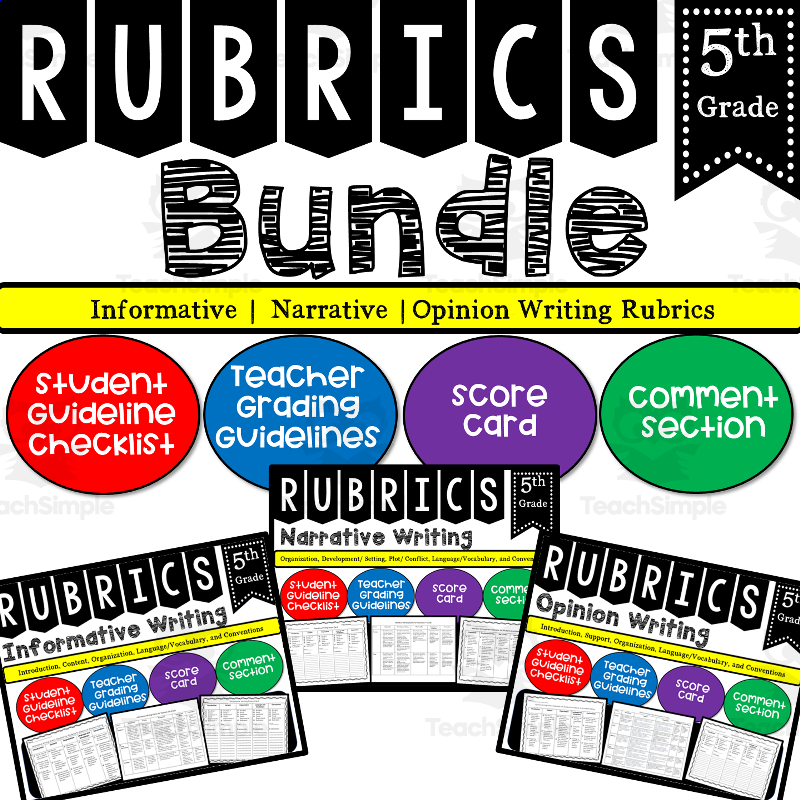
Assess fifth-grade narrative, opinion, and informative writing with rubrics and student checklists. Choose the narrative rubric for story writing.
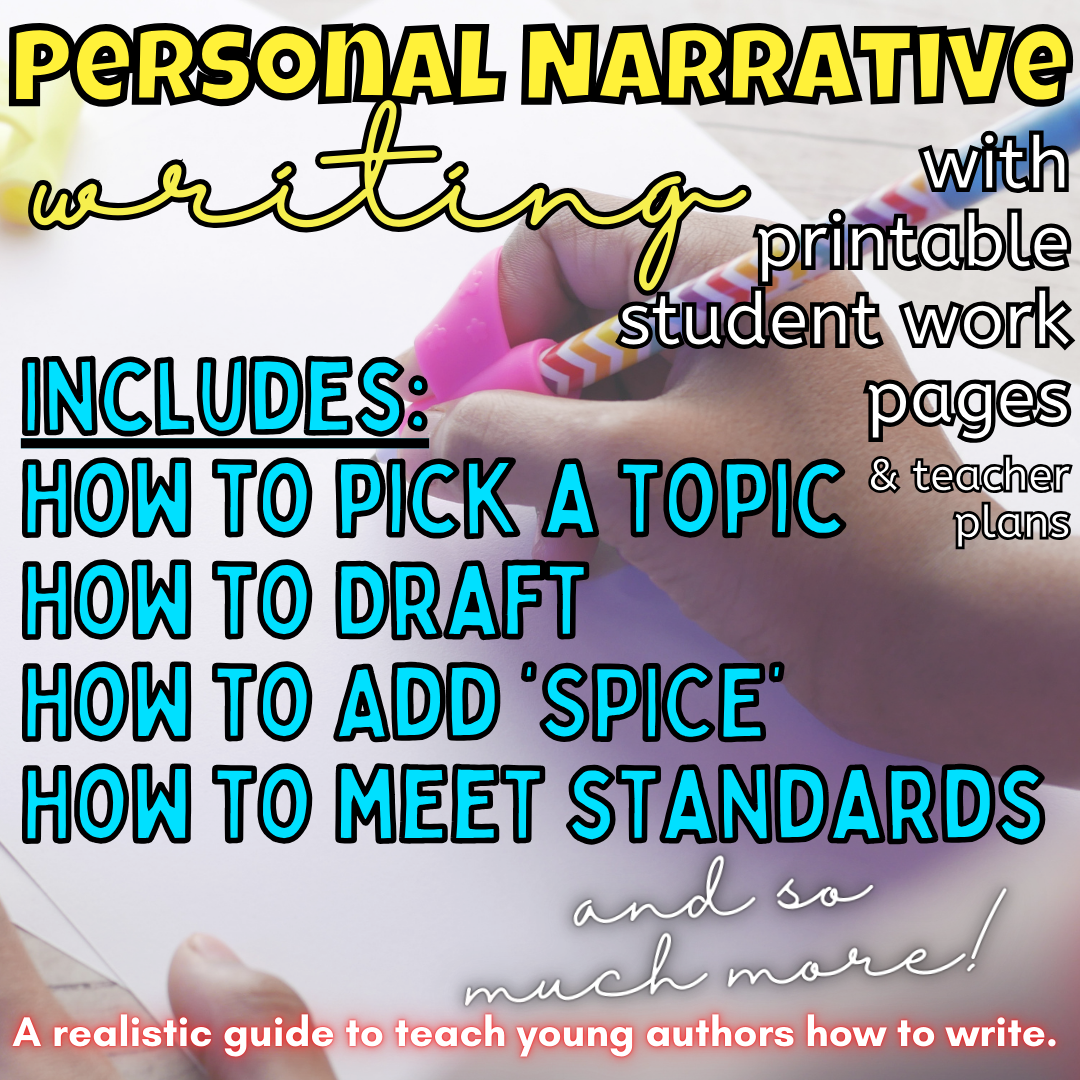
Guide students through a personal narrative using graphic organizers and examples, then assess the finished writing with the included rubric.
A step-by-step creative-writing project guide leading students through planning, mapping, drafting, peer-editing and finalizing an original mystery narrative, with a rubric aligned to narrative-writing standards.
Give middle/high school students short, targeted creative writing exercises that isolate and practice five literary devices (Details, Diction, Imagery, Point of View, and Tone) one at a time, building creative writing skills incrementally.

A reproducible Milliken Publishing workbook of 26 themed creative-writing activities guiding grade 4-5 students through character development, descriptive writing, poetry, and imaginative writing techniques.
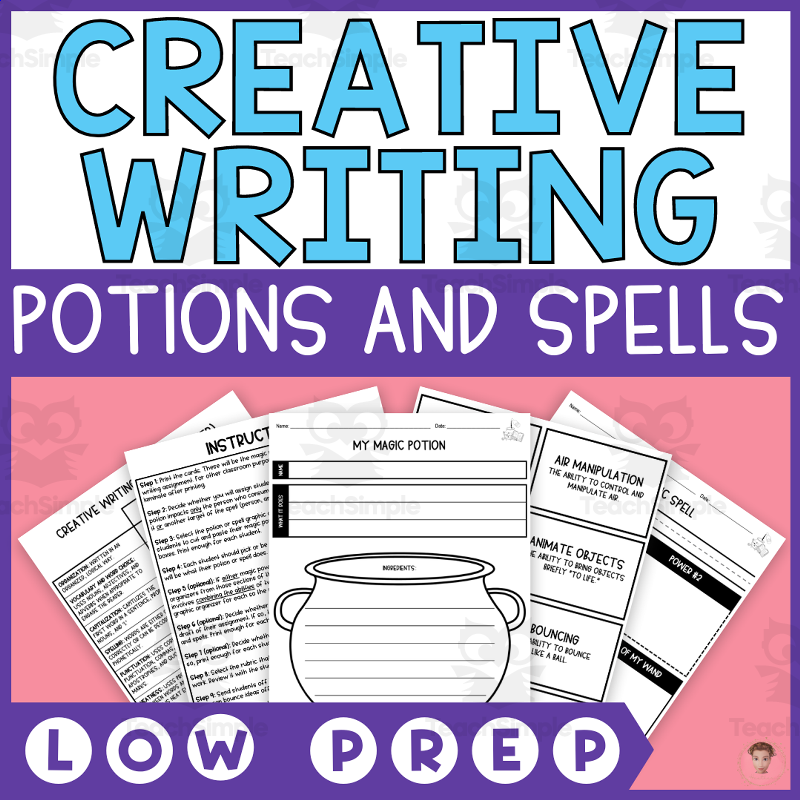
A magic-potions-and-spells themed creative writing activity where students design a magic potion or spell using assigned 'magic power' traits, then write about it using a graphic organizer and are assessed with a rubric.
Students choose a farm animal’s voice and write Boxer’s eulogy as a short narrative or poem. The assignment asks them to incorporate and annotate at least two literary devices and include a cited quotation from the novel. Model eulogies and a rubric support planning, drafting and feedback.
A creative-writing activity introducing students to the 'six word story' format as a getting-to-know-you and theme-identification exercise, with a scoring rubric.
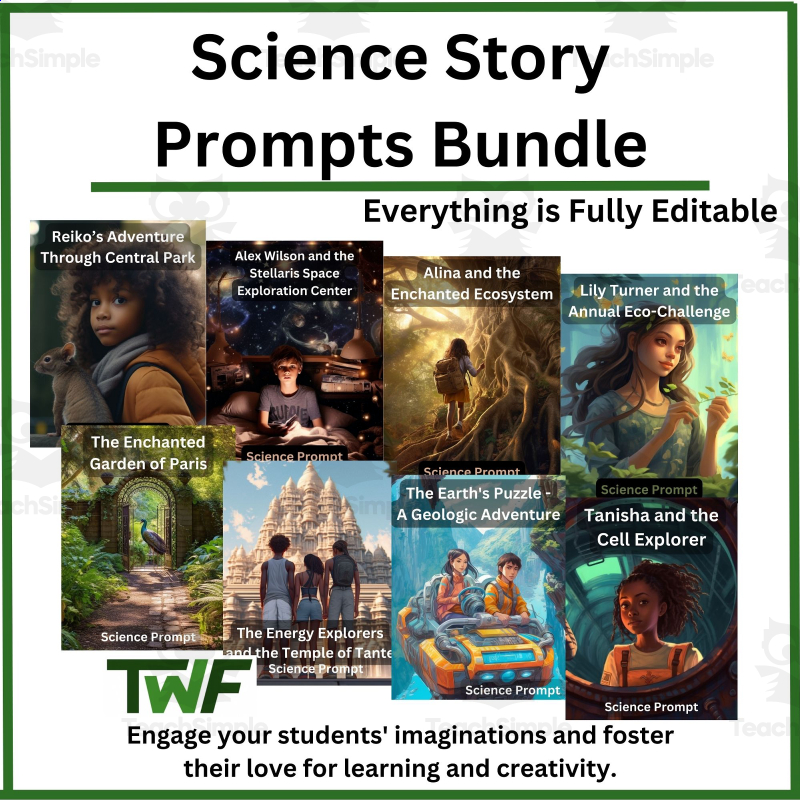
Students write original story conclusions connected to science concepts. The bundle includes grading criteria for assessing their creative responses.

A creative writing resource using an arctic animals theme and the SWBST (Somebody Wants But So Then) story structure to give first-to-third grade students low-prep writing prompts that also build arctic animal knowledge.
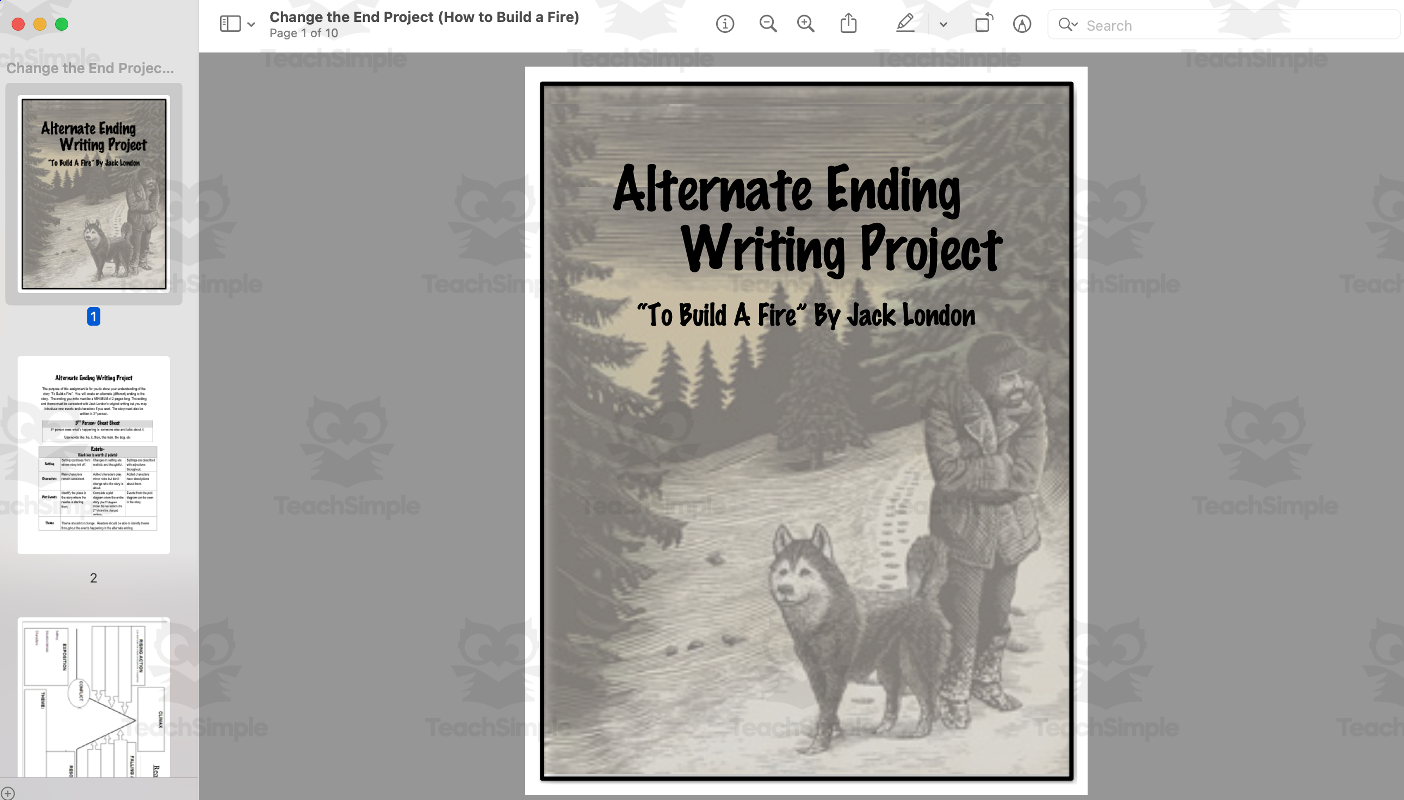
A creative writing project that has students demonstrate comprehension of Jack London's short story 'To Build a Fire' by identifying a turning point in the plot and writing an alternate ending from that point, using plot-diagram planning and a grading rubric.
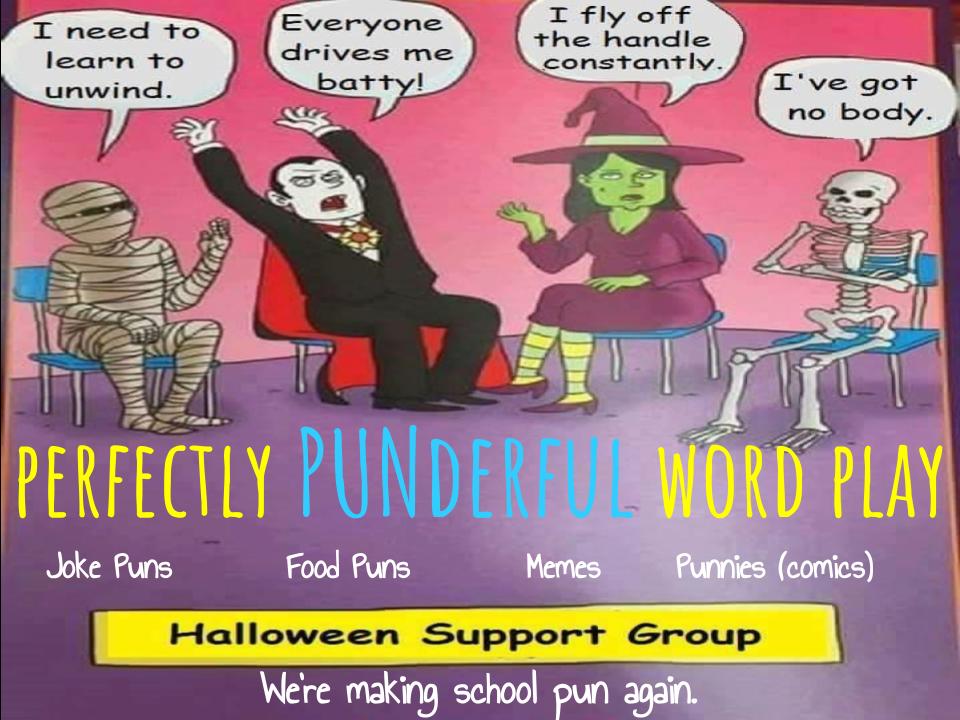
A slide deck teaching the concept of puns/wordplay through examples (joke puns, food puns, punnies/comics) and a creative-writing assignment applying puns.
A creative-writing characterization activity in which students write a eulogy for the character Piggy after reading Chapter 11 (or the full novel) of Lord of the Flies.

Provides a low-prep, reusable creative-writing framework using the 'Somebody Wants But So Then' (SWBST) story structure, themed around zoo animal character cards.
A literary-terms vocabulary lesson package teaching 13 terms related to Points of View through a slide presentation, guided notes, a creative-writing application task, and multiple assessment options.
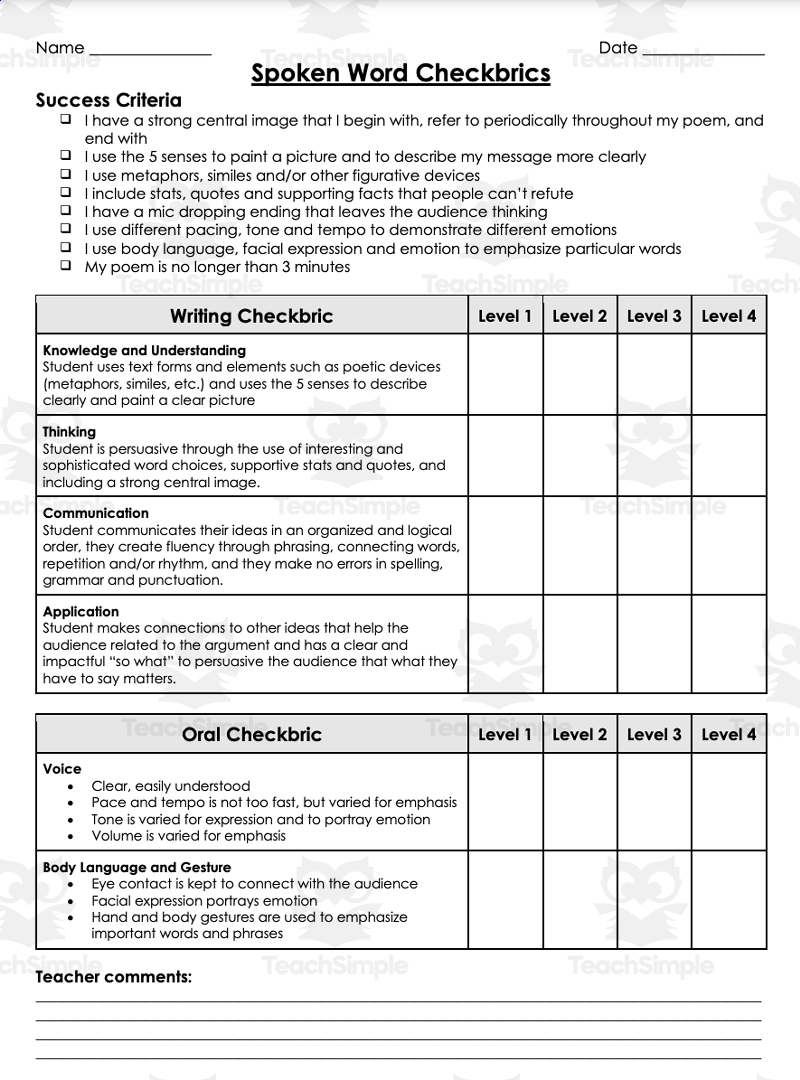
A grading rubric/checkbric set for evaluating a student's spoken-word 'poetry slam' performance, covering both the written poem (knowledge/thinking/communication/application) and the oral delivery (voice, body language, gesture).
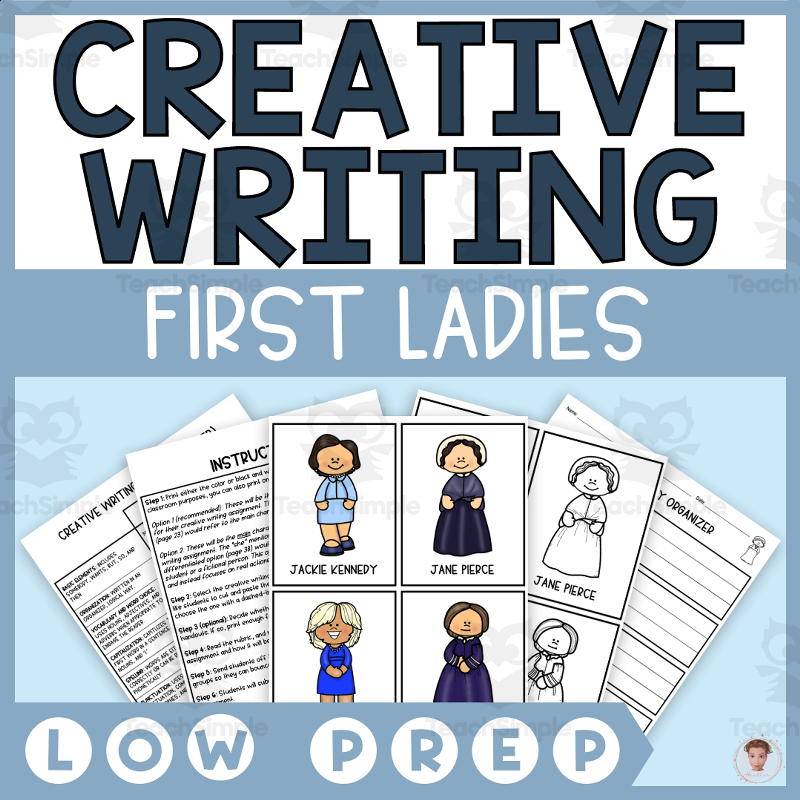
A creative-writing unit using cards naming US First Ladies as character prompts, for Women's History Month.