



3,976 products added recently
Page 64 - 2nd Grade Worksheets
Provide your second graders with worksheets that promote growth in literacy, numeracy, and critical thinking. These resources align with curriculum standards and offer engaging activities. Incorporate them to strengthen understanding and encourage enthusiasm for learning.

 Show filters

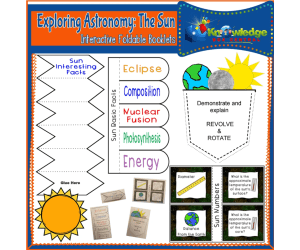
Exploring Astronomy: The Sun Interactive Foldable Booklets - EBOOK
Science, Earth and Environmental Sciences, Space, Grade 2, 3, 4, 5, 6, 7, 8, 9, 10, 11, 12, Worksheets & Printables, Worksheets
Exploring Astronomy: The Sun Interactive Foldable Booklets eBook The Exploring Astronomy: The Sun Interactive Foldable Booklets eBook provides an engaging and interactive medium for students to expand their knowledge on astronomy. Being an adaptable resource, it can be incorporated into various types of curriculums or paired with differing textbooks. Crafted delicately, the eBook consists of: Four distinct interactive foldables covering a range of topics. Fundamental facts about the Sun like its composition Related phenomena such as eclipse and photosynthesis The process of nuclear fusion that occurs directly within it. The vast coverage allows learners from grades 2 to 12 to grasp important aspects about our closest star - the Sun. Holistic learning experience: To offer a holistic learning experience, this resource dives into significant numbers associated with the sun such as its size, temperature and distance from Earth. Students can also understand key astronomical elements like rotation and revolution through this comprehensive material. Interesting Facts: Possibly one of its most enthralling features is presentation of interesting facts concerning the Sun that goes beyond regular classroom textbooks. Potential for group activities: This resource holds immense potential not just for individual learning but also for enjoyable group study sessions or homework assignments! Note for Homeschoolers: Homeschoolers could easily adapt this flexible tool for productive home teaching sessions. Create your unique foldable booklet! No worries about getting started: each instruction in this downloadable PDF file is distinctly outlined promoting easy cut-out patterns followed by folding and gluing actions! Astronomy – an enjoyable educational journey! Whether you're studying science generally or have a specific focus on astronomy – one thing's guaranteed – Exploring Astronomy: The Sun Interactive Foldable Booklets eBook promises space educational content delivered in an active learning format!
Author Knowledge Box Central
Tags Sun, Astronomy, Interactive Learning, Foldable Booklets
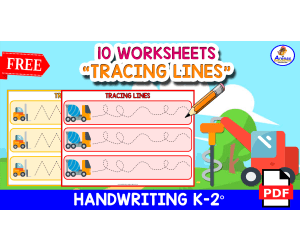
10 FUNNY WORKSHEETS | Tracing Lines
ELA, Writing, Handwriting, Kindergarten, Preschool, Grade 1, 2, Worksheets & Printables, Worksheets
PACK OF 10 VEHICLE TRACE CHECKS - For children from 3 to 6 years old. - Vehicle theme DOWNLOAD IT NOW! PRODUCT GENERAL DESCRIPTIONS: WE PRESENT TO YOU THIS FANTASTIC RESOURCE OF 10 SHEETS OF TRACES WITH THE THEME OF VEHICLES! Welcome to the EDITORIAL ARENAS EDUCATIVAS resource store. We are a store specialized in the generation of educational resources for primary school children in the areas of literacy, mathematics, Spanish and reasoning. SPECIFIC RESOURCE DESCRIPTIONS: 1. Brief introduction: The practice of strokes is very beneficial for children and for child development, especially at school. For this reason, this stroke sheet will bring you multiple benefits such as: - It will develop your fine motor skills. - It will improve your hand-eye coordination - It will prepare them for future writing of numbers and words - It will help them develop their cognition - It will help them stimulate their creativity - It will help them stimulate their creativity - It will help them recognize shapes and patterns - It will help them foster patience and persistence - It will encourage the development of independence - It is the basis for the development of future academic skills As you can see, the strokes will not only prepare children for writing, but will also help or contribute to their comprehensive development, in multiple ways, improving their cognitive, motor, and emotional skills. 2. Product Description: This document contains 10 pages with tracing exercises, with the theme of heavy-duty vehicles. 3. Number of pages contained in this document: It contains 10 pages. 4. Topic addressed in this document: Graphomotor skills - fine motor skills - cargo vehicles 5. Children's ages in which it can be applied: Apply this to children from 3 to 6 years old. 6. Version in which this resource is found: Available in PDF, A4 size 7. Way in which it should be printed: Print it in A4 format, in colors so that it is eye-catching for your students KEYWORDS: graphomotor skills, strokes, stroke books, stroke activities .
Author EDITORIAL LAURA EDUCA
Tags Tracing Lines, Tracing Worksheets, Tracing Activities, Tracing Exercises
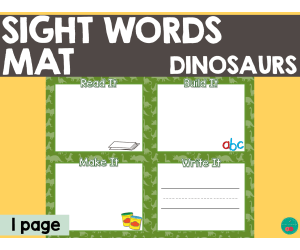
Sight Word Mat - Dinosaurs
ELA, Reading, Kindergarten, Preschool, Grade 1, 2, Worksheets & Printables, Worksheets
Sight Word Mat - Dinosaurs Sight Word Mat - Dinosaurs is a unique teaching resource, purposely designed to stimulate young learners in language arts and reading. This multifaceted tool is suitable for early learning, preschool, and primary grades up to Grade 2. It elegantly blends education with the fascinating world of dinosaurs attracting children effectively. The Sight Word Mat profoundly develops sight word recognition and vocabulary building skills of the students. The product comprises a print-friendly page formatted into a PDF file ready for immediate download and use. Versatility Works seamlessly with any existing word cards you may have like magnetic letters, letter cubes or Scrabble tiles. Designed for quick integration with other learning materials beyond standard word cards offering customization according to each child's learning pace and style. A remarkable feature allows incorporating play dough into the learning process that adds tactile dimension enhancing motor skills alongside language development. Multifunctionality This Sight Word Mat approves multiple forms of deployment depending on classroom dynamics or individual student needs: Group-based activities , Dedicated one-on-one instruction time, At-home assignments promoting independent learning. Care Instructions & Sustainability After lamination (optional), mats can be reused over multiple sessions using dry erase markers making this resource practical as well as eco-friendly inside classrooms. In summary, this dinosaur-themed teaching tool makes education entertaining stimulating keen participation from children while consistently helping them enhance sight word practice and augment their vocabulary range effectively.
Author Cherry Workshop
Tags Sight Words, Dinosaurs, Language Arts, Reading Practice, Vocabulary Building

Diving Reading Comprehension Passage - Cored Ed Encyclopedia
ELA, Language Development, Resources for Teachers, Reading Comprehension, Reading, Pre-Reading, Writing, Sports, P.E. & Health, Strategies, Grade 2, 3, 4, 5, Worksheets & Printables, Worksheets, Teacher Tools, Centers, Activities, Writing Prompts, Assessments, Tests, Quizzes and Tests, Quizzes
This diving reading comprehension contains the following: Pre-Reading Trivia Students will write down one thing they already know about the subject and then read five more facts and discuss. These facts are fun, and the students will enjoy learning about the subject before reading more. Reading Passage The text is a high-interest reading passage with set paragraphs, roughly three to four paragraphs long. It contains a variety of themes about the topic, anywhere from history to technology. The passage is between 250 and 350 words in length. Mixed Questions The first question page contains four multiple-choice questions, each with a choice of four answers, and three written response questions that require a sentence or two from the student. Creative Writing In this question, the student will be required to write a five to eight sentence paragraph on a question related to the topic. Extension Activities This page is optional for fast finishers. If there are five to ten minutes left at the end of the lesson, the student can choose one of three activities, each one requiring a different skill. Answer Key There are answers for the multiple-choice questions and three written response questions have sample answers. FULL CATALOG OF DOWNLOAD LINKS AND ENCYCLOPEDIA INDEX HERE Cored Ed Encyclopedia Overview The Cored Ed Encyclopedia is a weekly series of lessons that you can pick up and use right away. These short readings fit into whatever time you have available. Each one includes a warm-up, a reading, and a set of questions, but it’s flexible — you can do just the reading, the full lesson, or skip the writing section if you need to. Each lesson focuses on a single topic so students don’t get lost. The writing is clear but never childish, making it perfect for grades two through five. Topics range from animals and science to history, inventions, and everyday things. No matter the level of the student, everyone should take away at least one new idea or fact from each lesson. The materials are easy to print, easy to explain, and require no setup. They work well for whole-class teaching, partner work, or independent study.
Author Cored Education
Rating
Tags Vocabulary, Spelling, Reading Comprehension, Reading Passages, Cored Encyclopedia, Facts, Reading, Creative Writing, Diving, Sports

Smart Cookies Daily Morning Work | Ocean Language and Grammar
ELA, Grammar, Grade 2, Worksheets & Printables, Worksheets
This resource is an Ocean Daily Morning Work Packet. It is filled with language and grammar for 2nd grade. Tips for use and directions are included. From contractions to suffixes, students will get great daily language practice during your ocean unit .
Author Second Grade Smartypants
Tags Ocean, Smart Cookies, Daily Morning Work, Grammar, Syllables

Geography Crosswords - Set 2 (PDF)
ELA, Language Development, Vocabulary, Spelling, ESL, Resources for Teachers, Geography, Social Studies, Grade 2, 3, 4, 5, Worksheets & Printables, Worksheets, Teacher Tools, Crosswords Puzzles, Centers, Activities
Crossword Series This crossword series is designed for students in grades 2–5. Each set of crosswords is built around a clear vocabulary theme, allowing students to strengthen their word recognition, build subject-based knowledge, and reinforce early literacy and thinking skills. Each topic includes six crossword sets , and each set features the following consistent structure: 1. 8 vocabulary clues 2. Crossword puzzle 3. Answer key 4. 1 Did You Know fact related to the set These crosswords are designed to be student-friendly, classroom-ready, and easily integrated into thematic units, seasonal learning, morning work, or independent literacy stations. Geography Crosswords Set 2 Word List 1. More Countries of the World Germany, Italy, Russia, South Africa, Argentina, Saudi Arabia, Thailand, Canada 2. More Famous Cities Los Angeles, Beijing, Moscow, Berlin, Dubai, Madrid, Buenos Aires, Seoul 3. More Famous Landmarks Machu Picchu, Big Ben, Leaning Tower, Christ the Redeemer, Stonehenge, Mount Rushmore, Petra, The Louvre 4. Bodies of Water Amazon River, Nile River, Mississippi River, Lake Superior, Mediterranean Sea, Arctic Ocean, Gulf of Mexico, Dead Sea 5. Climate and Weather Tropical, Desert, Polar, Humidity, Hurricane, Tornado, Drought, Monsoon 6. Geography Tools and Maps Globe, Map, Compass, Latitude, Longitude, Equator, Hemisphere, Legend PDF Version Other versions will appear here when available. Follow the store for the lastest on new products. How to Use This Crossword These crosswords are ideal for whole-class work, small groups, literacy centers, or take-home activities. Use one set per day, or spread them across a week or month depending on your curriculum needs. Each clue has been crafted to align with the reading level of grades 2–5, with support for both decoding and meaning. The Did You Know? facts offer additional extension opportunities for writing, drawing, or display work. Whether you're reinforcing vocabulary, exploring a seasonal topic, or adding variety to your literacy block, these crosswords provide a fun, flexible, and focused way to boost early literacy in an engaging format. More Geography Themed Products Geography Crosswords (Set 1) PDF Geography Crosswords (Set 3) PDF FULL CATALOG OF DOWNLOAD LINKS HERE Themed Crossword Links Addition PDF Animals PDF Around the Home PDF Birthday PDF Candy PDF Christmas PDF Cinco de Mayo PDF Clothes PDF Colors PDF Days and Months PDF Division PDF Earth Day PDF Easter PDF Easy Crosswords PDF Fall PDF Father's Day PDF Food PDF Geography (Set 1) PDF Geography (Set 2) PDF Geography (Set 3) PDF Graduation PDF Health PDF History (Set 1) PDF History (Set 2) PDF History (Set 3) PDF Human Body PDF Kindness PDF Life Skills PDF Mother's Day PDF Multiplication PDF Science Crosswords (Set 1) PDF Science Crosswords (Set 2) PDF Science Crosswords (Set 3) PDF Shapes PDF Social Skills PDF Spring PDF Sports PDF St. Patrick's Day PDF Subtraction PDF Summer PDF Thanksgiving PDF Transport PDF Valentine's Day PDF Winter PDF Crosswords in Depth Structure Each crossword clue is written in simplified language to suit early readers, and follows a strict number-and-clue format (e.g., 1.A shape with four sides ). Students complete each puzzle using the themed vocabulary provided, helping to build both content knowledge and spelling confidence. Each completed set includes: A questions section with clearly formatted clues An answers section to support teacher checking or independent correction A Did You Know? fact tied to the topic (one per set) to add curiosity and cross-curricular value Themes Included The crosswords cover a wide variety of engaging, age-appropriate themes such as: Seasons & Holidays (e.g., Winter, Easter, Valentine’s Day) Math Concepts (e.g., Addition, Subtraction, Multiplication, Division) Everyday Topics (e.g., School, Colors, Animals, Weather) Special Units (e.g., Health, Earth Day, Sports, Graduation, Kindness) Each theme is carefully selected to reflect the experiences and interests of young learners, while reinforcing vocabulary and comprehension. For similar downloads and other frees, do check out Cored Group on TeachSimple.
Author Cored Education
Rating
Tags Vocabulary, Spelling, Crosswords, Geography, Geography Crosswords, Countries Of The World, Famous Cities, Famous Landmarks, Bodies Of Water, Climate And Weather

Telling Time to the Hour with Tom Turkey Activities and Worksheets
Math, Time, Grade 1, 2, Worksheets, Worksheets & Printables
Its Turkey Time! Your grade 1 and grade 2 learners are going to enjoy working their way through these learning activities with a fun turkey theme. This product consists of a turkey craftivity, 8 corresponding worksheets, and a bonus learning game. The focus of each worksheet and activity is telling time to the hour. Learners will start out making their very own analog clock, which in the end will look like a colorful turkey. There are 3 options for a clock face, 2 of which will engage your learners in adding their own numbers to the clock face. After completing the turkey craftivity, learners will use their clocks to help them tell time on the worksheets. Designed for differentiation and to keep your learners engaged, the worksheets present with a variety of skill levels and types of tasks. Your learners will cut and paste, match, color, write digital times, and draw hands on analog clocks. To round out the product, learners will have the opportunity to play a learning game. In this activity , they will identify an hour presented in digital time and display that time on their analog turkey clocks. It’s a great, hands-on way for them to make connections with the concepts practiced in the worksheets. The learning game and worksheets are available in a color version, as well as a black & white version. You’ll also find an answer key is provided. Although the game does require initial prep work, it will then be ready for year-over- year use. Most of the worksheets are PRINT and GO, with the exception of the two cut and paste activities. These learning activities will make a wonderful addition to your Fall math curriculum and get your learners ready to celebrate the Thanksgiving holiday. Below are the details of each page found within this product. PAGE 1: instructions for the turkey clock craftivity PAGES 2-4: three versions of clock faces for the craftivity PAGES 5-6: templates for the turkey head, feet, feathers, and clock hands PAGE 7: WORKSHEET #1 – learners will identify the digital time each turkey is holding and cut/paste the analog clock showing the matching time. PAGE 8: WORKSHEET #2 – learners will identify the time on the analog clocks that Tom Turkey is holding and write the matching digital time. PAGE 9: WORKSHEET #3 – learners will identify the digital time each turkey is holding and draw the matching clock hands on the analog clocks. PAGE 10: WORKSHEET #4 – learners will count the feathers on each turkey and use that number to match the turkey to an analog clock, as well as write the digital version of the time shown on the clock. PAGE 11: WORKSHEET #5 – learners will identify the digital time each turkey is holding and color the analog clock under each turkey that matches the digital time. PAGE 12: WORKSHEET #6 – learners will identify two digital times and cut/paste the analog clock that shows the hour between the two digital times. PAGE 13: WORKSHEET #7 – learners will draw the hands on analog clocks that show the time either before or after an activity done by Tom Turkey. PAGE 14: WORKSHEET #8 – learners will use a color key to color the feathers on the turkey that show the matching analog time. PAGES 15-16: “Its Turkey Time” learning game cards (version 1) PAGES 17-18: “Its Turkey Time” learning game cards (version 2) ANSWER KEY CHECK IT OUT! Four additional learning games and corresponding PowerPoint slides are also available. Find them under the title: Telling Time Learning Games with Tom Turkey.
Author Quail Trail Products
Tags Telling Time, Hour, Analog Clocks, Digital Time, Turkey, Worksheets, Craftivity, Learning Game, Thanksgiving, Fall

Alphabet Tracing Worksheets | Letter Recognition & Beginning Sounds
ELA, Reading, Writing, Phonics, Language Development, Spelling, ESL, Handwriting, Life Sciences, Science, Kindergarten, Preschool, Grade 1, 2, Worksheets & Printables, Teacher Tools, Classroom Decor, Activities, Centers, Worksheets, Workbooks
The alphabet worksheet sets are designed to help young learners develop basic reading and writing skills through tracing, writing, and coloring. This interactive and engaging set of alphabet worksheets is designed to help young learners develop basic letter skills through tracing, writing, finding letters, and coloring. Children can learn letters by enjoying a combination of tradition and hands-on learning fun. These printable worksheets offer useful lessons and provide rich practice in a fun and interactive way. They are designed to help students easily use this second grade resource to learn about alphabet worksheet activities. A collaborative learning activity added by students. Alphabet worksheet sets are designed to help young children develop basic reading and writing skills through tracing, writing, and tracing. This alphabet resource is perfect for kindergarten students and is great as a letter of the week activity. The alphabet worksheet sets are designed to help young children develop basic reading and writing skills through tracing, writing, and tracing.
Author LAMO
Rating
Tags English Language Arts, Phonics , Phonics & Phonological Awareness, Back To School, Worksheets, Printables, Homeschool, Centers, Letter , Alphabet

SAMPLE Fry's Tenth 100 Sight Words - Digital and Printable Quiz
ELA, Language Development, Vocabulary, Grade 1, 2, 3, Worksheets, Worksheets & Printables
SAMPLE Fry's Tenth 100 Sight Words - Digital and Printable Quiz The SAMPLE Fry's Tenth 100 Sight Words - Digital and Printable Quiz is a teaching resource carefully crafted for educators seeking to expand their students' vocabulary skills. This product caters specifically to learners between grade 1 and grade 3, helping them ace Fry's Sight Words in an exciting and efficient way. Features: A digital fill-in-the-blanks game for immediate response learning. Self-guided flashcards that enable independent learning at a comfortable pace. In addition to digital resources, this package also provides: Printable worksheets suitable for homework or classroom activities when access to screens is limited. Included answer keys for each worksheet providing instant feedback on student understanding. This teaching tool comes with two organized lists featuring the words: one sorted by frequency of usage, the other in alphabetical order. These lists provide students a holistic overview of all the sight words they need to know. Suitable for Diverse Student Needs: If you've noticed some learners struggling more with sight words than others, this versatile kit will help bridge the gap. The provided activities make practicing fun whether used in classroom or home settings. The product aligns well with Common Core Standards RF.K.3 and RF.K.3c,, making it easy to incorporate into lesson plans. It can be used as part of whole class interactive sessions, Precisely tailored into smaller teaching groups, The self-correcting feature on digital exercises makes it perfect as homework too! . In Summary: Mixing digital technology with traditional paper-based pedagogy, SAMPLE Fry's Tenth 100 Sight Words offers unique learning experiences that students can navigate independently, promoting their reading advancement in an enjoyable way.
Author Tom's Talk
Tags Sight Words, Vocabulary Skills, Digital Learning, Printable Worksheets, Interactive Exercises

West Virginia State Symbols Interactive Foldable Booklets - EBOOK
Social Studies, Geography, Preschool, Grade 1, 2, 3, 4, 5, 6, 7, 8, Worksheets & Printables, Worksheets
West Virginia State Symbols Interactive Foldable Booklets - EBOOK This comprehensive eBook offers an engaging and interactive way to learn about the significant state symbols of West Virginia. Perfect for teachers in public or private school settings as well as homeschooling arrangements, this resource is designed for students from Kindergarten to Grade 8 studying Geography. This eBook includes two separate booklets. The first booklet features vibrant colored illustrations of each symbol, while the second presents black and white versions for students to color as they learn. The state map The flag of West Virginia The state flower The state bird Unique mammal/insect/fish species indigenous to West Virginia A blank page is also included, encouraging children to research and include additional symbols unique to West Virginia. This adaptability makes it easy for educators of all types to utilize the resource: it can be used independently or incorporated into existing Interactive Notebooks or Lapbooks. It's a perfect medium for group discussions in regular classrooms, smaller study sessions in after-school clubs, or even homework assignments. Included with this resource is a beneficial links page that provides suggestions where both educators and students can find additional information necessary. This function promotes independent research skills in students while minimizing unnecessary online searches by teachers. To use: All that's needed is a simple download as a PDF file—follow straightforward instructions listed then cut,fold,and glue! An Ideal Tool For Fun Learning! Coupled with other similar resources from our collection dealing with different regions' symbols—this complete guide assists educators shape young minds efficiently making their geography lessons immersive and educational.
Author Knowledge Box Central
Tags West Virginia, State Symbols, Interactive, Foldable Booklets, Geography

Sight Word Fluency Packet - could
ELA, Reading, Grade 1, 2, Worksheets & Printables, Worksheets
Sight Word Fluency Packet - could - These sight word worksheets encourage all students to practice sight word reading fluency for the target sight word. There are three different fluency practice pages that all focus on learning to recognize, spell, and read the target sight word in context. Allowing students to practice the sight word in context gives students the ability to connect the sight word's meaning and grammatical usage to help gain a greater understanding of the target word. Each passage repeats the target word multiple times for extra practice with the word. Students will practice reading, writing, reading comprehension, and spelling high frequency words with these fluency pages. Included in this sight word fluency packet: * One reading fluency page that contains a single passage for students to read and find the sight word. * One write and read fluency page where students will write the target sight word and then read the passage. * One read, write, and draw fluency page where students will read a sentence, copy the sentence then draw a picture to illustrate the sentence. When can these be used? * Literacy activities * Independent Reading Practice * Small group activities * Shared or Partner reading activities * Homework * Morning Work * Emergency sub plans * Extra reading practice The reading fluency page and the write and read page include the same passage and is the perfect way to differentiate between students who need to focus on just recognizing the word while reading and those who need more practice with writing and spelling the sight word in the correct context. These sight word pages are no prep. Teachers only need to print the pages and hand them to the students to read and complete. This packet focuses on the sight word: could.
Author The Connett Connection
Tags Sight Words, Sight Word Fluency, Sight Word Passages, First Grade Sight Words, Second Grade Sight Words, Sight Word Worksheets, Reading Passages, Sight Word Could, Reading Fluency

Reading Comprehension Passages Fiction Set 7 - Sports (PDF)
ELA, Reading, Reading Comprehension, Common Core, Children’s Literature, Literature, Language Development, ESL, Writing, Vocabulary, Grade 2, 3, Worksheets & Printables, Worksheets, Writing Prompts, Assessments, Teacher Tools, Tests, Quizzes and Tests, Centers, Activities
Reading Comprehension Passages Fiction Set 7 Overview Fascinating reading comprehension passages, each with an array of activities included. Stories are written for the modern classroom and topics are designed to promote enthusiasm from each student. Each lesson contains a mixed questions section to check understanding, a vocabulary or spelling activity to help remember key language introduced, and a writing exercise. Full answer keys are provided. For a more detailed overview, check the section under the links at the bottom of this description. Passages Include 1.Catch It, Dan: Dan is at the ball game and wants to catch a foul ball. 2.Feeling Left Out: Polly isn't invited bowling by her friends and wants to knowwhy. 3.Ian's Friday Nights: Ian wants to be anywhere but the bleachers on Friday nights. 4.Aimee's Dilemma: Soccer or cheerleading? That is the question. 5.A Great Team: Adam & Justin both want to play first base. How will they sortit? 6.Ana's Swimming Party: Jodie can't swim and doesn't want her friends to find out. 7.Touchdown Pythons: Serena loves her first football game. 8.Sam's Passion: Sam talks about his passion for Karate in this passage. 9.Where's My Board: Kerry spends all the story looking for her skateboard. 10.Lacey the Runner: Lacey has dreams to run in the Olympics. Read to find out more. Additional File: Ana's Swimming Party: Invitation Templates PDF Version This is the PDF uneditable version. This download is available in GOOGLE Docs, GOOGLE Forms, GOOGLE Slides. PDF, PPT, WORD. FULL CATALOG OF DOWNLOAD LINKS HERE Grade 2/3 Links Fiction Set 1 - Nature Google Docs Google Forms Google Slides PDF PPT Word Guided Reading Materials Fiction Set 2 - Animals Google Docs Google Forms Google Slides PDF PPT Word Guided Reading Materials Fiction Set 3 - Food Google Docs Google Forms Google Slides PDF PPT Word Guided Reading Materials Fiction Set 4 - School Google Docs Google Forms Google Slides PDF PPT Word Guided Reading Materials Fiction Set 5 - Friends Google Docs Google Forms Google Slides PDF PPT Word Guided Reading Materials Fiction Set 6 - Family Google Docs Google Forms Google Slides PDF PPT Word Guided Reading Materials Fiction Set 7 - Sports Google Docs Google Forms Google Slides PDF PPT Word Guided Reading Materials Nonfiction Set 1 - Technology Google Docs Google Forms Google Slides PDF PPT Word Guided Reading Materials Nonfiction Set 2 - Nutrition Google Docs Google Forms Google Slides PDF PPT Word Guided Reading Materials Nonfiction Set 3 - Animals Google Docs Google Forms Google Slides PDF PPT Word Guided Reading Materials Reading Passages Overview Each passage is especially written for Grade 2-3 students, including key vocabulary required for this age group. Topics are varied and are accompanied by colorful graphics. Topics are meant to educate, yet entertain the modern student. These passages are perfect for the modern classroom. Whereas textbooks can become outdated in no time, any changes to technology or the world will result in updates to this product. Mixed Questions The mixed questions section of each lesson includes a variation of fivecomprehension, vocabulary and math questions. In addition, key reading strategies are frequently covered including cause & effect, summarizing, compare & contrast and making conclusions. Three of the questions will be MCQs and two will require a written response of some kind. Full answers and example responses appear at the end of the lesson. Spelling & Vocab Each reading passage contains a variety of words and phrases designed for Grade 2-3 students. Spelling and vocab activities provide the opportunity to build fluency with these words. As it can become quite mundane doing the same activities over and over, each lesson in a set will contain a different spelling and vocab activity . Writing Prompts Writing prompts are designed to continue the theme or lessons learned in the story. Students are persuaded to write in a variety of ways and each prompt includes several cues to help. As with the spelling/vocab section, writing prompts will vary. This includes research pieces, reading responses, poetry and creative writing prompts. Full Answer Keys Full answer keys and sample responses are provided so no matter how busy you are, you know you're covered! Mixed question answers provide evidence from the text, math questions contain the relevant workings. Answers are designed for use by the teacher, but also suitable as a handout to the student. Additional File One lesson will have an additional file. This is something fun to extend the lesson with. For similar downloads and other frees, do check out Cored Group on TeachSimple.
Author Cored Education
Rating
Tags Elementary, Reading, Comprehension, Vocabulary, Answers, Spelling, Writing, Passages, Reading Centers, Reading Comprehension Assessment

Sports Maze: 1 Page Sample (PDF)
ELA, Language Development, Resources for Teachers, Vocabulary, Spelling, ESL, Sports, P.E. & Health, Grade 2, 3, 4, 5, Worksheets & Printables, Worksheets, Teacher Tools, Centers, Activities, Mazes
THIS IS A ONE PAGE SAMPLE OF A SIX PAGE MAZE DOWNLOAD FULL SIX MAZE DOWNLOAD INFORMATION: Maze Series This maze series is designed for students in grades 2–5. Each set features a clear, kid-friendly theme with scene-based mazes that students first navigate, then complete by drawing a few target words from a simple word list. Pages come in varied styles and graduated difficulty, with an optional “color it in” step—and some themes invite quick calculations to match the task. These mazes are student-friendly, classroom-ready, and perfect for literacy warmups, seasonal units, fast-finisher bins, centers, sub plans, or home learning extensions. The playful, structured format builds problem-solving, attention to detail, and fine-motor control while reinforcing themed content in a motivating way. Note: Unlike many themed products, not all word-list words appear on the maze pages. To support full vocabulary coverage, we’ve released a companion word list you can find in the links section. Sports Word List 1. Team Sports Soccer, Basketball, Baseball, Football, Volleyball, Hockey, Lacrosse, Softball 2. Fun Outdoor Games Tag, Jump rope, Kickball, Frisbee, Tug-of-war, Relay race, Capture the flag, Hide-and-seek 3. Sports Equipment Ball, Bat, Helmet, Goal, Net, Jersey, Whistle, Racket 4. Olympics & World Sports Gymnastics, Swimming, Track, Boxing, Archery, Wrestling, Judo, Marathon 5. Describing Sports & Athletes Fast, Strong, Agile, Tough, Focused, Teamwork, Determined, Champion 6. Jobs in Sports Coach, Referee, Athlete, Commentator, Trainer, Fan, Scorekeeper, Reporter PDF Version Other versions will appear here when available. Follow the store for the lastest on new products. How to Use These Mazes Perfect for: Morning work or early-finisher bins Literacy or STEM centers Holiday/seasonal review lessons Independent stations, sub plans, or take-home enrichment More Sports Themed Products CROSSWORDS WORD SEARCHES FULL CATALOG OF DOWNLOAD LINKS HERE Themed Mazes Links Addition PDF Animals PDF Around the Home PDF Birthday PDF Candy PDF Christmas PDF Cinco de Mayo PDF Clothes PDF Colors PDF Days and Months PDF Division PDF Earth Day PDF Easter PDF Easy Mazes PDF Fall PDF Father's Day PDF Food PDF Geography (Set 1) PDF Geography (Set 2) PDF Geography (Set 3) PDF Graduation PDF Health PDF History (Set 1) PDF History (Set 2) PDF History (Set 3) PDF Human Body PDF Kindness PDF Life Skills PDF Mother's Day PDF Multiplication PDF Science (Set 1) PDF Science (Set 2) PDF Science (Set 3) PDF Shapes PDF Social Skills PDF Spring PDF Sports PDF St. Patrick's Day PDF Subtraction PDF Summer PDF Thanksgiving PDF Transport PDF Valentine's Day PDF Winter PDF Mazes in Depth Structure Each maze is crafted around a focused sub-theme. Students navigate the maze, encountering branches and cul-de-sacs that build attention and planning. Most pages include a tiny follow-up box—students draw or label 2–3 target words from a small word box, add a quick count, or color in the scene—so the activity reinforces both content and skills in a highly engaging format. Each completed set includes: A themed maze page. A simple student instruction strip. An answer key showing the solved path for teacher support or self-checking Themes Included These mazes cover a wide range of fun, age-appropriate themes, including: Seasons & Holidays (e.g., Halloween, Easter, Valentine’s Day) Math-Lite Connections (e.g., quick counts, number words) Everyday Topics (e.g., Animals, Weather, School) Special Units (e.g., Health, Earth Day, Sports, Kindness) Each topic reflects students’ real-life experiences and interests while strengthening problem-solving, visual scanning, and fine-motor control in a playful, highly visual way. Easy extensions (optional): Time it: solve once in pencil, then try to beat the time in pen Retell the route using sequence words (first, next, then, finally) Count intersections or turns and graph the results Write a 1–2 sentence mini-story about the scene using the target words Design a tiny maze in the corner for a partner to solve Differentiation tips: Offer a finger-trace pass before pencils for emerging learners Highlight the borders of the correct region on first attempts Use thicker-line versions or simpler pages to build confidence Pair roles: “navigator” gives directions; “driver” traces the path For similar downloads and other frees, do check out Cored Group on TeachSimple.
Author Cored Education
Rating
Tags Vocabulary, Spelling, Sports, Team Sports, Sports Equipment, Olympics & World Sports, Maze, Mazes, Ela Mazes, Sports Mazes

Grade 2 MATH Worksheets | Beach Theme
Math, Place Value, Time, Grade 2, 3, Worksheets & Printables, Word Problems, Worksheets
Who doesn’t love a fun day at the beach? Your grade 2 learners are going to enjoy this set of 12 beach-themed math worksheets . They are perfect the perfect way to kick-off the summer months. Use them as end-of-the year review during those last few weeks of the school year. The print and go format also allows you to easily create a summer worksheet packet so learners can practice their math skills over the break from school. If you’re a grade 3 teacher, these worksheets are also a great way to transition your learners from summer break to a new school year. Use them as review or to assess math skills in your new learners. The beach theme is kid-friendly and includes a variety of topics all kids will enjoy. Concepts presented in this product include addition, subtraction, place value, graphing, 2-D shapes, word problems, telling time, and more. Along with the 12 worksheets, an answer key is also provided. Check out the details of each worksheet below. WORKSHEET 1: learners will add the one-digit and two-digit numbers presented on each pair of flip flops. WORKSHEET 2: learners will solve the one-digit and two-digit subtraction equations. Then, they will color the lifesaver ring that shows the correct answer. WORKSHEET 3: learners will identify the number on each beach ball as odd or even. Then, they will color the beach ball according to how the number is categorized. WORKSHEET 4: learners will read the place value clue on each beach pail and color the seashell that shows the matching number to the clue. WORKSHEET 5: learners will read the skip counting prompt under each snorkeling diver and write the correct pattern of numbers on the fish. WORKSHEET 6: learners will compare two-digit and three-digit numbers on either side of the surfer. Then they will write the greater than or less than symbol on the surfboard. WORKSHEET 7: learners will write numbers in word form, expanded form, or number form based on the prompts given with each set of watercraft. WORKSHEET 8: learners will find 2-D shapes hidden within a sandcastle and color the shapes based on the given prompt. WORKSHEET 9: learners will read the time on an analog clock and write the digital time on the line below the “luau” prompt. WORKSHEET 10: learners will count each set of coins and glue the matching popsicle in the box under the coins. WORKSHEET 11: learners will answer questions about data presented in a picture graph. WORKSHEET 12: learners will solve addition and subtraction equations presented in “boardwalk” themed word problems. ANSWER KEY ALSO AVAILABLE:Grade 2 ELA Worksheets | Beach Theme
Author Quail Trail Products
Tags Grade 2 Math, Grade 3 Math, Beach, Addition, Subtraction, Graphing, Telling Time, Word Problems, Place Value, 2-D Shapes

Password Cards
Resources for Teachers, Kindergarten, Preschool, Grade 1, 2, 3, Worksheets & Printables, Worksheets
Password Cards This teaching resource, Password Cards, caters serves busy teachers or homeschooling parents. It's a practical and efficient way to manage student login details. The cards are user-friendly and easy to edit, helping you maintain an organized digital classroom. Versatile Tool The password cards hold the names of your students along with the respective logins and passwords for up to three websites. They're fully editable allowing adjustments according to each unique classroom requirement. Suitable for pre-school through grade 3 classes. Easy To Use To use this system, simply click on any text-containing part of the password card template to edit or input necessary details. Printing & Organization Tips: The PPTX file type makes it possible to print these cards multiple times. We suggest printing on different colored cardstock making identification easier for younger students. A simple hole punch at one end followed by threading onto binder rings turns these printed cards into handy sets ready-to-use whenever needed by your students Note: This is especially useful for teachers across different subjects as they cross subject barriers offering universal benefits towards Classroom Organization in a digital age where online resources requires effective password management. Incorporating educational games online or organizing virtual project teamwork requiring individual student login details; these Password Cards will streamline the process keeping everything organized yet easy for any e-learning activity next! In Conclusion The Password Cards provide a simple method instead of traditional ones that are prone to errors or loss of information – truly streamlining student login information management! They're a must-have tool simplifying key aspects within today’s e-learning environment used increasingly in both public schools and homeschool settings alike.
Author Rodriguez's Resources
Tags Password Management, Classroom Organization, E-learning, Teacher Tools, Student Login
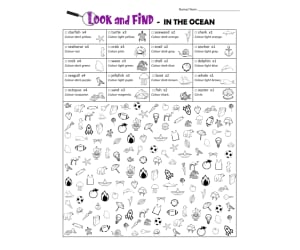
Look and Find! - In the Ocean Theme
Science, Earth and Environmental Sciences, Earth Sciences, Grade 2, 3, 4, Worksheets & Printables, Worksheets
Have fun looking for the different animals in the ocean and coloring them in.
Author Brave Education
Tags Ocean, Look And Find, Seek, Animals, Color

Reading Comprehension Fiction Set 3 Sample: Cindy's Tea Party (Word)
ELA, Reading, Reading Comprehension, Common Core, ESL, Language Development, Spelling, Creative Writing, Writing, Resources for Teachers, Grade 2, 3, Worksheets & Printables, Worksheets, Writing Prompts, Assessments, Teacher Tools, Tests, Quizzes and Tests
Reading Comprehension Passages Fiction Set 3 Sample Overview Fascinating reading comprehension passages, each with an array of activities included. Stories are written for the modern classroom and topics are designed to promote enthusiasm from each student. Each lesson contains a mixed questions section to check understanding, a vocabulary or spelling activity to help remember key language introduced, and a writing exercise. Full answer keys are provided. For a more detailed overview, check the section under the links at the bottom of this description. Passage Included 4.Cindy's Tea Party: Cindy invites some special friends to her tea party. Word Version This is the Word editable version. This download is available in GOOGLE Docs, GOOGLE Forms, GOOGLE Slides. PDF, PPT, WORD. FULL CATALOG OF DOWNLOAD LINKS HERE Grade 2/3 Links Fiction Set 1 - Nature Google Docs Google Forms Google Slides PDF PPT Word Guided Reading Materials Fiction Set 2 - Animals Google Docs Google Forms Google Slides PDF PPT Word Guided Reading Materials Fiction Set 3 - Food Google Docs Google Forms Google Slides PDF PPT Word Guided Reading Materials Fiction Set 4 - School Google Docs Google Forms Google Slides PDF PPT Word Guided Reading Materials Fiction Set 5 - Friends Google Docs Google Forms Google Slides PDF PPT Word Guided Reading Materials Fiction Set 6 - Family Google Docs Google Forms Google Slides PDF PPT Word Guided Reading Materials Fiction Set 7 - Sports Google Docs Google Forms Google Slides PDF PPT Word Guided Reading Materials Nonfiction Set 1 - Technology Google Docs Google Forms Google Slides PDF PPT Word Guided Reading Materials Nonfiction Set 2 - Nutrition Google Docs Google Forms Google Slides PDF PPT Word Guided Reading Materials Nonfiction Set 3 - Animals Google Docs Google Forms Google Slides PDF PPT Word Guided Reading Materials Reading Passages Overview Each passage is especially written for Grade 2-3 students, including key vocabulary required for this age group. Topics are varied and are accompanied by colorful graphics. Topics are meant to educate, yet entertain the modern student. These passages are perfect for the modern classroom. Whereas textbooks can become outdated in no time, any changes to technology or the world will result in updates to this product. Mixed Questions The mixed questions section of each lesson includes a variation of fivecomprehension, vocabulary and math questions. In addition, key reading strategies are frequently covered including cause & effect, summarizing, compare & contrast and making conclusions. Three of the questions will be MCQs and two will require a written response of some kind. Full answers and example responses appear at the end of the lesson. Spelling & Vocab Each reading passage contains a variety of words and phrases designed for Grade 2-3 students. Spelling and vocab activities provide the opportunity to build fluency with these words. As it can become quite mundane doing the same activities over and over, each lesson in a set will contain a different spelling and vocab activity . Writing Prompts Writing prompts are designed to continue the theme or lessons learned in the story. Students are persuaded to write in a variety of ways and each prompt includes several cues to help. As with the spelling/vocab section, writing prompts will vary. This includes research pieces, reading responses, poetry and creative writing prompts. Full Answer Keys Full answer keys and sample responses are provided so no matter how busy you are, you know you're covered! Mixed question answers provide evidence from the text, math questions contain the relevant workings. Answers are designed for use by the teacher, but also suitable as a handout to the student. Additional File One lesson will have an additional file. This is something fun to extend the lesson with. For similar downloads and other frees, do check out Cored Group on TeachSimple.
Author Cored Education
Tags Elementary, Reading, Comprehension, Vocabulary, Answers, Ccss, Common Core, Spelling, Writing, Passages

Maine State Symbols Interactive Foldable Booklets - EBOOK
Social Studies, Geography, Preschool, Grade 1, 2, 3, 4, 5, 6, 7, 8, Worksheets & Printables, Worksheets
Maine State Symbols Interactive Foldable Booklets Bring Maine's state symbols to life with these engaging interactive foldable booklets. Students will learn about Maine's state map, flag, flower, bird, mammal, insect, fish, and more while creating their own mini booklets to add to a state notebook. This easy-to-use printable PDF includes full-color and black and white templates that allow students to color, cut, fold, and glue the pages into informative booklets. A resource page provides links for students to research and fill in details about each state symbol. Use these versatile foldables for independent practice, whole class activities, or homework. They can be used on their own or incorporated into interactive notebooks and lapbooks to showcase what students have learned about Maine's unique state symbols and history. The interactive process of creating the foldable book builds understanding and retention while allowing students to show their creativity. With cross-curricular connections to reading, writing, geography, and research skills, these hands-on foldables turn a lesson on state symbols into an engaging and memorable learning experience for grades K-8.
Author Knowledge Box Central
Tags Maine State History, Maine, United States, State History , Maine Symbol

Practise Writing Stories ‘Zoggy At A Picnic’ (4-7 years)
ELA, Writing, Grade 1, 2, Worksheets & Printables, Worksheets
Practise Writing Stories 'Zoggy At A Picnic' (4-7 years) is a resource designed for Grade 1 and Grade 2 teachers. This resource aims to enhance early reading, writing, and spelling skills in an approach marked by simplicity and effectiveness. The material predominately focuses on story-writing exercises. By using visual aids to encourage richer expressions and a stronger understanding, children are motivated to compose their narrative based on a provided picture. For assistance when necessary, suggested words accompany each image. This product introduces interactive exercises centered around the exploits of Zoggy's picnic journey. There are different story scenarios featuring vibrant context and captivating narratives that keep learning interesting for kids. The downloadable PDF file consists of ten pages. The contained activities range from whole group interaction to individual homework assignments. Possible Scenario: Visualize kids animatedly discussing what they see in Zoggy's picnic picture or wrestling with sentences containing specifically proposed words; refining both creativity and language skills concurrently! This tool targets basic Language Arts competencies especially focusing on writing-related aspects making it a suitable choice for public school teachers in need of classroom resources or homeschoolers looking for insightful teaching aids. Don't delay! Let’s start enriching early learning experiences one story at a time with Practise Writing Stories 'Zoggy At A Picnic.' Simplify teaching all while maximizing comprehension using inviting visuals aligned with engaging themes!
Author Guinea Pig Education
Tags Story Writing, Early Reading, Early Writing, Language Skills, Visual Aids
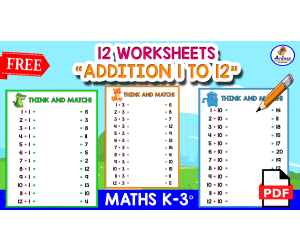
12 MATCHING ADDITION WORKSHEETS | Animals Theme
Math, Addition and Subtraction, Addition, Kindergarten, Preschool, Grade 1, 2, Worksheets & Printables, Worksheets
A. GENERAL DESCRIPTION OF THE PRODUCT: 12 FABULOUS SHEETS TO WORK ON THE ADDITION FROM 1 TO 12 -Number of pages: 12 color pages in A4 format -Available in PDF -Colorful and animal-themed B. PURPOSE OF OUR PUBLISHER: Welcome to my EDITORIAL ARENAS EDUCATIVAS resource store! WE ARE DEDICATED TO THE PREPARATION OF SHEETS AND EDUCATIONAL RESOURCES FOR PRIMARY EDUCATION, FOR THE AREAS OF MATHEMATICS, LITERACY, SPANISH AND REASONING. So on this occasion we have developed this fantastic worksheet with which your students can work on the addition from 1 to 12. C. SPECIFIC PRODUCT DESCRIPTIONS: 1. Benefits of using this product: The use of these worksheets will bring multiple benefits such as: - They will facilitate the understanding of abstract mathematical concepts. - Will promote active learning. - It will stimulate interest as well as motivation for mathematics. - It will encourage discovery and exploration. - Develop practical and manipulative skills. - It will facilitate and reinforce memory and retention of mathematical concepts. 2. Number of pages contained in this document: This document contains 12 printables /worksheets/worksheets-by-subject/math-worksheets/addition-and-subtraction-worksheets/addition-worksheets">addition worksheets from 1 to 12. 3. Topic addressed in this document: The sum of the tables from 1 to 12 4. Children's ages in which it can be applied: It can be applied to children from 4 to 7 years old. 5. Version in which this resource is found: Available in PDF, A4 size. 6. How it should be printed: Print in A4 format. In colors so that it is more striking for your students. 7. Standards based on which this resource was developed: It was not prepared based on any specific standard. 8. Author and credit: The author is EDITORIAL ARENAS EDUCATIVAS. 9. Free or paid? At the moment it is free. KEYWORDS: addition, printables /worksheets/worksheets-by-subject/math-worksheets/addition-and-subtraction-worksheets/addition-worksheets">addition worksheets , printables /worksheets/worksheets-by-subject/math-worksheets/addition-and-subtraction-worksheets/addition-worksheets">addition worksheets , addition resources, addition printables . I INVITE YOU TO CONTINUE EXPLORING MY STORE BECAUSE WE HAVE MORE WORK SHEETS TO WORK ON SUBTRACTION, MULTIPLICATION, AND SUBTRACTION.
Author EDITORIAL LAURA EDUCA
Tags Addition Worksheets, Addition Exercises, Addition Resources

Turkey life cycle diagram fall thanksgiving bird science unit study
Life Sciences, Science, Biology, Nature & Plants, Kindergarten, Preschool, Grade 1, 2, 3, Coloring Pages, Worksheets, Worksheets & Printables, Parts of and Anatomy of, Flashcards, Diagrams, Teacher Tools, Lesson Plans
Make learning about the turkey life cycle fun and engaging with this printable bird science activity! Students will explore how turkeys grow from eggs into adult birds while learning about the major stages of development, turkey anatomy, habitat, behavior, and interesting facts. I like using this resource during fall science units, Thanksgiving activities, bird studies, animal life cycle lessons, classroom centers, and homeschool learning. It's a low-prep activity that combines animal science with a popular seasonal theme. What You Will Get This printable Turkey Life Cycle resource helps students identify and sequence the major stages of a turkey's growth while building animal science vocabulary and learning fascinating turkey facts. What's Included in this Resource? • Turkey life cycle diagram • Life cycle sequencing activity • Egg, embryo, poult, juvenile, and adult turkey stages • Bird science vocabulary • Turkey habitat and behavior facts • Fun facts about turkeys • Student-friendly printable science activities This resource is perfect for: • Fall science lessons • Thanksgiving classroom activities • Bird life cycle studies • Animal science units • Turkey-themed learning • Science centers • Homeschool learning • Early finisher activities Why you will love this? • Easy to print and use • Connects animal science with a seasonal fall theme • Reinforces life cycle sequencing skills • Builds bird and animal vocabulary • Encourages observation and scientific thinking • Great for Thanksgiving and fall science centers This Turkey Life Cycle activity is a fun way for students to discover how turkeys develop from eggs into adult birds while exploring animal growth, bird science, and fascinating facts about this iconic North American bird.
Author Perfect_Printables
Rating
Tags Life Cycle, Fall Activities, Fall Science, Fall Science Worksheet, Turkey, Turkey Life Cycle, Thanksgiving Activities , Bird Life Cycle, Birds Activities, Bird Body Parts

Multiplication Custom Cards | COLORING | DIY 1
Creative Arts, Art, Math, Multiplication and Division, Division, Grade 2, 3, 4, Coloring Pages, Worksheets, Worksheets & Printables
Multiplication Custom Cards | Coloring | DIY 1 . Engaging and interactive learning experience designed for students in grades 2 through 4 . A unique approach intertwining Math with Art & Music . What makes these cards special ? Weaves creativity into academics . Distinctive dinosaur images to help learn multiplication facts . Black and white cards encouraging custom coloring to nurture creative abilities and effortless concept grasp . Versatile Applications . The uses of these Multiplication Custom Cards extend beyond mere flashcards, they can be utilized : As classroom decor : Transform them into books, posters or board games adorning your classroom walls . In group activities : Convert the cards into engrossing board games ensuring active participation during small group tasks . Homing learning tool : Assign as homework tasks promoting self-paced education at home . Lasting Learning Material : Create laminate sets for long- term usage . An Opportunity for Creative Number Play & More ! Apart from number sets, this resource also offers empty numbered cards propagating imaginative number play. These could also serve as back covers bringing a neat finish to the card formations" . The Multiplicity Continues... In the first book of this series, captivating dinosaurs introduce children to an appealing theme stirring excitement of learning by seamlessly blending math with art . The package includes not only flashcards but a holistic teaching resource that acts both thematic educational material and creative outlet - completed in an accessible PDF file format humanoid fifty- four pages filled with ready-to-implement ideas . Hence, a perfect blend of Dungeons & Dragons meets mathematics - practice math basics while nurturing developing artistic flair with Multiplication Custom Cards | Coloring | DIY 3" ! 54 - page PDF . For more pdf materials on numeracy, basic math and pictorial / manipulative approach to learning, you can click WORDS ASIDE .
Author WORDS ASIDE
Tags Multiplication, Custom Cards, Coloring, DIY, Art, Dinosaurs, Centers, Stations, Mini Books, Words Aside

1st 100 Fry Sight Words Worksheets & Activities, #61-70, SET 1
ELA, Reading, Language Development, Spelling, Writing, Preschool, Grade 1, 2, Worksheets & Printables, Worksheets
1st 100 Fry Sight Words Worksheets & Activities, #61-70, SET 1 This resource Includes Sight Words Worksheets for 10 words (61-70) of 1st 100 Fry Sight words list. These Worksheets are NO PREP, fun and engaging worksheets, perfect for sight words recognition, sight words practice and revision. These worksheets include 8 unique activities for each Sight Word. These activities are fun and will motivate kids to ace their Sight words and also understand the meaning of Sight Words in the context. The activities included are - Read it Trace it Write the word Find it ( Circle the Sight Word ) Read the Sentence & Circle the Sight Word Write the Sight Word in the Sentence Cut & Paste the Sight Word Decorate / Color the Sight Word Words Included - some, her, would, make, like, him, into, time, has, look These Worksheets are easy to use and can be used for different purpose, such as Word Wall, Flash Cards, Sight Words Book etc. These can be used for individual work, group work, or at Homeschool. This is a must have resource to teach students sight words while having fun. The 8 activities included motivate kids to learn their sight words and give them more practice by repetition. Activities like coloring , cut & Paste are fun and engaging for kids and they will also learn the word in the process. While as activities like tracing and writing will develop their fine motor skills. And Activities including sentences like read the sentence and circle the sight words will improve their sight words recognition and understanding the sight words in context. While as writing the sight words in the sentence will put their knowledge to use while they learn the sight Words. Download it today and let your kids ace their Sight Words while having Fun. You Will Receive 1 PDF 10 Pages 8.5" x 11" (U.S. Letter Size) You may also like - 1st 100 Fry Sight Words Worksheets, SET 1 # 1 to 10 1st 100 Fry Sight Words Worksheets, SET 1 # 11 to 20 1st 100 Fry Sight Words Worksheets, SET 1 # 21 to 30 1st 100 Fry Sight Words Worksheets, SET 1 # 31 to 40 1st 100 Fry Sight Words Worksheets, SET 1 # 41 to 50 1st 100 Fry Sight Words Worksheets, SET 1 # 51 to 60 1st 100 Fry Sight Words Worksheets, SET 1 # 61 to 70 1st 100 Fry Sight Words Worksheets, SET 1 # 71 to 80 1st 100 Fry Sight Words Worksheets, SET 1 # 81 to 90 1st 100 Fry Sight Words Worksheets, SET 1 # 91 to 100
Author TeacherYouWant
Tags Sight Words , Sight Words Practice, Fry's First 100, Sight Words Activites, Fry Sight Words, First Grade, Kindergarten, Pre-k, Second Grade, 21-30

Multiply by Nine Worksheets | Multiplication Facts | 9 Times Tables
Math, Multiplication and Division, Division, Grade 2, 3, Worksheets & Printables, Worksheets
Multiply by Nine Worksheets | Multiplication Facts Unit | 9 Times Tables The Multiply by Nine Worksheets are an all-inclusive teaching resource created to incorporate fun and creativity into times table practice. This product is perfect for public school educators as well as homeschoolers, providing students with a variety of materials to solidify their understanding of multiplication. Product Highlights: Multiple Components: The material includes different worksheets, activities, flashcards, and even a test to diversify the learning process. Ready-to-Use: These resources are ready-to-print-and-use with clear instructions ideal for classroom or home-based learning. Diverse Activities: Learners engage in interactive games that reinforce their understanding of multiplication in unique ways. Evaluations Included: Tests are available to track progress easily and efficiently. This kit consists of over 25 worksheets that rigorously cover all aspects of the nine times tables. Alongside these worksheet exercises are bulletin board equation cards which do a double duty – they assist in learning time too! Additionally, answer keys take out any guesswork during grading therefore making your job easier as an educator. A Comprehensive Teaching Resource This toolkit encompasses 71 ready-to-print PDFs specifically tailored towards second graders and third graders ensuring they not just meet but exceed the required standard. Educational Settings: Ideal for full classrooms, Suitable for small groups, Pefectly acceptable for individual lessons - serving varying student needs efficiently while maintaining high-quality instruction fundamental to creating confident learners. Motivate and Engage Your Students The Multiply by Nine Worksheets | Multiplication Facts Unit | 9 Times Tables is designed to make learning exciting and engaging maximizing learners' proficiency in multiplication while making the practice sessions enjoyable.
Author Simply Schoolgirl
Tags Multiply, Multiplication Facts, Times Tables, Practice, Worksheets