Reading & language
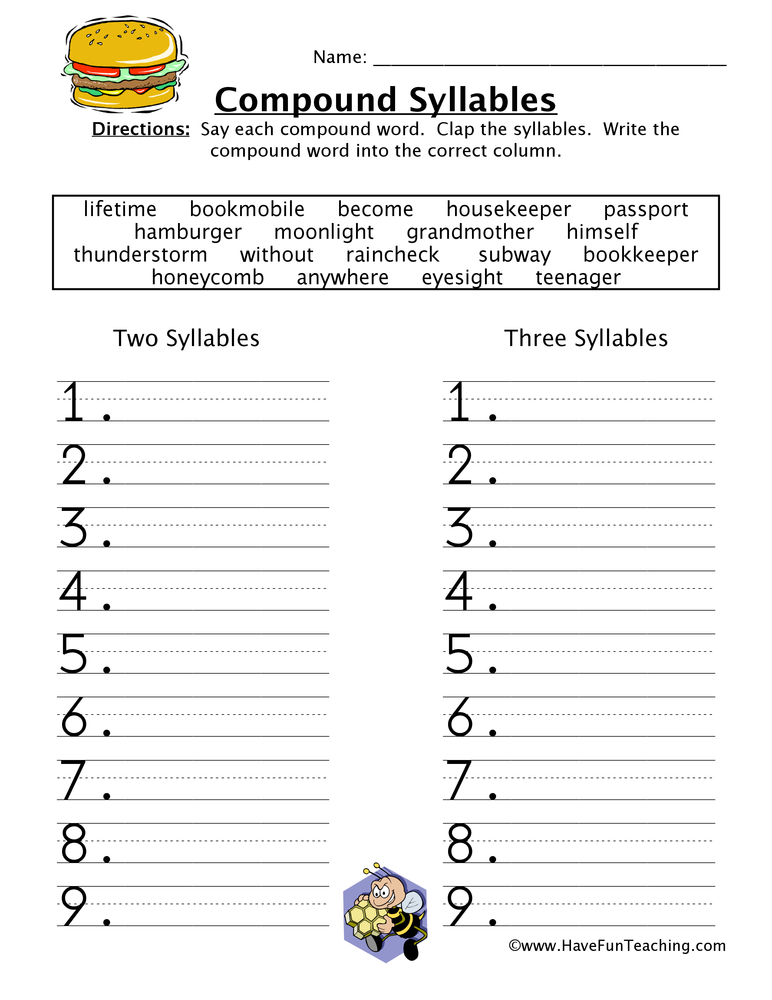
Count the Compound Words Syllables Worksheet
Worksheet for practicing identifying compound words and counting/clapping their syllables to sort them by syllable count.
Answers included


Classroom resources
Browse by lesson focus
Choose the topic or kind of practice you need.
Showing 601–624 of 4905 resources

 Show filters
Worksheet for practicing identifying compound words and counting/clapping their syllables to sort them by syllable count.

Reference/practice charts for multiplication facts and repeated-addition/skip-counting patterns for factors 1 through 12.

Students solve ten subtraction facts within five on a compact practice page. Time and accuracy fields let you record results when useful, and the answer page supports checking. Leave timing optional while students are developing understanding, and use objects to discuss a subtraction they found difficult.

The worksheet gives students six division problems that leave remainders. They work through the calculation and record both the whole-number quotient and the amount left over. Use the completed checking page after practice, and ask students to confirm a result by multiplying the quotient by the divisor and adding the remainder.

This Editing Sentences Worksheet is a great way for students to practice writing without errors. By rewriting the sentences with the correct use of capital letters and end marks, they can improve their writing skills.

Practice recognizing and forming compound words by matching word pairs.
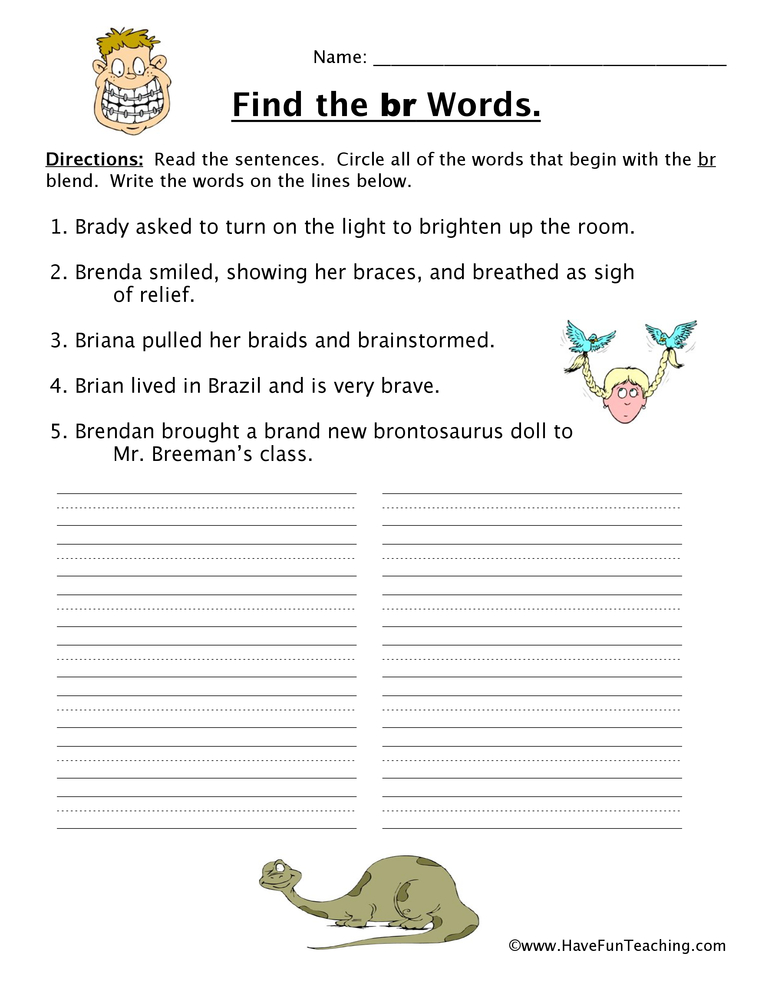
Phonics/reading worksheet for finding words beginning with the br consonant blend within sentences.

This Farm Sentence Writing Worksheet is a great way for students to practice writing complete sentences using key vocabulary. The pictures of farm animals are also a great way to introduce new vocabulary words.

Give students practice applying the perimeter formula to real-life word-problem scenarios.

Math worksheet giving students practice solving triple-digit addition problems without regrouping.

A poster and worksheet set teaching the benefits of positive self-talk and helping students practice generating their own positive self-talk statements.
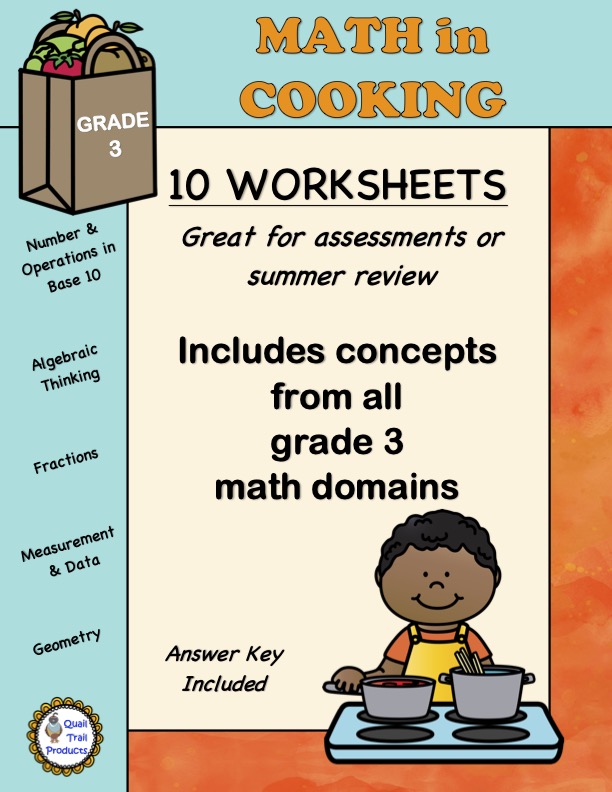
A chef/cooking-themed set of 10 Grade 3 math worksheets covering all third-grade math domains (multiplication and division facts, properties of multiplication, fractions, measurement and data, geometry), for use as review or assessment, woven into recipes and food-preparation scenarios.

Practice putting words into alphabetical order.

Four dimensioned figures place a formula beside the shape for students to use. The final prompts reverse the task: draw and label a shape with a specified area, then write its formula. Compare different valid drawings to show that equal areas can come from different dimensions.

Reinforce subtraction and odd-and-even recognition through twenty single-digit equations. After finding each difference, students color odd answers pink and even answers green. Separating the calculation and coloring steps can help students check their subtraction before applying the classification rule.

Say each pictured word, listen to its opening sound, and write CH, SH, or TH on the line. A completed reference identifies the picture words for review. Model stretching the opening sound before students choose the corresponding two-letter digraph.
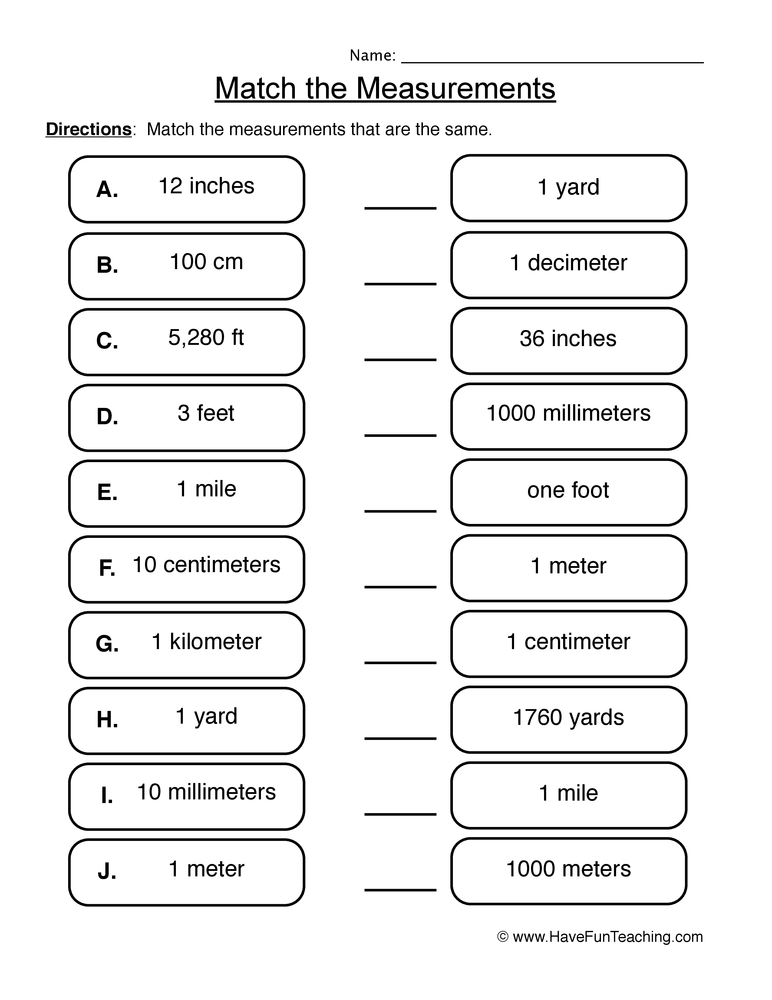
Match lengths that have the same value across two columns. The worksheet includes customary relationships involving inches, feet, yards, and miles, as well as metric lengths. Use a familiar conversion to model the first match, then ask students to explain how they checked another pair.
Twelve beach-themed worksheets cover a range of Grade 2 math skills: adding two-digit numbers to one- or two-digit numbers on flip-flop pairs; subtracting one- or two-digit numbers from two-digit numbers and coloring a lifesaver ring with the correct answer; sorting numbers as odd or even by coloring beach balls; matching a tens/ones place-value clue to the correct two-digit number on a seashell; completing skip-counting patterns by 2s, 5s, and 10s; comparing two- and three-digit numbers with greater-than/less-than symbols on a surfboard; converting between numeral, word and expanded forms; coloring 2-D shapes (stars, rectangles, ovals, triangles, circles, trapezoids, hexagons, pentagons) hidden in a sandcastle; reading analog clocks to the nearest five minutes; counting coins and matching the total to a cent amount; answering questions from a beach-themed picture graph; and solving one-step addition or subtraction word problems set at a boardwalk. Every worksheet has a matching answer-key page with the correct answers filled in.
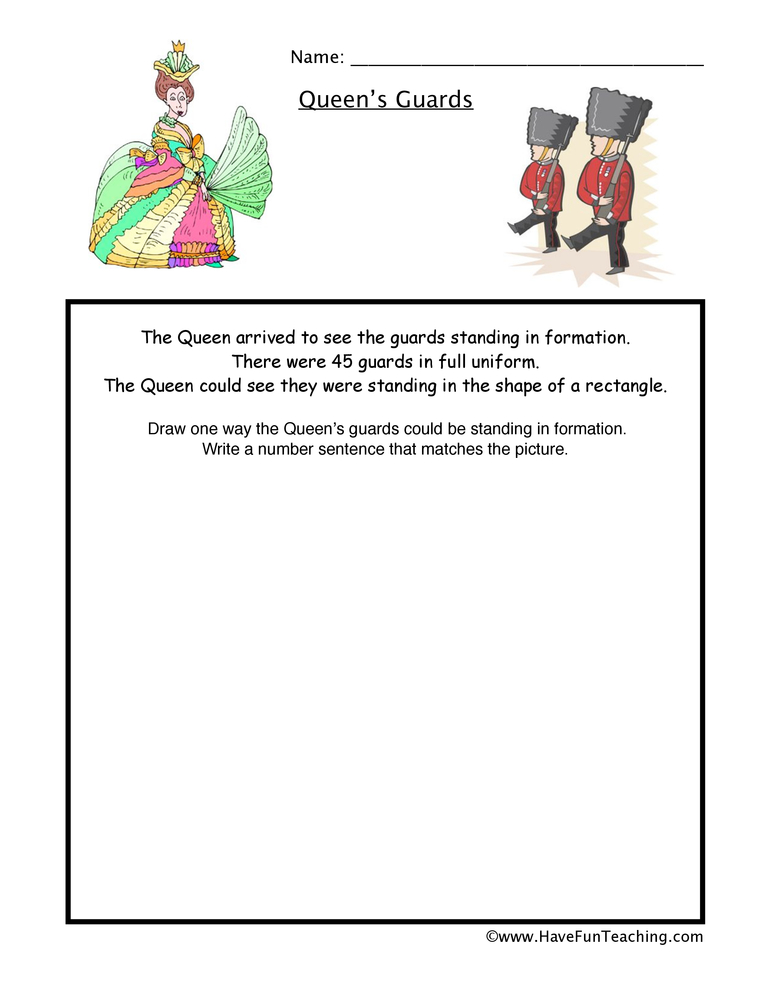
This multiplication worksheet is perfect for helping students solve word problems with a queens guards theme. With drawings and equations, your students will be able to work through the problem and get the answer they need.

An art worksheet packet teaching students to identify, draw, and complete lines of symmetry using insect imagery.

A set of no-prep printable worksheets for practicing adding and subtracting fractions with unlike denominators using the least common denominator method.

The sentence context helps students decide which beginning blend fits each incomplete word. They can read the remaining letters with each option, then check whether the resulting word makes sense. One sentence contains two incomplete words, so students need to attend to every blank rather than assume there is only one per item.

Develop a focused topic sentence by moving from a broad subject to a narrower idea. A definition and worked model introduce the process before students use the three-step planning spaces. A reptiles-as-pets selection task offers another way to discuss what makes a topic sentence clear and specific.

Guide a frog through a maze to reach school. Students trace a route around blocked passages, practicing careful visual tracking and pencil control as they work. Encourage them to look ahead at a junction before drawing so they can plan a possible path.