



2,735 products added recently
Page 18 - Science Fiction Writing Prompts

 Show filters

U-Boats Reading Comprehension Passage - Cored Ed Encyclopedia
ELA, Language Development, Reading Comprehension, Reading, Science, Technology, Engineering, History, Social Studies, Physics, Grade 2, 3, 4, 5, Worksheets & Printables, Worksheets, Teacher Tools, Centers, Activities, Writing Prompts, Assessments, Quizzes and Tests, Quizzes, Lesson Plans
This U-boats reading comprehension with lesson plan includes: Visualization (on the front cover) Start your lesson by taking a minute to think and share something about the topic. Read the script aloud (slowly), perhaps prepare some music or sound effects. Student close their eyes and let their imaginations wander. Students open their eyes, read the question aloud and give them a few minutes to complete. Ask a few students to share or keep answers until the end to compare with what they learn in the passage. Quick pause—thousands of Cored Education products are included with your TeachSimple membership. Download links and encyclopedia index available here. Pre-Reading Trivia Students will write down one thing they already know about the subject and then read five more facts and discuss. These facts are fun, and the students will enjoy learning about the subject before reading more. Give 1 minute for students to write what they already know (no pressure—best guess is fine). Read the five facts together. After each fact, do ask a student for their opinion, was it surprising? Set a purpose by asking students to highlight/underline one fact they want to learn more about during the reading. Reading Passage The text is a high-interest reading passage with set paragraphs, roughly three to four paragraphs long. It contains a variety of themes about the topic, anywhere from history to technology. The passage is between 250 and 350 words in length. First, ask students to look at the headings and see what they’ll learn about today. What do they know about the topic/heading? First read options: Teacher read-aloud (best for support). Partner reading (paragraph by paragraph). While reading, students underline important details, and vocabulary words they think may come up in the questions section. Mixed Questions The first question page contains four multiple-choice questions, each with a choice of four answers, and three written response questions that require a sentence or two from the student. Students complete the mcqs first independently, then review quickly as a class. For the 3 written responses, try to get students giving the answer with some form of evidence: “I think ___ because the text says ___.” If students get stuck, send them back to check the passage. Vocabulary Questions Practice seven key words from the text in this section across two activities. First section is scrambled words where students will unscramble three words given a clue for each. The second section is a word to meaning matching activity. Before starting, have some students read out words they underlined in the passage. Ask students to say the word and read aloud the sentence(s) around each word. Ask students to do scrambled words and the matching exercise in pairs then go through answers as a class. For the scrambled spelling task, get four pairs to come up to the board and write the words for extra practice with the other student reading out the clue. For the matching task, prompt students to give full sentences: “I matched ___ with ___ because ___.” Creative Writing In this question, the student will be required to write a five to eight sentence paragraph on a question related to the topic. Before starting, ask students write down 3 key ideas they are going to include in their piece. Ask students for ideas to share around the class to help those struggling. Pro writing expectations: 5–8 sentences At least 2 facts or details from the passage At least 2 vocabulary words from the previous page Students read their paragraphs while classmates listen for facts and vocabulary words. Extension Activities This page is optional for fast finishers or to take home. There are several activities, each one requiring a different skill. Do some, do none, do all, completely optional - but you will feel reassured knowing every possibility is planned for. Includes summary writting question. Answer Key There are answers for the multiple-choice questions, written response questions have sample answers, vocabulary answers and if there is a summary question then a sample summary will be provided as well. Lesson Plan Included Customized lesson plan for this lesson is included. Lesson Snapshot Title: U-Boats Genre: Nonfiction (informational text) Subject: Social Studies (World History) Primary Topic: U-boats, convoys, and the Battle of the Atlantic Estimated Guided Reading Level (A–Z): R What This Lesson Teaches Best Explains what “U-boat” means and where the name comes from (German U-Boot , short for Unterseeboot , meaning “undersea boat”). Shows how underwater attacks shifted World War I fighting toward supply ships , and why food and materials crossing the Atlantic mattered. Teaches how convoys (merchant ships traveling together under protection) helped weaken the U-boat threat. Highlights how defenders used tools like sonar and radar to listen and search better during the Battle of the Atlantic, and how the balance began to swing by 1943. Describes the snorkel as a solution for getting air to submarine engines while staying mostly submerged, including testing in 1943 and wider use in 1944. Learning Goals Students will explain what the term “U-boat” means and where the name comes from using details from the text. Students will describe why supply ships crossing the Atlantic became so important in both World War I and World War II. Students will identify how convoys worked and explain how they helped weaken the U-boat threat. Students will explain how sonar and radar helped defenders find and track U-boats better. Students will describe what problem the snorkel solved for submarines and how it worked. Key Vocabulary From the Text convoys — groups of ships traveling together with protection. unrestricted — not limited by rules or limits. sonar — a tool that uses sound to find underwater objects. radar — a tool that helps detect objects by radio waves. snorkel — a tube that brings air while mostly underwater. FULL CATALOG OF DOWNLOAD LINKS AND ENCYCLOPEDIA INDEX HERE
Author Cored Education
Rating
Tags Vocabulary, Reading Comprehension, Reading Passages, Lesson Plans, Ela Lesson Plans, Reading Comprehension Lesson Plans, Pre-reading, History, History Lesson Plans, Physics

Social Studies Reading Passages: Early Empires and Trades (PDF)
ELA, Reading, Reading Comprehension, Strategies, Resources for Teachers, Social Studies, History: Ancient, History, Economics, Geography, Grade 6, 7, 8, 9, Writing Prompts, Worksheets & Printables, Centers, Activities, Teacher Tools, Assessments, Quizzes and Tests, Quizzes, Tests
Social Studies Reading Comprehension Passages: Early Empires and Trade Networks (PDF) This very engaging collection of Social Studies reading passages about Early Empires and Trade Networks is designed to bridge the gap between social studies and literacy through strengthening reading comprehension and sparking knowledge curiosity in middle school students. Each passage blends English Language Arts skills with accurate social studies content. Ideal for interdisciplinary learning in ELA and Social Studies. Suitable for Grade 9 review, too! What Is Included? There are - (3) - informational passages: Digging Into Time: How Archaeology Explains Prehistory When Spices Ruled the World: Trade, Power, and Taste The Rise and Fall of the Aztec Empire Student Tasks for Each Passage: 5 multiple-choice questions targeting main idea, key details, inference, vocabulary in context, and use of evidence 5 vocabulary matching items with clear, student-friendly definitions 5 text-based questions that require citing specific lines or facts 1 summary prompt that asks students to condense central ideas accurately Full answer key for every section Available Formats for this Resource Fillable PDF Word Docs Google Docs FULL CATALOG OF DOWNLOADING LINKS HERE Reading Passage Links: Ancient Civilizations PDF Fillable PDF Word Docs Google Docs Early Empires and Trade Networks PDF Fillable PDF Word Docs Google Docs The Founding of the United States PDF Fillable PDF Word Docs Google Docs Language, Culture, and Meaning PDF Fillable PDF Word Docs Google Docs Psychology and Society PDF Fillable PDF Word Docs Google Docs Global Festivals and Traditions PDF Fillable PDF Word Docs Google Docs Extreme Environments and People PDF Fillable PDF Word Docs Google Docs Food, Culture, and Preservation PDF Fillable PDF Word Docs Google Docs Global Food Customs PDF Fillable PDF Word Docs Google Docs Media, Communication, and Popular Culture PDF Fillable PDF Word Docs Google Docs Human Impact on the Environment PDF Fillable PDF Word Docs Google Docs Civic Action and Social Change PDF Fillable PDF Word Docs Google Docs Fashion, Society, and Power PDF Fillable PDF Word Docs Google Docs People, Places, and Unusual Histories PDF Fillable PDF Word Docs Google Docs Product Details Length: 15 pages total Grades: 6–8, also suitable for Grade 9 review Use cases: close reading, stations, homework, intervention, test prep, and sub plans Why Teachers Choose This Set Authentic social studies content paired with rigorous literacy practice Consistent task structure across all passages for easier planning and smoother student routines Clear, age-appropriate writing that builds confidence without oversimplifying Use this set to reinforce ELA skills in social studies, to add literacy to your lessons, and to support independent work. The passages strengthen main idea, evidence use, vocabulary in context, inference, cause and effect, and summary writing. With ready-to-use assessments and complete answer keys, you can provide focused practice that is simple to run and fast to review.
Author CORED Education - Middle & High School
Rating
Tags Middle School, Reading Comprehension, Reading Strategies, ELA, Centers, Reading Passage, Assessments, Vocabulary, Social Studies, Ancient Civilization

ESL Novel Study - Diary of a Wimpy Kid: The Getaway - Jeff Kinney
ELA, Language Development, ESL, Reading, Library, Writing, Creative Writing, Grade 6, 7, 8, 9, Worksheets & Printables, Novel Studies, Writing Prompts, Worksheets
ESL Novel Study - Diary of a Wimpy Kid: The Getaway - Jeff Kinney In this fantastic ESL teaching resource it is offered a comprehensive novel study worksheet activity (3 printable PDF pages; Worksheets) focused on "Diary of a Wimpy Kid: The Getaway" by American author Jeff Kinney. Ideal for post reading activities, this English Second or Foreign Language (ESL EFL) teaching resource can be more than great to enhance students' overall understanding of this coming of age novel by American author Jeff Kinney. The English Second or Foreign Language Novel Study activity (3 printable PDF pages; Worksheets) can be ideal for ESL EFL TESOL learners in middle and high school (from 6th grade to 9th grade, teen students). In this Novel Study on "Diary of a Wimpy Kid: The Getaway" (3 printable PDF pages; Worksheets), English Second or Foreign Language teachers (ESL EFL) can find the following ESL novel study activities: 1 part on general information (author's name, genre, and publishing date) 1 part related to New Vocabulary Learned (1 space where to write 10 new words they learned and 1 space where students can write their related meaning) 1 part related to the story timeline (story timeline where learners set in a chronological order the most important moments during the narration) First writing activity on students' review on the novel Second writing activity (imagining to write a letter to Greg Heffley, the main character, and to give him some advice) Third writing activity (pretending to be a character, other than Greg Heffley, and describing a scene of the book from his/her point of view + space where students can draw with comic bubbles the scene they described) This ESL EFL (English Second or Foreign Language) Novel Study Activity on "Diary of a Wimpy Kid: The Getaway" by American author Jeff Kinney (3 PDF Printable Slides; worksheets) can be suitable for ESL EFL learners from 6th grade to 9th grade to study this coming of age novel Learning with Alan is a Teaching Resource/Educational Material Store whose aim is to help Teachers, Educators and Tutors to achieve their teaching objectives while creating a fun and stimulating learning and teaching environment. Remember. Learning is Fun. Never Forget! If you want to browse more of my English Second or Foreign Language (ESL EFL) Teaching Resources, click here Learning with Alan!
Author Learning with Alan
Tags ESL, English Second Language, English, Novel Study, Books, Teens, Book Companion, Diary Of A Wimpy Kid, Writing Activity, Worksheets
Reading Comprehension Passages Nonfiction Set 2 (Word)
ELA, Reading, Reading Comprehension, Common Core, Language Development, Spelling, Vocabulary, Creative Writing, Writing, Resources for Teachers, Grade 6, 7, Worksheets & Printables, Worksheets, Writing Prompts
Reading Comprehension Passages Nonfiction Set 2 Overview Reading comprehension lessons, especially written for Grade 6-7, providing the chance to read interesting and engaging passages. Each lesson has a mix of questions to check understanding, a vocabulary or spelling activity to help remember key language introduced, and a writing exercise. Full answer keys are provided. Passages Include 1.Red Pandas: Red Pandas eat nearly 9,000 pounds of food during their lifetime. 2.Hoatzin: This loud creature has roots stretching back 36 billion years! 3.Moose: These huge creatures are built for the coldest climates in America. 4.Vancouver: Fact: Vancouver was once known as Gastown! 5.Recycling: Reduce, Reuse and Recycle? Read more about that, and more! 6.Atlantic Ocean: Just how important is the Atlantic to countries that border it? Word Version This is the Word editable version. This download is available in GOOGLE Docs, GOOGLE Forms, GOOGLE Slides. PDF, PPT, WORD. FULL CATALOG OF DOWNLOAD LINKS HERE Grade 6/7 Links Fiction Set 1 Google Docs Google Forms Google Slides PDF PPT Word Guided Reading Materials Fiction Set 2 Google Docs Google Forms Google Slides PDF PPT Word Guided Reading Materials Nonfiction Set 1 Google Docs Google Forms Google Slides PDF PPT Word Guided Reading Materials Nonfiction Set 2 Google Docs Google Forms Google Slides PDF PPT Word Guided Reading Materials Reading Passages Overview Each passage is especially written for Grade 6/7 students, including key vocabulary required for this age group. Topics are varied and are accompanied by colorful graphics. Topics are meant to educate, yet entertain the modern student. The majority of these short stories contain an important message - a way of developing these young learners further. Mixed Questions The mixed questions section of each lesson includes a variation of five to six comprehension, vocabulary and Math questions. In addition, key reading strategies are frequently covered including cause & effect, summarizing, compare & contrast and making conclusions. Mixed questions require a written response (no MCQ's), full answers and example responses appear at the end of the lesson. Spelling & Vocab Each reading passage contains a variety of words and phrases designed for Grade 6/7 students. Spelling and vocab activities provide the opportunity to build fluency with these words. Activities provide clues to help assist students. Vocabulary activities include extra questions where students must write a synonym, an antonym or a sentence using a certain word. Writing Prompts Writing prompts are designed to continue the theme or lessons learned in the story. Students are persuaded to write in a variety of ways and each prompt includes several cues to help. The main focus in this product, is the student. Prompts will require the student to relate to past experiences and encourage them to discuss feelings and ways to improve. Full Answer Keys Full answer keys and sample responses are provided so no matter how busy you are, you know you're covered! Mixed question answers provide evidence from the text, Math questions contain the relevant workings. Answers are designed for use by the teacher, but also suitable as a handout to the student. For similar downloads and other frees, do check out Cored Group on TeachSimple.
Author Cored Education
Tags Elementary, Reading, Comprehension, Vocabulary, Answers, Ccss, Common Core, Spelling, Writing, Passages

Reading Passages: Health & Applied Bioscience (FILLABLE PDF)
Science, ELA, Reading, Reading Comprehension, Strategies, Resources for Teachers, Health, P.E. & Health, Life Sciences, Grade 6, 7, 8, 9, Writing Prompts, Worksheets & Printables, Centers, Activities, Teacher Tools, Assessments, Quizzes and Tests, Quizzes, Tests
Health & Applied Bioscience: Reading Comprehension Passages and Questions (FILLABLE PDF) This very engaging and fillable collection of science reading passages about The Truth about Drinks, Green Tea, and Plastic in Medicine is designed to bridge the gap between science and literacy through strengthening reading comprehension and sparking scientific curiosity in middle school students. Each passage blends English Language Arts skills with accurate science content that supports NGSS classroom practice. Ideal for interdisciplinary learning in ELA and Science. Suitable for Grade 9 review, too! These worksheets are designed as fillable PDFs , which means students can type their answers directly into the document on any computer or tablet . Each page includes highlighted text fields that show them exactly where to type! What Is Included? There are (3) informational passages: The Truth About Drinks: Many popular drinks add a lot of sugar, caffeine, or artificial sweeteners without people noticing. Knowing what is in sports drinks, sodas, and energy drinks helps you choose water or low-sugar options more often. Green Tea: Ancient Drink, Modern Science: Green tea comes from an old tradition, but today it is studied for its helpful plant chemicals. It can support alertness and health, but it works best as part of overall good habits, not as a magic drink. Plastic in Medicine: From Everyday Uses to Life-Saving Care: Plastics made it easier to keep hospitals clean, since items like gloves, syringes, and IV tubes can be used once and thrown away. They also make medical tools lighter and safer, though all that single-use plastic has to be handled carefully. Student Tasks for Each Passage: 5 multiple-choice questions targeting main idea, key details, inference, vocabulary in context, and use of evidence 5 vocabulary matching items with clear, student-friendly definitions 5 text-based questions that require citing specific lines or facts 1 summary prompt that asks students to condense central ideas accurately Full answer key for every section Available Formats for this Resource Word Docs Google Docs FULL CATALOG OF DOWNLOADING LINKS HERE Reading Passage Links: Astronomy & Space Science PDF Word Docs Google Docs Volcanoes, Rocks, & Mountains PDF Word Docs Google Docs Rock Cycle, Soil, & Sinkholes PDF Word Docs Google Docs Mars, Glaciers, & Antarctica PDF Word Docs Google Docs Water Cycle, Acid Rain, & Wastewater PDF Word Docs Google Docs Insects, Animals, & Ecosystems PDF Word Docs Google Docs Bioluminescence & Insects PDF Word Docs Google Docs Animal Skin, Cats, & T. Rex PDF Word Docs Google Docs Human Body and Senses PDF Word Docs Google Docs Health & Applied Bioscience PDF Word Docs Google Docs Waves, Light, & Imaging PDF Word Docs Google Docs Electricity & Energy PDF Word Docs Google Docs Motion & Materials PDF Word Docs Google Docs Chemistry and Materials Science PDF Word Docs Google Docs How to Use These PDFs Click on the highlighted area to start typing your answer. Move to the next question by clicking in the next highlighted box. When you are finished, close the document and select SAVE so your answers stay recorded. If you want to keep a blank copy for later, choose Save As and give your completed version a new name. Product Details Length: 14 pages total Grades: 6–8, also suitable for Grade 9 review Use cases: close reading, stations, homework, intervention, test prep, and sub plans Standards support: reinforces informational-text skills and supports NGSS-style sense making through observation, modeling, and clear use of claim, evidence, and reasoning Why Teachers Choose This Set Authentic science content paired with rigorous literacy practice Consistent task structure across all passages for easier planning and smoother student routines Clear, age-appropriate writing that builds confidence without oversimplifying Use this set to reinforce ELA skills in science, to add literacy to your lessons, or to support independent work. The passages strengthen main idea, evidence use, vocabulary in context, inference, cause and effect, and summary writing. With ready-to-use assessments and complete answer keys, you can provide focused practice that is simple to run and fast to review.
Author CORED Education - Middle & High School
Rating
Tags Middle School, Reading Comprehension, Reading Strategies, ELA, Centers, Reading Passage, Assessments, Vocabulary, Life Science, Health

Daniel and the Lion's Den Bible Story Foldable Mini Book Grade 1 2 3
Common Core, Language Development, ELA, Reading, Reading Comprehension, Strategies, Homeschool Templates, Grade 1, 2, 3, Crafts, Activities, Projects, Literacy Readers, Teacher Tools, Worksheets & Printables, Workbooks, Writing Prompts
Create an inspiring environment in your class with the special Bible story of Daniel and the Lion’s Den through this Daniel and the Lion’s Den Foldable Mini Book Set! Designed especially for Grade 1, 2, and 3 students, homeschoolers, and EFL / ESL learners, this captivating lesson of faith and courage is an important addition to your reading class as well as Bible lessons. With the following contents, this set offers a lot of teaching and learning experiences for you growing little minds: 1. Daniel and the Lion’s Den colored mini-book 2. Daniel and the Lion’s Den black and white mini-book with story tracing activities 3. Daniel and the Lion’s Den picture-fill mini-book for sequencing test or exercise 4. Daniel and the Lion’s Den black and white mini-book for story re-tell and writing exercise 5. Daniel and the Lion’s Den blank mini-book pages for story re-tell, writing and drawing exercises 6. Daniel and the Lion’s Den sample lesson plan The well-chosen images for the story in this set capture the essence of the story and inspire creativeness and spark imagination. The mini books are created in 3 different papers sizes to accommodate your classroom needs. The five different mini-books are perfect for supplemental reading lessons, reading comprehension activities, story retelling, creative interpretation, writing exercises, and assessment tool that be included in your class portfolio or open house showpieces.
Author It's Teacher L
Tags Bible Story, Bible Lessons, Daniel And The Lion's Den, Bible Reading Comprehension, Bible Story Retelling, Story Retelling
Reading Comprehension Passage: Fast Fashion (Fillable PDF Sample)
ELA, Reading, Reading Comprehension, Strategies, Resources for Teachers, Social Studies, Sociology, Grade 6, 7, 8, 9, Writing Prompts, Worksheets & Printables, Centers, Activities, Teacher Tools, Assessments, Quizzes and Tests, Quizzes, Tests
This is a ONE PASSAGE SAMPLE. The following is the description of the FULL resource and the downloading links: Social Studies Reading Comprehension Passages and Questions: Fashion, Society, and Power (Fillable PDF) This resource introduces a collection of Social Studies reading comprehension passages with questions about Fashion, Society, and Power. The passages are carefully designed to bridge the gap between social studies and literacy through strengthening reading comprehension and sparking knowledge curiosity in middle school students. Each passage blends English Language Arts skills with accurate social studies content . Ideal for interdisciplinary learning in ELA and Social Studies. Suitable for Grade 9 review, too! These worksheets are designed as fillable PDFs , which means students can type their answers directly into the document on any computer or tablet . Each page includes highlighted text fields that show them exactly where to type! What Is Included in this Collection? There are three informational passages (with full answer keys): Beyond the Price Tag: How Fast Fashion Affects the World The Fur Debate: Ethics, Fashion, and Survival Designing Change: Chanel, Dior, and Women’s Lives For Each Passage, students will have multiple tasks to complete as follow: 5 multiple-choice questions targeting main idea, key details, inference, vocabulary in context, and use of evidence 5 vocabulary matching items with clear, student-friendly definitions 5 text-based questions that require citing specific lines or facts 1 summary prompt that asks students to condense central ideas accurately Available Formats for this Resource PDF Word Docs Google Docs FULL CATALOG OF DOWNLOADING LINKS HERE For more Social Studies Reading Passages, check the following Links: Ancient Civilizations PDF Fillable PDF Word Docs Google Docs Early Empires and Trade Networks PDF Fillable PDF Word Docs Google Docs The Founding of the United States PDF Fillable PDF Word Docs Google Docs Language, Culture, and Meaning PDF Fillable PDF Word Docs Google Docs Psychology and Society PDF Fillable PDF Word Docs Google Docs Global Festivals and Traditions PDF Fillable PDF Word Docs Google Docs Extreme Environments and People PDF Fillable PDF Word Docs Google Docs Food, Culture, and Preservation PDF Fillable PDF Word Docs Google Docs Global Food Customs PDF Fillable PDF Word Docs Google Docs Media, Communication, and Popular Culture PDF Fillable PDF Word Docs Google Docs Human Impact on the Environment PDF Fillable PDF Word Docs Google Docs Civic Action and Social Change PDF Fillable PDF Word Docs Google Docs Fashion, Society, and Power PDF Fillable PDF Word Docs Google Docs People, Places, and Unusual Histories PDF Fillable PDF Word Docs Google Docs How to Use These PDFs Click on the highlighted area to start typing your answer. Move to the next question by clicking in the next highlighted box. When you are finished, close the document and select SAVE so your answers stay recorded. If you want to keep a blank copy for later, choose Save As and give your completed version a new name. Product Details Length: 15 pages total Grades: 6–8, also suitable for Grade 9 review Use cases: close reading, stations, homework, intervention, test prep, and sub plans Why Teachers Choose This Set Authentic social studies content paired with rigorous literacy practice Consistent task structure across all passages for easier planning and smoother student routines Clear, age-appropriate writing that builds confidence without oversimplifying Use this set to reinforce ELA skills in social studies, to add literacy to your lessons, and to support independent work. The passages strengthen main idea, evidence use, vocabulary in context, inference, cause and effect, and summary writing. With ready-to-use assessments and complete answer keys, you can provide focused practice that is simple to run and fast to review.
Author CORED Education - Middle & High School
Rating
Tags Middle School, Reading Comprehension, Reading Strategies, ELA, Centers, Reading Passage, Assessments, Vocabulary, Social Studies, Fashion

READING-COMPREHENSION MINIBOOK | WHAT IS ARTIFICIAL INTELLIGENCE?
Reading Comprehension, Reading, ELA, Adult Education, Elementary, High School, Homeschool Resources, Middle School, Not Grade Specific, Writing Prompts, Worksheets & Printables, Worksheets
READING-COMPREHENSION MINIBOOK | WHAT IS ARTIFICIAL INTELLIGENCE? ABOUT THE AUTHOR: Hi there! We are EDITORIAL LAURA EDUCA 🎓✨. We love designing educational materials that make children’s learning joyful, dynamic, and motivating. I invite you to visit my educational store, explore the variety of resources available, and find the perfect one for your students. PLEASE READ CAREFULLY THE FOLLOWING INFORMATION OF THIS RESOURCE: · What is its name?: READING-COMPREHENSION MINIBOOK | WHAT IS ARTIFICIAL INTELLIGENCE? · How many pages does it have?: 20 · What format is it in (PDF, Word, PPT)?: PDF · Is it colorful, black & white, or both?: COLOR DESCRIPTION OF THIS RESOURCE: What is the name of the product? Hello! Thank you so much for being interested in this beautiful and fabulous product that you can use with your children, both at school and at home. The name of this fabulous product is: READING-COMPREHENSION MINIBOOK | WHAT IS ARTIFICIAL INTELLIGENCE? How many pages does it include? This educational document, carefully created and in some cases compiled, has the following number of pages: 20 What format is it in (A4, letter, digital, printable)? This educational resource is designed in A4 format and PDF, so you will have no difficulties printing it and it will also stay well-protected. PDF A4 Is it in black and white or in color? This document is available in black and white as well as in color. Actually, it combines both, making it more attractive for your students. COLOR EXTRA INFORMATION: For what age, grade, or school level is it ideal? I usually create resources for early grades (children ages 3–5), but I also design for primary students (ages 7–12). My priority is to make children’s learning creative. What learning area does it focus on? This and all my resources focus on children’s essential learning, such as math and literacy. Occasionally, I also create resources for Spanish. What will students learn or practice with it? With this educational resource, children will be able to practice basic skills in math and literacy. Teachers can also adapt it to other learning areas, since learning is multidisciplinary.
Author EDITORIAL LAURA EDUCA
Rating
Tags FREE, FREE RESOURCES, COMPREHENSION, READING, ELA, READING AND COMPREHENSION

Criminal Profiling: Social Studies Reading Comprehension Passage. Docs
ELA, Reading, Reading Comprehension, Strategies, Resources for Teachers, Social Studies, Psychology, Grade 6, 7, 8, 9, Writing Prompts, Worksheets & Printables, Centers, Activities, Teacher Tools, Assessments, Quizzes and Tests, Quizzes, Tests
Criminal Profiling: Social Studies Reading Comprehension Passage (Docs) This resource introduces a unique Social Studies reading comprehension passage with questions about Criminal Profiling: Inside the Mind of a Criminal. The passage is carefully designed to bridge the gap between social studies and literacy through strengthening reading comprehension and sparking knowledge curiosity in middle school students. Each passage blends English Language Arts skills with accurate social studies content . Ideal for interdisciplinary learning in ELA and Social Studies. Suitable for Grade 9 review, too! Student Tasks throughout the passage: 5 multiple-choice questions targeting the following skills: main idea, key details, inference, vocabulary in context, and use of evidence 5 vocabulary matching items with clear, student-friendly definitions 5 text-based questions that require citing specific lines or facts 1 summary prompt that asks students to condense central ideas accurately Full answer key for every section Available Formats for this Resource: PDF Fillable PDF Google Docs FULL CATALOG OF DOWNLOADING LINKS HERE Social Studies Reading Comprehension Collection Links: 1. Ancient Civilizations PDF Fillable PDF Word Docs Google Docs 2. Early Empires and Trade Networks PDF Fillable PDF Word Docs Google Docs 3. The Founding of the United States PDF Fillable PDF Word Docs Google Docs 4. Language, Culture, and Meaning PDF Fillable PDF Word Docs Google Docs 5. Psychology and Society PDF Fillable PDF Word Docs Google Docs 6. Global Festivals and Traditions PDF Fillable PDF Word Docs Google Docs 7. Extreme Environments and People PDF Fillable PDF Word Docs Google Docs 8. Food, Culture, and Preservation PDF Fillable PDF Word Docs Google Docs 9. Global Food Customs PDF Fillable PDF Word Docs Google Docs 10. Media, Communication, and Popular Culture PDF Fillable PDF Word Docs Google Docs 11. Human Impact on the Environment PDF Fillable PDF Word Docs Google Docs 12. Civic Action and Social Change PDF Fillable PDF Word Docs Google Docs 13. Fashion, Society, and Power PDF Fillable PDF Word Docs Google Docs 14. People, Places, and Unusual Histories PDF Fillable PDF Word Docs Google Docs Product Details: Length: 5 pages Grades: 6–8, also suitable for Grade 9 review Use cases: close reading, stations, homework, intervention, test prep, and sub plans Why Teachers Choose This Passage: Authentic social studies content paired with rigorous literacy practice Consistent task structure for easier planning and smoother student routines Clear, age-appropriate writing that builds confidence without oversimplifying Use this passage to reinforce ELA skills in social studies, to add literacy to your lessons, and to support independent work. The passage strengthens main idea, evidence use, vocabulary in context, inference, cause and effect, and summary writing. With ready-to-use assessments and complete answer keys, you can provide focused practice that is simple to run and fast to review.
Author CORED Education - Middle & High School
Rating
Tags Middle School, Reading Comprehension, Reading Strategies, ELA, Centers, Reading Passage, Assessments, Vocabulary, Social Studies, Pschology
Snails Reading Comprehension Passage - Cored Ed Encyclopedia
ELA, Language Development, Reading Comprehension, Reading, Pre-Reading, Writing, Science, Animals, Life Sciences, Strategies, Grade 2, 3, 4, 5, Worksheets & Printables, Worksheets, Teacher Tools, Centers, Activities, Writing Prompts, Assessments, Quizzes and Tests, Quizzes, Lesson Plans
This snails reading comprehension includes: Visualization (on the front cover) Start your lesson by taking a minute to think and share something about the topic. Read the script aloud (slowly), perhaps prepare some music or sound effects. Student close their eyes and let their imaginations wander. Students open their eyes, read the question aloud and give them a few minutes to complete. Ask a few students to share or keep answers until the end to compare with what they learn in the passage. Quick pause—thousands of Cored Education products are included with your TeachSimple membership. Download links and encyclopedia index available here. Pre-Reading Trivia Students will write down one thing they already know about the subject and then read five more facts and discuss. These facts are fun, and the students will enjoy learning about the subject before reading more. Give 1 minute for students to write what they already know (no pressure—best guess is fine). Read the five facts together. After each fact, do ask a student for their opinion, was it surprising? Set a purpose by asking students to highlight/underline one fact they want to learn more about during the reading. Reading Passage The text is a high-interest reading passage with set paragraphs, roughly three to four paragraphs long. It contains a variety of themes about the topic, anywhere from history to technology. The passage is between 250 and 350 words in length. First, ask students to look at the headings and see what they’ll learn about today. What do they know about the topic/heading? First read options: Teacher read-aloud (best for support). Partner reading (paragraph by paragraph). While reading, students underline important details, and vocabulary words they think may come up in the questions section. Mixed Questions The first question page contains four multiple-choice questions, each with a choice of four answers, and three written response questions that require a sentence or two from the student. Students complete the mcqs first independently, then review quickly as a class. For the 3 written responses, try to get students giving the answer with some form of evidence: “I think ___ because the text says ___.” If students get stuck, send them back to check the passage. Vocabulary Questions Practice seven key words from the text in this section across two activities. First section is scrambled words where students will unscramble three words given a clue for each. The second section is a word to meaning matching activity. Before starting, have some students read out words they underlined in the passage. Ask students to say the word and read aloud the sentence(s) around each word. Ask students to do scrambled words and the matching exercise in pairs then go through answers as a class. For the scrambled spelling task, get four pairs to come up to the board and write the words for extra practice with the other student reading out the clue. For the matching task, prompt students to give full sentences: “I matched ___ with ___ because ___.” Creative Writing In this question, the student will be required to write a five to eight sentence paragraph on a question related to the topic. Before starting, ask students write down 3 key ideas they are going to include in their piece. Ask students for ideas to share around the class to help those struggling. Pro writing expectations: 5–8 sentences At least 2 facts or details from the passage At least 2 vocabulary words from the previous page Students read their paragraphs while classmates listen for facts and vocabulary words. Extension Activities This page is optional for fast finishers or to take home. There are several activities, each one requiring a different skill. Do some, do none, do all, completely optional - but you will feel reassured knowing every possibility is planned for. Includes summary writting question. Answer Key There are answers for the multiple-choice questions, written response questions have sample answers, vocabulary answers and if there is a summary question then a sample summary will be provided as well. Lesson Plan Included Customized lesson plan for this lesson is included. Lesson Snapshot Title: Snails Genre: Nonfiction (informational text with support pages) Subject: Science (Life Science) Primary Topic: Snail traits, habitats, and how they survive Estimated Guided Reading Level (A–Z): S What This Lesson Teaches Best What snails are (gastropods, “belly-footed” mollusks) and how they move using a strong foot on the bottom of their bodies. How snail body parts work, including the mantle making the shell, tentacles with tiny eyes, and a radula that scrapes food with many tiny teeth. How snails live in many habitats (mostly ocean; also land and freshwater), including near shore, on reefs, and in deep, dark water. How snails stay safe and survive tough conditions by pulling into their shell, becoming dormant, and sometimes sealing the opening with mucus or an operculum. How scientists use evidence (shell growth spirals and silvery trails) to study snails and understand how they live in so many places. Learning Goals Explain what “gastropods” means and how snails move using a strong foot. Describe how a snail’s mantle helps make and grow its shell. Identify what a radula is and how it helps a snail eat. Describe how land and freshwater snails avoid drying out and handle hot or cold weather. Use details from the passage to describe where snails live (near shore, reefs, deep water, and moist land places). Key Vocabulary From the Text gastropods — “belly-footed” animals that move using a strong foot. mantle — a flap of skin that makes the shell. radula — a scraper with many tiny teeth for eating. dormant — resting and not active for a while. operculum — a little door that can seal a shell opening. FULL CATALOG OF DOWNLOAD LINKS AND ENCYCLOPEDIA INDEX HERE
Author Cored Education
Rating
Tags Vocabulary, Reading Comprehension, Reading Passages, Reading, Creative Writing, Reading Strategies, Writing Prompts, Lesson Plans, Snails, Life Science

Adventure Visual Writing Prompts | Photo Ideas | Writing Project
ELA, Writing, Creative Writing, Grade 2, 3, 4, 5, Writing Prompts, Worksheets & Printables
These picture writing templates are a cute way to give your students a nudge or idea about what they can write about. Have them study the picture and then let their pencils loose as they write about what they see, what the picture might mean, or build a story based on the photo. These are great to use as open-ended prompts that encourage their giggles and creativity! How To Use This: Choose which photo templates you’d like to share with your students or put our several options and let them pick one that interests them. Have some classroom or small group discussions about the picture and brainstorm what they could write about. These prompts work great for homework, early finishers, group projects, extra credit, supplemental work for advanced students, or just a fun writing project to interject to stretch those imaginative muscles! These are great to print ahead of time and have a giant stack ready to use to fill in time, add to work notebooks, or supplement activities you've already planned. What You Get: ·26 Adventure Photo Prompt Cards (full page photograph) ·26 Writing Prompt Templates ·26 “Add a Caption” Activities ·26 Early Writer Templates Take a Look at Other Writing Resources: How to Make an Apple Pie Writing and Sequencing Activity Postcards of Europe Geography Unit How to Make a Peanut Butter Sandwich Writing and Sequencing Activity Trace A Story Handwriting Practice Preschool Animal Posters Doodle Art Prompt Packet Check out other resources from my store: Simply Schoolgirl! I can be contacted for questions and concerns at simplyschoolgirl1@gmail.com
Author Simply Schoolgirl
Tags Adventure, Photo Ideas, Writing Project, Small Group Discussion, Writing Templates, Writing Prompts, Photo Templates, Photograph, Picture, Activity

Reading Comprehension and Questions Fiction Set 4 - School Presentable
ELA, Reading, Common Core, Spelling, Language Development, Vocabulary, Children’s Literature, Literature, Creative Writing, Writing, Grade 4, 5, Worksheets & Printables, Worksheets, Writing Prompts, Assessments, Teacher Tools, Tests, Quizzes and Tests
Reading Comprehension Passages Fiction Set 4 Snapshot Title: Title not stated Genre: Fiction (short story collection with comprehension/skill pages) Subject: Reading (ELA) Primary Topic: School-based short stories and reading practice Estimated Guided Reading Level (A–Z): Q What This Teaches Best Character change and motivation through school dilemmas (e.g., telling the truth and taking responsibility, welcoming a new student, choosing kindness over winning). Theme and life lessons grounded in realistic situations (touching what isn’t yours, facing fears, not judging by appearances, turning embarrassment into humor, leadership and courage). Plot structure skills (problem/solution and sequencing) across multiple short narratives with clear beginning–middle–end events. Academic vocabulary in context (students meet words like summoned, confronting, sophisticated, derived, and repelled inside the stories). Teacher note (support-page QA): The “President Lina” spelling page includes a clue that appears mismatched with the story’s word choice (the story uses prospects ). Learning Goals Identify key events in a story and retell them in logical order using details from the text. Describe a character’s feelings, choices, and traits using evidence from dialogue and actions. Explain the central lesson or message of a story and connect it to what happens in the plot. Determine the meaning of unfamiliar words using context clues from surrounding sentences. Describe how a problem is introduced and solved in a narrative. Passages Include The Principal: Kaitlin and Diann end up in the principal’s office. Who caused the trouble? Fear: Tyson is trying to act brave, but he’s been worrying a lot lately. Warm Welcome: Follow Juliet as she starts her first day at Westside Elementary. Funny Photos: Darlene and her class come up with a clever plan for their silly photo day pictures. Gold Star: Amber’s class begins a new contest, and the winner earns a gold star. Sub Teacher: Ed isn’t thrilled to meet the substitute teacher—Mr. Strict. President Lina: Lina feels too shy to run for school president, but after some encouragement… Devon’s Science Project: Devon’s project turns into an adventure that just might help save the world. On the Stage: Tera and her class work together to build an adobe stage for their school. Eve’s Amazing Day: Eve has an awesome day at school—read what happens in this lesson. PRESENTABLE PDF VERSION Run it like a slide show straight from a PDF, with no PowerPoint or extra software needed, just open, project, and teach. Other versions are available in the links list below or in the full catalog. FULL CATALOG OF DOWNLOAD LINKS HERE For similar downloads and other frees, do check out Cored Group on TeachSimple.
Author Cored Education
Rating
Tags Elementary, Reading, Comprehension, Vocabulary, Answers, Common Core, Spelling, Writing, Passages, Reading Comprehension Assessments
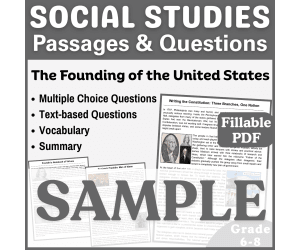
Social Studies SAMPLE Passage: The U.S. Constitution (Fillable PDF)
ELA, Reading, Reading Comprehension, Strategies, Resources for Teachers, Social Studies, Biographies, Government, History: USA, History, Grade 6, 7, 8, 9, Writing Prompts, Worksheets & Printables, Centers, Activities, Teacher Tools, Assessments, Quizzes and Tests, Quizzes, Tests
This is a ONE PASSAGE SAMPLE. The following is the description of the FULL resource and the downloading links: Social Studies Reading Comprehension Passages: The Founding of the United States (Fillable PDF) This resource introduces a collection of Social Studies reading comprehension passages about Benjamin Franklin and Writing the constitution (Founding the United States). The passages are carefully designed to bridge the gap between social studies and literacy through strengthening reading comprehension and sparking knowledge curiosity in middle school students. Each passage blends English Language Arts skills with accurate social studies content. Ideal for interdisciplinary learning in ELA and Social Studies. Suitable for Grade 9 review, too! What Is Included in this Collection? There are three informational passages (with full answer keys): Franklin’s Notebook of Virtues Benjamin Franklin: Man of Ideas Writing the Constitution: Three Branches, One Nation For Each Passage, students will have multiple tasks to complete as follow: 5 multiple-choice questions targeting main idea, key details, inference, vocabulary in context, and use of evidence 5 vocabulary matching items with clear, student-friendly definitions 5 text-based questions that require citing specific lines or facts 1 summary prompt that asks students to condense central ideas accurately Available Formats for this Resource Fillable PDF Word Docs Google Docs FULL CATALOG OF DOWNLOADING LINKS HERE For more Social Studies Reading Passages, check the following Links: Ancient Civilizations PDF Fillable PDF Word Docs Google Docs Early Empires and Trade Networks PDF Fillable PDF Word Docs Google Docs The Founding of the United States PDF Fillable PDF Word Docs Google Docs Language, Culture, and Meaning PDF Fillable PDF Word Docs Google Docs Psychology and Society PDF Fillable PDF Word Docs Google Docs Global Festivals and Traditions PDF Fillable PDF Word Docs Google Docs Extreme Environments and People PDF Fillable PDF Word Docs Google Docs Food, Culture, and Preservation PDF Fillable PDF Word Docs Google Docs Global Food Customs PDF Fillable PDF Word Docs Google Docs Media, Communication, and Popular Culture PDF Fillable PDF Word Docs Google Docs Human Impact on the Environment PDF Fillable PDF Word Docs Google Docs Civic Action and Social Change PDF Fillable PDF Word Docs Google Docs Fashion, Society, and Power PDF Fillable PDF Word Docs Google Docs People, Places, and Unusual Histories PDF Fillable PDF Word Docs Google Docs Product Details Length: 13 pages total Grades: 6–8, also suitable for Grade 9 review Use cases: close reading, stations, homework, intervention, test prep, and sub plans Why Teachers Choose This Set Authentic social studies content paired with rigorous literacy practice Consistent task structure across all passages for easier planning and smoother student routines Clear, age-appropriate writing that builds confidence without oversimplifying Use this set to reinforce ELA skills in social studies, to add literacy to your lessons, and to support independent work. The passages strengthen main idea, evidence use, vocabulary in context, inference, cause and effect, and summary writing. With ready-to-use assessments and complete answer keys, you can provide focused practice that is simple to run and fast to review.
Author CORED Education - Middle & High School
Rating
Tags Middle School, Reading Comprehension, Reading Strategies, ELA, Centers, Reading Passage, Assessments, Vocabulary, Social Studies, U.S Government

2025 May ELA Bell Ringers
ELA, Writing, Creative Writing, Resources for Teachers, Holiday & Seasonal, May, Months, Seasons, Spring, High School, Homeschool Resources, Middle School, Worksheets & Printables, Writing Prompts, Activities, Teacher Tools, Assessments
Looking to breathe new life into your ELA classroom this May? These 2025 May ELA Bell Ringers are exactly what you need. Packed with 22 ready-to-use activities, this resource turns those first few minutes of class into meaningful learning moments. These 2025 May ELA Bell Ringers have a little bit of everything – from grammar drills to creative writing, vocabulary builders to poetry analysis – ensuring your students/homeschoolers stay engaged and challenged. These are not your typical worksheet fillers. Each bell ringer is carefully designed to get students thinking, writing, and exploring language in exciting ways. Whether you're looking to kick off class with a quick warm-up, smooth out transitions between lessons, or give students some independent practice, these activities hit the mark. These 2025 May ELA Bell Ringers will push your students/homeschoolers to sharpen their skills, spark their creativity, and develop a genuine love for language and literature. INCLUDED IN THIS RESOURCE ✔ 22 daily ELA bell ringers for May The real magic happens when learning feels less like a requirement and more like an exciting daily challenge. Your students/homeschoolers won't just be completing an activity; they'll be embarking on a quick but meaningful intellectual journey every single morning. Your classroom/homeschool isn't just a room—it's a launching pad for young minds, one bell ringer at a time. If you and your students/homeschoolers enjoyed this resource, please leave a review. Thank you for your support! Tina - Big Easy Homeschooling Mom
Author Homeschool with Big Easy Homeschooling Mom
Tags May Bell Ringers, ELA Bell Ringers, Daily Writing Prompts, Homeschool Writing Activities, English Class Starters, ELA Warm-Ups, Middle & High School ELA

October Writing Prompts - Learning Passport
ELA, Writing, Creative Writing, Grade 2, 3, 4, Writing Prompts, Worksheets & Printables
October Writing Prompts - Learning Passport The October Writing Prompts - Learning Passport is an engaging and thematic teaching resource suitable for Grade 2 to Grade 4 classrooms. It provides a blend of fun and learning, ideal for encouraging creative writing and language art lessons during the month of October. Consisting of just four double-sided sheets of paper, it translates into a compelling 32-page learning activity that caters to enhancing not only student’s writing skills but also their understanding on different subjects connected to the month including topics such as National Dessert Day or Do Something Nice Day. Such themes make the prompts timely and relevant, exciting students' interests in ways that traditional assignments might not. Teachers will find this resource beneficial for various classroom activities like morning work or even homework assignments. For those who advance more swiftly than others in their work—the 'fast finishers'--this passport serves as an enjoyable yet educational tool keeping them both constructively engaged and challenged. Reward-Based System The unique feature involves offering students a tangible reward upon completion: a stamp they can collect on their passport stamp sheet. This feature introduces an element of accountability which can be quite motivating for young learners encouraging them to complete their tasks quickly with quality workmanship. Ease Of Preparation The preparation is minimally time-consuming—it simply requires teachers to print it double-sided, cut out the material, fold it neatly into book format before stapling together. The ready-to-go style saves teachers preparation times while also economizing paper use—a win-win situation! Creativity Aspect In addition to sharpening creative writing skills, this learning passport features coloring sections including covers, inside graphic elements plus stamp designs which further increase its appeal among creatively inclined young ones. Overall, with these colorful hands-on passports at hand students mix fun with increasing proficiency in language arts—making way towards becoming confident writers while thoroughly relishing every step along this journey!
Author Knowledge Mobile
Tags Writing Prompts, Learning Passport, Creative Writing, Language Arts, Classroom Activities

High School 2025 July-September ELA Bell Ringer Bundle (Quarter)
ELA, Writing, Creative Writing, Research, Resources for Teachers, Homeschool Resources, High School, Teacher Tools, Assessments, Lesson Plans, Quizzes and Tests, Worksheets & Printables, Writing Prompts
I still remember the morning my daughter pushed back from our kitchen table, looked at me with genuine surprise, and said, "Mom, I actually have an idea for this one." It was our third week of starting each school day with a simple writing warm-up, and something had finally clicked. As a homeschool parent, I had been searching for that magic formula to help my reluctant writer find her voice, and honestly, I had almost given up on these short daily exercises. But watching her evolve from someone who stared at blank pages to a confident high schooler who can craft compelling arguments and vivid narratives – well, it reminded me that sometimes the most powerful learning happens in those unassuming 10-minute moments before we dive into our "real" lessons. Because she is heading into her first year of high school, she gave me the idea to create these writing prompts for High School ELA . WHAT YOU'LL RECEIVE: Ready-to-use daily warm-ups 66 carefully crafted exercises covering a full academic quarter Grammar, Imaginative writing challenges focusing on speculative and dystopian themes KEY LEARNING OBJECTIVES: Grammar, poetry, vocabulary, and sentence structure analysis Using literary excerpts for enhance critical thinking and textual analysis skills Diverse writing styles to help students/homeschoolers discover their unique voice and style Creative and descriptive writing prompts from dystopian to flash fiction As I reflect on our homeschool path, especially those sometimes challenging middle school years, I have come to understand that consistency trumps complexity every single time. It was not the elaborate unit studies or the impressive final projects that made the biggest difference in my daughter's writing development – though those certainly had their place. Instead, it was showing up each morning with a meaningful prompt, creating that safe space for her to experiment with words and ideas, and celebrating those small victories along the way. Now, as she navigates her ninth-grade year with genuine enthusiasm for writing across all subjects, I am reminded that my role as homeschool educators is not just to teach skills – it is to help our children discover they have important thoughts worth sharing and the tools to express them clearly. If you are in that familiar place of wondering how to bridge the gap between where your teenager is as a writer and where they need to be, these daily practices might just be the gentle, consistent support they need to surprise themselves with their own capabilities. If you and your students/homeschoolers enjoyed this resource, please leave a review. Thank you for your support! Tina - Big Easy Homeschooling Mom
Author Homeschool with Big Easy Homeschooling Mom
Rating
Tags High School ELA Bell Ringers For July-September, Daily English Activities For Homeschool High School, Creative Writing Prompts For High Schoolers/homeschoolers, No Prep ELA Resources For Teachers, Homeschool Daily Writing Activities High School, Back To School English Bell Ringers, High School ELA Bell Ringers Bundle, Homeschool Resources, Grammar Exercises For High School Students, Literary Analysis Prompts
Pumpkins Reading Comprehension Passage - Cored Ed Encyclopedia
ELA, Language Development, Resources for Teachers, Reading Comprehension, Reading, Pre-Reading, Writing, Nature & Plants, Life Sciences, Science, Grade 2, 3, 4, 5, Worksheets & Printables, Worksheets, Teacher Tools, Centers, Activities, Writing Prompts, Assessments, Tests, Quizzes and Tests, Quizzes
This pumpkins reading comprehension includes: Visualization (on the front cover) Start your lesson by taking a minute to think and share something about the topic. Read the script aloud (slowly), perhaps prepare some music or sound effects. Student close their eyes and let their imaginations wander. Students open their eyes, read the question aloud and give them a few minutes to complete. Ask a few students to share or keep answers until the end to compare with what they learn in the passage. Quick pause—thousands of Cored Education products are included with your TeachSimple membership. Download links and encyclopedia index available here. Pre-Reading Trivia Students will write down one thing they already know about the subject and then read five more facts and discuss. These facts are fun, and the students will enjoy learning about the subject before reading more. Give 1 minute for students to write what they already know (no pressure—best guess is fine). Read the five facts together. After each fact, do ask a student for their opinion, was it surprising? Set a purpose by asking students to highlight/underline one fact they want to learn more about during the reading. Reading Passage The text is a high-interest reading passage with set paragraphs, roughly three to four paragraphs long. It contains a variety of themes about the topic, anywhere from history to technology. The passage is between 250 and 350 words in length. First, ask students to look at the headings and see what they’ll learn about today. What do they know about the topic/heading? First read options: Teacher read-aloud (best for support). Partner reading (paragraph by paragraph). While reading, students underline important details, and vocabulary words they think may come up in the questions section. Mixed Questions The first question page contains four multiple-choice questions, each with a choice of four answers, and three written response questions that require a sentence or two from the student. Students complete the mcqs first independently, then review quickly as a class. For the 3 written responses, try to get students giving the answer with some form of evidence: “I think ___ because the text says ___.” If students get stuck, send them back to check the passage. Vocabulary Questions Practice seven key words from the text in this section across two activities. First section is scrambled words where students will unscramble three words given a clue for each. The second section is a word to meaning matching activity. Before starting, have some students read out words they underlined in the passage. Ask students to say the word and read aloud the sentence(s) around each word. Ask students to do scrambled words and the matching exercise in pairs then go through answers as a class. For the scrambled spelling task, get four pairs to come up to the board and write the words for extra practice with the other student reading out the clue. For the matching task, prompt students to give full sentences: “I matched ___ with ___ because ___.” Creative Writing In this question, the student will be required to write a five to eight sentence paragraph on a question related to the topic. Before starting, ask students write down 3 key ideas they are going to include in their piece. Ask students for ideas to share around the class to help those struggling. Pro writing expectations: 5–8 sentences At least 2 facts or details from the passage At least 2 vocabulary words from the previous page Students read their paragraphs while classmates listen for facts and vocabulary words. Extension Activities This page is optional for fast finishers or to take home. There are several activities, each one requiring a different skill. Do some, do none, do all, completely optional - but you will feel reassured knowing every possibility is planned for. Includes summary writting question. Answer Key There are answers for the multiple-choice questions, written response questions have sample answers, vocabulary answers and if there is a summary question then a sample summary will be provided as well. This lesson is also great for independent work , assessments , or sub plans as students can complete the it with minimal support. Lesson Snapshot Title: Pumpkins Genre: Nonfiction (informational text) Subject: Life Science (plants) / Social Studies (culture & traditions) / Reading Informational Text Primary Topic: How pumpkins changed, spread, and are used Estimated Guided Reading Level (A–Z): Q What This Lesson Teaches Best How pumpkins became larger and tougher over many seasons when people saved the best seeds . How pumpkin seeds spread to new places as Indigenous farmers carried seeds and later pumpkins traveled across oceans . How pumpkin flowers and bees connect to pumpkin growth (bees move pollen ; then pumpkins can begin to swell). How pumpkins connect to fall traditions and food, including jack-o’-lanterns , pies , roasted seeds , and soups . How headings help organize information (seed change, travel, pollination/growth, and uses). Learning Goals Students will explain how saving the best seeds changed pumpkins over many seasons. Students will describe how pumpkin seeds traveled to new places and who carried them. Students will describe what a pumpkin patch looks like in summer using details from the passage. Students will explain how bees help a pumpkin begin to grow, based on the passage. Students will identify two ways people use pumpkins today that are named in the text. Key Vocabulary From the Text cultivated — grown by people with care, not wild. genus — a science group name for related plants. pollen — powder bees move from flower to flower. immigrants — people who move to a new country to live. rinds — thick outer skins of pumpkins. FULL CATALOG OF DOWNLOAD LINKS AND ENCYCLOPEDIA INDEX HERE
Author Cored Education
Rating
Tags Vocabulary, Spelling, Reading Comprehension, Reading Passages, Reading, Creative Writing, Reading Strategies, Writing Prompts, Pumpkins, Life Science

Daily Writing Prompt Cards
ELA, Writing, Preschool, Grade 1, 2, 3, Writing Prompts, Worksheets & Printables
This resource is a set of Daily Writing Prompt Cards. There are 32 prompt cards that you can print, laminate and cut for students to enjoy. You could put these cards on a binder ring and allow students to use them independently for early finishers, morning work and so much more.
Author Top Notch Teaching
Tags Writing Prompts, Task Cards, Daily Writing, Interactive Notebook, Writing Center, Writing Prompt Cards
Mind Games: How Illusions and Biases Shape Our Reality Reading Passage
ELA, Reading, Writing, Research, Resources for Teachers, Science, STEM, Life Skills, Special Resources, High School, Homeschool Resources, Teacher Tools, Assessments, Lesson Plans, Quizzes and Tests, Worksheets & Printables, Writing Prompts
As a homeschool mom who is passionate about bringing real science into our learning, I created this resource after watching my own kids become fascinated by optical illusions and questioning "how do we really know what we see?" This comprehensive package takes that natural curiosity and channels it into serious academic exploration of how our minds work. I have spent countless hours researching current neuroscience studies to ensure this material meets the rigor your advanced students deserve while remaining engaging and accessible. Whether you are preparing high schoolers/homeschoolers for college psychology courses or diving deep into critical thinking with curious learners, this resource delivers the kind of substantial content that sparks meaningful discussions around your kitchen table or classroom. INCLUDED IN THIS RESOURCE: Comprehensive reading passage that makes complex neuroscience understandable 20 carefully crafted questions that really make students think (not just recall facts) Complete answer key with detailed explanations Five note-taking sheets TOPICS COVERED: How optical illusions reveal the shortcuts our brains take every day Why we believe what we want to believe (confirmation bias explained) The sneaky ways first impressions influence all our decisions How growing up in different cultures literally changes what we see This resource bridges the gap between high school and college-level work beautifully. I designed it specifically for families and educators who want to offer their students/homeschoolers the kind of rigorous, research-based content they will encounter in university psychology and neuroscience courses. The depth and sophistication of the material challenges advanced learners while the clear organization and teaching supports make it manageable for dedicated students/homeschoolers. Whether you are homeschooling through high school or teaching AP-level courses, this resource provides the academic foundation and critical thinking development that sets students/homeschoolers up for success in higher education and beyond. If you and your students/homeschoolers enjoyed this resource, please leave a review. Thank you for your support! Tina - Big Easy Homeschooling Mom
Author Homeschool with Big Easy Homeschooling Mom
Rating
Tags How Optical Illusions Work Educational Resource, Cognitive Biases Lesson Plan High School, Cognitive Psychology, Neuroscience, Visual Perception, Psychology Curriculum, Homeschool Psychology Resources, Perception And Reality Educational Content, Psychology Reading Comprehension Activities, , Neuroscience Curriculum Homeschool
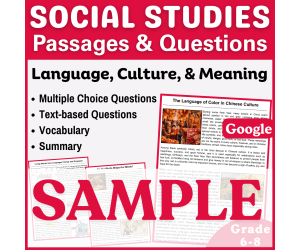
Social Studies SAMPLE Reading Passage: Language, Culture (Google)
ELA, Reading, Reading Comprehension, Strategies, Resources for Teachers, Social Studies, Geography, Sociology, Grade 6, 7, 8, 9, Writing Prompts, Worksheets & Printables, Centers, Activities, Teacher Tools, Assessments, Quizzes and Tests, Quizzes, Tests
This is a ONE PASSAGE SAMPLE. The following is the description of the FULL resource and the downloading links: Social Studies Reading Comprehension Passages: Language, Culture, Meaning (Google) This resource introduces a collection of Social Studies reading comprehension passages about Language, Culture, and Meaning. The passages are carefully designed to bridge the gap between social studies and literacy through strengthening reading comprehension and sparking knowledge curiosity in middle school students. Each passage blends English Language Arts skills with accurate social studies content. Ideal for interdisciplinary learning in ELA and Social Studies. Suitable for Grade 9 review, too! What Is Included in this Collection? There are three informational passages (with full answer keys): Living Words: How Languages Change and Disappear The Language of Color in Chinese Culture Do Our Words Shape Our Minds For Each Passage, students will have multiple tasks to complete as follow: 5 multiple-choice questions targeting main idea, key details, inference, vocabulary in context, and use of evidence 5 vocabulary matching items with clear, student-friendly definitions 5 text-based questions that require citing specific lines or facts 1 summary prompt that asks students to condense central ideas accurately Available Formats for this Resource Fillable PDF Word Docs Google Docs FULL CATALOG OF DOWNLOADING LINKS HERE For more Social Studies Reading Passages, check the following Links: Ancient Civilizations PDF Fillable PDF Word Docs Google Docs Early Empires and Trade Networks PDF Fillable PDF Word Docs Google Docs The Founding of the United States PDF Fillable PDF Word Docs Google Docs Language, Culture, and Meaning PDF Fillable PDF Word Docs Google Docs Psychology and Society PDF Fillable PDF Word Docs Google Docs Global Festivals and Traditions PDF Fillable PDF Word Docs Google Docs Extreme Environments and People PDF Fillable PDF Word Docs Google Docs Food, Culture, and Preservation PDF Fillable PDF Word Docs Google Docs Global Food Customs PDF Fillable PDF Word Docs Google Docs Media, Communication, and Popular Culture PDF Fillable PDF Word Docs Google Docs Human Impact on the Environment PDF Fillable PDF Word Docs Google Docs Civic Action and Social Change PDF Fillable PDF Word Docs Google Docs Fashion, Society, and Power PDF Fillable PDF Word Docs Google Docs People, Places, and Unusual Histories PDF Fillable PDF Word Docs Google Docs Product Details Length: 13 pages total Grades: 6–8, also suitable for Grade 9 review Use cases: close reading, stations, homework, intervention, test prep, and sub plans Why Teachers Choose This Set Authentic social studies content paired with rigorous literacy practice Consistent task structure across all passages for easier planning and smoother student routines Clear, age-appropriate writing that builds confidence without oversimplifying Use this set to reinforce ELA skills in social studies, to add literacy to your lessons, and to support independent work. The passages strengthen main idea, evidence use, vocabulary in context, inference, cause and effect, and summary writing. With ready-to-use assessments and complete answer keys, you can provide focused practice that is simple to run and fast to review.
Author CORED Education - Middle & High School
Rating
Tags Middle School, Reading Comprehension, Reading Strategies, ELA, Centers, Reading Passage, Assessments, Vocabulary, Social Studies
Atlantis Reading Comprehension Passage - Cored Ed Encyclopedia
ELA, Language Development, Reading Comprehension, Reading, Social Studies, Writing, Vocabulary, Geography, History, History: Ancient, Grade 2, 3, 4, 5, Worksheets & Printables, Worksheets, Teacher Tools, Centers, Activities, Writing Prompts, Assessments, Quizzes and Tests, Quizzes, Lesson Plans
This Atlantis reading comprehension with lesson plan includes: Visualization (on the front cover) Start your lesson by taking a minute to think and share something about the topic. Read the script aloud (slowly), perhaps prepare some music or sound effects. Student close their eyes and let their imaginations wander. Students open their eyes, read the question aloud and give them a few minutes to complete. Ask a few students to share or keep answers until the end to compare with what they learn in the passage. Quick pause—thousands of Cored Education products are included with your TeachSimple membership. Download links and encyclopedia index available here. Pre-Reading Trivia Students will write down one thing they already know about the subject and then read five more facts and discuss. These facts are fun, and the students will enjoy learning about the subject before reading more. Give 1 minute for students to write what they already know (no pressure—best guess is fine). Read the five facts together. After each fact, do ask a student for their opinion, was it surprising? Set a purpose by asking students to highlight/underline one fact they want to learn more about during the reading. Reading Passage The text is a high-interest reading passage with set paragraphs, roughly three to four paragraphs long. It contains a variety of themes about the topic, anywhere from history to technology. The passage is between 250 and 350 words in length. First, ask students to look at the headings and see what they’ll learn about today. What do they know about the topic/heading? First read options: Teacher read-aloud (best for support). Partner reading (paragraph by paragraph). While reading, students underline important details, and vocabulary words they think may come up in the questions section. Mixed Questions The first question page contains four multiple-choice questions, each with a choice of four answers, and three written response questions that require a sentence or two from the student. Students complete the mcqs first independently, then review quickly as a class. For the 3 written responses, try to get students giving the answer with some form of evidence: “I think ___ because the text says ___.” If students get stuck, send them back to check the passage. Vocabulary Questions Practice seven key words from the text in this section across two activities. First section is scrambled words where students will unscramble three words given a clue for each. The second section is a word to meaning matching activity. Before starting, have some students read out words they underlined in the passage. Ask students to say the word and read aloud the sentence(s) around each word. Ask students to do scrambled words and the matching exercise in pairs then go through answers as a class. For the scrambled spelling task, get four pairs to come up to the board and write the words for extra practice with the other student reading out the clue. For the matching task, prompt students to give full sentences: “I matched ___ with ___ because ___.” Creative Writing In this question, the student will be required to write a five to eight sentence paragraph on a question related to the topic. Before starting, ask students write down 3 key ideas they are going to include in their piece. Ask students for ideas to share around the class to help those struggling. Pro writing expectations: 5–8 sentences At least 2 facts or details from the passage At least 2 vocabulary words from the previous page Students read their paragraphs while classmates listen for facts and vocabulary words. Extension Activities This page is optional for fast finishers or to take home. There are several activities, each one requiring a different skill. Do some, do none, do all, completely optional - but you will feel reassured knowing every possibility is planned for. Includes summary writting question and additional facts. Answer Key There are answers for the multiple-choice questions, written response questions have sample answers, vocabulary answers and if there is a summary question then a sample summary will be provided as well. Lesson Plan Included Customized lesson plan for this lesson is included. Lesson Snapshot Title: Atlantis Genre: Nonfiction (informational passage about a myth/story’s origins and meaning) Subject: Reading (Informational Text) / Social Studies (Myths & ancient world references) Primary Topic: Atlantis in writing, details, and “lesson” meaning Estimated Guided Reading Level (A–Z): T What This Lesson Teaches Best Identifying where an idea “first appears in writings” and tracking its source (the passage names Plato and two dialogues). Visualizing and describing setting details from informational text (rings of water, bridges, gates, canals, temples, palace). Cause/effect in a legend: how pride and disrespect lead to destruction (earthquakes, floods, island vanishes; travel becomes hard). Distinguishing story-meaning vs scientific proof: stories can warn; science looks for “rocks, ruins, and dates.” Understanding how a name becomes a symbol for “anything lost and longed for” and why mysteries keep people thinking. Learning Goals Students will identify where the Atlantis story first appears and name the two dialogues the passage lists. Students will describe Atlantis’s “circles of water” using details from the passage (moats, bridges, gates, canals). Students will explain what events cause the island to vanish and how the water changes afterward. Students will summarize why people keep hunting for a real location and what “most scholars” think instead. Students will compare what the passage says stories do versus what science asks for. Students will explain how the passage describes Atlantis as a “shortcut” for things that are lost. Key Vocabulary From the Text dialogues — written conversations between speakers. moats — water ditches around a place. canals — water paths that boats can travel on. clogged — blocked so movement becomes difficult. scholars — people who study a topic deeply. FULL CATALOG OF DOWNLOAD LINKS AND ENCYCLOPEDIA INDEX HERE
Author Cored Education
Rating
Tags Vocabulary, Reading Comprehension, Reading Passages, Lesson Plans, Ela Lesson Plans, Reading Comprehension Lesson Plans, Pre-reading, History, History Lesson Plans, Geography
Ballet Reading Comprehension Passage - Cored Ed Encyclopedia
ELA, Language Development, Reading Comprehension, Reading, Social Studies, Writing, Vocabulary, History, Dance, Creative Arts, Grade 2, 3, 4, 5, Worksheets & Printables, Worksheets, Teacher Tools, Centers, Activities, Writing Prompts, Assessments, Quizzes and Tests, Quizzes, Lesson Plans
This ballet reading comprehension with lesson plan includes: Visualization (on the front cover) Start your lesson by taking a minute to think and share something about the topic. Read the script aloud (slowly), perhaps prepare some music or sound effects. Student close their eyes and let their imaginations wander. Students open their eyes, read the question aloud and give them a few minutes to complete. Ask a few students to share or keep answers until the end to compare with what they learn in the passage. COMPANION VIDEO NOW AVAILABLE (EMBEDDED AFTER PREVIEW PICTURES IN PRODUCT DESCRIPTION) Quick pause—thousands of Cored Education products are included with your TeachSimple membership. Download links and encyclopedia index available here. Pre-Reading Trivia Students will write down one thing they already know about the subject and then read five more facts and discuss. These facts are fun, and the students will enjoy learning about the subject before reading more. Give 1 minute for students to write what they already know (no pressure—best guess is fine). Read the five facts together. After each fact, do ask a student for their opinion, was it surprising? Set a purpose by asking students to highlight/underline one fact they want to learn more about during the reading. Reading Passage The text is a high-interest reading passage with set paragraphs, roughly three to four paragraphs long. It contains a variety of themes about the topic, anywhere from history to technology. The passage is between 250 and 350 words in length. First, ask students to look at the headings and see what they’ll learn about today. What do they know about the topic/heading? First read options: Teacher read-aloud (best for support). Partner reading (paragraph by paragraph). While reading, students underline important details, and vocabulary words they think may come up in the questions section. Mixed Questions The first question page contains four multiple-choice questions, each with a choice of four answers, and three written response questions that require a sentence or two from the student. Students complete the mcqs first independently, then review quickly as a class. For the 3 written responses, try to get students giving the answer with some form of evidence: “I think ___ because the text says ___.” If students get stuck, send them back to check the passage. Vocabulary Questions Practice seven key words from the text in this section across two activities. First section is scrambled words where students will unscramble three words given a clue for each. The second section is a word to meaning matching activity. Before starting, have some students read out words they underlined in the passage. Ask students to say the word and read aloud the sentence(s) around each word. Ask students to do scrambled words and the matching exercise in pairs then go through answers as a class. For the scrambled spelling task, get four pairs to come up to the board and write the words for extra practice with the other student reading out the clue. For the matching task, prompt students to give full sentences: “I matched ___ with ___ because ___.” Creative Writing In this question, the student will be required to write a five to eight sentence paragraph on a question related to the topic. Before starting, ask students write down 3 key ideas they are going to include in their piece. Ask students for ideas to share around the class to help those struggling. Pro writing expectations: 5–8 sentences At least 2 facts or details from the passage At least 2 vocabulary words from the previous page Students read their paragraphs while classmates listen for facts and vocabulary words. Extension Activities This page is optional for fast finishers or to take home. There are several activities, each one requiring a different skill. Do some, do none, do all, completely optional - but you will feel reassured knowing every possibility is planned for. Includes summary writting question and additional facts. Answer Key There are answers for the multiple-choice questions, written response questions have sample answers, vocabulary answers and if there is a summary question then a sample summary will be provided as well. Lesson Plan Included Customized lesson plan for this lesson is included. Lesson Snapshot Title: Ballet Genre: Nonfiction (informational passage) Subject: Arts (Dance) / Reading (Informational Text) Primary Topic: How ballet began, changed, and is practiced today Estimated Guided Reading Level (A–Z): S What This Lesson Teaches Best How ballet began in Renaissance palace courts, with dancing as part of celebrations. How ballet shifted from joining in to watching a performance “from the sides.” How ballet grew in France through royal support, including **Louis XIV starting a dance academy to set training rules and approve teachers. How stage design affected what audiences saw (the “proscenium arch” helped viewers see clearer lines and sharper footwork). How ballet tells stories without words using movement plus music, costumes, and a bit of mime, and how pointe shoes and lighter skirts changed the look. Learning Goals Describe where early ballet began and what events it was part of. Explain how ballet changed when people began watching instead of joining in. Identify what happened in 1661 and why it mattered for ballet training. Describe how the proscenium arch affected what audiences could see. Explain how ballet can show feelings and stories “without words,” using details from the text. Describe how ballet is practiced today (studios worldwide, barre work, and careful technique for growing bodies). Key Vocabulary From the Text Renaissance — a time in Europe with art, learning, and change. nobles — people from wealthy or high-ranking families. proscenium — a stage frame that shapes the audience’s view. pointe — dancing on the tips of the toes. barre — a rail dancers hold while practicing in class. FULL CATALOG OF DOWNLOAD LINKS AND ENCYCLOPEDIA INDEX HERE
Author Cored Education
Rating
Tags Vocabulary, Reading Comprehension, Reading Passages, Lesson Plans, Ela Lesson Plans, Reading Comprehension Lesson Plans, Pre-reading, History, Art, Dance Lesson Plans
How Languages Change: Social Studies Reading Passage (Word)
ELA, Reading, Reading Comprehension, Strategies, Resources for Teachers, Social Studies, History, History: World, Grade 6, 7, 8, 9, Writing Prompts, Worksheets & Printables, Centers, Activities, Teacher Tools, Assessments, Quizzes and Tests, Quizzes, Tests
How Languages Change and Disappear: Social Studies Reading Comprehension Passage (Word) This resource introduces a unique Social Studies reading comprehension passage with questions about How Languages Change and Disappear. The passage is carefully designed to bridge the gap between social studies and literacy through strengthening reading comprehension and sparking knowledge curiosity in middle school students. Each passage blends English Language Arts skills with accurate social studies content . Ideal for interdisciplinary learning in ELA and Social Studies. Suitable for Grade 9 review, too! Student Tasks throughout the passage: 5 multiple-choice questions targeting the following skills: main idea, key details, inference, vocabulary in context, and use of evidence 5 vocabulary matching items with clear, student-friendly definitions 5 text-based questions that require citing specific lines or facts 1 summary prompt that asks students to condense central ideas accurately Full answer key for every section Available Formats for this Resource: PDF Fillable PDF Google Docs FULL CATALOG OF DOWNLOADING LINKS HERE Social Studies Reading Comprehension Collection Links: 1. Ancient Civilizations PDF Fillable PDF Word Docs Google Docs 2. Early Empires and Trade Networks PDF Fillable PDF Word Docs Google Docs 3. The Founding of the United States PDF Fillable PDF Word Docs Google Docs 4. Language, Culture, and Meaning PDF Fillable PDF Word Docs Google Docs 5. Psychology and Society PDF Fillable PDF Word Docs Google Docs 6. Global Festivals and Traditions PDF Fillable PDF Word Docs Google Docs 7. Extreme Environments and People PDF Fillable PDF Word Docs Google Docs 8. Food, Culture, and Preservation PDF Fillable PDF Word Docs Google Docs 9. Global Food Customs PDF Fillable PDF Word Docs Google Docs 10. Media, Communication, and Popular Culture PDF Fillable PDF Word Docs Google Docs 11. Human Impact on the Environment PDF Fillable PDF Word Docs Google Docs 12. Civic Action and Social Change PDF Fillable PDF Word Docs Google Docs 13. Fashion, Society, and Power PDF Fillable PDF Word Docs Google Docs 14. People, Places, and Unusual Histories PDF Fillable PDF Word Docs Google Docs Product Details: Length: 5 pages Grades: 6–8, also suitable for Grade 9 review Use cases: close reading, stations, homework, intervention, test prep, and sub plans Why Teachers Choose This Passage: Authentic social studies content paired with rigorous literacy practice Consistent task structure for easier planning and smoother student routines Clear, age-appropriate writing that builds confidence without oversimplifying Use this passage to reinforce ELA skills in social studies, to add literacy to your lessons, and to support independent work. The passage strengthens main idea, evidence use, vocabulary in context, inference, cause and effect, and summary writing. With ready-to-use assessments and complete answer keys, you can provide focused practice that is simple to run and fast to review.
Author CORED Education - Middle & High School
Rating
Tags Middle School, Reading Comprehension, Reading Strategies, ELA, Centers, Reading Passage, Assessments, Vocabulary, Social Studies, WORLD HISTORY

ESL Novel Study Worksheets - Orlando - Virginia Woolf
ELA, Language Development, ESL, Vocabulary, Literature, Creative Writing, Writing, Formal Writing, Grade 7, 8, 9, 10, 11, 12, Worksheets & Printables, Novel Studies, Worksheets, Writing Prompts
ESL Novel Study Worksheets - Orlando - Virginia Woolf This ESL - EFL - TESOL (English Second or Foreign Language) teaching resource is a comprehensive novel study worksheet activity (2 printable PDF pages; Worksheets) focused on the novel "Orlando" (Novel by British author Virginia Woolf - Literature). This Novel Study worksheets on "Orlando" (Novel by British author Virginia Woolf - Literature) is tailored for middle and high school ESL students (7th – 12th grade) and provide a variety of thought provoking and language building activities. Whether you're teaching English as a Second Language (ESL), English as a Foreign Language (EFL), or in a TESOL context, this resource is classroom-ready and easy to use. Within this ESL Novel Study on "Orlando - Virginia Woolf - Literature" (2 printable PDF worksheets pages), English Second or Foreign Language (ESL - EFL - TESOL - TEFL) teachers can find the following activities: General information activity (author, genre, publishing date) Vocabulary building section – new words from the novel 1 Story timeline Personal reflection on a favorite chapter Student novel review and rating Creative writing task : pretending being a character you personally liked and writing 3 diary pages for 3 scenes as if you were this character This English Second or Foreign Language (ESL EFL) Novel Study Activity Worksheets on the "Orlando" (Novel by British author Virginia Woolf - Literature) can be ideal for learners from 7th grade to 12th grade to study this Novel (middle school + High School Students + Adult learners + University Students) ESL with Alan is a high-quality ESL teaching resources that inspire both teachers and students. Our goal is to make learning English fun, interactive, and meaningful. Discover more English Second or Foreign Language activities by visiting our store – because learning English should always be fun! If you want to browse more of my English Language and Literature Novel Study Activity Teaching Resources, click here ESL with Alan!
Author Learning with Alan
Rating
Tags ESL, English, English Second Language, Literature, Orlando, Virginia Woolf, Novel Study, Worksheets, Printable, Activity