Stories & imaginative writing
Fun Writing Activities: Creative Writing Prompts
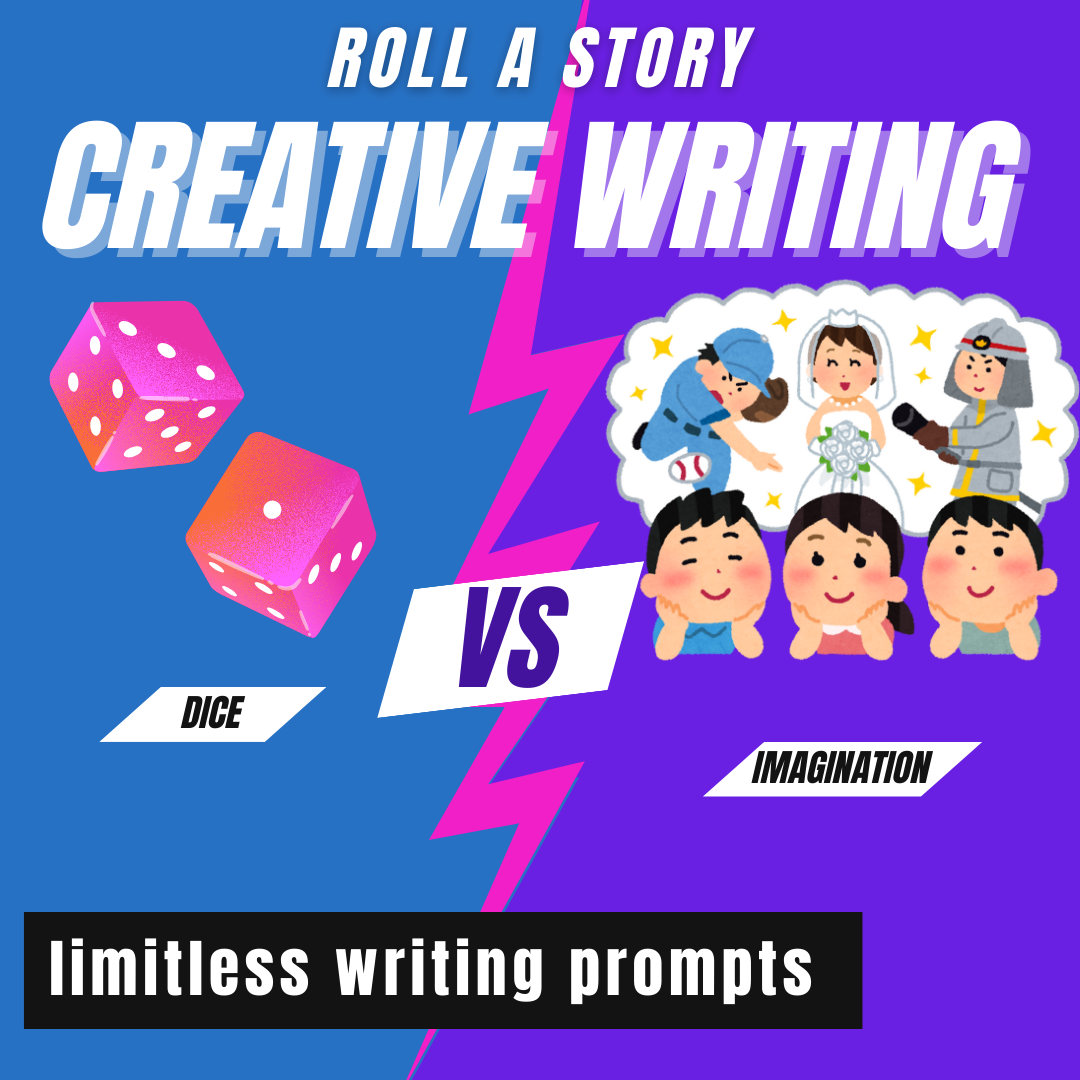
Generate creative writing prompts by having students roll a die to randomly select a character, setting, and problem for a story.




Classroom resources
Develop high-school creative writing with story starters, poetry and descriptive prompts, personal reflection and creative responses to literature. Guided lessons and supporting analytical writing offer ways to extend the initial ideas.
Browse by lesson focus
Choose the topic or kind of practice you need.
Showing 1–24 of 351 resources

 Show filters
 Generate creative writing prompts by having students roll a die to randomly select a character, setting, and problem for a story.
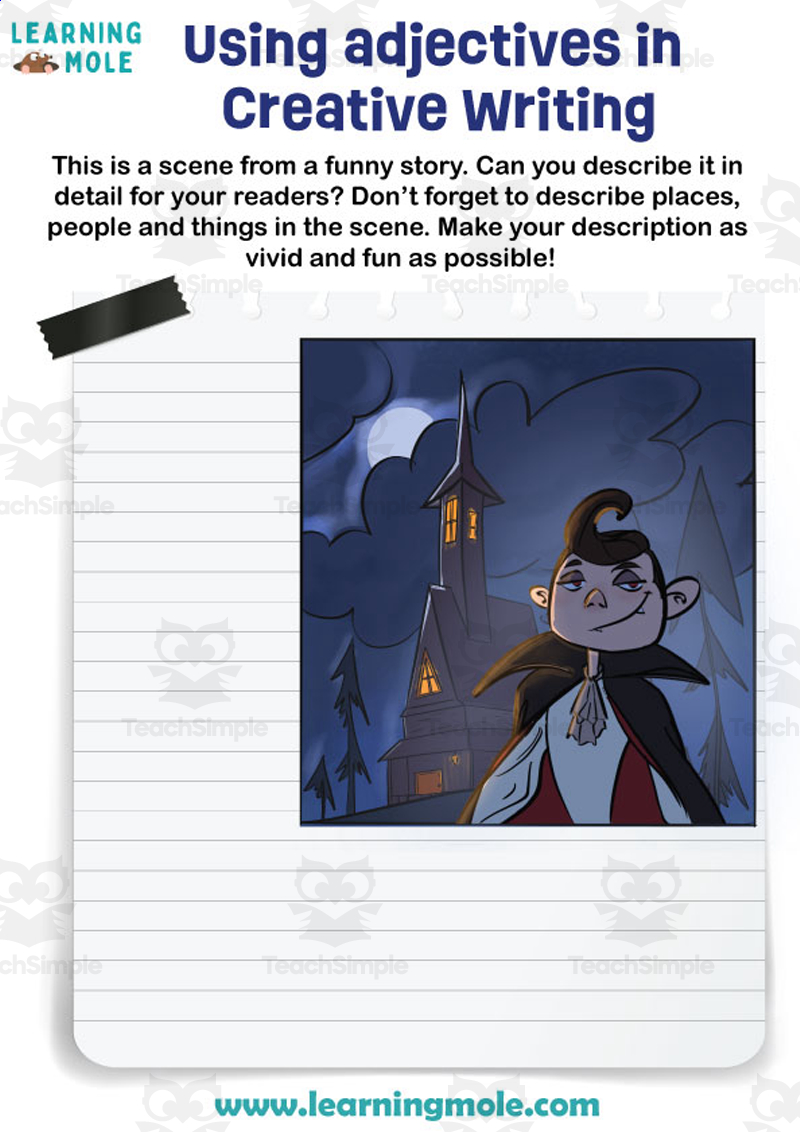
A single-page creative writing prompt asking students to use adjectives to vividly describe a humorous illustrated scene.
Google Slideshow of 24 creative writing prompts to inspire student writing across genres and moods, with an elements-of-fiction mini-lesson.

A creative-writing prompt that has students invent an original monster character (with a drawing and fact sheet) and then write a graded short story featuring that monster.
Give middle/high school students short, targeted creative writing exercises that isolate and practice five literary devices (Details, Diction, Imagery, Point of View, and Tone) one at a time, building creative writing skills incrementally.
Google Slideshow of creative writing prompts (second in a series) to inspire student writing, with mini-lessons on story elements and dialogue.

A Google Slides-based set of 14 creative-writing prompts, each combining a character, situation, prop, setting, and phrase, to inspire short stories and flash fiction across genres (realistic fiction, fantasy, science fiction, mystery).
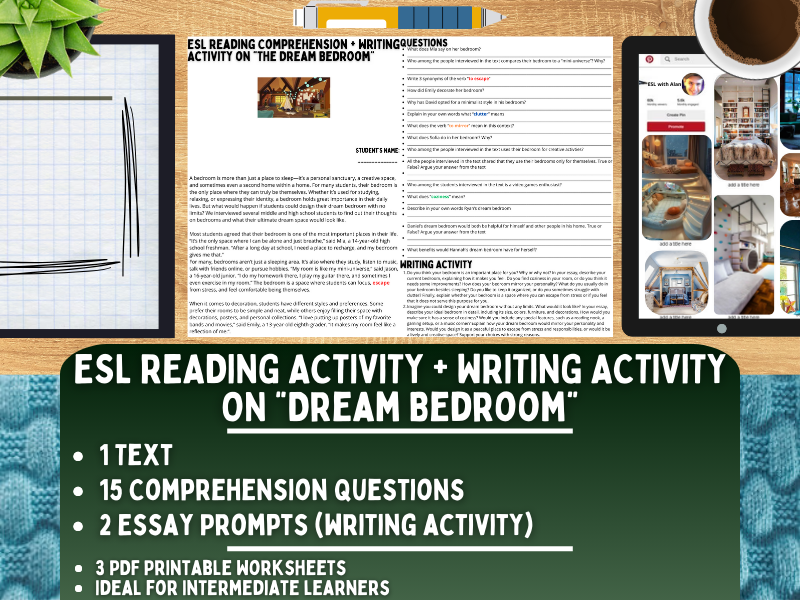
Give ESL/EFL students a nonfiction reading passage about students' views on their bedrooms and designing a dream bedroom, paired with comprehension checks and essay writing prompts to build reading and writing skills.
A month's worth of daily ELA "bell ringer" warm-up writing prompts for June 2025, for middle and high school ELA classrooms, summer-themed.
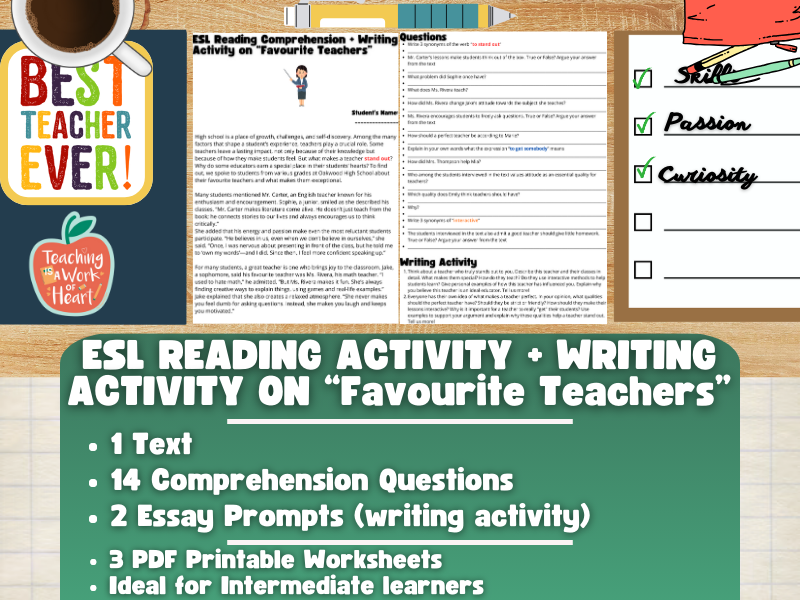
Give ESL/EFL students a nonfiction reading passage about what makes a favourite/memorable teacher, based on student interviews, paired with comprehension checks and essay writing prompts to build reading and writing skills.
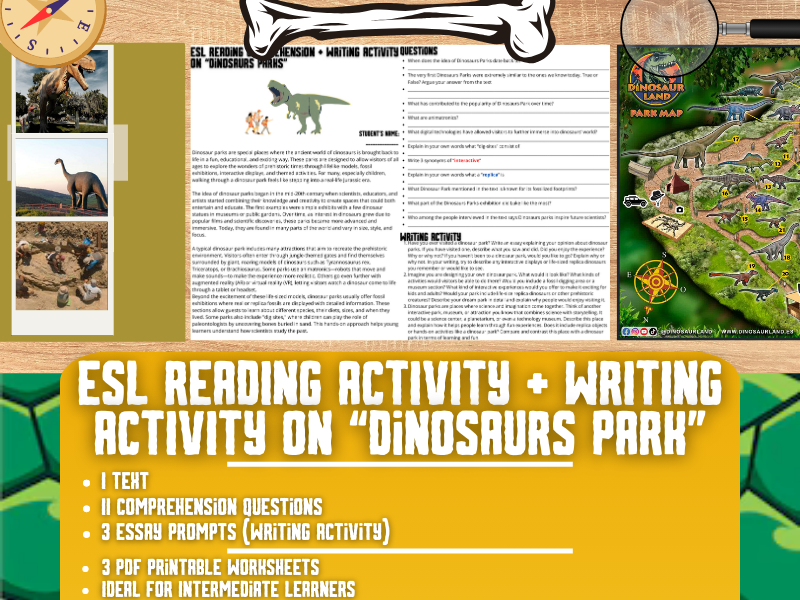
Give ESL/EFL students a nonfiction reading passage about dinosaur theme parks and their educational and entertainment role, paired with comprehension checks and essay writing prompts to build reading and writing skills.
Students choose a farm animal’s voice and write Boxer’s eulogy as a short narrative or poem. The assignment asks them to incorporate and annotate at least two literary devices and include a cited quotation from the novel. Model eulogies and a rubric support planning, drafting and feedback.
Provide 90 daily writing prompts to spark student creative writing over an extended period (e.g., a semester).
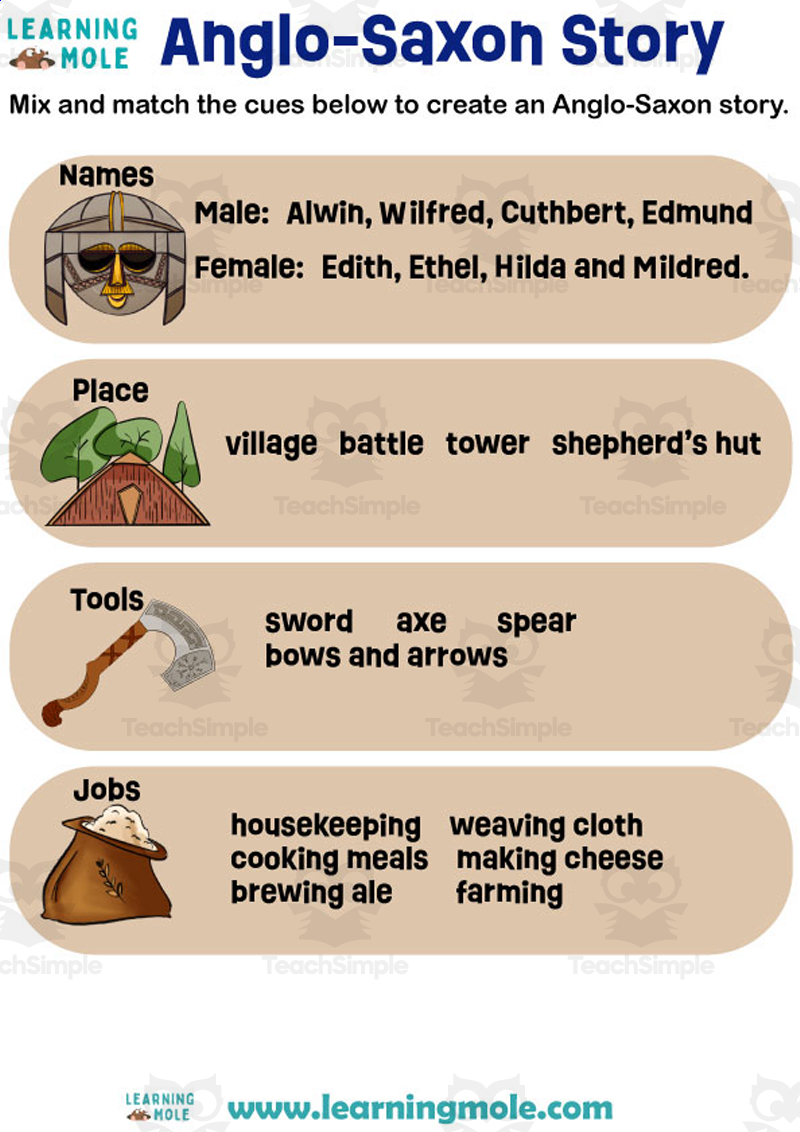
A creative writing prompt sheet that gives students Anglo-Saxon themed vocabulary to build an original story.
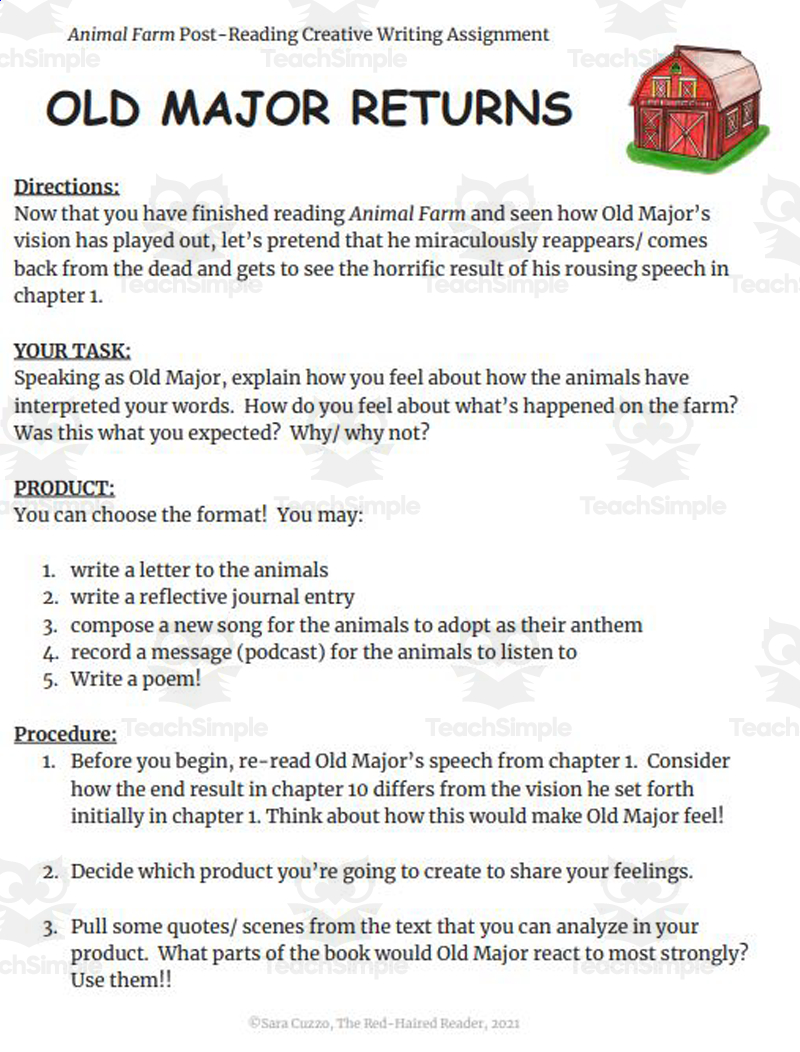
After finishing Animal Farm, students compare Old Major's original vision with what happens by the end of the novel. They choose one of five response formats and write in his voice, drawing on quotations or scenes to explain his reaction. The included rubric focuses on voice, use of text, and proofreading, providing clear points to discuss before students begin.
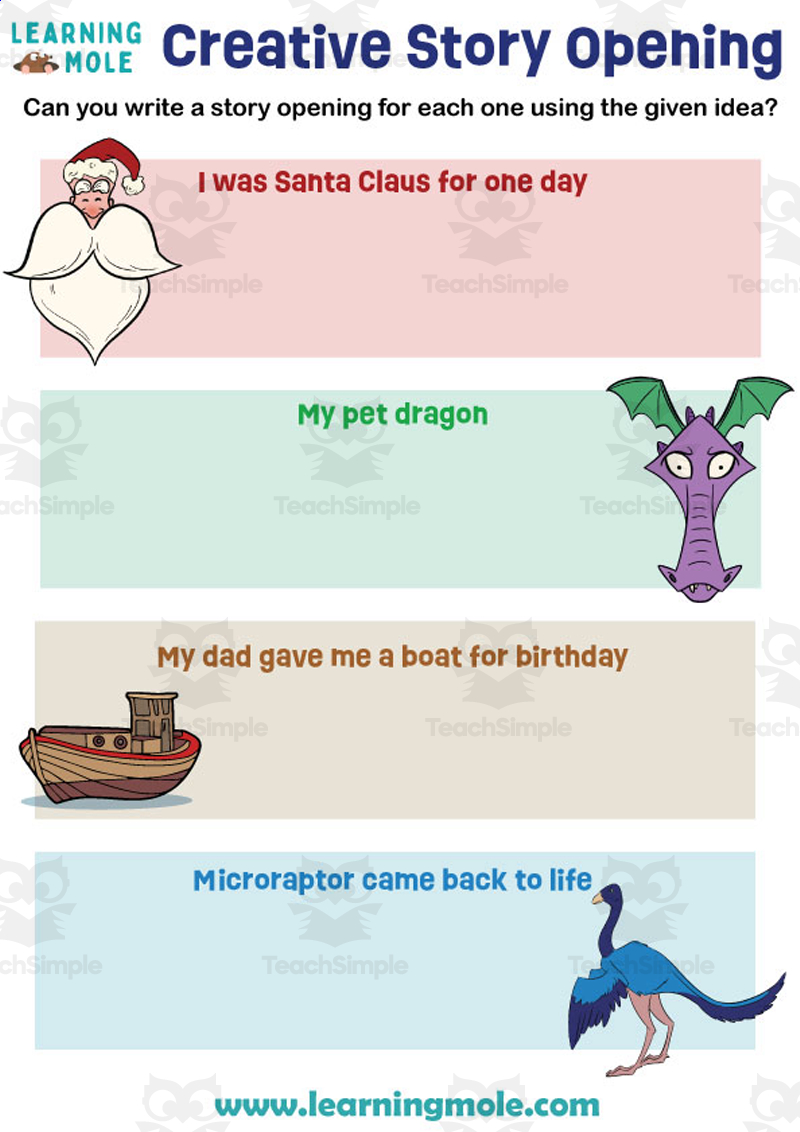
A one-page creative writing prompt sheet giving students several imaginative scenario starters to practice writing story openings.
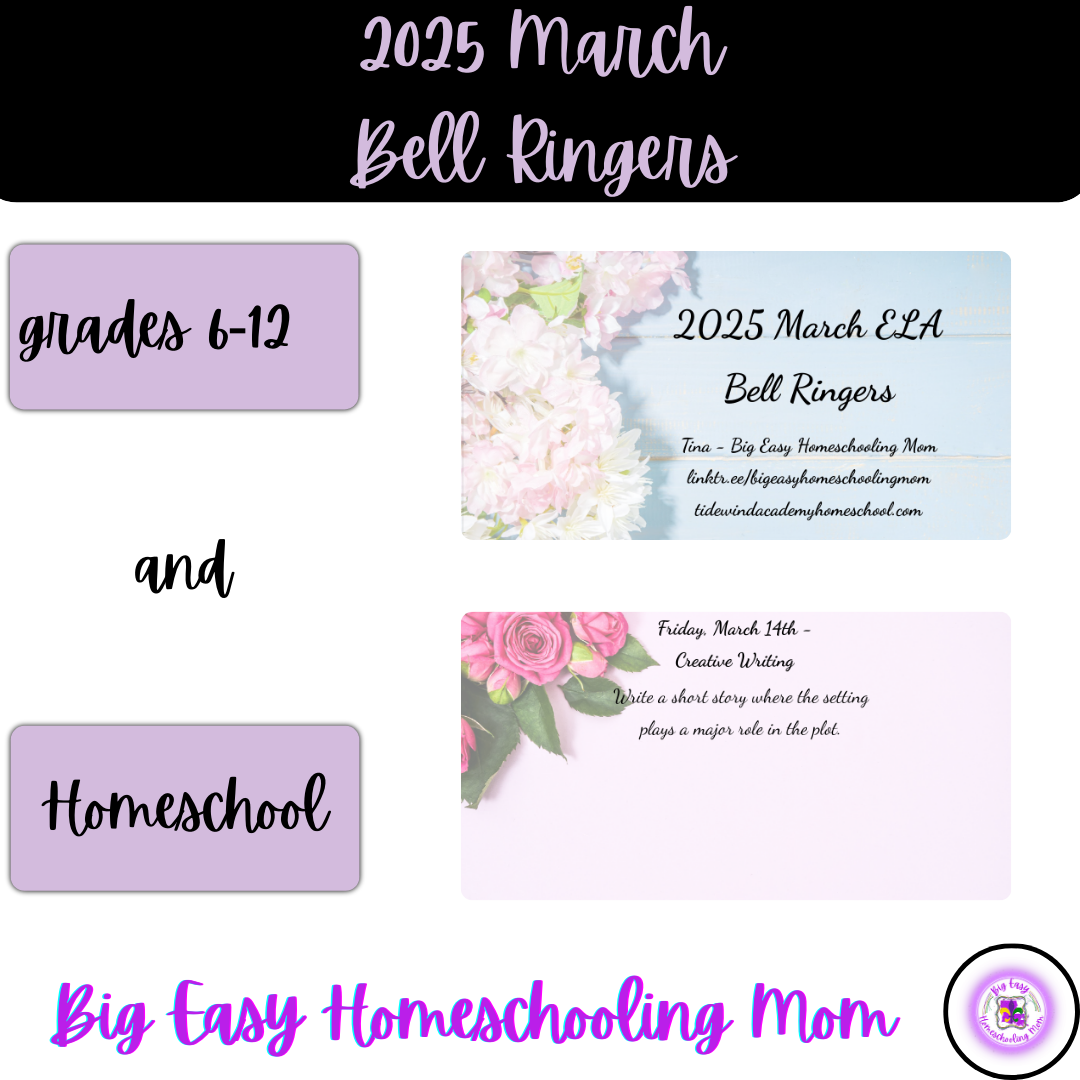
A month's worth of daily ELA "bell ringer" warm-up writing prompts for March 2025, for middle and high school ELA classrooms, spring/Women's History Month-themed.
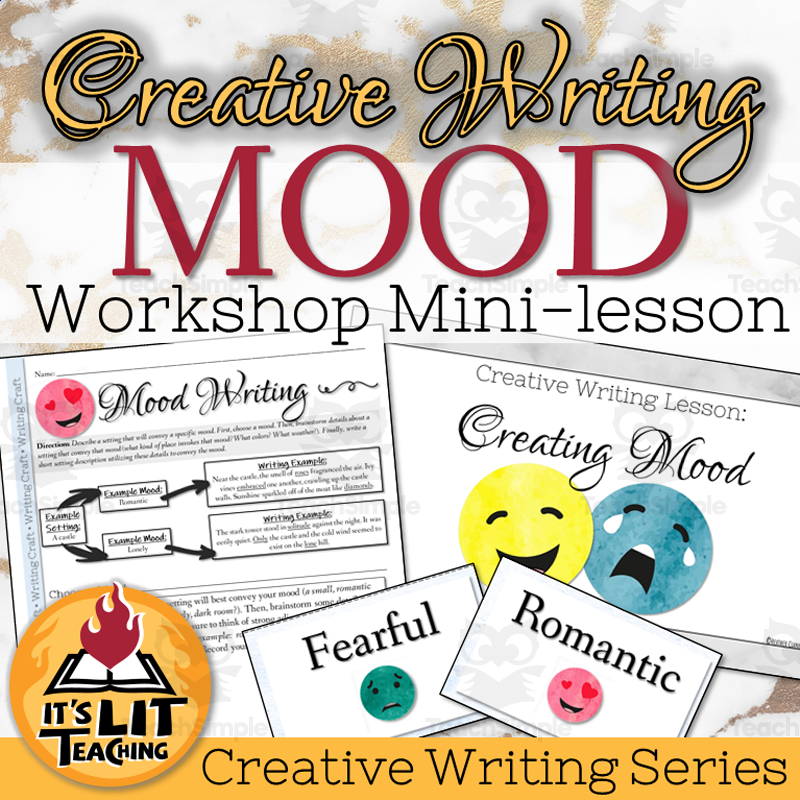
A mini-lesson/workshop teaching secondary students to identify and create mood in writing, using famous paintings as mood-analysis examples (as a whole-class lesson or gallery walk) and a setting-description writing activity.

A creative writing prompt worksheet using a science-fiction space travel scenario, combined with research questions about the solar system and space, culminating in a narrative or diary writing task.
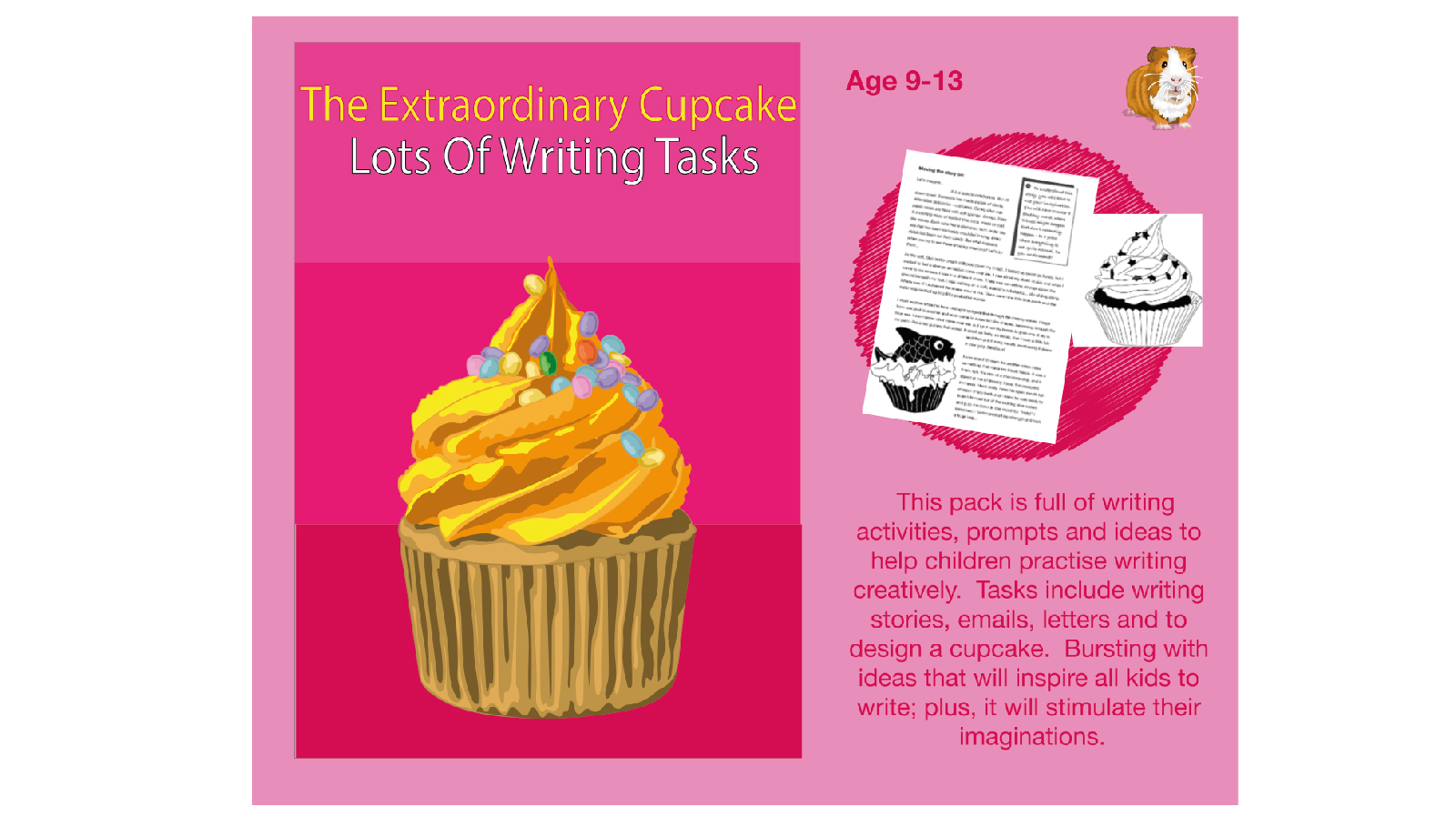
A creative-writing task pack that uses a fantasy narrative (shrinking into a cupcake and discovering an underwater/mermaid world) as a model text, paired with vocabulary building and multiple guided writing prompts for ages 9-13.

An editable graphic organizer centers on the question "Who Am I?" and divides student reflection into four quadrants: Self-Image ("Who do I think I am?"), Public Image ("How do others see me?"), Relationships with Friends and Family, and Culture (ethnic background and place in society). Supporting prompts under each quadrant ask specific reflective questions, such as "What are my personal dreams and goals?", "Do I fit in well in my group of friends?", and "What is the influence of my ethnicity?", giving students concrete starting points rather than one open-ended writing task. The chart is designed as a personal, written self-reflection activity a student completes individually, making it suitable as a stand-alone SEL exercise or as a pre-writing tool before a personal-narrative or identity-themed essay.
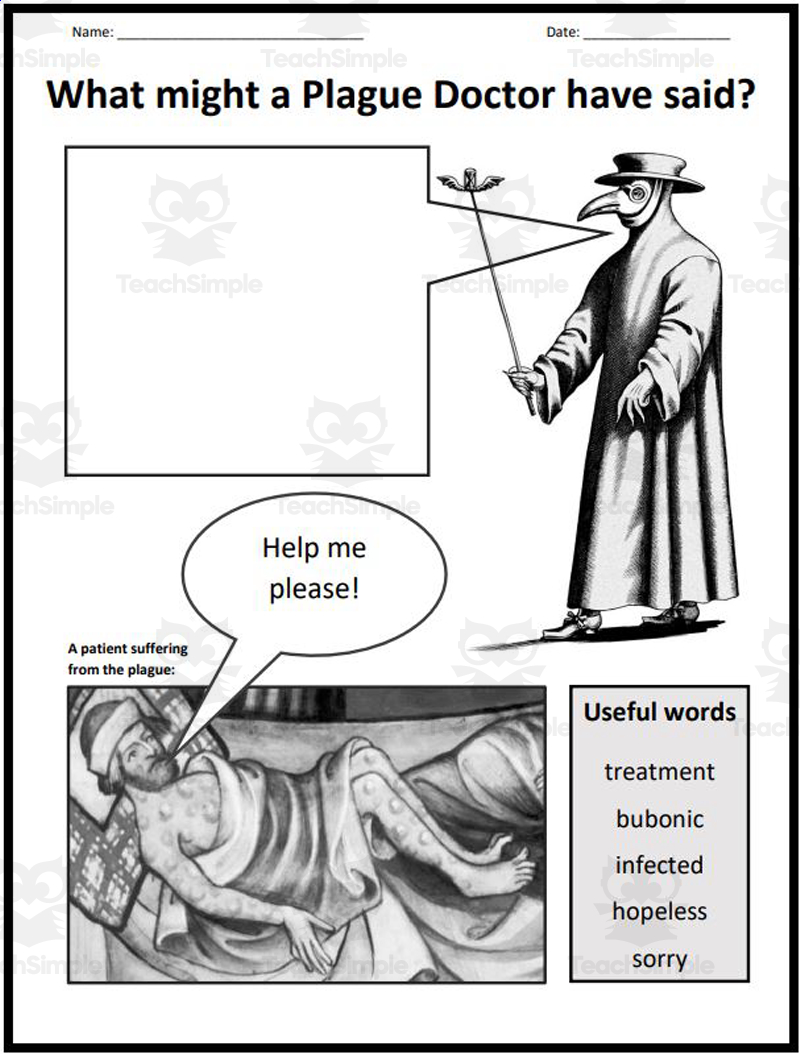
A creative-writing/history worksheet prompting students to imagine and write what a plague doctor might have said to a suffering patient, using a supplied word bank.

A comprehension movie guide for the 1989 film Dead Poets Society, used alongside viewing the film to check understanding of plot, characters, and themes, and to prompt a creative writing response.
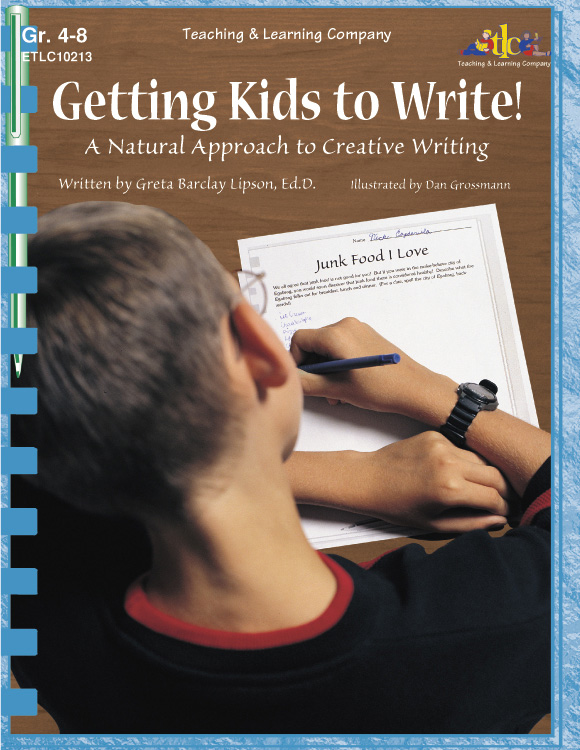
A 114-page reproducible creative-writing book presenting an informal, personal-experience-based approach to teaching writing, with a large collection of open-ended writing topic activities.