2D Shapes Outlines for Craft Templates

- Grades
- Preschool–K, Toddler
- Pages
- 45
- File type
- Preparation
- Print ready


- Subject
- Art, Creative Arts, Math, Geometry
- Topic
- shape outlines, 2d shapes
- Resource types
- Crafts, Activities
- Preparation
- Print ready
About this resource
What's inside this resource
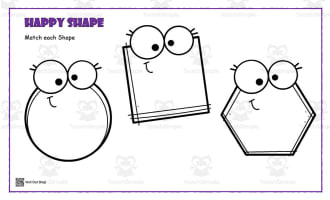
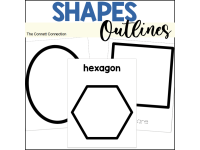
Help students learn to recognize 2D shapes with these shape outlines! Each shape in this resource contains 3 different options for teachers to use with students. The outlines allow teachers to have an easy to use craft template or activity mat for students to practice shape recognition.
Shape Outlines Included:
circle, crescent, diamond, heart, hexagon, pentagon, octagon, oval, rectangle, rhombus, square, star, triangle, trapezoid
Types of Mats Included:
The first set of mats has only the shape centered on a full 8.5X11 sheet of printer paper.
The second set of mats features the shape with the shape name at the top of the page.
The third set of mats features the shape with the shape name at the bottom of the page. The shape name is traceable on this mat.
Each mat features thick, bold lines, making them easy to see and to use for craft templates or manipulative mats. These shape outlines will allow students to have fun, be creative, and stay engaged with learning basic 2D shapes.
Ways to Use:
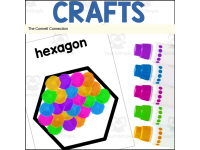
Craft Templates - The mats are perfect for crafts. The teacher needs to add the desired craft material for students to fill in each shape.
Bulletin Board Shapes - The teacher (or students) can cut out the shapes to include on a bulletin board, or teachers can use the finish crafts as a display.
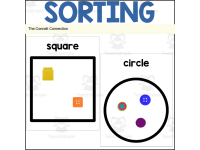
Manipulative Mats - The shape mats can be used in several ways as manipulative mats. They can be used to sort objects by shape, or students can use stickers or mini erasers to line the edges of each shape.
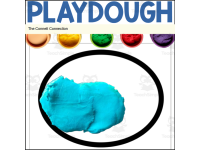
Playdough Mats - Students can use playdough to build each shape by placing the dough around the perimeter of the shape or by filling the area of the shape with playdough.
These shape outlines are no-prep. They just need to be printed and used. The teacher just needs to add the desired method of completion to create a fun shape recognition activity.
Related resources
More resources teachers may find useful
24 related resources were found using this product's title, contributor, categories and tags.
In the classroom
Teaching tips & learning objectives

Learning objectives
Match a printed shape name to its outline across the two labeled page sets.
Recognize and name the 14 basic 2D shapes represented (circle, square, rectangle, triangle, rhombus, trapezoid, hexagon, octagon, pentagon, oval, star, diamond, heart, crescent).

Teaching tips
Use the unlabeled outline set first for open-ended coloring, playdough building or craft assembly, then move to the two labeled sets to reinforce shape-name recognition.
Print only the specific shapes a lesson needs rather than the full 44-page file, since each shape occupies its own page across all three sets.
Pair the outlines with scissors, glue, counters or playdough, since the file itself supplies the templates only and no additional materials. Introduce Spanish names alongside the outlines with these Spanish shape tracing pages.

Skills covered
Shape recognition -- students match each 2D shape's printed name to its outline across the two labeled page sets.
Shape naming -- students practice naming circle, square, rectangle, triangle, rhombus, trapezoid, hexagon, octagon, pentagon, oval, star, diamond, heart and crescent from the individual outline pages.
Fine-motor cutting and tracing -- the bold, thick-lined outlines are sized for scissors or tracing work when used as a craft or bulletin-board template.

No reviews yet
Downloaded this resource? Tell other teachers how it went.
Curriculum
Standards, concepts & topics
Standards
 Standards
- K.G. — Identify and describe shapes (squares, circles, triangles, rectangles, hexagons, cubes, cones, cylinders, and spheres).
- K.G.A.1 — Describe objects in the environment using names of shapes, and describe the relative positions of these objects using terms such as above, below, beside, in front of, behind, and next to.
- K.G.A.2 — Correctly name shapes regardless of their orientations or overall size
Core concepts
 Core concepts
2D shapes
shape recognition
shape names
 Topics
Explore more
Categories this resource belongs to
Explore related searches
More to explore
You may also like