Math Bingo Printable 4th Grade


- Grades
- Grade 4, Elementary
- File type
- Preparation
- Print ready


- Subject
- Math, Decimals, Fractions, Measurements, Multiplication and Division
- Topic
- bngo games , 4th grade math
- Resource types
- Activities, Games
- Preparation
- Print ready
About this resource
What's inside this resource
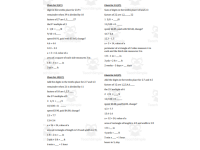
This file contains questions for multiple 4th grade math bingo games. The topics covered are place value, remainder in division, factors, multiples, converting fractions to decimal, adding and subtracting decimals, area and perimeter, finding change with money, and converting mixed numbers to improper fractions. There are blank bingo cards for you to use. Students can create their own boards or you can easily make them.
Directions for Bingo Game 1. Have students make a 4 x 4 Bingo Board or pass out the included blank boards. Students will fill in the numbers 1 -16 in random order on their board. This way everyone will have all answers, but will have a different board. 2. As the teacher, you will choose the questions you ask, one question per number. Use a highlighter to mark the questions you ask. This way you will keep track and not repeat an answer.
Each time you play Bingo, use a different color highlighter. 3. Ask about 8- 10 questions per game. You will usually have 5-6 students to bingo with this many questions, if you have at least 20 students. I give out a piece of candy for bingos. 4. You have enough questions for about 12-15 games.
Related resources
More resources teachers may find useful
24 related resources were found using this product's title, contributor, categories and tags.



In the classroom
Teaching tips & learning objectives

Learning objectives
Students identify decimal place value (tenths and hundredths) from given numbers.
Students find remainders in division and list factors or identify multiples of a number.
Students convert between fractions and decimals and solve one-step addition equations.

Teaching tips
Use a highlighter to mark each clue as it's asked, and switch highlighter colors between games, exactly as the directions specify, to avoid repeating a clue.
Plan for about 8-10 clues per round when playing with 20 or more students, per the included directions.
Rotate which of the 16 numbered clue sets you draw from each game so the same 12-15 games don't repeat identical clues.

Skills covered
Decimal place value identification — students name the digit in the tenths or hundredths place for numbers like 0.14 or 2.37.
Division remainders and factors/multiples — students find remainders (e.g. 23 divided by 6) and list factors or multiples of a given number.
Fraction-decimal conversion and one-step equations — students convert fractions like 3/10 to decimal form and solve equations such as a + 8 = 11.
Good to know
Questions teachers ask about this resource
How does each numbered clue set guarantee students mark the correct square on their board?
Every clue within a numbered set (e.g. all of 'Clues for 7') is written so its correct solution equals that set's own number, so whichever clue the teacher reads, students mark the matching number on their board.

No reviews yet
Downloaded this resource? Tell other teachers how it went.
Curriculum
Standards, concepts & topics
Standards
 Standards
- 4.NBT.B.6 — Find whole-number quotients and remainders with up to four-digit dividends and one-digit divisors, using strategies based on place value, the properties of operations, and/or the relationship between multiplication and division. Illustrate and explain the calculation by using equations, rectangular arrays, and/or area models.
- 4.OA.B.4 — Find all factor pairs for a whole number in the range 1–100. Recognize that a whole number is a multiple of each of its factors. Determine whether a given whole number in the range 1–100 is a multiple of a given one-digit number. Determine whether a given whole number in the range 1–100 is prime or composite.
- 4.NF.C.6 — Use decimal notation for fractions with denominators 10 or 100. For example, rewrite 0.62 as 62/100; describe a length as 0.62 meters; locate 0.62 on a number line diagram.
Core concepts
 Core concepts
decimal place value
factors and multiples
one-step equations
area and perimeter
unit conversion
Topics
 Topics
More to explore
You may also like