7 Teamwork Skills for Students – Visual Mind Map
- Grades
- Not Grade Specific
- Pages
- 8
- File type
- Multiple File Types


- Subject
- Social Emotional Learning (SEL), Social Skills
- Topic
- Teamwork skills, Student leadership
- Resource types
- Posters
Product description
From the author
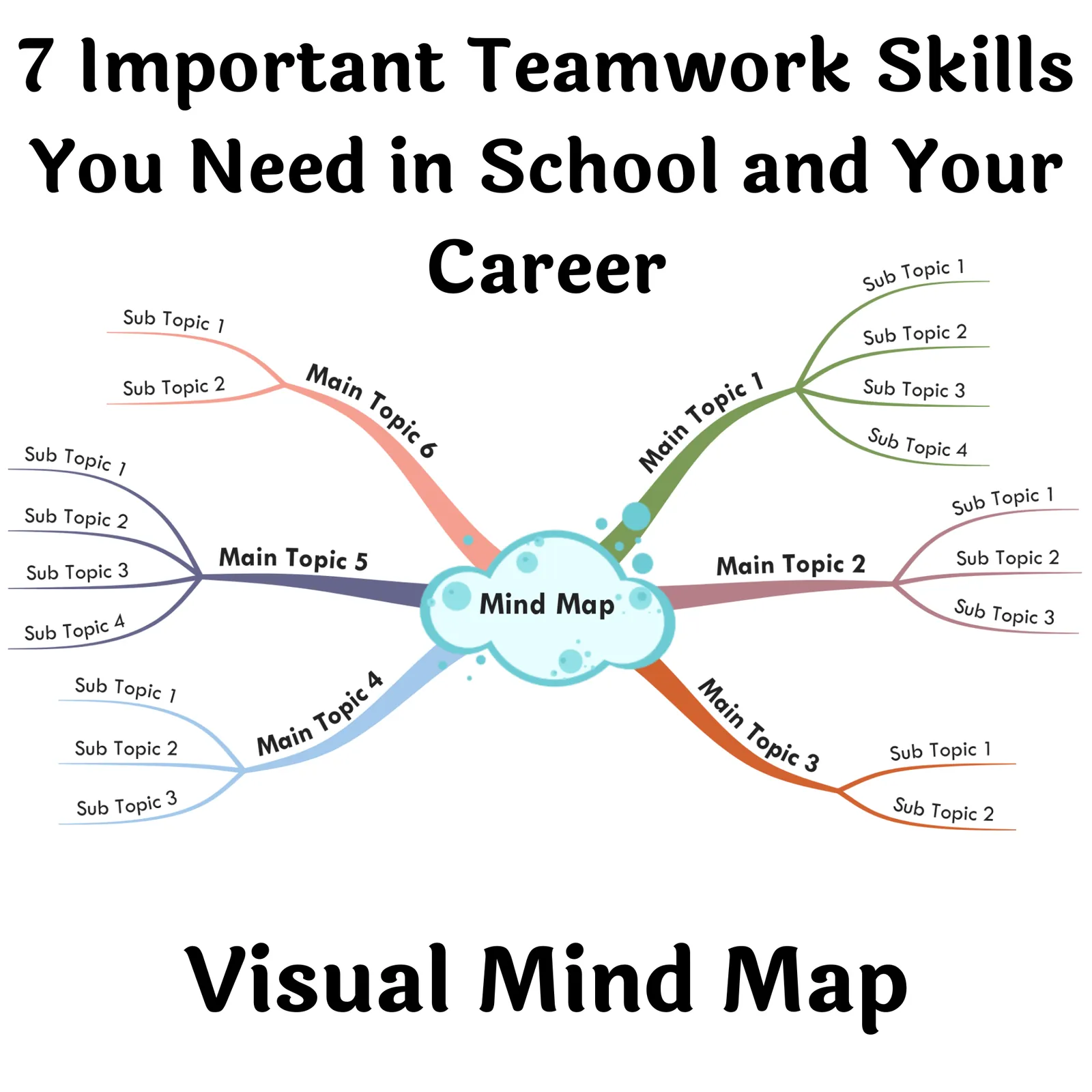
Discuss seven teamwork skills with a visual mind map: communication, time management, problem-solving, listening, critical thinking, collaboration and leadership. Supporting branches connect these ideas with school and workplace situations.
Right-aligned and classic layouts are supplied as PDF, PNG and browser-viewed HTML files. A five-page introduction to mind mapping and a one-page HTML guide accompany the maps. View on a desktop or laptop and zoom into individual branches for easier reading.
Related resources
More resources teachers may find useful
24 related resources were found using this product's title, contributor, categories and tags.


In the classroom
Teaching tips & learning objectives

Learning objectives
Identify seven core teamwork skills and at least one supporting idea for each, using the mind map as a study reference.
Explain how communication, time management, and problem-solving contribute to effective teamwork in a group setting.
Connect each teamwork skill to a real-world example described on its branch, such as balancing multiple deadlines or listening to other viewpoints.

Teaching tips
Open the HTML version in a browser and use zoom controls (Ctrl/Cmd + and -, or Ctrl/Cmd + scroll) so students can explore each of the seven branches without the small text becoming illegible.
Read the map starting at the top-right corner and moving clockwise, following the file's own reading-order instructions, when introducing it as a whole-class visual.
Use the two visual layouts, right-aligned and classic, interchangeably according to your display needs. Review the included personal-use terms before making student copies.

Skills covered
Team communication -- the map details talking openly and honestly about deadlines, responsibilities, and expectations with group members.
Time management -- the map connects balancing multiple deadlines in school to adjusting to a fast-paced, collaborative work environment later on.
Collaborative leadership -- the map explains how leaders spread knowledge, mentor others, and promote collaboration across a team.
Good to know
Questions teachers ask about this resource
Which file should be used if a computer can't open the interactive HTML mind map?
The same seven-skill mind map is also included as a high-resolution PDF and a PNG image, so the content can be printed or viewed without opening the interactive browser version.
Do the Right Aligned and Classic mind map versions cover different content?
No -- both layouts present the same seven teamwork skills and supporting details; only the visual arrangement of the branches differs, so either can be chosen based on display or printing preference.

No reviews yet
Downloaded this resource? Tell other teachers how it went.
Resource details
Concepts & topics
Core concepts
 Core concepts
Teamwork skills
Communication
Time management
Leadership
Mind mapping
 Topics
Explore more
Categories this resource belongs to
Explore related searches
More to explore
You may also like