Anger Meter Display


- Grades
- Not Grade Specific
- Pages
- 2
- File type
- Preparation
- Print ready


- Subject
- Special Resources, Social Emotional Learning (SEL)
- Topic
- Anger Meter, Emotion Regulation
- Resource types
- Activities
- Preparation
- Print ready
Product description
From the author
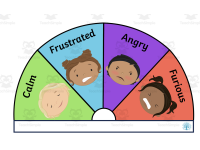
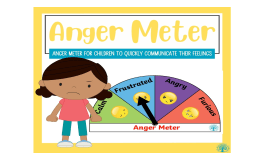
Use the anger meter as a visual check-in for calm, frustrated, angry or furious feelings. A child can point or move the arrow, then discuss their choice with an adult if they wish.
The updated PDF contains two dial designs and a credits page. An older one-page version is included and also supplied separately. Print a chosen dial and arrow, laminate if desired and join with a split pin.
Clipart credits: Kari Bolt and Hidesy’s Clipart.
Related resources
More resources teachers may find useful
24 related resources were found using this product's title, contributor, categories and tags.
In the classroom
Teaching tips & learning objectives

Learning objectives
Identify and name a personal emotional state (calm, frustrated, angry, furious) using a visual, non-verbal tool.

Teaching tips
Laminate both the dial and the arrow before attaching the split pin so the meter holds up to repeated use.
Keep the meter at a student's desk or on a wall for them to update independently, or use it to open a conversation about their feelings.

Skills covered
Emotional self-identification — students select the label that best matches their current feeling on a four-level scale.
Non-verbal emotional communication — the dial format lets students express feelings without needing to verbalize them.
Good to know
Questions teachers ask about this resource
Which versions are included?
The updated PDF has two four-level dials: one with emoji faces and one with illustrated children, followed by credits. An older one-page design is also supplied.
What do I need to assemble the meter?
Print and cut out a dial and arrow, then attach the arrow with a split pin. Laminating is optional for reuse.

No reviews yet
Downloaded this resource? Tell other teachers how it went.
Resource details
Concepts & topics
Core concepts
 Core concepts
Anger scale
Emotional self-regulation
Non-verbal communication
 Topics
Explore more
Categories this resource belongs to
Explore related searches
More to explore
You may also like