Brain Teasers – Hidden Meaning Puzzles (Part 4)


- Grades
- Grades 4–9, Elementary, Middle School, High School
- Pages
- 7
- File type
- Answer key
- Included


- Subject
- ELA, Language Development, Vocabulary
- Topic
- brain teaser, expressions
- Resource types
- Worksheets & Printables, Worksheets
- Answer key
- Included
About this resource
What's inside this resource
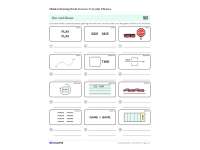
Hidden Meaning Brain Teasers: Everyday Phrases gives students in grades 4 to 8 thirty word-picture puzzles to decode. The answer lives in the drawing itself: a word printed upside down, one number stacked on another, a letter tumbling off a ledge or a tiny picture standing in for a word. The puzzles are grouped by setting into At School, Out and About, and Numbers and Time, and every box carries an Easy, Medium or Tricky tag.
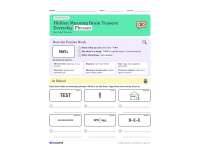
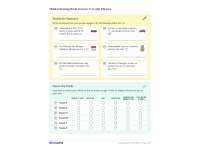
A How the Puzzles Work card at the top of page 1 gives one worked example (the word TURN printed upside down reads "turn around"), three steps to follow and six named tricks to watch for. After the puzzles come two Phrases in Action pages, where students drop solved phrases into sentences, decide which trick hides each of six puzzles, and build four puzzle boxes of their own, one for a phrase they pick themselves.
The answer key fills two pages, pairing every phrase with a one-line explanation of its box, and adds alternate answers that also count, prompts for close answers and model ideas for the build tasks. The set works well for brain breaks, word-play warm-ups and early finishers. Two versions are provided: full color and a grayscale copy for low-ink printing.
Related resources
More resources teachers may find useful
24 related resources were found using this product's title, contributor, categories and tags.


In the classroom
Teaching tips & learning objectives

Learning objectives
Decode a word-picture puzzle by noticing how a word's position, size, direction, repetition or missing part signals a phrase.
Name the decoding trick a puzzle uses and point to the part of the box that shows it.
Choose the decoded everyday phrase that correctly completes a sentence.

Teaching tips
Solve the TURN example on page 1 together, asking students to say each of the three steps aloud before they write.
During Name the Trick, have students point to the part of the box that shows the trick, such as the fallen Y in puzzle 26.
After Build the Box, partners can trade pages, cover the phrases and try to solve each other's boxes.

Skills covered
Visual wordplay: students treat placement, size, direction and repetition as clues, reading a picture of words as a spoken phrase.
Phrases in context: students decide which solved phrase completes short sentences about a late bus, a calendar or a class contest.
Naming strategies: students sort six puzzles by the trick that hides each phrase, which makes their decoding method visible.
Good to know
Questions teachers ask about this resource
Are the answers idioms?
No. Every answer is an everyday phrase tied to school, travel and sports, numbers or time, so students work from familiar words rather than figurative sayings.
How many puzzles are there, and how hard do they get?
There are 30 puzzles. Each box is tagged Easy, Medium or Tricky, and the difficulty climbs within each themed page.
Does it include an answer key?
Yes. Two key pages list every phrase with a note on how its box works, alternate answers that also count, and model ideas for the four Build the Box tasks.
What versions are included?
Two printable PDFs, one in full color and one in grayscale for low-ink printing. Students write the puzzle and sentence answers by hand and tick the boxes for Name the Trick.

No reviews yet
Downloaded this resource? Tell other teachers how it went.
Resource details
Concepts & topics
Core concepts
 Core concepts
rebus puzzles
everyday phrases
wordplay
visual reasoning
 Topics
Explore more
Categories this resource belongs to
Explore related searches
More to explore
You may also like