Building Self-Esteem in Children – Mind Map
- Grades
- Adult Education, Not Grade Specific
- File type
- Multiple File Types
- Editable
- Yes


- Subject
- P.E. & Health, Special Resources, Life Studies, Resources for Teachers, Classroom Management, Social Emotional Learning (SEL), Special Education Needs (SEN), Social Skills, Life Skills, Career, Coaching
- Topic
- self-esteem, children
- Resource types
- Diagrams, Teacher Tools
- Editable
- Yes
About this resource
What's inside this resource
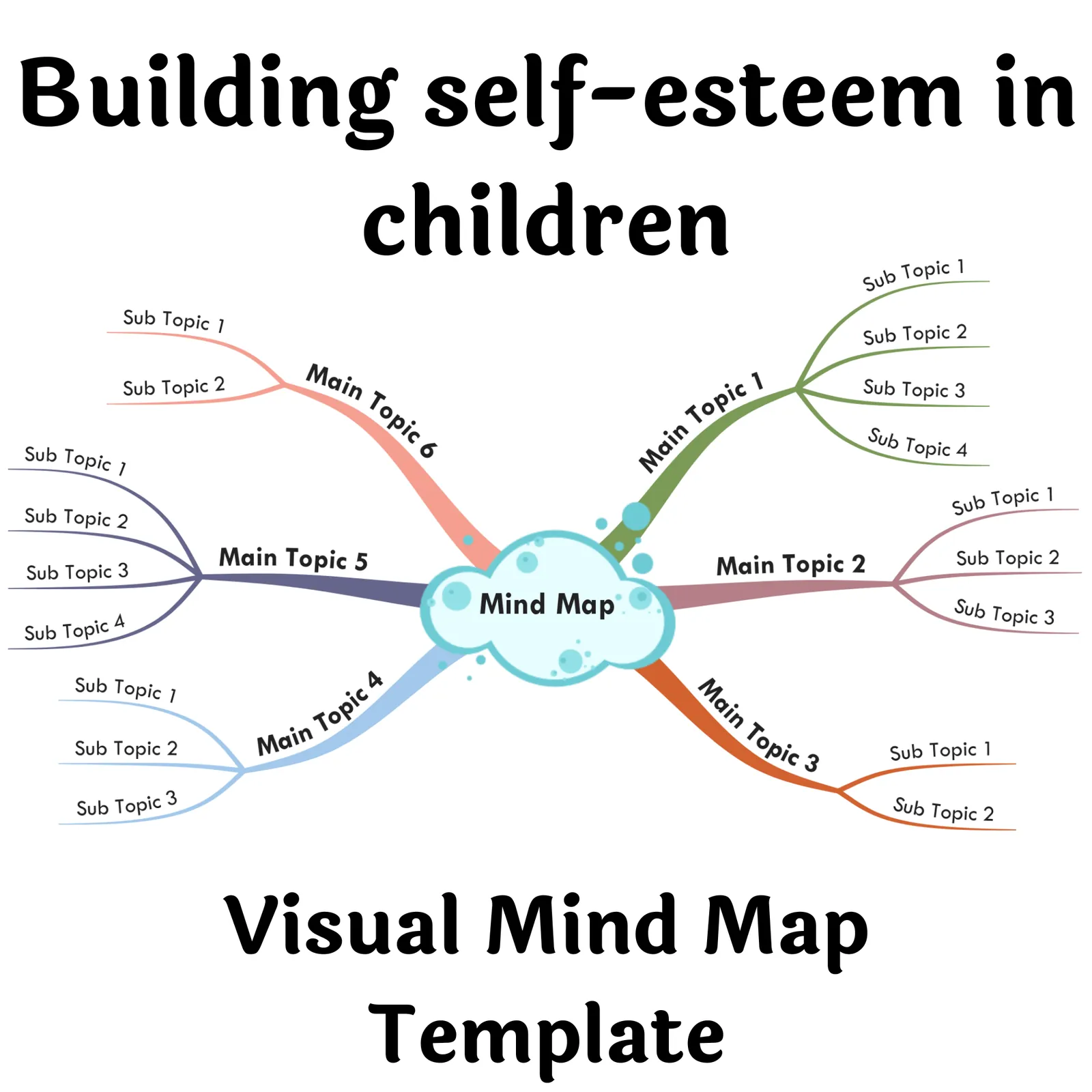
Building Self-Esteem in Children - Visual Mind Map (+Template)
This educational teaching resource has been specially designed for caregivers and instructors with the aim to foster a strong sense of self-worth within children. This visual tool highlights the significance and methods of building self-esteem, which plays a pivotal role in shaping a child's overall development.
Approach
- Recognizing the child's strengths and interests while promoting learning opportunities
- A safe environment where expression can take place without fear of judgment
- Acknowledging individual accomplishments—no matter how minor—to nurture confidence and reassurance
- Encouraging risk-taking, embracing failure as a learning opportunity, and pursuing personal passions.
Mind Mapping Techniques
The mind-mapping technique at its core is known to enhance cognitive skills significantly. Considering that thinking visually aligns more naturally with our brain’s way of functioning than linear note-taking does; this method could prove incredibly beneficial. It aids educators by facilitating ideas' smooth flow through phrases or keywords etcetera represented by images or icons capturing thoughts quickly leading to an unhindered continuum of ideas.
Main Ideas Decoded Into Subtopics Related To Building Self Esteem:Utilising this tool helps identify our focus areas while also helping understand their interconnectedness. Turning disarray into order irrespective of its complexity or breadth—they assist not just enhanced comprehension but recall capacity too!
Ease Of Accessibility
The Visual Mind Map engages users both textually and graphically creating a multidimensional teaching experience facilitated thru downloadable PDF files on benefits along with HTML files featuring classical template . Suited specifically for Adult Education purposes under numerous subjects like P.E & Health along Special Resources among others catering multiple facets Classroom Management Organization with aspects in Social Emotional Learning along with Special Education needs, Social Skills, Life Skills, and Career Coaching.
The resource is best viewed on desktop or laptop for optimal clarity. Users can use the zoom feature to focus on specific branches—thereby promoting creativity, improving problem-solving ability and goal visualization in addition to facilitating thought organization. This versatile teaching tool indeed is an excellent investment in anyone's personal or professional growth journey.
Related resources
More resources teachers may find useful
24 related resources were found using this product's title, contributor, categories and tags.


In the classroom
Teaching tips & learning objectives

Teaching tips
The map is built for a laptop or desktop browser rather than a phone, and the guides say so directly - worth knowing before planning to use it on a classroom tablet
Collapsing every branch and expanding one at a time turns the map into a sequence, which suits reading it aloud with a group rather than presenting the whole diagram at once
Editing the map means opening it in the Mindomo service and signing in, so check whether accounts can be created on the school network before relying on the editable route

Skills covered
Reading a branching diagram on screen - the guides show how to pan, zoom and use the number badge on each branch to collapse or expand its sub-branches.
Customising a shared template - branches can be added, removed or restyled, and the guide invites the reader to add content or delete branches that are not relevant.
Applying mind mapping as a planning technique - the introductory guide sets out what mind maps do for structuring information, recall and idea flow, with examples of who uses them.
Good to know
Questions teachers ask about this resource
How is the mind map opened and read?
Straight in a web browser. The .htm files open in Chrome, Firefox, Safari, Opera or Edge; click and drag to move around the map, and zoom with Ctrl and plus or minus on Windows, Cmd and plus or minus on a Mac, or Ctrl with the mouse scroll wheel.
What does the number beside a branch do?
It both counts and controls. The number tells you how many sub-branches that branch holds, and clicking it collapses or expands the branch, so a reader can close a section once finished with it and move on to the next.
What is required to change the map rather than just read it?
An account on the Mindomo service. The guide directs the reader to the hamburger menu at the top left, then "Copy and Edit", which prompts a sign-in; a free account can be created at that point. Once opened there the map can also be exported as a PDF or PNG. Reading the map needs none of this - the .htm files work on their own.

No reviews yet
Downloaded this resource? Tell other teachers how it went.
Resource details
Concepts & topics
Core concepts
 Core concepts
Mind mapping
Self-esteem
 Topics
Explore more
Categories this resource belongs to
Explore related searches
More to explore
You may also like