Crash Course Psychology #33: Eating and Body Dysmorphic Disorders
- Grades
- Grades 9–12
- Pages
- 4
- File type
- Zip
- Answer key
- Included


- Subject
- Social Studies, Psychology
- Topic
- Eating disorders, Body dysmorphic disorder
- Resource types
- Worksheets
- Answer key
- Included
Product description
From the author
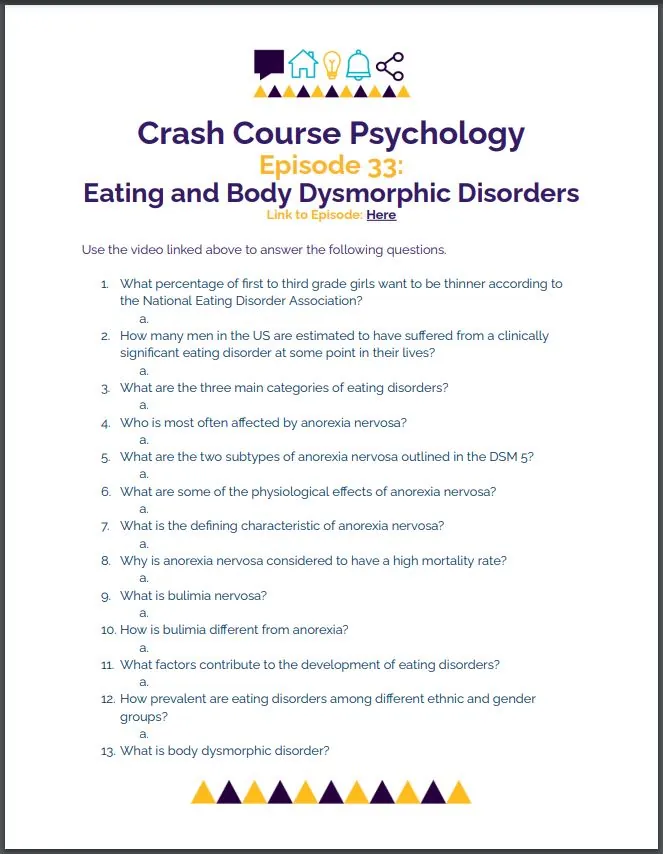
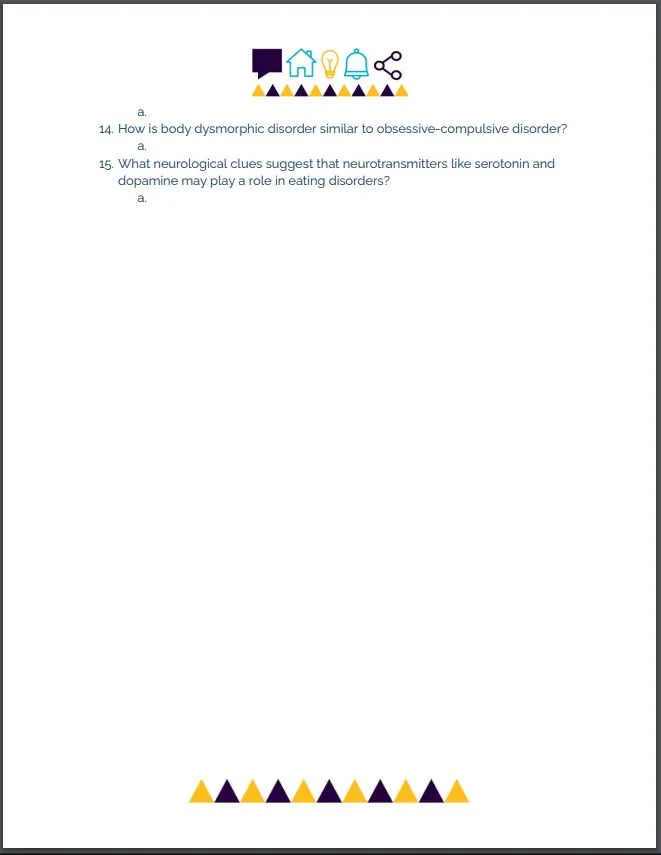
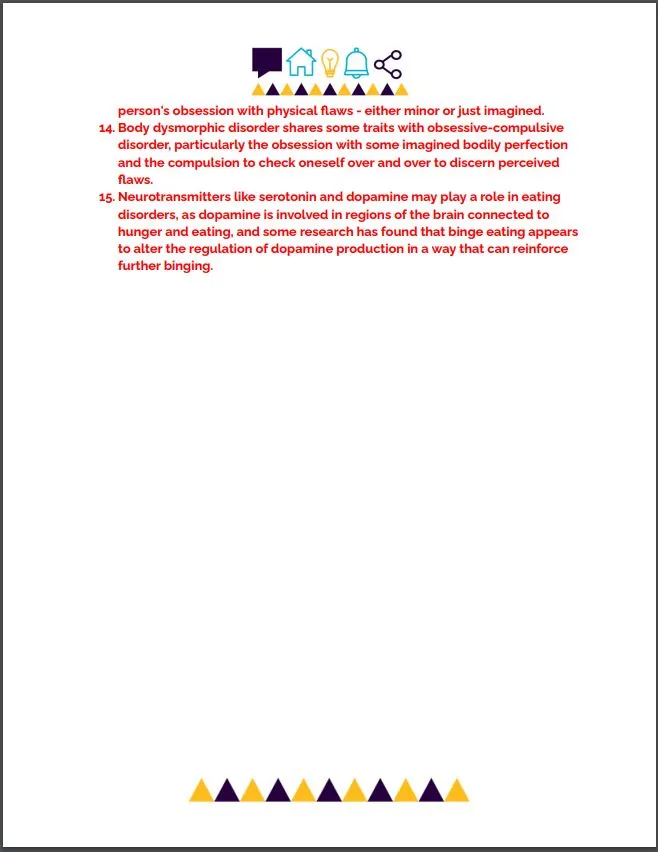
Use this two-page worksheet with Crash Course Psychology episode 33 to support note-taking and review. Its 15 short-answer questions cover definitions, the episode’s prevalence figures, contributing factors and body dysmorphic disorder.
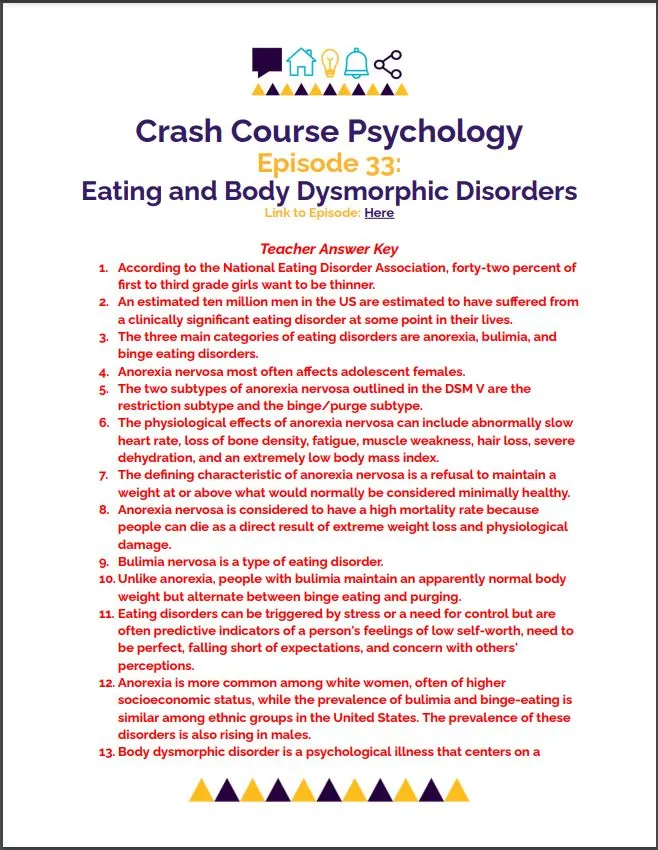
A separate two-page teacher key provides model responses. The ZIP contains both documents in PDF and editable Word formats. Preview the linked episode before assigning the questions.
Related resources
More resources teachers may find useful
24 related resources were found using this product's title, contributor, categories and tags.

In the classroom
Teaching tips & learning objectives

Learning objectives
Define and distinguish the three main categories of eating disorders: anorexia nervosa, bulimia nervosa, and binge eating disorder.
Identify psychological and social factors (such as need for control, perfectionism, and cultural/media influence) that contribute to eating disorders.
Explain how body dysmorphic disorder relates to obsessive-compulsive disorder.

Teaching tips
Because this topic covers eating disorders and body image directly, review your school's guidance on sensitive-topic content and consider previewing the episode yourself before assigning it to a class.
Have students watch the linked video and answer the questions as homework, then use class time for discussion rather than re-explaining content already covered in the video.
Pair this worksheet with a broader unit on psychological disorders so students see eating and body dysmorphic disorders in the context of other conditions covered in the Crash Course Psychology series.

Skills covered
Note-taking from video — students extract specific facts (definitions, statistics, causal factors) from a psychology video to answer direct questions.
Psychological disorder classification — students distinguish between related but distinct conditions (anorexia, bulimia, binge eating disorder, body dysmorphic disorder) using their defining characteristics.
Explaining causation — several questions ask students to explain contributing factors (e.g., neurotransmitters, cultural influence) rather than just recall a definition.

No reviews yet
Downloaded this resource? Tell other teachers how it went.
Resource details
Concepts & topics
Core concepts
 Core concepts
Eating disorders (anorexia, bulimia, binge eating)
Body dysmorphic disorder
Psychological and neurological factors in disordered eating
 Topics
Explore more
Categories this resource belongs to
Explore related searches
More to explore
You may also like