Crash Course Psychology #29: OCD and Anxiety Disorders
- Grades
- Grades 9–12
- Pages
- 4
- File type
- Multiple File Types
- Answer key
- Included


- Subject
- Social Studies, Psychology
- Topic
- OCD, Anxiety disorders
- Resource types
- Worksheets, Activities
- Answer key
- Included
- Standards
- L.9.6
Product description
From the author
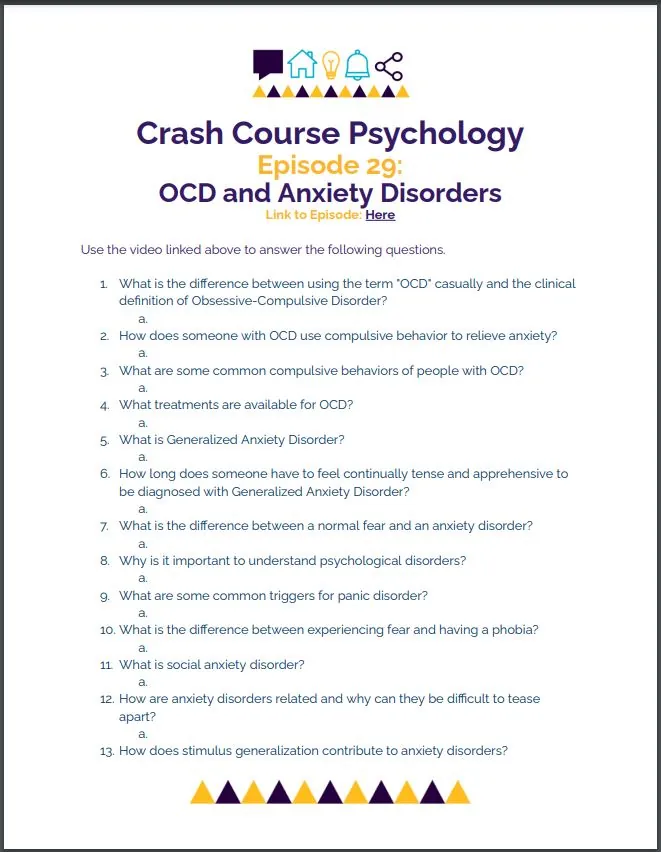
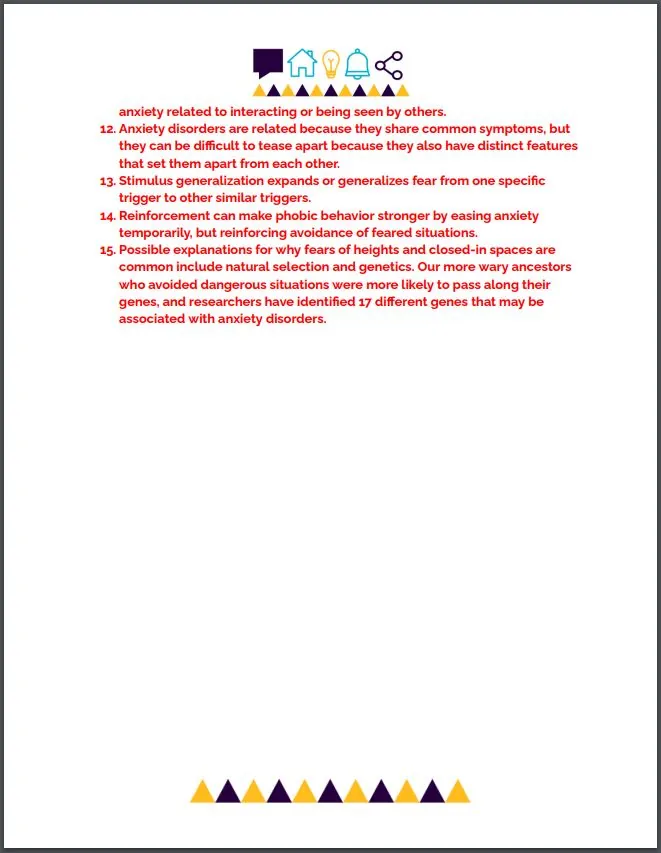
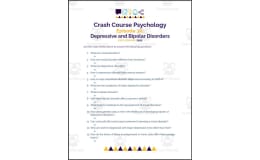
Use fifteen questions with Crash Course Psychology Episode 29 to review OCD, anxiety disorders and the biological and learning-based explanations discussed in the video.
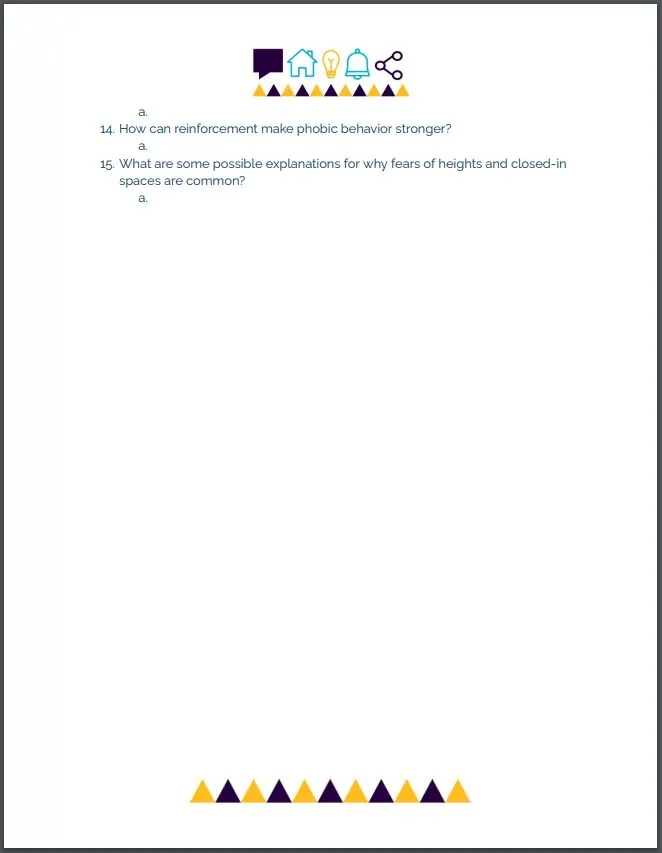
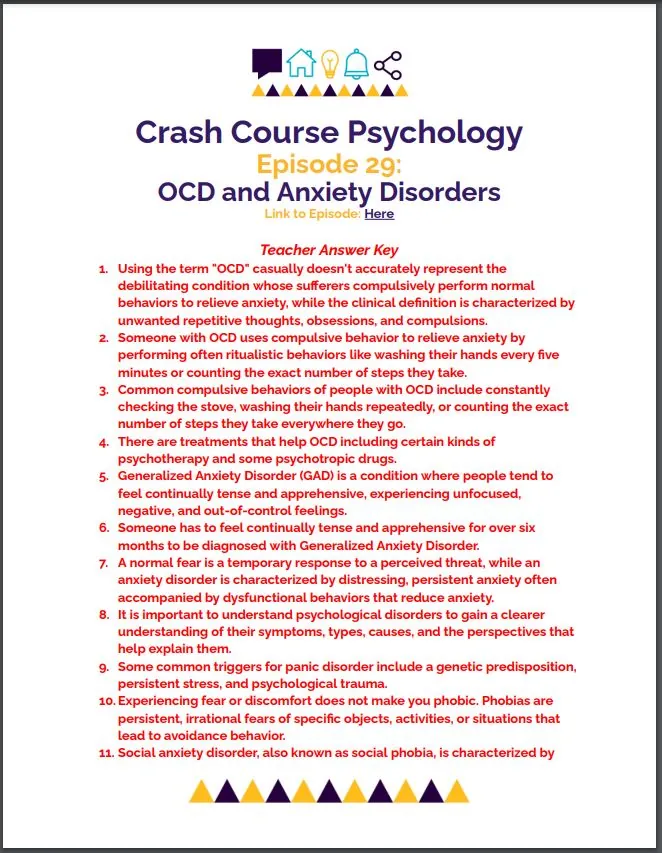
The download includes a two-page student handout and two-page teacher key in PDF and editable Word formats. The Word files repeat the four PDF pages. Arrange access to the linked episode and preview it before class.
Related resources
More resources teachers may find useful
24 related resources were found using this product's title, contributor, categories and tags.
In the classroom
Teaching tips & learning objectives

Learning objectives
Distinguish casual and clinical uses of the term OCD and describe its compulsive behaviors and available treatments.
Define Generalized Anxiety Disorder and distinguish a normal fear from an anxiety disorder.
Explain biological and learning-based explanations (genetics, natural selection, reinforcement, stimulus generalization) for anxiety disorders and phobias.

Teaching tips
Assign Episode 29 as a flipped-classroom video, or play it in class, since the 15 questions on OCD, GAD, and phobias are written to be answered while or after watching.
Spot-check student responses against the teacher key, which pairs a model answer drawn from Episode 29 with each of the 15 questions.
Handle this topic with sensitivity given its subject matter (OCD, anxiety, phobias); the episode itself models a clinical, non-stigmatizing tone worth reinforcing in discussion.

Skills covered
Video-based note-taking — students extract answers to 15 comprehension questions on OCD and anxiety disorders while watching Episode 29.
Distinguishing related but distinct psychological disorders (OCD, GAD, panic disorder, phobia, social anxiety disorder).
Explaining biological and behavioral mechanisms such as stimulus generalization and reinforcement of avoidance.
Good to know
Questions teachers ask about this resource
How do students access the episode?
A link on the worksheet opens Crash Course Psychology Episode 29. Students need access to the online video; the download supplies the worksheet and teacher key in Word and PDF.
What should I preview before teaching the lesson?
Preview the episode and key for their descriptions of OCD, anxiety, phobias and treatment. Keep discussion focused on the lesson content rather than asking students to disclose symptoms or diagnose themselves or classmates.

No reviews yet
Downloaded this resource? Tell other teachers how it went.
Curriculum
Standards, concepts & topics
Standards
 Standards
- L.9.6
Core concepts
 Core concepts
OCD
Anxiety disorders
Phobias
Stimulus generalization
 Topics
Explore more
Categories this resource belongs to
Explore related searches
More to explore
You may also like