Crash Course Psychology #32: Schizophrenia and Dissociative Disorders
- Grades
- Grades 9–12, High School
- Pages
- 2
- File type
- Zip


- Subject
- Social Studies, History, Psychology
- Topic
- psychology, mental health
- Resource types
- Worksheets & Printables, Worksheets
About this resource
What's inside this resource
Related resources
More resources teachers may find useful
24 related resources were found using this product's title, contributor, categories and tags.
In the classroom
Teaching tips & learning objectives

Learning objectives
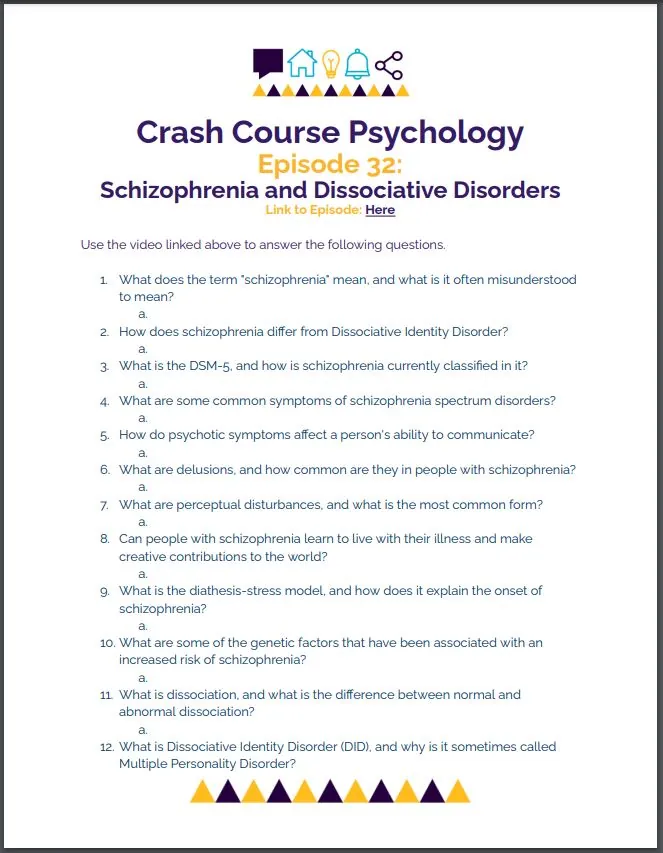
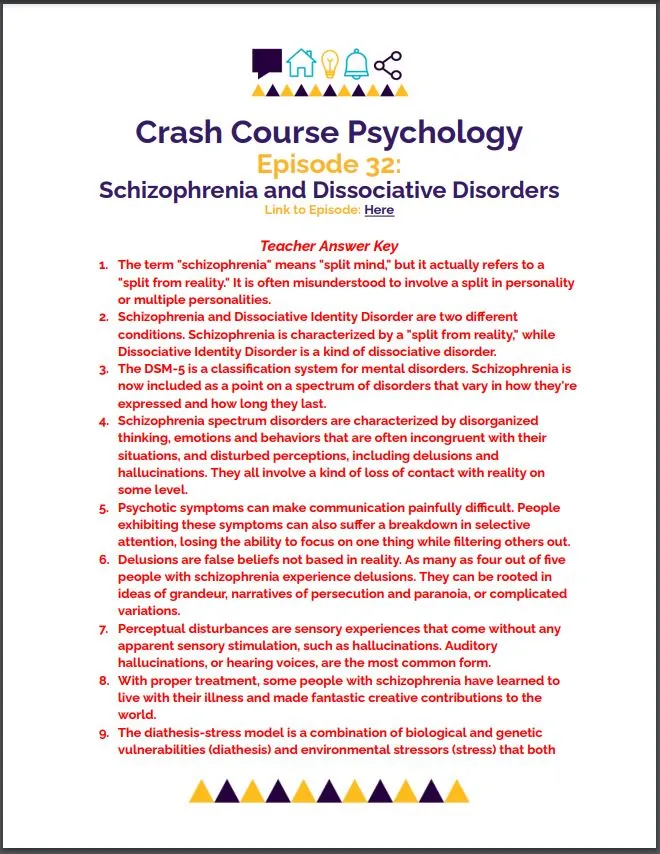
Distinguish schizophrenia (a 'split from reality') from the popular misconception of a split personality, and from Dissociative Identity Disorder.
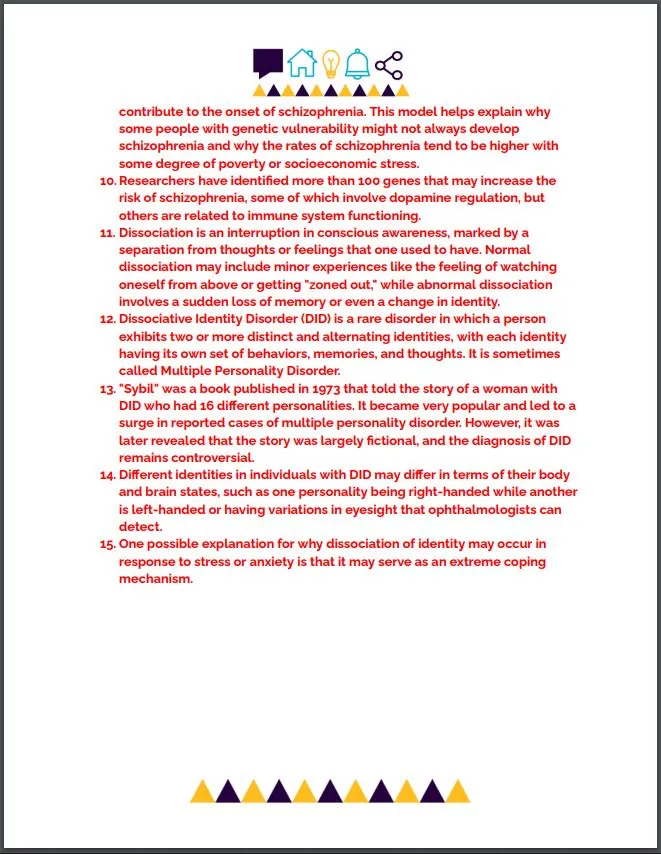
Describe the diathesis-stress model as an explanation for schizophrenia's onset.
Explain how the 1973 book 'Sybil' influenced the diagnosis and public perception of Dissociative Identity Disorder.

Teaching tips
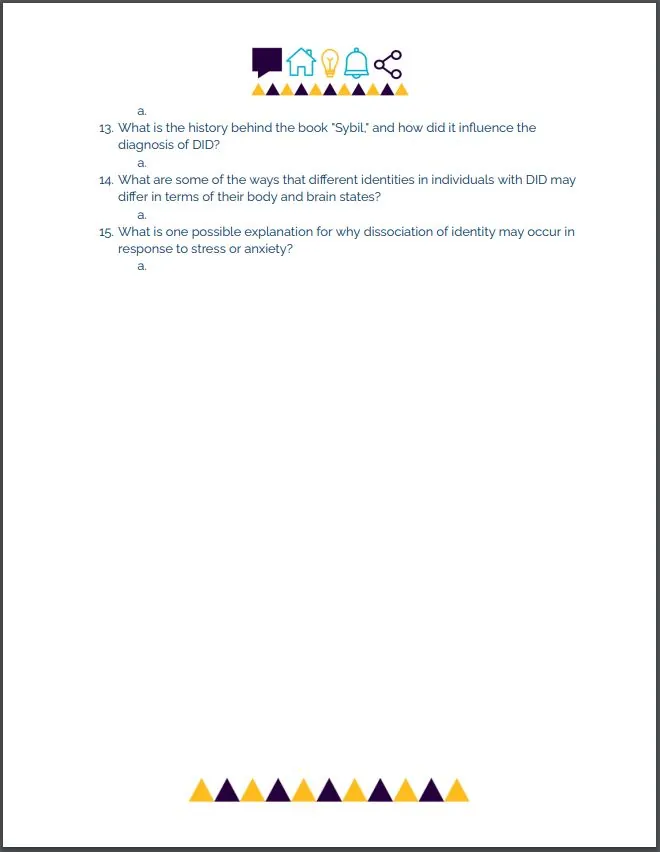
Assign the fifteen questions in order while playing the video, since they follow the episode's own sequence from schizophrenia definitions through DID.
Shorten the question set in the .docx when class time is tight — items 1 through 10 stay with schizophrenia, and 11 through 15 move to dissociation and DID, so either block can be assigned on its own.
Discuss the 'Sybil' question as a media-literacy point, since the episode ties a single popular book to a real shift in diagnostic patterns.

Skills covered
Video-based note-taking — students write answers to fifteen questions in the order the episode raises them, from how the DSM-5 classifies schizophrenia to the case history behind the 1973 book "Sybil".
Diagnostic concept differentiation — students distinguish schizophrenia, DID, and normal/abnormal dissociation from one another.
Explanatory-model literacy — students describe the diathesis-stress model of schizophrenia's onset.
Good to know
Questions teachers ask about this resource
What common misconception does the worksheet correct first?
Question 1 addresses the confusion between schizophrenia's actual meaning — a 'split from reality' — and the popular misunderstanding that it means a split personality or multiple personalities.
How does the worksheet connect a specific book to DID diagnosis history?
Question 13 asks students to explain the history behind 'Sybil,' a 1973 book about a woman with DID, and how it influenced the diagnosis of the disorder afterward.

No reviews yet
Downloaded this resource? Tell other teachers how it went.
Resource details
Concepts & topics
Core concepts
 Core concepts
schizophrenia
dissociative identity disorder
diathesis-stress model
video guide
 Topics
Explore more
Categories this resource belongs to
Explore related searches
More to explore
You may also like