Crash Course Psychology #30: Depressive and Bipolar Disorders
- Grades
- Grades 9–12, High School
- Pages
- 2
- File type
- Zip


- Subject
- Social Studies, Psychology
- Topic
- psychology, video
- Resource types
- Worksheets & Printables, Worksheets
About this resource
What's inside this resource
Related resources
More resources teachers may find useful
24 related resources were found using this product's title, contributor, categories and tags.
In the classroom
Teaching tips & learning objectives

Learning objectives
Define mood disorders and distinguish depressive disorders from ordinary emotions and normal sadness.
Explain how the DSM-V diagnoses major depressive disorder and describe its symptoms.
Describe how brain activity and neurotransmitter levels (norepinephrine, serotonin) differ between depressive and manic states.

Teaching tips
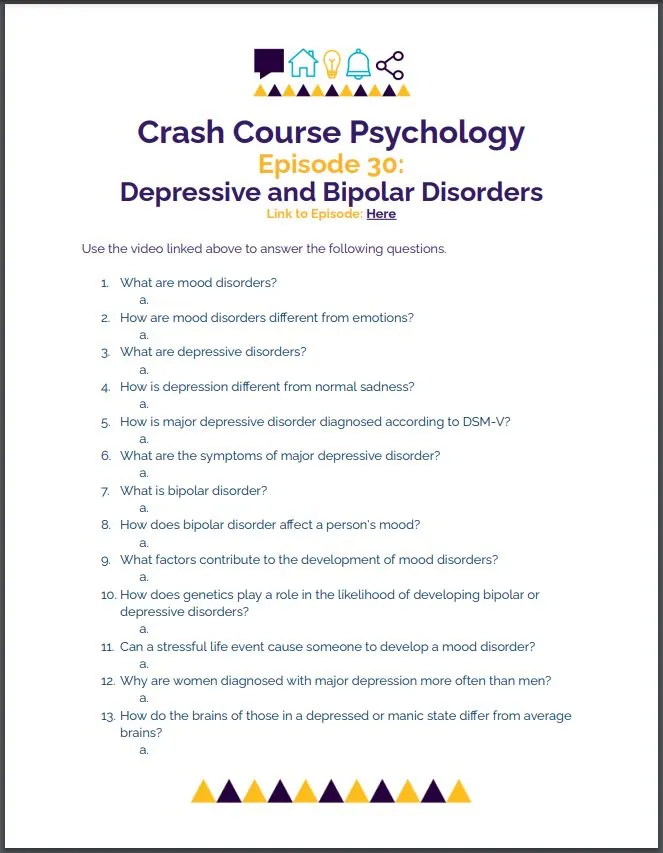
Play the linked Crash Course episode in full before assigning the questions, since every question is drawn directly from its content.
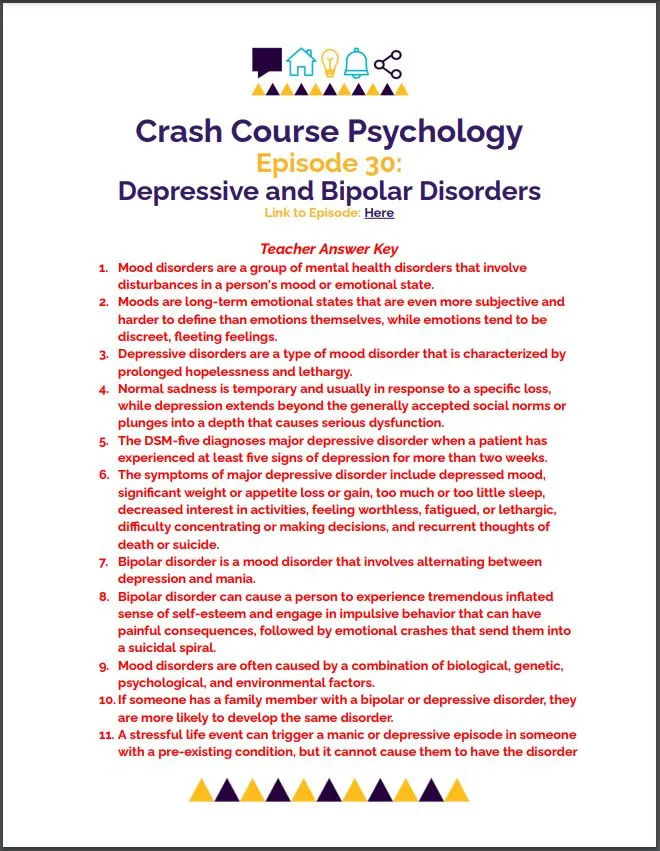
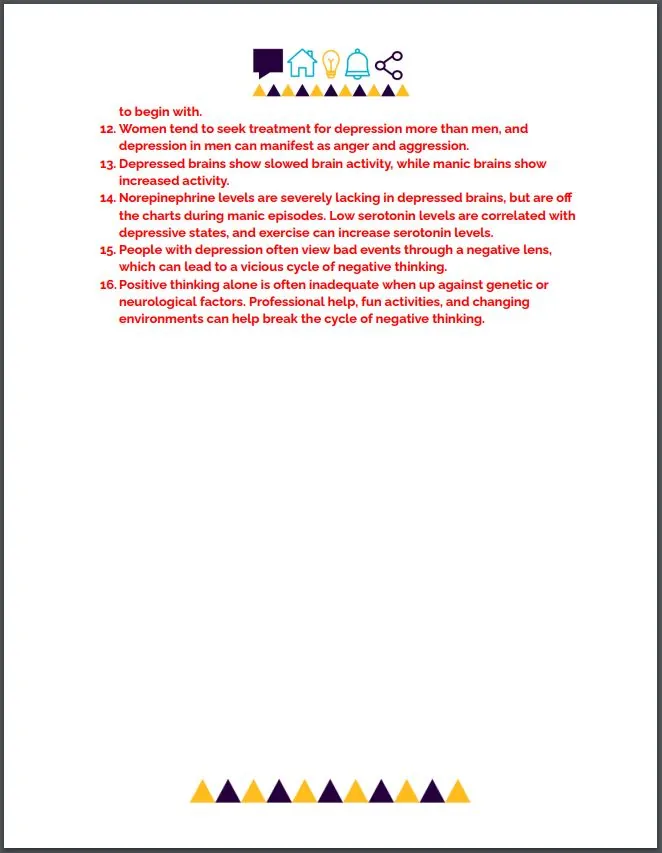
Use the teacher answer key to check for the specific distinctions the episode draws (e.g., moods vs. emotions, normal sadness vs. depression) rather than accepting any related answer.
Because the topic covers depression and bipolar disorder directly, consider previewing the content and available support resources with your class or school counselor before assigning it.

Skills covered
Scientific vocabulary application — students define and differentiate terms such as mood disorder, depressive disorder, and bipolar disorder as presented in the episode.
Diagnostic-criteria comprehension — students explain how the DSM-V diagnoses major depressive disorder.
Neuroscience concept application — students describe how brain activity and neurotransmitter levels differ between depressive and manic states.
Good to know
Questions teachers ask about this resource
What does the episode say about gender differences in seeking treatment for depression?
Women tend to seek treatment for depression more often than men, while depression in men can instead show up as anger and aggression.

No reviews yet
Downloaded this resource? Tell other teachers how it went.
Resource details
Concepts & topics
Core concepts
 Core concepts
Mood disorders
Major depressive disorder
Bipolar disorder
Neurotransmitters (serotonin, norepinephrine)
 Topics
Explore more
Categories this resource belongs to
Explore related searches
More to explore
You may also like