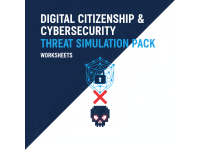
Digital Citizenship & Cybersecurity Threat Simulation Pack


Science, Technology, Computer Science, Engineering, Research, Resources for Teachers, Classroom Management, Community Building, Special Resources, Social Emotional Learning (SEL)
Homeschool Curriculum, Homeschool Templates, Grade 9, 10, 11, 12
Worksheets & Printables, Writing Prompts, Worksheets, Word Searches, Teacher Tools, Assessments, Lesson Plans, Quizzes and Tests, Quizzes, Tests


About This Product
Develop your students’ practical skills in digital security via this complete Digital Citizenship and Cybersecurity Curriculum. This second-to-none Cybersecurity Threat Simulation Pack allows teachers to provide their students with a hands-on learning experience that far exceeds simple “strong password” teachings. Students learn about the psychology of social engineering, spear phishing, cryptography (encryption, decryption, hashing, and the avalanche effect), vulnerability to packet sniffer and evil twin man-in-the-middle attacks, OSINT and metadata risks, the permanence of their digital footprint, ransomware mitigation, synthetic media (deepfakes), and managing credential stuffing attacks.
Includes:
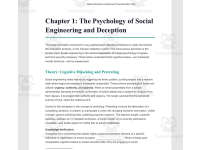
4 detailed theory chapters including real-world examples (Operation Phantom Credentials, Midnight Hash Collision, Café Doppelgänger Breach, Overexposed Athlete)
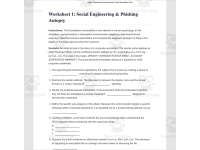
10 high engagement student worksheets including: Social Engineering Autopsy, OSINT Investigation, Cryptographic Frameworks, Ransomware Playbook, Ethics of Hacktivism, Synthetic Media Verification, etc.
7 Knowledge Verification and Assessment Nodes (3 underscored blanks)
Complete teacher materials and instructional aids including concept maps (Cybersecurity Threat Taxonomy), etc.
Ideal for use as 1-1 or in project-based learning models.
Available immediately as PDF downloads. No prep needed! Great for high school digital citizenship; cybersecurity electives; computer science; information technology; and media literacy classes.
Keywords: digital citizenship curriculum for high schools, cybersecurity student worksheets, cybersecurity simulation, social engineering lesson plan, OSINT activities, how to teach ransomware, password security curriculum, digital footprint lesson, deepfake verification lessons, ethical hacking for high schools, TpT cybersecurity bundle.
Why Schools and Parents Appreciate It:
Transforms passive “internet safety” policies into active, high-risk simulation scenarios, which students retain long after the event.
No prep, print-ready worksheets and answer blanks supplied equal instant classroom student engagement and assessment.
All modern threats are covered (phishing, ransomware, deepfakes, open-source intel [OSINT], and credential stuffing), so that students know how to properly identify real-world attacks.
Developing ethical digital citizens and teaching college and career readiness (a few universities are requiring all students become aware of cybersecurity).
Saves teachers resources by providing over 40 pages of teacher materials (including an entire curriculum with teacher visuals and answer keys).
Intended Audience/Classroom Setting:
This resource has been developed specifically for children aged 14-18 years old (i.e., students in grades 9 to 12). The case studies involve high school seniors who are applying for scholarships/financial aid, student-athletes involved in high school football, track coaches (in their respective teams), school district divisions (i.e., regional) and students heading to universities. Given the complexity of the lesson topics (asymmetrical encryption; SHA-256 avalanche effect; MITM/evil twin attacks; OSINT metadata exploitation; ransomware IR playbooks; deep fake epistemological security), it is not suitable for children in grades 6-8 due to their maturity level (14-18) but is ideal for the following:
Grades 9-12 Digital Citizenship/Digital Literacy
Cybersecurity / Information Security Electives
Computer science / ICT classes
Media literacy/journalism (synthetic media/OSINT sections)
CTE (Career and Technical Education) Cybersecurity Pathways
Copyright / Terms of Use:
Syed Hammad Rizvi has placed copyright on this book. This resource can be used for private (personal / classroom) use only. You may not change, copy, or sell any portion of this resource. Additionally, you will not put this on the internet for free public access (so users have to pay to download). Please purchase additional licenses through Teachsimple to share this with coworkers. Thank you for complying with these terms of use.
This product has been produced with much joy by Syed Hammad Rizvi.
Resource Tags
0 Reviews
Check out these other great products