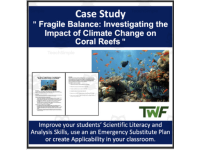
Ecology Case Study - The Impact of Climate Change on Coral Reefs

- Grades
- Grades 6–8, Middle School
- Pages
- 3
- File type
- Multiple File Types


- Subject
- Science, Life Sciences, Nature & Plants, Biology, Earth and Environmental Sciences, Earth Sciences, Environmental Science
- Topic
- science reading, coral
- Resource types
- Activities
About this resource
What's inside this resource
Bring climate science to life for your middle or high school students with this engaging case study on the threats facing coral reef ecosystems. Students will be immersed in a real-world investigation of how rising ocean temperatures are damaging delicate coral habitats across the globe.
The case study provides an in-depth look at the cascading effects of climate change on the Great Barrier Reef, the world's largest reef system off the coast of Australia. Vibrant photos and maps put learners on location to witness firsthand the alarming phenomenon of coral bleaching. As carbon emissions continue to warm and acidify ocean waters, students will come to understand why coral polyps are under attack.
This interdisciplinary activity blends literacy skills with ecology, Earth science and biology concepts. The reading builds background knowledge on reef biodiversity and why coral health is critical for local marine ecosystems and economies. Students will learn how coral bleaching and lowering pH impede symbiotic relationships, reproductive cycles and calcification.
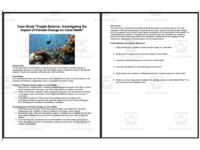
Following the well-researched narrative are open-ended discussion questions and analysis tasks. Learners will interpret impacts through data analysis and make predictions on the future of reefs based on climate projections. Additional student research explores mitigation strategies like reducing tourism, overfishing and pollution.
Use this case study to kickstart a unit on climate change, introduce systems thinking, or drive an inquiry project. The blending of science disciplines promotes analysis from multiple angles. Assign as individual work or group discussion to fit diverse class needs. Whatever the approach, students will gain a memorable look into cascading climate impacts on the front lines.
Turn up the heat on climate literacy in your classroom with this thought-provoking reef case study! Immerse students in investigating the threats coral ecosystems face from acidic and warming waters due to greenhouse gas emissions. Understanding the science behind these impacts creates informed, caring stewards of the environment.
NGSS:
MS-LS2-4
HS-LS2-7
HS-ESS3-5
HS-ESS2-2
Related resources
More resources teachers may find useful
24 related resources were found using this product's title, contributor, categories and tags.


In the classroom
Teaching tips & learning objectives

Learning objectives
- Explain how ocean warming and acidification lead to coral bleaching
- Describe the ecological and economic consequences of reef decline
- Evaluate strategies for reducing climate impacts on reefs

Skills covered
- Cause and effect — connecting rising ocean temperatures and lower pH to reef damage
- Independent research — investigating a question beyond the reading

No reviews yet
Downloaded this resource? Tell other teachers how it went.
Resource details
Concepts & topics
Core concepts
 Core concepts
- Coral bleaching
- Ocean acidification
- Ocean warming
- Reef biodiversity
- Climate change mitigation
Topics
 Topics
Explore more
Categories this resource belongs to
Explore related searches
More to explore
You may also like