2,759 products added recently
Projects
Enhance your curriculum with projects that encourage students to apply knowledge and skills creatively. This collection includes cross-curricular activities, collaborative efforts, and individual explorations. By integrating these projects into your teaching, you can deepen understanding and foster a love for learning.
Paracelsus – Scientist Profile and Reading Activities - PDF + H5P
Life Sciences, Science, STEM, Social Studies, Biographies, Inventors, Basic Science, Physics, Chemistry, Human Body, Grade 6, 7, 8, 9, 10, 11, Worksheets, Worksheets & Printables, Quizzes, Quizzes and Tests, Teacher Tools, Projects, Activities
Paracelsus – Scientist Profile and Reading Activities Informational Text, Quiz & Interactive Version (PDF + H5P) ⚗️📄 This resource introduces students to Paracelsus (Philippus Aureolus Theophrastus Bombastus von Hohenheim), a groundbreaking figure in the history of medicine and chemistry. Known for his belief that chemical substances could be used as treatments and for challenging traditional medical thinking in the 16th century, Paracelsus remains a fascinating figure for students exploring early scientific ideas. Designed for secondary classrooms (grades 7–10), this resource supports both content-based science instruction and interdisciplinary work, such as lessons on the history of science, alchemy, or early medicine. What’s included: Informational text on the life and work of Paracelsus Student profile worksheet to summarize key facts Quiz questions with answer key Extension activities: – Write your own questions about the text – Exchange questions with a classmate and answer theirs Formats: – Printable PDF – Editable DOCX (text only) – H5P (text-based interactive version for LMS use) How it works in class: Students begin by reading the short text, either independently or in pairs. They then complete a profile with guided prompts to help structure what they’ve learned. The included quiz questions check reading comprehension and can be done in writing or as a group discussion. For early finishers or more advanced learners, the extension tasks allow for critical thinking and peer interaction. The material is especially practical for substitute teaching since everything is self-contained and doesn’t require subject-specific knowledge. It also works well in blended or digital learning contexts thanks to the H5P version, which students can complete online with automatic feedback. Minimal prep – just print or upload and you're ready to go. Have fun exploring the world of science with your students! Warmly, Lernfitness Did You Know? I teach with a certified therapy dog, and together we focus on creating a positive and inspiring learning environment.
Author Lernfitness
Rating
Tags Science, Famous Scientists Lesson, H5P, Interactive Science Exercises, STEM, History, Scientists, Chemistry, Scientific Concepts
Scientist Carl von Linné – Fact Sheet, Quiz, and Interactive Exercises
Life Sciences, Science, Biology, STEM, History: World, History, Social Studies, Nature & Plants, Animals, Grade 7, 8, 9, 10, Worksheets, Worksheets & Printables, Quizzes, Quizzes and Tests, Teacher Tools, Projects, Activities
Discover Carl von Linné – The Father of Modern Taxonomy Carl von Linné, also known as Carolus Linnaeus, revolutionized the classification of living organisms and is widely regarded as the "Father of Modern Taxonomy". But did you know his work also laid the foundation for modern biology? This comprehensive teaching resource introduces your students in grades 7–10 to Linné’s groundbreaking contributions to the natural sciences. Designed for a 45-minute lesson, it combines engaging informational content with interactive and creative tasks to provide an inspiring and memorable learning experience. What’s Included: Concise Informational Text: A clear and engaging overview of Carl von Linné’s role in science. Fact Sheet Activity: Encourages students to organize knowledge and work creatively. Quiz with Solutions: Promotes fun, interactive learning and self-assessment. Additional Exercises: Students can create their own questions and collaborate in pairs to deepen their understanding. Flexible Formats: Includes a color and black-and-white printable PDF, as well as interactive H5P tasks for digital learning. Why You’ll Love This Resource: Time-Saving: Perfect for teachers who need a ready-to-go, well-structured lesson. Versatile Use: Ideal for biology, history of science, or cross-curricular lessons in English and science classes. Promotes Independence: Solutions are included, allowing students to check their work and explore the topic at their own pace. Interactive and Engaging: Tasks are designed to keep students actively involved while learning about Carl von Linné’s legacy. Whether you use it for a regular lesson, substitute teaching, or as part of a digital learning activity, this resource will make Carl von Linné’s contributions come alive for your students. Bring Carl von Linné’s fascinating world of science into your classroom and inspire your students to see history and science in a whole new light! Have fun exploring the world of science with your students! Warmly, Lernfitness Did You Know? I teach with a certified therapy dog, and together we focus on creating a positive and inspiring learning environment.
Author Lernfitness
Tags Science, Biology, Famous Scientists Lesson, H5P, Interactive Science Exercises, STEM, History, Scientists, Carl Von Linné, Taxonomy
SUPER FREE PACK | Only Animals Activities FOR KIDS!
Creative Arts, Animals, Life Sciences, Science, Vocabulary, Language Development, ELA, Early Learning, Elementary, Homeschool Resources, Not Grade Specific, Pre-K, Workbooks, Worksheets & Printables, Word Problems, Worksheets, Crafts, Activities, Games, Projects
SUPER FREE PACK | Only Animals Activities FOR KIDS! INFORMATION OF THE AUTHOR: At EDITORIAL ARENAS EDUCATIVAS, we work every day to create educational materials that turn learning into a fun game. Our mission is for every child to enjoy the process of learning. Visit my educational store and discover all the resources we have ready for you. MAIN DESCRIPTION OF THIS PRODUCT: What is the name of the product? Hello! Thank you so much for being interested in this beautiful and fabulous product that you can use with your children, both at school and at home. The name of this fabulous product is: SUPER PACK OF FREE ACTIVITIES FOR KIDS How many pages does it include? This educational document, carefully created and in some cases compiled, has the following number of pages: 320 What format is it in (A4, letter, digital, printable)? This educational resource is designed in A4 format and PDF, so you will have no difficulties printing it and it will also stay well-protected. PDF A4 SECONDARY AND COMPLEMENTARY INFORMATION: For what age, grade, or school level is it ideal? I usually create resources for early grades (children ages 3–5), but I also design for primary students (ages 7–12). My priority is to make children’s learning creative. What learning area does it focus on? This and all my resources focus on children’s essential learning, such as math and literacy. Occasionally, I also create resources for Spanish. What will students learn or practice with it? With this educational resource, children will be able to practice basic skills in math and literacy. Teachers can also adapt it to other learning areas, since learning is multidisciplinary. SUMMARY OF THIS BUNDLE: · What is its name?: SUPER BUNDLE OF ANIMALS ACTIVITIES · How many pages does it have?: 320 PAGES · What format is it in (PDF, Word, PPT)?: PDF A4 · Is it colorful, black & white, or both?: BOTH
Author EDITORIAL LAURA EDUCA
Rating
Tags FREE, FREE RESOURCES, BUNDLE, PACK, VACATION, ANIMALS, ACTIVITIES, PRINTABLES
Scientist Ernst Haeckel Fact Sheet, Quiz + Exercises | PDF + H5P
Life Sciences, Science, Biology, STEM, History: World, History, Social Studies, Animals, Biographies, Grade 6, 7, 8, 9, Worksheets, Worksheets & Printables, Quizzes, Quizzes and Tests, Teacher Tools, Projects, Activities
Discover Ernst Haeckel – The Scientist Who Made Nature a Work of Art Have you ever tried to explain to students how scientists organize and classify life? It can be tricky, but Ernst Haeckelmade it easier—not just through words, but through breathtaking illustrations. He was more than just a scientist; he was also an artist who brought the beauty of biology to life. His work helped shape modern science, and he even gave us the word "ecology", which we still use today! This ready-to-go lesson introduces your students to Haeckel’s fascinating discoveries, his role in expanding Darwin’s ideas, and how his scientific drawings helped people understand the natural world in a whole new way. What’s Inside? 📚 Engaging Reading Text – A simple, student-friendly introduction to Haeckel’s life and work. 📝 Creative Fact Sheet Activity – Encourages students to process and organize information in their own way. ❓ Quiz with Answers – A fun way to check understanding while keeping students engaged. 🎯 Discussion & Thinking Tasks – Students create their own questions and work in pairs or small groups. 🖥️ Print & Digital Formats – Includes a printable PDF and H5P interactive exercises for flexible use. Why Teachers Love This Lesson ✔ Zero Prep Needed – Just print (or assign digitally) and go! ✔ Perfect for Multiple Subjects – Great for biology, environmental science, and history of science. ✔ Encourages Student Independence – Students can check their own answers and explore further. ✔ More Than Just Facts – Thought-provoking tasks keep students actively involved. Why Your Students Will Love It Unlike a typical textbook lesson, this resource makes science feel alive. Instead of memorizing dry facts, students will discover how Haeckel shaped how we see the natural world—and how his love for both art and science continues to inspire us today. No complicated explanations. No boring worksheets. Just an engaging, eye-opening lesson that makes science unforgettable! 🌍 Introduce your students to the scientist who turned biology into art! Download now and bring the wonder of nature into your classroom. Wishing you and your students a great time exploring science together! Best, Lernfitness Did You Know? I teach with a certified therapy dog, and together we focus on creating a positive and inspiring learning environment.
Author Lernfitness
Tags Science, Biology, Famous Scientists Lesson, H5P, Interactive Science Exercises, STEM, History, Scientists, Evolution, Ernst Haeckel
Guided Reading Activity Among the Hidden Trifold Book Report
ELA, Reading, Grade 3, 4, 5, Activities, Projects, Teacher Tools, Graphic Organizers, Novel Studies, Worksheets & Printables
Among the Hidden by Margaret Peterson Haddix follows Luke Garner, a third child in a society where families are restricted to two children due to population control laws. Forced to live in isolation to avoid detection, Luke discovers another hidden child, Jen, who dreams of leading a rebellion for freedom. As their friendship grows, Luke faces life-changing decisions about courage, sacrifice, and the fight for justice in a controlled world. This trifold resource is created to help students practice reading comprehension skills while providing differentiation for various reading levels. This tool can easily be utilized during guided reading, independent seat work, or literature circles. The included writing wrap-up allows for assessing multiple skills in one project, making it perfect for teachers looking for projects that can cover multiple subjects - reading comprehension, reading skills, and writing. What’s Included in This Resource: Each trifold is broken down by chapters or pages and allows chunking of information for easy teacher planning and appropriate student use. In each trifold, the following skills are assessed: Making Connections: Encourage students to relate the story to their own lives, other texts, and the wider world. Making Inferences: Help students combine text evidence with prior knowledge to draw logical conclusions. Using Context Clues: Teach students to deduce the meaning of unfamiliar words using hints from the text. Visualization: Support students in creating mental images of characters, events, and settings. Evaluation: Develop critical thinking by analyzing characters, themes, and the author’s message. Writing Wrap-Up: A writing assessment tool for reflection and deeper understanding. How This Resource Benefits Teachers: ✔ Provides differentiated instruction for diverse learners. ✔ Fosters text engagement and critical thinking with content. ✔ Offers flexibility for grades, seat work, or group discussions. What Teachers Are Saying: ⭐ "This resource made my guided reading groups more organized and productive!" - Rebecca T. ⭐ "Perfect for differentiation and keeping all students engaged at their level." - Larraine C. ⭐ "My students loved the activities, and it worked seamlessly in our literature circles!" - Celia N.
Author Kel's Klass
Tags Reading Strategies, Trifold Project, Guided Reading, Making Connections, Making Inferences, Context Clues, Evaluating, Visualization, Among The Hidden
The Mouse and the Motorcycle STEM Experiment + STEM Project
Science, Technology, Engineering, STEM, Grade 3, 4, 5, Experiments, Activities, Projects, Diagrams, Teacher Tools, Graphic Organizers, Rubrics
Help design and build a four-wheeled car for Ralph, the adventurous mouse, from The Mouse and the Motorcycle. Perfect for integrating literature and science, this challenge guides students to apply engineering principles using simple materials while fostering teamwork and critical thinking. What’s Inside This Resource: Student Letter: A fun letter from Ralph introduces the challenge, linking the story to a real-world engineering task. Design Loop Graphic: A visual students can attach to their science journals, serving as a step-by-step guide throughout the activity. Detailed Instructions: Choose to print the guide as a packet or have students record each stage in their journals for an interactive experience. Teacher Tips: Practical guidance for crafting a clear problem statement with time constraints, materials, and success criteria tailored to your classroom. Skills Your Students Will Build: ✔ Problem-Solving: Identify obstacles and create inventive solutions. ✔ Engineering Design: Navigate the design loop—plan, construct, test, and refine. This page can easily be enlarged for a classroom poster. ✔ Critical Thinking: Assess their prototype’s performance and pinpoint ways to enhance it. ✔ Teamwork: Collaborate effectively to accomplish shared goals. Versatile Classroom Application: Whether as guided instruction or part of an integrated literature and science unit, this STEM activity encourages students to think creatively, document their process, and meet science and engineering standards. The rubric included is based on engineering concepts, but can also be used as a nonfiction writing rubric for cross-curricular options. Why Educators Love This Resource: ⭐ “My students were fully engaged, combining their passion for reading with STEM!” ⭐ “Simple to set up and encourages creativity and teamwork.” ⭐ “A seamless connection between literature and science for cross-curricular learning!” Inspire your students to solve Ralph’s problem and discover the joy of engineering with this fun, standards-aligned STEM challenge!
Author Kel's Klass
Tags 4th Grade Science Project, 4th Grade Science Experiment, 5th Grade Science Project, 5th Grade Science Experiment, Engineering Diagram, Science Graphic Organizer, Science Rubric, 3rd Grade Science Project, 3rd Grade Science Experiment, The Mouse And The Motorcycle
John Dalton – A Short Introduction to a Key Figure in Chemistry
Life Sciences, Science, STEM, Social Studies, Biographies, Inventors, Basic Science, Physics, Chemistry, Human Body, Grade 6, 7, 8, 9, 10, 11, Worksheets, Worksheets & Printables, Quizzes, Quizzes and Tests, Teacher Tools, Projects, Activities
John Dalton – A Short Introduction to a Key Figure in Chemistry Informational Text, Student Tasks & Digital Quiz (PDF + H5P) 🧪📘 A printable and digital resource for grades 7–10 This material introduces students to John Dalton, best known for his early atomic theory and his work on gases. The text is kept simple and clear, making it easy to integrate into lessons on the history of chemistry or atomic structure. It’s especially useful when you want to combine reading comprehension with scientific content. I’ve used this type of material when I needed something structured but flexible – for example, during quiet lesson phases, independent study, or even in a substitute teaching situation. It’s straightforward enough to use without much prep, and students can usually work through it on their own or in pairs. Here’s what’s included: A short reading passage about John Dalton A worksheet where students fill out a basic profile of him Quiz questions to check understanding (with solutions) Two optional follow-up tasks: – Write your own questions about the text – Swap and answer a partner’s questions Available in three formats: – PDF (print-friendly) – Editable .docx (text only) – H5P version for interactive use without images In the classroom: The material works well for independent work or as part of a science station. Students start with the reading text, complete the profile, and then move on to the quiz questions. The optional tasks are a nice way to extend the activity, especially if some students finish early. The H5P version is useful if you’re working in a digital setting or want to offer students the chance to check their answers right away. It’s a calm, focused lesson component that helps students learn about an important scientific thinker – without needing complicated prep or background knowledge. Have fun exploring the world of science with your students! Warmly, Lernfitness Did You Know? I teach with a certified therapy dog, and together we focus on creating a positive and inspiring learning environment.
Author Lernfitness
Rating
Tags Science, Famous Scientists Lesson, H5P, Interactive Science Exercises, STEM, History, Scientists, Chemistry, John Dalton, Atomic Theory
Thumbelina Fairy Tale Lapbook Project Reading & Writing Grades 3 4 5
ELA, ESL, Language Development, Literary Devices, Literature, Children’s Literature, Reading Comprehension, Reading, Strategies, Grade 3, 4, 5, Centers, Activities, Escape Room, Projects, Assessments, Teacher Tools, Graphic Organizers, Templates
Bring your learners to the amazing world and adventure of Thumbelina through this Thumbelina Lapbook Project created for Grades 3, 4, and 5, homeschoolers and EFL/ESL learners. This resource is a perfect project for your reading classroom, reading centers, fairy tale unit, and reading comprehension assessment tool. Contents: •3 Thumbelina Lapbook Project Differentiated Reading Passages (Easy, Average, Hard) •5 Thumbelina Lapbook Project Lapbook Cover Designs •2 Thumbelina Lapbook Project Name Page Styles (Individual or Group Project) •1 Thumbelina Lapbook Project Lapbook Overlap Page for easy assembly •3 Thumbelina Lapbook Project Story Summary Templates •2 Thumbelina Lapbook Project Theme & Lesson Pages •2 Thumbelina Lapbook Project Sequence Pockets •6 Thumbelina Lapbook Project Story Sequence Cards •3 Thumbelina Lapbook Project Levels of Sequence Cards (6 per level) •6 Thumbelina Lapbook Project Story Retell Cards •1 Thumbelina Lapbook Project Character Traits Foldable •1 Thumbelina Lapbook Project Setting Foldable •1 Thumbelina Lapbook Project Extra Info Foldable •1 Thumbelina Lapbook Project Story Rating Page •1 Thumbelina Lapbook Project Reflection Fold
Author It's Teacher L
Rating
Tags Thumbelina, ELA Project, Reading Centers, Reading Comprehension Project
Johannes Nicolaus Brønsted – Scientist Profile and Reading Tasks
Life Sciences, Science, STEM, Social Studies, Biographies, Inventors, Basic Science, Physics, Chemistry, Technology, Grade 6, 7, 8, 9, 10, 11, Worksheets, Worksheets & Printables, Quizzes, Quizzes and Tests, Teacher Tools, Projects, Activities
Johannes Nicolaus Brønsted – Scientist Profile and Reading Tasks Comprehension Activities A structured classroom resource for teaching about acids, bases, and scientific history ⚗️📘 (PDF + H5P) ⚗️📘 A printable and digital resource for grades 7–10 science and cross-curricular teaching 🧪🧠 This material introduces students to Johannes Nicolaus Brønsted, a Danish chemist known for developing the Brønsted–Lowry acid-base theory. His work provides an essential foundation for modern chemistry and is especially helpful when students begin learning about pH, protons, and the role of acids and bases in chemical reactions. The resource is designed to be easy to use – both in traditional lessons and in situations where little prep time is available, such as substitute teaching or self-paced work. It includes a short, accessible reading passage, a student profile sheet, and comprehension tasks that guide students through the key points. What’s included: Informational text about Brønsted’s life and work Printable profile worksheet to summarize the text Quiz questions with answer key Two optional extension tasks: – Students create their own questions based on the reading – Partner exchange: students answer each other’s questions File formats: – PDF for easy printing or digital distribution – Editable DOCX (text only) – H5P version for digital platforms (no images) In the classroom: This activity can be used to complement a chemistry unit on acids and bases, as an introduction to scientific models, or simply as a way to bring real historical context into science lessons. The material is clear and accessible, even for students who may be new to the topic. The H5P version supports digital learning and allows students to complete the quiz interactively, making it great for homework or blended settings. The resource is flexible enough to work in group settings or independently. Minimal prep. Meaningful content. A great way to connect theory with the people who helped shape it. Have fun exploring the world of science with your students! Warmly, Lernfitness Did You Know? I teach with a certified therapy dog, and together we focus on creating a positive and inspiring learning environment.
Author Lernfitness
Rating
Tags Science, Famous Scientists Lesson, H5P, Interactive Science Exercises, STEM, Scientists, Chemistry, Johannes Nicolaus Brønsted, Acid-base Theory, Acids And Bases
Mathematics Binder Covers – Templates for Classroom Use
Science, STEM, Basic Science, Special Resources, Montessori, Classroom Management, Resources for Teachers, Math, Physics, Technology, Homeschool Templates, Grade 6, 7, 8, 9, Worksheets, Worksheets & Printables, Teacher Tools, Projects, Activities, Workbooks, Drawing Templates & Outlines, Templates, Graphic Organizers, Classroom Decor
Mathematics Binder Covers – Templates for Classroom Use Organize your Math handouts, notes, and units with visual clarity Simple and flexible templates to help organize your Mathematics materials In my math classes, it can be a challenge to keep things organized - especially when it comes to multiple units, lab notes, worksheets and review materials. To make it easier for my students and myself, I designed these simple binder sleeves. There are 12 different pages. The covers have a clean, colorful blob layout that is friendly but not distracting. I usually print them out and use them as cover sheets or as dividers in folders for students or teachers. They also work well for digital learning environments, e.g. as section covers in PDF files or on classroom platforms. I like that the color scheme allows students to quickly find what they are looking for, and it brings a little more structure to a subject that is often riddled with formulas and technical terms. When used as cover sheets, students can choose their favorite color for their cover sheet. This resource is handy - and has saved me a lot of time in lesson preparation and follow-up. What’s included: 12 math-themed cover pages different colors zu choose as a cover sheet as a divider between the individual Mathematics topics I've printed these on colored paper for my own binder and also used them digitally in student notebooks. Works well for both teacher organization and student-facing materials. 📍 Best wishes, Heike from Lernfitness Math teacher (Chemistry teacher, Biology teacher) in Germany Did You Know? I teach with a certified therapy dog, and together we create a positive and inspiring learning environment. 🐶✨
Author Lernfitness
Rating
Tags Science, STEM, Binder, Cover Sheet, Template, Organizer, Organize, GoodNotes, Mathematics, Math
Who Has It? – Chemical Elements Game (1–118) – 3 Levels of Differentia
STEM, Science, Chemistry, Physics, Life Sciences, Earth and Environmental Sciences, Basic Science, Special Resources, Social Emotional Learning (SEL), Special Education Needs (SEN), Homeschool Templates, Grade 6, 7, 8, 9, 10, 11, Activities, Games, Worksheets & Printables, Task Cards, Quizzes and Tests, Teacher Tools, Quizzes, Worksheets, Projects, Flashcards
Who Has It? – Chemical Elements Game (1–118) – 3 Levels of Differentiation A cooperative chemistry card game for grades 7–10 to review atomic numbers, element names, and symbols 🧪🎯 This resource is a classroom game that helps students become more confident with the chemical elements – from hydrogen to oganesson. The game follows the well-known “I have… who has?” format and is designed to reinforce students’ understanding of element names, symbols, and atomic numbers in a playful and interactive way. To support different learning levels, the material includes three differentiated versions of the full game, each with 118 element cards: With element names for both question and answer (beginner level) Only the “I have…” part includes the name , the question uses the symbol/number (intermediate level) Without element names – players must match based on symbol and atomic number alone (advanced level) Each version builds on the last and can be used flexibly depending on students' prior knowledge. The game works best with medium to large groups and encourages students to listen carefully, stay engaged, and support one another. What’s included: 3 full card sets (118 cards per set = 354 total) Differentiated by content and level of language support Clear instructions for printing, laminating, and use Ideal for individual, pair, or group work How I use it in class: I’ve played this game both at the end of a chemistry unit and as a fun opener when starting the periodic table. It’s also perfect for substitute lessons or for classes with mixed ability levels. Since each student needs to be ready when their card comes up, it fosters attention and collaboration. This is one of those games where learning happens almost by accident – students are so focused on playing that they internalize atomic numbers and symbols without even noticing. A simple, engaging way to bring structure, repetition, and movement into chemistry class – no extra prep needed. If you're looking for an easy way to help students become more confident with the periodic table, this might be worth trying in your classroom. Best, Heike from Lernfitness Did You Know? I teach with a certified therapy dog, and together we create a positive and welcoming learning environment. 🐶
Author Lernfitness
Rating
Tags Game, Educational Card Games, Chemistry, Physics, STEM Science Matching Game, Chemical Elements, Periodic Table Matching Game, Who Has It, STEM, Who Has It?
Guided Reading Activity The Lemonade War Trifold Book Report
ELA, Reading, Grade 3, 4, 5, Activities, Projects, Teacher Tools, Graphic Organizers, Novel Studies, Worksheets & Printables
The Lemonade War by Jacqueline Davies follows a brother and sister pair, Evan and Jessie, as they compete to see who can earn the most money selling lemonade. While the contest starts as a fun challenge, it brings underlying feelings between the two to the surface, highlighting themes of sibling rivalry and miscommunication. The story emphasizes the importance of family, forgiveness, and understanding one another's strengths and feelings. This trifold resource is created to help students practice reading comprehension skills while providing differentiation for various reading levels. This tool can easily be utilized during guided reading, independent seat work, or literature circles. The included writing wrap-up allows for assessing multiple skills in one project, making it perfect for teachers looking for projects that can cover multiple subjects - reading comprehension, reading skills, and writing. What’s Included in This Resource: Each trifold is broken down by chapters or pages and allows chunking of information for easy teacher planning and appropriate student use. In each trifold, the following skills are assessed: Making Connections: Encourage students to relate the story to their own lives, other texts, and the wider world. Making Inferences: Help students combine text evidence with prior knowledge to draw logical conclusions. Using Context Clues: Teach students to deduce the meaning of unfamiliar words using hints from the text. Visualization: Support students in creating mental images of characters, events, and settings. Evaluation: Develop critical thinking by analyzing characters, themes, and the author’s message. Writing Wrap-Up: A writing assessment tool for reflection and deeper understanding. How This Resource Benefits Teachers: ✔ Provides differentiated instruction for diverse learners. ✔ Fosters text engagement and critical thinking with content. ✔ Offers flexibility for grades, seat work, or group discussions. What Teachers Are Saying: ⭐ "This resource made my guided reading groups more organized and productive!" - Rebecca T. ⭐ "Perfect for differentiation and keeping all students engaged at their level." - Larraine C. ⭐ "My students loved the activities, and it worked seamlessly in our literature circles!" - Celia N.
Author Kel's Klass
Tags Reading Strategies, Trifold Project, Guided Reading, Making Connections, Making Inferences, Context Clues, Evaluating, Visualization, The Lemonade War, Guided Reading Activity
Camping Budget Project: Gr 5-8 Budget Worksheet Personal Finance
Life Studies, Home Economics, Money, Math, Multiplication and Division, Addition and Subtraction, Grade 5, 6, 7, 8, Worksheets & Printables, Worksheets, Activities, Projects
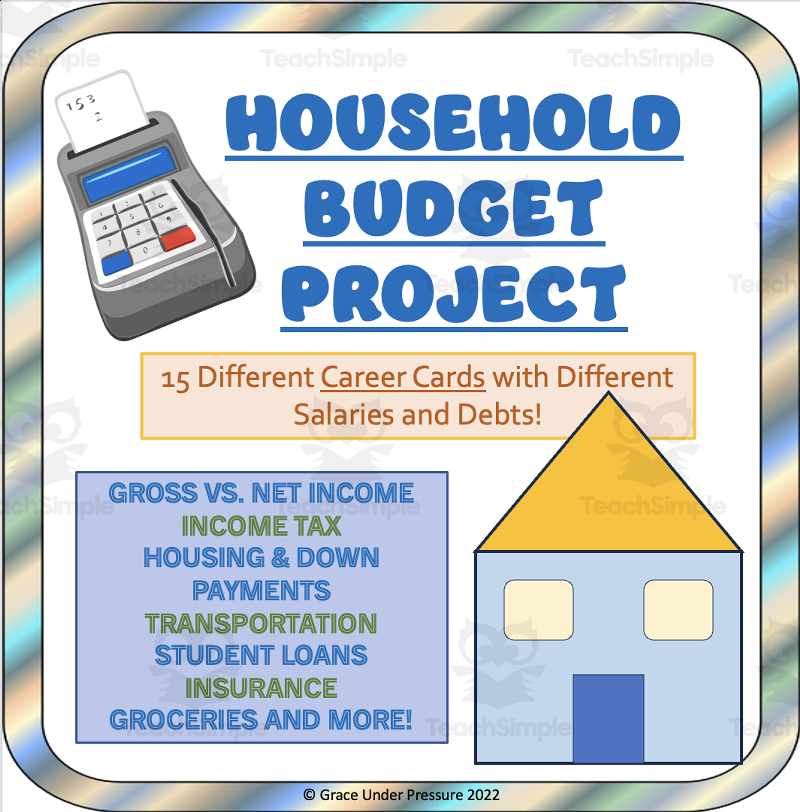
Here’s an engaging, summer-themed, real-world math budget project for your middle grades students (in grades 5-8). The math project incorporates useful personal finance and financial literacy skills along with realistic budgeting. Each student in your class is going to plan their purchases for a summer camping trip with friends! How to Use: You will assign each student in your class a budget (I recommend between $400-$1,750). A $400 budget will be challenging, and the student might only be able to bring one friend and buy mainly low-cost items. On the other hand, a $1,750 budget will be much more luxurious, and that student will be able to more friends and choose many fancy items. Students work within their budgets, picking a low, middle, or high-cost choice for each category (tent, sleeping bag, cooler chairs, food and more). Certain items must be multiplied by the total number of campers while others (like a stove) do not. Students will add up their eleven choices and make sure they stay within their budget. They might need to make a few trade-offs and skip desired items to ensure they have the things they can't camp without. Finally, your students will calculate how much money they have left, and they will answer reflection questions shopping within a budget, earning more money, or buying things used. What's Included: 5 Page PDF It's Ready to Print and Go! - Title page/teacher instructions - 2 page budgeting worksheet: This includes all of the item choices and their prices. - 1 page reflection: This is a great way to start a class discussion about budgeting- an important life skill. - COMPLETE ANSWER KEY that includes a completed sample budget so you know exactly how to assess this project Math skills required: - adding, subtracting, and multiplying with whole numbers (up to the thousands): no decimals! This project could also be a great addition to a high school life skills classroom!
Author Grace Under Pressure
Tags Budget Project, Budget Worksheet, Camping Budget, Math Project, Financial Literacy, Personal Finance, Budget, Money Math, Life Skills, Multiplication
The Princess and the Pea Lapbook Project Reading Writing Grades 3 4 5
ELA, Reading, Literature, ESL, Language Development, Grade 3, 4, 5, Activities, Centers, Crafts, Projects, Graphic Organizers, Teacher Tools, Assessments, Templates
Discover what a real princess is all about through this The Princess and the PeaLapbook Project! Designed for Grades 3, 4, and 5 students, homeschoolers and EFL/ESL learners, this interactive resource is perfect for reading centers, reading classes, fairy tale units, reading comprehension supplemental assessment tool, sup plans, and so much more! Included in this pack are: •3 The Princess and the PeaLapbook Differentiated Reading Passages (Easy, Average, Hard) •4 The Princess and the PeaLapbook Princess and the Pea-Themed Lapbook Covers for student choice •2 The Princess and the PeaLapbook Name Page Options for individuals or group teams •1 The Princess and the PeaLapbook Inner Overlap Page for smooth lapbook assembly •3 The Princess and the PeaLapbook Story Retelling Templates to summarize the tale in students’ words •2 The Princess and the PeaLapbook “Moral of the Story” Pages to explore deeper meanings •2 The Princess and the PeaLapbook Sequencing Pockets to sort key story events •6 The Princess and the PeaLapbook Illustrated Sequence Cards (picture cards) •3 The Princess and the PeaLapbook Sets of Sequencing Cards (differentiated by difficulty) •6 The Princess and the PeaLapbook Story Retell Cards to support oral or written retelling •1 The Princess and the PeaLapbook Character Traits Fold (analyze the princess, queen, prince, etc.) •1 The Princess and the PeaLapbook Setting Fold to capture time and place •1 The Princess and the PeaLapbook Story Elements Fold for extra details and plot highlights •1 The Princess and the PeaLapbook Story Rating Page for expressing opinions •1 The Princess and the PeaLapbook Reflection Fold to connect the story to students’ experiences
Author It's Teacher L
Rating
Tags The Princess And The Pea, Fairy Tale, Reading Comprehension, Reading Centers, ELA Projects
The Nightingale Lapbook Project Reading & Writing Grades 3 4 5 ELA
ESL, Language Development, ELA, Literary Devices, Literature, Reading Comprehension, Reading, Strategies, Grade 3, 4, 5, Centers, Activities, Crafts, Projects, Assessments, Teacher Tools, Graphic Organizers, Templates
Discover the amazing tale of The Nightingalethrough this dynamic The Nightingale Lapbook Project made especially for Grades 3, 4, and 5 learners, homeschoolers and EFL/ESL students. This interactive resource is packed with activities for your reading class, reading centers, ELA projects, fairy tale units, and reading comprehension assessment tool and so much more! What’s Inside: •3 The Nightingale Lapbook Leveled Reading Passages (Easy, Average, Hard) •6 The Nightingale Lapbook Unique Cover Options •2 The Nightingale Lapbook Name Page Versions (for individual and group projects) •1 The Nightingale Lapbook Center Page •3 The Nightingale Lapbook Story Summary Templates •2 The Nightingale Lapbook Theme and Message Pages •2 The Nightingale Lapbook Sequencing Pockets •6 The Nightingale Lapbook Picture Event Cards •3 The Nightingale Lapbook Event Sequencing Sets – Easy, Average, Hard (6 cards each) •6 The Nightingale Lapbook The Nightingale Lapbook Retell Cue Cards •1 The Nightingale Lapbook Character Foldable •1 The Nightingale Lapbook Setting Accordion Fold •1 The Nightingale Lapbook Story Elements Foldout •1 The Nightingale Lapbook Book Rating Page •1 The Nightingale Lapbook Personal Connection Page
Author It's Teacher L
Rating
Tags The Nightingale, Reading Comprehension, ELA Project, Reading Centers
Dinosaur Activities - Are Dinosaurs and Birds Related?
Research, Science, Life Sciences, Animals, Biology, Elementary, High School, Homeschool Resources, Middle School, Centers, Activities, Projects, Lesson Plans, Teacher Tools
Are Birds and Dinosaurs Related? This activity pack helps students explore the scientific evidence behind the connection between birds and dinosaurs. Instead of simply presenting one viewpoint, this resource encourages students to analyze the evidence and form their own conclusions. I developed this project with my son, who has Autism, in mind. He struggles with writing and organizing his thoughts on paper. Using sorting mat activities reduced frustration and made learning more engaging. As a result, I began creating similar resources to help other teachers and parents make learning more interactive and enjoyable. What’s Included in This Activity Pack? Sorting Activities – Helps students categorize and compare information. Research and Writing Assignments – Encourages deeper exploration and evidence-based conclusions. Critical Thinking Development – Supports analytical thinking skills. Dinosaur Recognition Practice – Reinforces knowledge of different dinosaur types. Comparison of Bird-Hipped vs. Lizard-Hipped Dinosaurs – Explores their significance in relation to evolutionary theory. Bonus Activities: Realistic Dinosaur Coloring Pages Dinosaur Information Sheets for guided research Total: 41 Pages Learning Objectives By completing all activities, students will: Identify and describe at least one difference between bird-hipped and lizard-hipped dinosaurs. Name at least two bird-hipped and two lizard-hipped dinosaurs. List at least two facts about Archaeopteryx. Compare feathers and scales by identifying at least two key differences. Explain the difference between cold-blooded and warm-blooded animals. Research both sides of the "birds from dinosaurs" debate and write a five-paragraph report comparing bird-hipped and lizard-hipped dinosaurs. Analyze whether the evidence logically supports the idea that birds evolved from dinosaurs. This resource provides structured, hands-on learning that supports student inquiry and engagement.
Author Homeschooling Dietitian Mom
Tags Dinosaurs, Evolution, Birds, Hands-on Activities, Critical Thinking, Creation, Dinosaur, Dinosaur Activities, Dinosaur To Bird Evolution
Healthy Food Coloring Pages - Fruits and Vegetables
Health, P.E. & Health, Strategies, Reading, ELA, ESL, Language Development, Pre-Reading, Speech Therapy, Special Resources, Elementary, Pre-K, Homeschool Resources, Coloring Pages, Worksheets, Worksheets & Printables, Projects, Activities
Healthy Food Coloring Pages - Apples, Blueberries, Pumpkin, Tomatoes, Broccoli, and more! These giant fruit and vegetable images with nice thick borders will be a joy to color for your students, regular education as well as SPED (special education). Since each page contains only one word on top of the page and one word (two max) at the bottom of each page, these pages can be helpful with speech therapy sessions as well. Coloring helps develop fine motor skills. Each fruit and vegetable page contains a small example on the top left-hand corner of the page to aid students with choosing the colors. There are 30 unique fruits and vegetables in this food coloring pages pack. They include: Fruits: Red - Apple Orange - Cantaloupe Blue - Blueberries Orange - Orange Purple - Blackberry Red - Raspberry Green - Avocado (Can be considered a vegetable also) Yellow - Banana Orange - Cantaloupe Red - Cherry Purple - Grapes Green - Kiwi Yellow - Lemon Green - Lime Orange - Peach Yellow - Pineapple Purple - Plum Vegetables: Purple - Cabbage Yellow - Squash (No border due to glitch with color of squash greying out). Orange - Pumpkin Red - Chili Pepper Orange - Sweet Potato Orange - Carrot Purple - Carrot Blue Purple - Asparagus Red - Tomato (Can be considered as a fruit as well). Red - Beet Green - Broccoli Yellow - Corn Yellow - Sweet Pepper These coloring pages can be used as task cards, either full size or you can shrink the size when you print. Students who are early readers or learning ESL (English as a Second Language) can benefit from the extra-large words on the pages. A single color and name of fruit/vegetable is on each page with matching borders (except for yellow squash which has no border). Students can sort the fruits from the vegetables. Students can alphabetize the pages. Students can color the pages (even older students enjoy coloring) as something to do with their hands and to keep their concentration while the teacher is teaching a lesson on food, health, or nutrition. All fruits and vegetables have matching borders except for yellow squash due to a glitch in the program I used to create it. 31 pages including cover sheet Downloadable printable pdf
Author Homeschooling Dietitian Mom
Tags Apple Coloring Pages, Food Coloring Pages, Health Flashcards, Health Coloring Pages, Reading Strategies
Queen Esther Lapbook Grades 4 5 6 Bible Story ELA PROJECT
ELA, ESL, Language Development, Children’s Literature, Literature, Reading Comprehension, Reading, Strategies, Homeschool Curriculum, Homeschool Templates, Grade 4, 5, 6, Projects, Activities, Centers
Nurture wisdom and strength of character through meaningful classroom activities like this Queen Esther Lapbook Project made for Grades 4, 5, 6, homeschoolers, and EFL/ESL learners. This special activity pack is a perfect addition to any Bible lessons, Sunday school classes, reading comprehension supplemental project and a special feature in your reading centers! The following are the contents of this lapbook set: 6 Queen Esther Lapbook Covers 2 Queen Esther Lapbook Name Pages (individual / group projects) 1 Queen Esther Lapbook Inner Overlap Panel 2 Queen Esther Lapbook Story Summary Pages 1 Queen Esther Lapbook Story Message Page 1 Queen Esther Lapbook Story Sequence Pocket 6 Queen Esther Lapbook Story Sequence Photocards 3 Queen Esther Lapbook Differentiated Story Sequence Sets 6 Queen Esther Lapbook Story Retell Cards 1 Queen Esther Lapbook Character Traits Fold 1 Queen Esther Lapbook Story Setting Fold 1 Queen Esther Lapbook Book Ratings Page 1 Queen Esther Lapbook Prayer Response Fold
Author It's Teacher L
Rating
Tags Bible Lessons, Bible Studies, Reading Comprehension, Queen Esther, Reading Centers
Viking-Themed Door Tags – Discover and Visualize Strengths
Montessori, Special Education Needs (SEN), Special Resources, Social Emotional Learning (SEL), Social Skills, Classroom Management, Resources for Teachers, Community Building, Graphic Arts, Creative Arts, Grade 1, 2, 3, 4, 5, 6, Activities, Worksheets & Printables, Teacher Tools, Projects, Templates, Classroom Decor, Door Decor, Posters, Bulletin Boards, Banners
Viking-Themed Door Tags – Discover and Visualize Strengths A creative resource to support self-awareness and classroom community (grades 2–6) 🛡️✏️ This set of printable Viking-themed door tags helps students reflect on their personal strengths in a fun and low-pressure way. Whether you're working on self-esteem, social-emotional learning, or simply want to add a motivating activity to your classroom routine – these templates give you plenty of flexibility. The material includes 96 hand-drawn door hangers in three differentiated formats: – Pre-filled with strengths (ready to color and hang) – With gaps for students to add their own words – Completely blank for free design and writing All versions are included in both color and black-and-white, making them perfect for creative work, quiet time, or even as a thoughtful take-home project. Fonts are provided in print, tracing, and decorative styles – so you can adapt the activity to your students' level and needs. What makes it practical for teachers: I’ve used these door hangers when starting a new school year, during transition phases, or when I wanted to quietly support students’ confidence. They also work well in substitute lessons or as a calming station activity. The Viking theme adds just the right amount of playfulness without feeling too childish. Easy prep, lots of uses: Print, cut, and let students decorate their door hangers with drawings or personal messages. You can hang them on lockers, desks, or classroom walls. Some teachers also use them for class community projects or parent nights. This activity encourages self-reflection in a gentle and creative way – and reminds students that recognizing their own strengths is part of learning too. This is more than just a decoration – it’s a tool for early math learning wrapped in a bit of adventure. 📍 Best wishes, Heike from @Lernfitness Did You Know? I teach with a certified therapy dog, and together we create a positive and welcoming learning environment. 🐶
Author Lernfitness
Rating
Tags Vikings, Handdrawn, Banners, Viking Classroom Decor, Door Tags For Students, Character Building, Growth Mindset, SEL Resource, Personal Strengths Reflection, Student Self-esteem
Scientist Matthias Schleiden Fact Sheet, Quiz + Exercises PDF + H5P
Life Sciences, Science, Biology, STEM, History, Social Studies, Biographies, Inventors, Basic Science, Nature & Plants, Grade 6, 7, 8, 9, Worksheets, Worksheets & Printables, Quizzes, Quizzes and Tests, Teacher Tools, Projects, Activities
Discover Matthias Schleiden – The Scientist Who Laid the Foundation of Cell Theory 🔬 Make Cell Theory Come Alive in Your Classroom! Your students may already know that all living things are made of cells—but do they know who first proposed this revolutionary idea? Introduce them to Matthias Schleiden, the co-founder of cell theory, who, alongside Theodor Schwann, transformed our understanding of biology. His discoveries laid the foundation for modern cell biology, and this ready-to-use teaching resource helps you explore his contributions in an engaging and interactive way—all in just 45 minutes! 🧪 Why This Resource is a Must-Have for Biology Teachers ✅ No-Prep, Ready-to-Use Lesson – Save valuable planning time! ✅ Engaging & Interactive – Includes fact sheets, quizzes, and creative exercises to enhance understanding. ✅ Perfect for Grades 7–10 – Designed to be flexible and adaptable for different student levels. ✅ Blended Learning Ready – Available in printable PDF and interactive H5P exercises for digital use. ✅ Encourages Critical Thinking – Students not only learn who Schleiden was, but also why his work matters today. 📚 What’s Included? 📄 Informational Text on Matthias Schleiden – A clear and engaging reading passage explaining his role in cell theory. 📝 Fact Sheet Activity – Helps students organize key facts and summarize Schleiden’s contributions. ❓ Quiz with Solutions – A fun way to reinforce learning through self-assessment and review. 🎭 Creative & Interactive Tasks – Students create their own questions, exchange them, and engage in peer discussions. 🎨 Customizable Templates – Choose between color and black-and-white versions for easy printing or digital use. 🖥 H5P Digital Exercises – Perfect for blended learning and interactive lessons. 📌 How to Use This Resource in Your Classroom 1️⃣ Students read the informational text about Matthias Schleiden. 2️⃣ They complete a fact sheet summarizing his scientific discoveries. 3️⃣ Quiz questions reinforce their knowledge of Schleiden’s contributions. 4️⃣ Students create their own questions and challenge their classmates in pairs. 💡 Great for Biology Lessons, Substitute Teaching, and Digital Classrooms! 🌟 Why Biology Teachers Love It ✔ Brings Science History to Life – Connects students to real scientific discoveries. ✔ Simplifies a Key Concept – Helps students grasp the origins of cell theory in an easy-to-understand way. ✔ Flexible for Different Teaching Styles – Use for direct instruction, independent learning, or group activities. ✔ Encourages Active Participation – Turns a scientific breakthrough into an interactive experience. 🔬 Help Your Students Understand the Origins of Modern Biology! Give your students a deeper appreciation for how scientific discoveries shape our understanding of life with this engaging fact sheet, quiz, and interactive activities. 🚀 Download now and bring the legacy of Matthias Schleiden into your biology lessons today! 📍 Best wishes, Heike from Lernfitness Did You Know? I teach with a certified therapy dog, and together we create a positive and inspiring learning environment. 🐶✨
Author Lernfitness
Tags Science, Biology, Famous Scientists Lesson, H5P, Interactive Science Exercises, STEM, History, Scientists, Matthias Schleiden, Cytology
Svante Arrhenius – A Look at the Scientist Behind the Ion Theory
Life Sciences, Science, STEM, Social Studies, Biographies, Inventors, Basic Science, Physics, Chemistry, Technology, Grade 6, 7, 8, 9, 10, 11, Worksheets, Worksheets & Printables, Quizzes, Quizzes and Tests, Teacher Tools, Projects, Activities
Svante Arrhenius – A Look at the Scientist Behind the Ion Theory Comprehension Activities A classroom-ready reading and comprehension activity ⚗️📘 (PDF + H5P) ⚗️📘 A printable and digital resource for grades 7–10 science and cross-curricular teaching 🧪🧠 This resource introduces students to Svante Arrhenius, a Swedish chemist best known for his work on electrolytic dissociation and the behavior of ions in solution. His theories laid the groundwork for how we understand acids, bases, and conductivity – topics that still form a core part of chemistry education today. The material is structured to be simple and flexible. It includes a short informational text in student-friendly language, along with a worksheet and quiz questions. The tasks are designed so students can work independently or in pairs. It’s suitable for both regular lessons and substitute teaching – no special background knowledge is needed. What’s included: Reading text on Svante Arrhenius and his scientific contributions Profile worksheet to summarize the main ideas Quiz questions with an answer key Two optional extension tasks: – Students write their own questions based on the text – Exchange and answer questions in pairs Formats: – PDF (printable and digital) – DOCX (editable text only) – H5P (interactive version for LMS use, no images) How it works in the classroom: I’ve used this type of resource during units on acids and bases or to give context to chemical theories. It also works well when introducing the idea of scientific models and how theories develop over time. The included H5P version makes it easy to assign digitally. Students can complete the quiz independently and get feedback right away. The extra tasks are helpful for early finishers or when you want to add peer interaction to a quiet reading lesson. Print it, share it, or upload it – and the lesson’s ready. Have fun exploring the world of science with your students! Warmly, Lernfitness Did You Know? I teach with a certified therapy dog, and together we focus on creating a positive and inspiring learning environment.
Author Lernfitness
Rating
Tags Science, Famous Scientists Lesson, H5P, Interactive Science Exercises, STEM, Scientists, Chemistry, Acid-base Theory, Dissociation, Svante Arrhenius
Konrad Lorenz – Fact Sheet, Quiz & Interactive PDF incl. H5P
Life Sciences, Science, STEM, History, Social Studies, Biographies, Inventors, Basic Science, Physics, Biology, Grade 6, 7, 8, 9, 10, 11, 12, Worksheets, Worksheets & Printables, Quizzes, Quizzes and Tests, Teacher Tools, Projects, Activities
Scientist Konrad Lorenz - Fact Sheet, Quiz & Interactive Version (PDF & H5P) Konrad Lorenz – Animal Behavior and the Roots of Ethology Fact Sheet, Quiz & Interactive Exercises (PDF + H5P) 🦢🧠 This 45-minute resource introduces students in grades 7–10 to Konrad Lorenz – a key figure in the development of modern ethology, the study of animal behavior. Many students enjoy learning about animals, but the scientific side of behavior research ist oft weniger bekannt. Lorenz is especially known for his work on imprinting in geese – observing how young animals form strong attachments during a critical period after birth. His careful observations helped shape the way we think about instinct, learning, and behavior in both animals and humans. To make this topic approachable, I’ve put together a compact, ready-to-use lesson. It includes a short informational text, a fact sheet, quiz questions with answers, and a creative partner task. The materials are available in both color and black-and-white versions, plus there’s an H5P version for digital use. What’s included: A short, student-friendly text about Konrad Lorenz and his contributions to behavioral science A fact sheet to help students organize key ideas Quiz questions (with answer key) for review or self-check A partner task where students come up with their own questions and exchange them Formats: Printable/digital PDF and interactive H5P 💻 Answer key included ✅ I’ve used this material when introducing the basics of behavior in biology – especially to discuss how scientific observation works in practice. It also fits nicely into lessons on instinct vs. learning or historical perspectives on animal research. The flexible format works well for independent study, pair work, or short projects. 🚀 Download now and bring the legacy of Konrad Lorenz into your biology lessons today! 📍 Best wishes, Heike from Lernfitness Did You Know? I teach with a certified therapy dog, and together we create a positive and inspiring learning environment. 🐶✨
Author Lernfitness
Tags Science, Biology, Famous Scientists Lesson, H5P, Interactive Science Exercises, STEM, History, Scientists, Konrad Lorenz, Animal Behavior
Joseph John Thomson – The Discovery of the Electron
Life Sciences, Science, STEM, Social Studies, Biographies, Inventors, Basic Science, Physics, Chemistry, Technology, Grade 6, 7, 8, 9, 10, 11, Worksheets, Worksheets & Printables, Quizzes, Quizzes and Tests, Teacher Tools, Projects, Activities
Joseph John Thomson – The Discovery of the Electron Comprehension Activities A ready-to-use science resource for grades 7–10 (PDF + H5P) ⚛️📘 A printable and digital resource for grades 7–10 science and cross-curricular teaching 🧪🧠 This classroom resource introduces students to Joseph John Thomson, the physicist who discovered the electron and helped shape our modern understanding of atomic structure. His work not only earned him a Nobel Prize, but also laid the groundwork for the atomic models students learn about in middle and high school. The material is designed to be easy to use – even if you’re short on prep time. The reading text is short and accessible, followed by a structured worksheet and quiz questions. It’s suitable for science lessons focused on atomic theory or the history of chemistry, but it also works well in substitute teaching settings since students can work through it independently. Included in this resource: A short informational text on J.J. Thomson A profile worksheet to help students summarize key points Quiz questions (with solution key) Two extension activities: – Students write their own questions based on the reading – Exchange and answer a partner’s questions File formats: – PDF (for printing or digital use) – DOCX (editable, text only) – H5P version (interactive, for learning platforms) How I use it in class: I like using materials like this at the start of a unit on atomic structure or when we discuss the development of scientific models. It gives students a chance to see how our current understanding has evolved – and reminds them that science is built on the ideas of real people. The H5P version allows for digital delivery and self-checking, making it great for homework or blended learning. It also gives students the chance to reflect, work at their own pace, or collaborate in pairs. Quick to prepare, easy to adapt – and a great way to connect abstract content to the scientists who helped shape it. Have fun exploring the world of science with your students! Warmly, Lernfitness Did You Know? I teach with a certified therapy dog, and together we focus on creating a positive and inspiring learning environment.
Author Lernfitness
Rating
Tags Science, Famous Scientists Lesson, H5P, Interactive Science Exercises, STEM, Scientists, Chemistry, Joseph John Thomson, Electron, Atomic Structure
Dear Mr. Henshaw STEM Experiment + STEM Project for Grades 3, 4, 5
Science, Technology, Engineering, STEM, Grade 3, 4, 5, Experiments, Activities, Projects, Diagrams, Teacher Tools, Graphic Organizers, Rubrics
Leigh Botts from Dear Mr. Henshaw needs your help! This STEM project encourages problem-solving as students plan and construct a device that will help protect Leigh's lunch from a sneaky thief. Perfect for blending literature with science, it allows students to explore engineering concepts using simple supplies while promoting teamwork and critical thinking. What’s Inside This Resource: Student Letter: A pleading letter from Leigh introduces the challenge, linking the story to a real-world engineering task. Design Loop Graphic: A visual students can attach to their science journals, serving as a step-by-step guide throughout the activity. Detailed Instructions: Choose to print the guide as a packet or have students record each stage in their journals for an interactive experience. Teacher Tips: Practical guidance for crafting a clear problem statement with time constraints, materials, and success criteria tailored to your classroom. Skills Your Students Will Build: ✔ Problem-Solving: Identify obstacles and create inventive solutions. ✔ Engineering Design: Navigate the design loop—plan, construct, test, and refine. This page can easily be enlarged for a classroom poster. ✔ Critical Thinking: Assess their prototype’s performance and pinpoint ways to enhance it. ✔ Teamwork: Collaborate effectively to accomplish shared goals. Versatile Classroom Application: Whether as guided instruction or part of an integrated literature and science unit, this STEM activity encourages students to think creatively, document their process, and meet science and engineering standards. The rubric included is based on engineering concepts, but can also be used as a nonfiction writing rubric for cross-curricular options. Why Educators Love This Resource: ⭐ “My students were fully engaged, combining their passion for reading with STEM!” ⭐ “Simple to set up and encourages creativity and teamwork.” ⭐ “A seamless connection between literature and science for cross-curricular learning!” Encourage your students to solve Leigh’s challenge and experience the excitement of engineering with this standards-aligned STEM adventure!
Author Kel's Klass
Tags 4th Grade Science Project, 4th Grade Science Experiment, 5th Grade Science Project, 5th Grade Science Experiment, Engineering Diagram, Science Graphic Organizer, Science Rubric, 3rd Grade Science Project, 3rd Grade Science Experiment, Dear Mr. Henshaw